
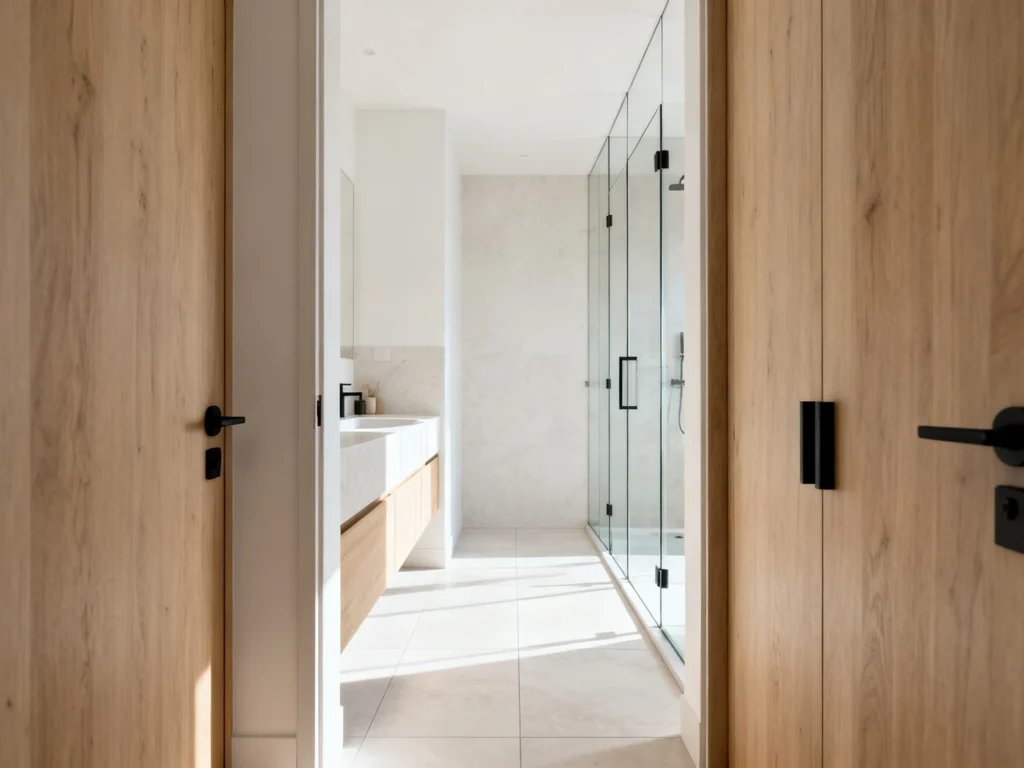
Bathroom Remodeling Layout Ideas for Better Flow
Great flow in a bathroom isn’t just about square footage—it’s about how the layout guides you from door to vanity to shower without awkward corners, tight squeezes, or blocked sightlines. The most satisfying remodels feel effortless, like the room was always meant to work that way.
Scroll-worthy layout inspiration ahead: ten distinct bathroom remodeling layouts that look beautiful and move beautifully, too—each with a clear “path” and a fresh vibe.
Idea 1: The Straight-Shot Vanity-to-Shower Layout
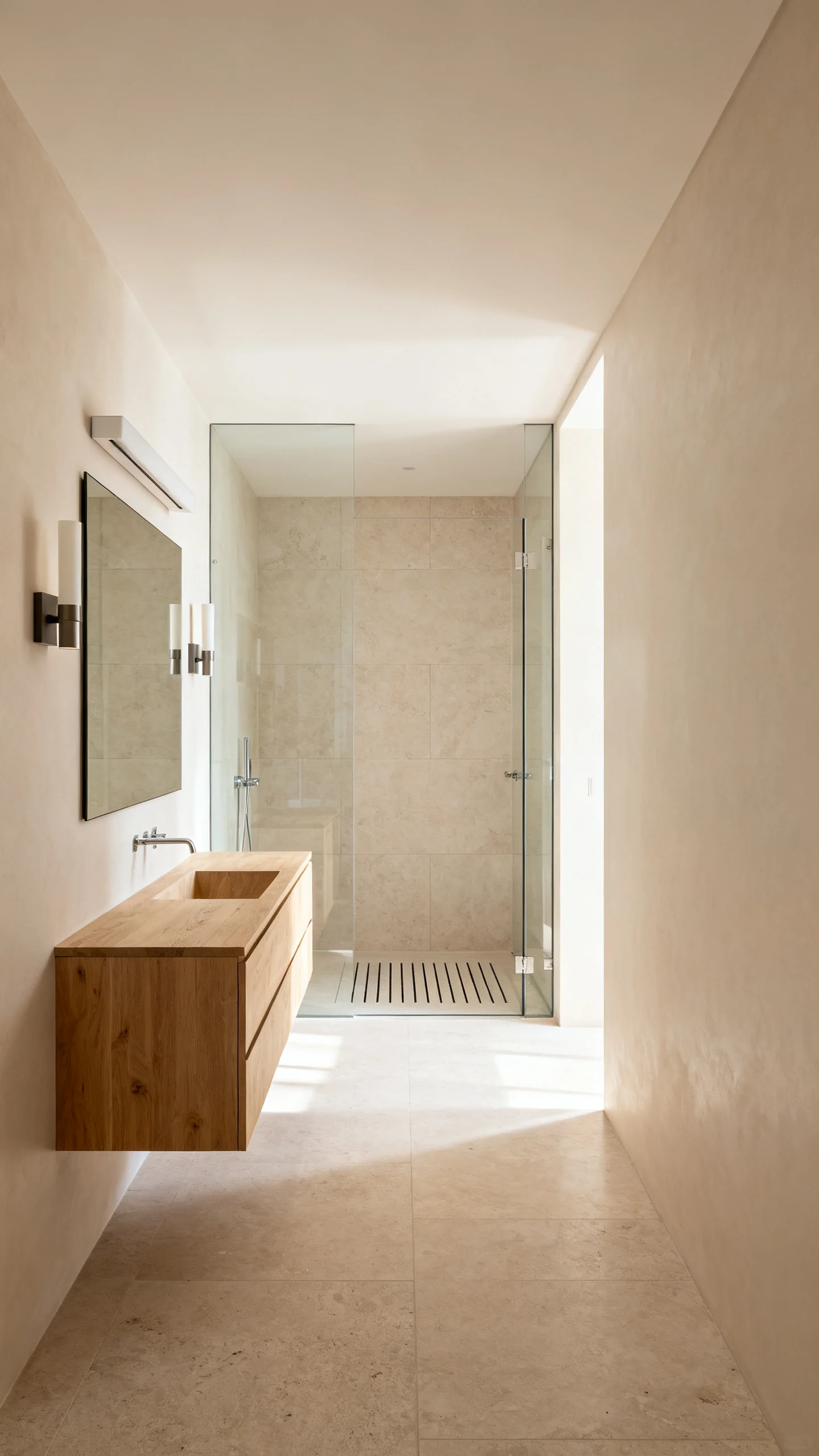
Picture a clean line from the doorway to a floating vanity, then straight to a frameless glass shower at the back wall. This layout feels instantly calm because nothing interrupts the view—just airy glass, a long runner-style bath mat, and a centered mirror that anchors the space.
Finish it with large-format porcelain tile to minimize visual breaks, plus a slim linear drain that keeps the shower floor looking like a continuation of the room. The result: hotel-sleek flow with a crisp, uncluttered rhythm.
Idea 2: The Privacy Pivot (Toilet Tucked Behind a Half Wall)
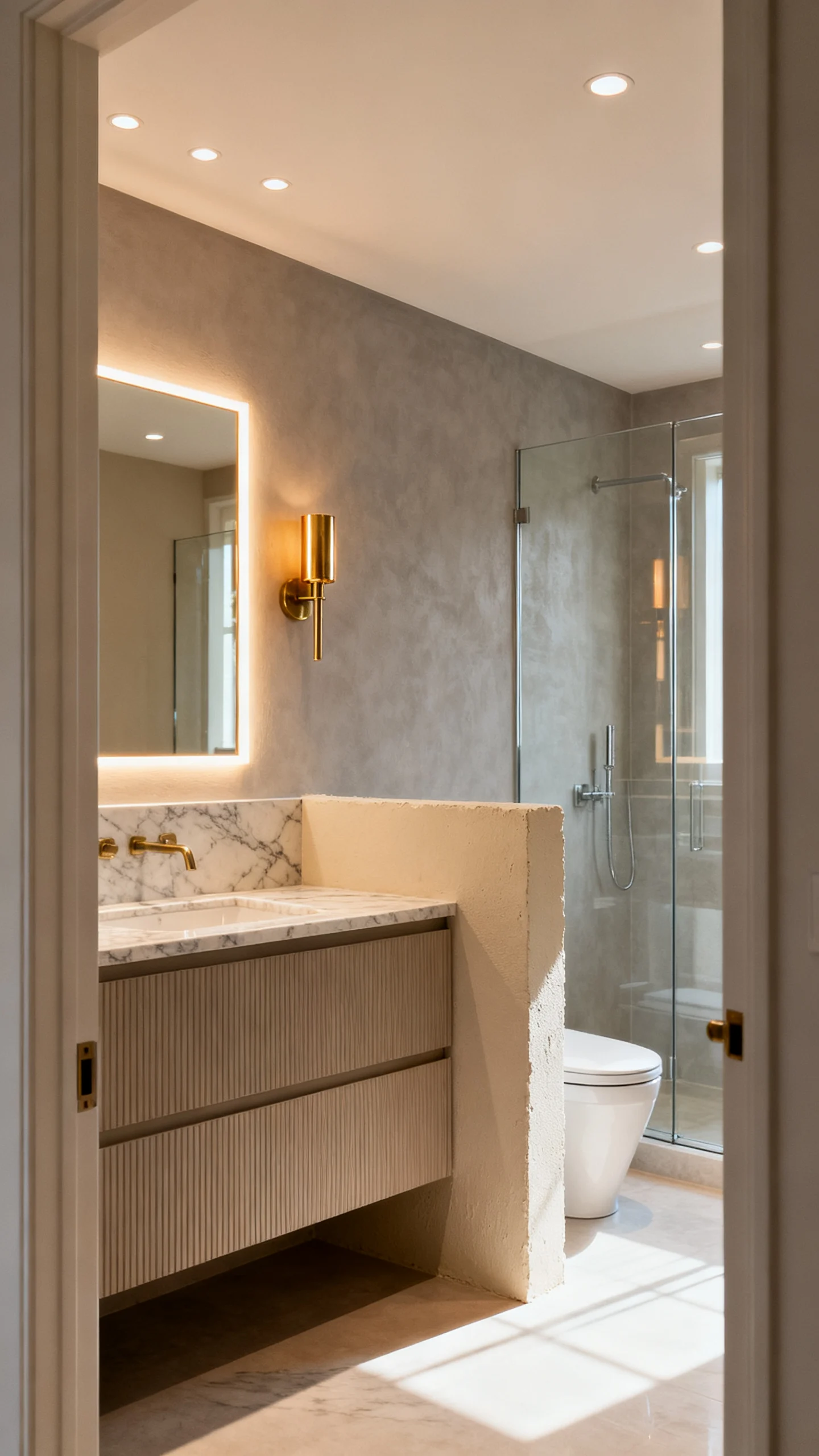
For better flow and better vibes, imagine entering to a statement vanity and sconce lighting, while the toilet quietly disappears behind a short half wall. It’s a layout that feels polished and considerate—no one wants the toilet to be the first thing you see.
Style the half wall like architecture: cap it in stone, run the same tile up the face, and add a ledge for a candle or a tiny vase. Everything feels intentional, and the walking path stays open and easy.
Idea 3: The Wet Room Zone (One Glass Panel, Big Open Feel)
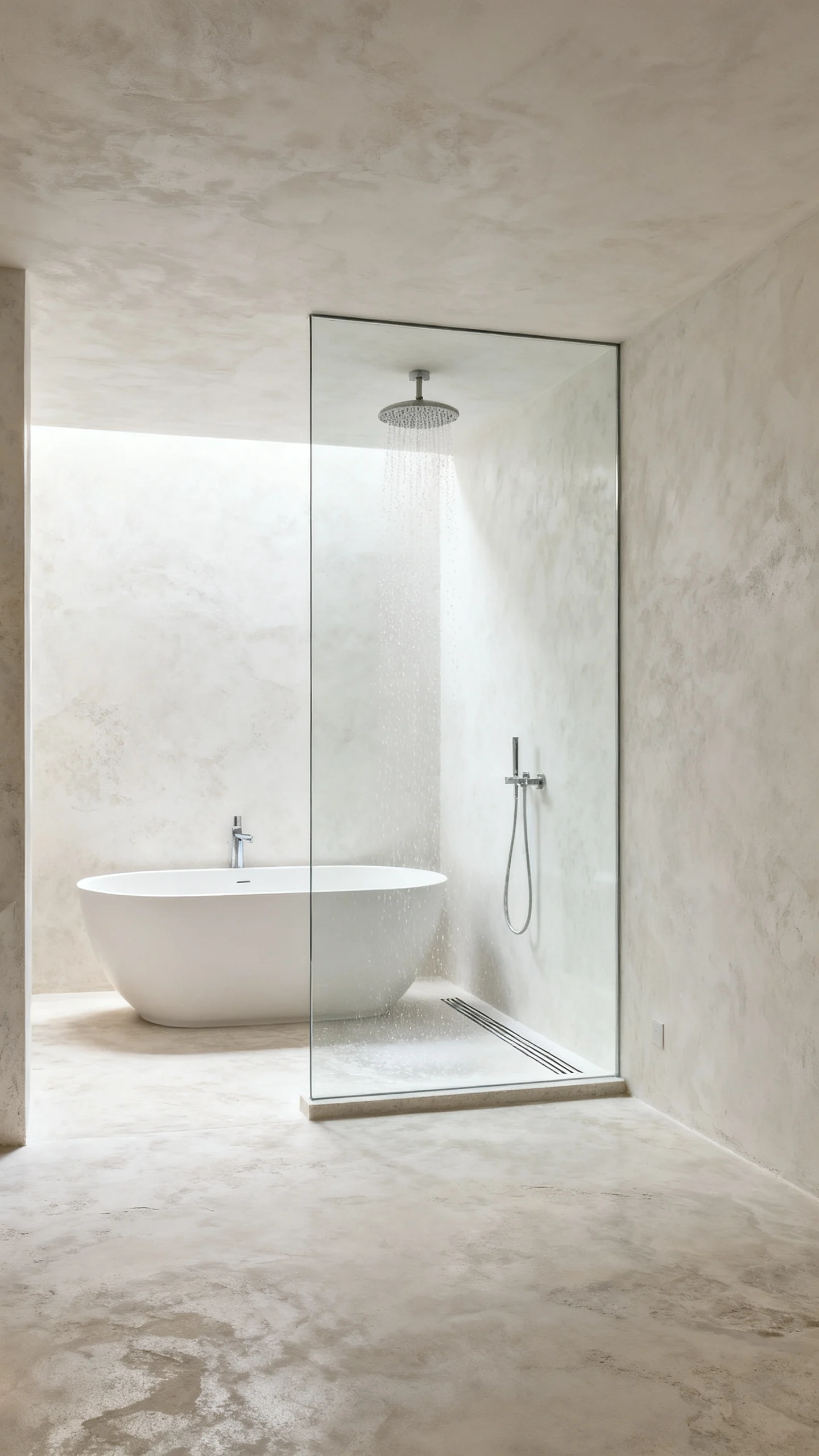
A wet room layout can make a bathroom feel twice as fluid: the shower and tub share one waterproof zone behind a single glass panel. Think spa minimalism—microcement or soft stone-look tile wrapping the entire “wet” area like a cocoon.
The flow is visual and physical: fewer doors, fewer thresholds, and one generous zone that reads as calm, continuous space. Add a wall niche, a floating bench, and warm wood accents to keep it inviting, not cold.
Idea 4: The Double-Vanity Corridor (Symmetry That Moves)
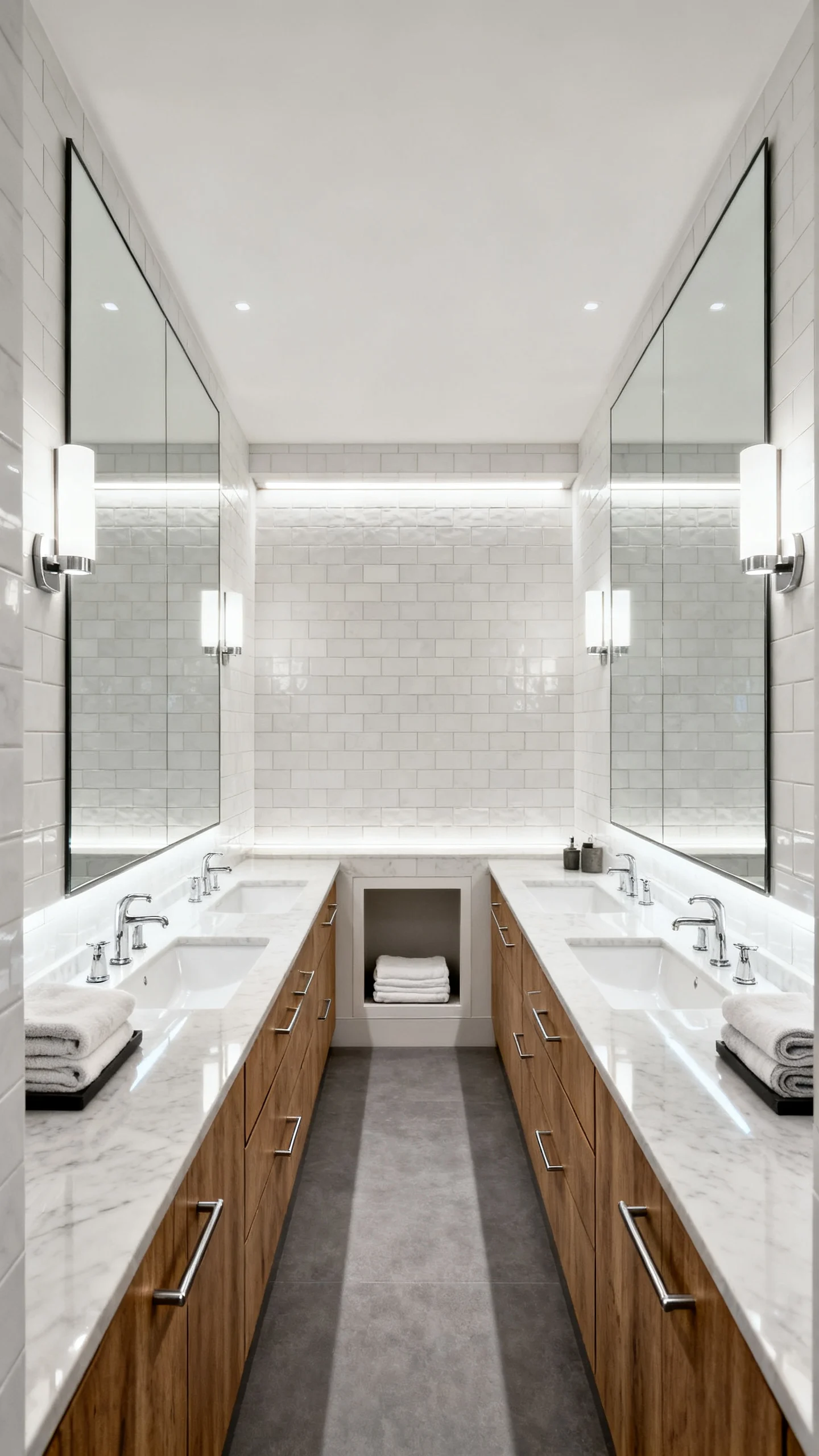
If you’ve got width to play with, a corridor-style layout with a double vanity along one side and a long, uninterrupted walkway can feel incredibly smooth. The mirror becomes a horizontal feature—one long pane with matching sconces spaced like jewelry.
At the end of the “hall,” place the shower (or shower-tub combo) like a destination. This layout feels orderly and chic, especially with matching drawer pulls, a continuous backsplash, and soft, even lighting that keeps the path bright.
Idea 5: The Door-Swing Fix (Pocket Door or Inset Entry Moment)
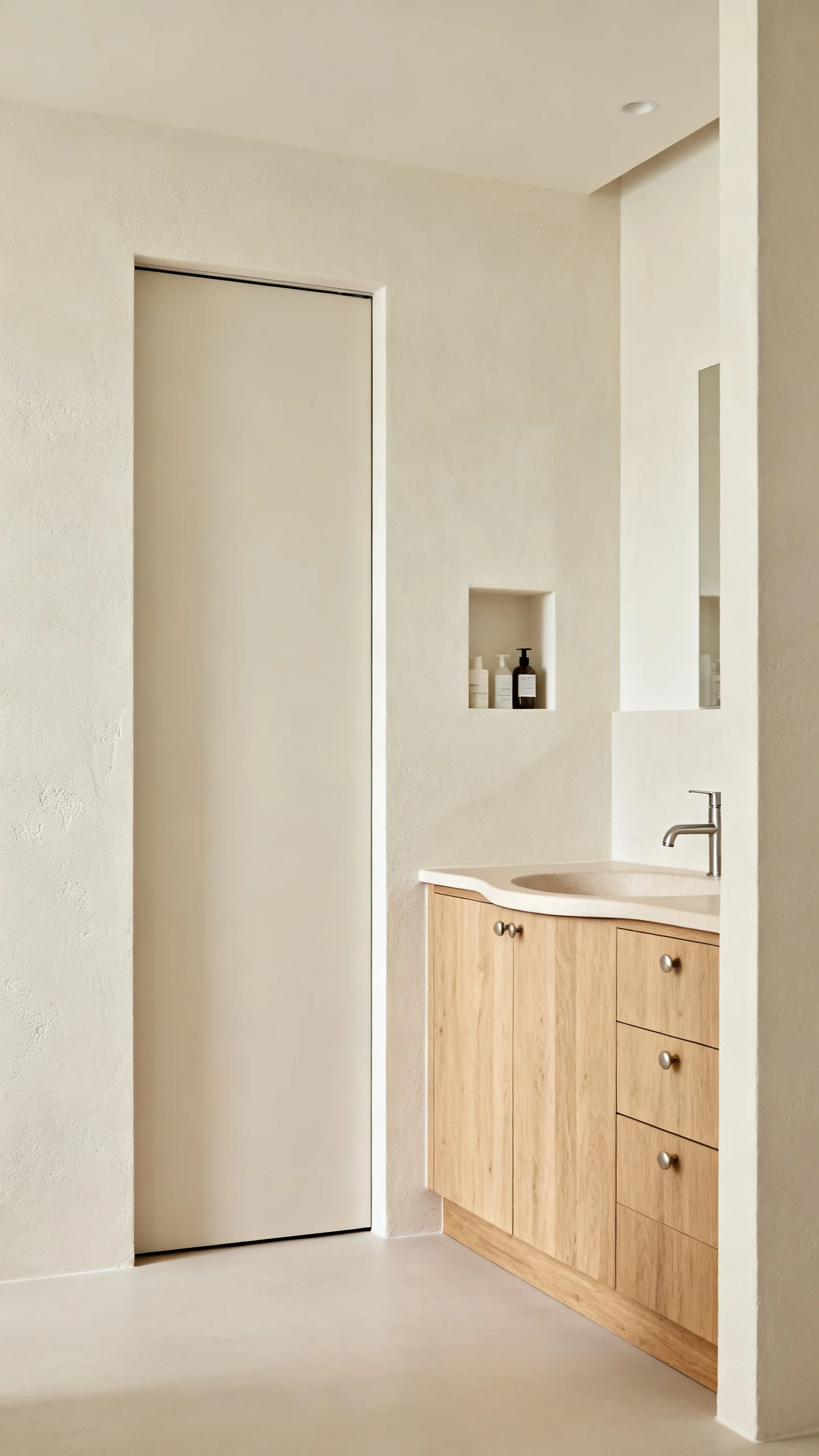
Sometimes better flow is about the entry: a pocket door (or a smart inset entry area) can instantly remove that awkward collision between door swing and vanity corner. The room feels more open the second you step in, with nothing forcing you to sidestep.
Make it look elevated with an intentional “arrival” view—like a sculptural mirror, fluted vanity front, or a small art print under a picture light. It’s a layout move that feels invisible but changes everything.
Idea 6: The L-Shaped Layout (Vanity + Shower Around the Corner)
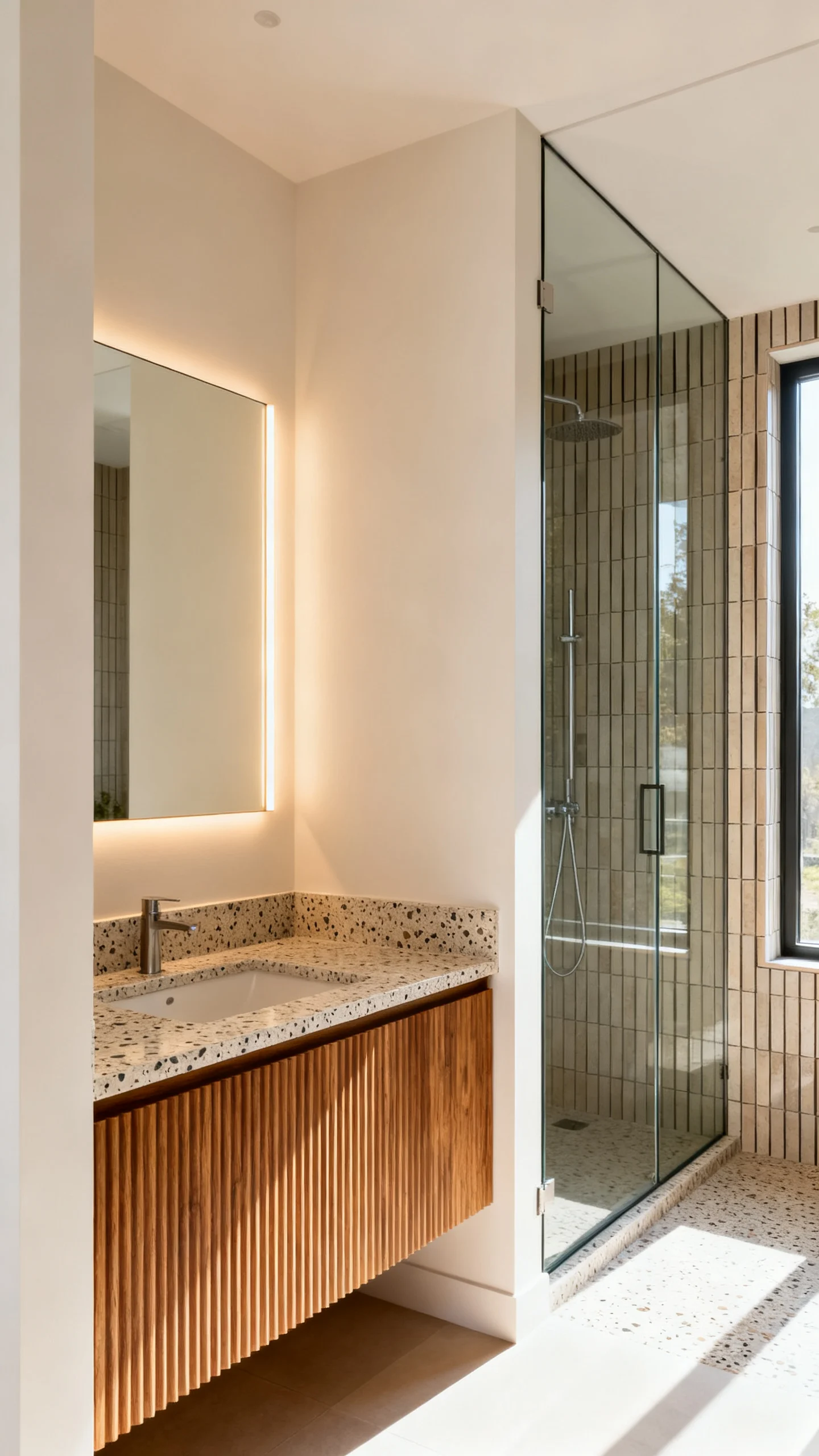
An L-shaped bathroom arrangement is perfect when you want separation without closing anything off. You enter to the vanity zone—bright, reflective, and styled—then turn the corner to find the shower or tub area tucked away for a more private, spa-like feel.
This layout shines with contrast: glossy zellige around the vanity, then a quieter, matte tile in the bathing zone. The turn creates a natural transition, so the bathroom feels like two mini spaces that still flow as one.
Idea 7: The Centerline Statement (Vanity as the First Focal Point)
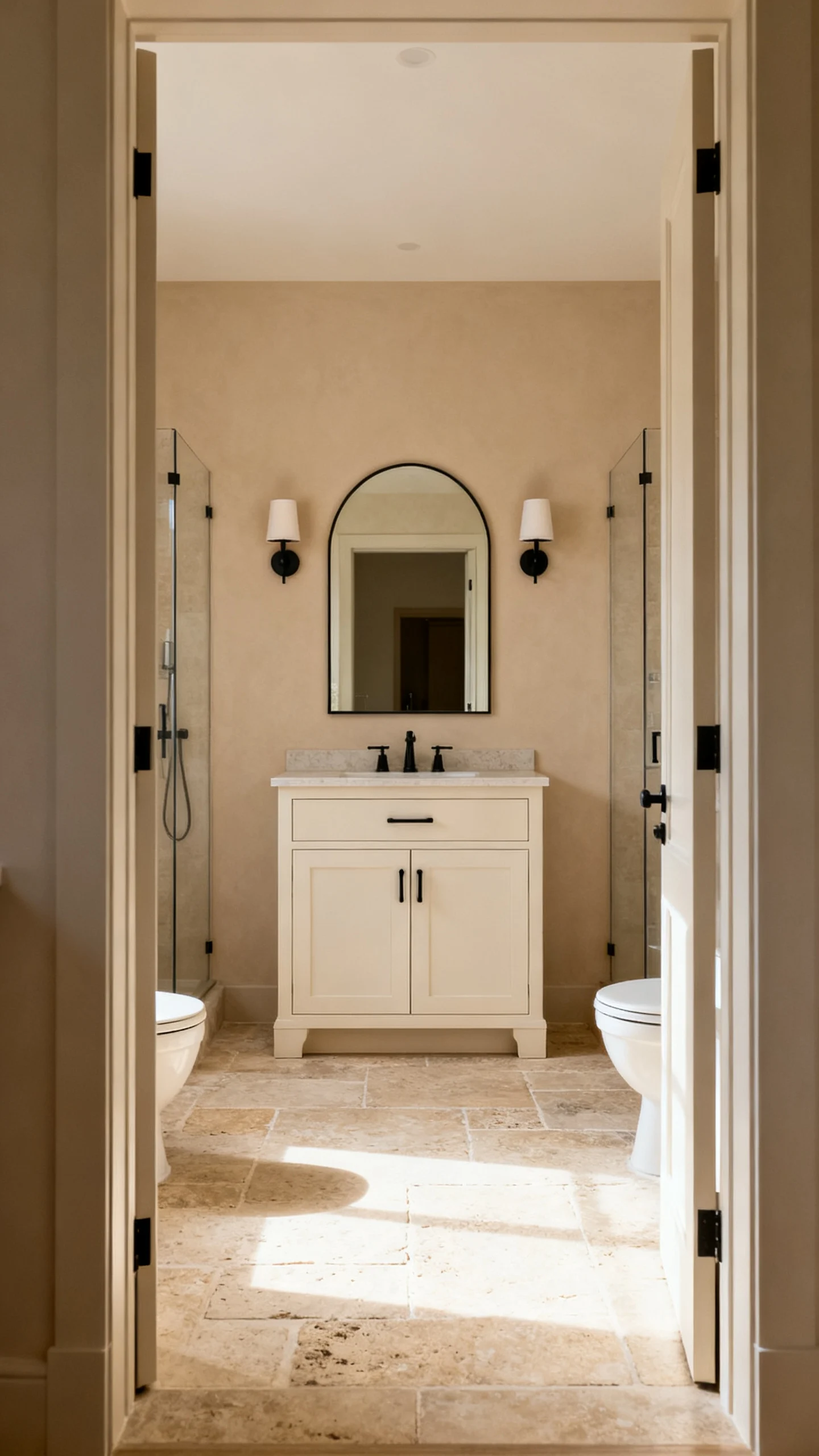
For a bathroom that feels instantly welcoming, place the vanity centered on the wall you see when you enter. That symmetrical focal point creates a sense of calm and makes the layout feel “resolved” from the doorway—especially with a bold mirror shape or a stone backsplash slab.
Then, keep circulation around it clean: shower to one side, toilet discreetly to the other. The space reads balanced, with a natural flow that doesn’t require weaving around fixtures.
Idea 8: The Tub-in-the-Window Moment (Bathing Zone as the Destination)
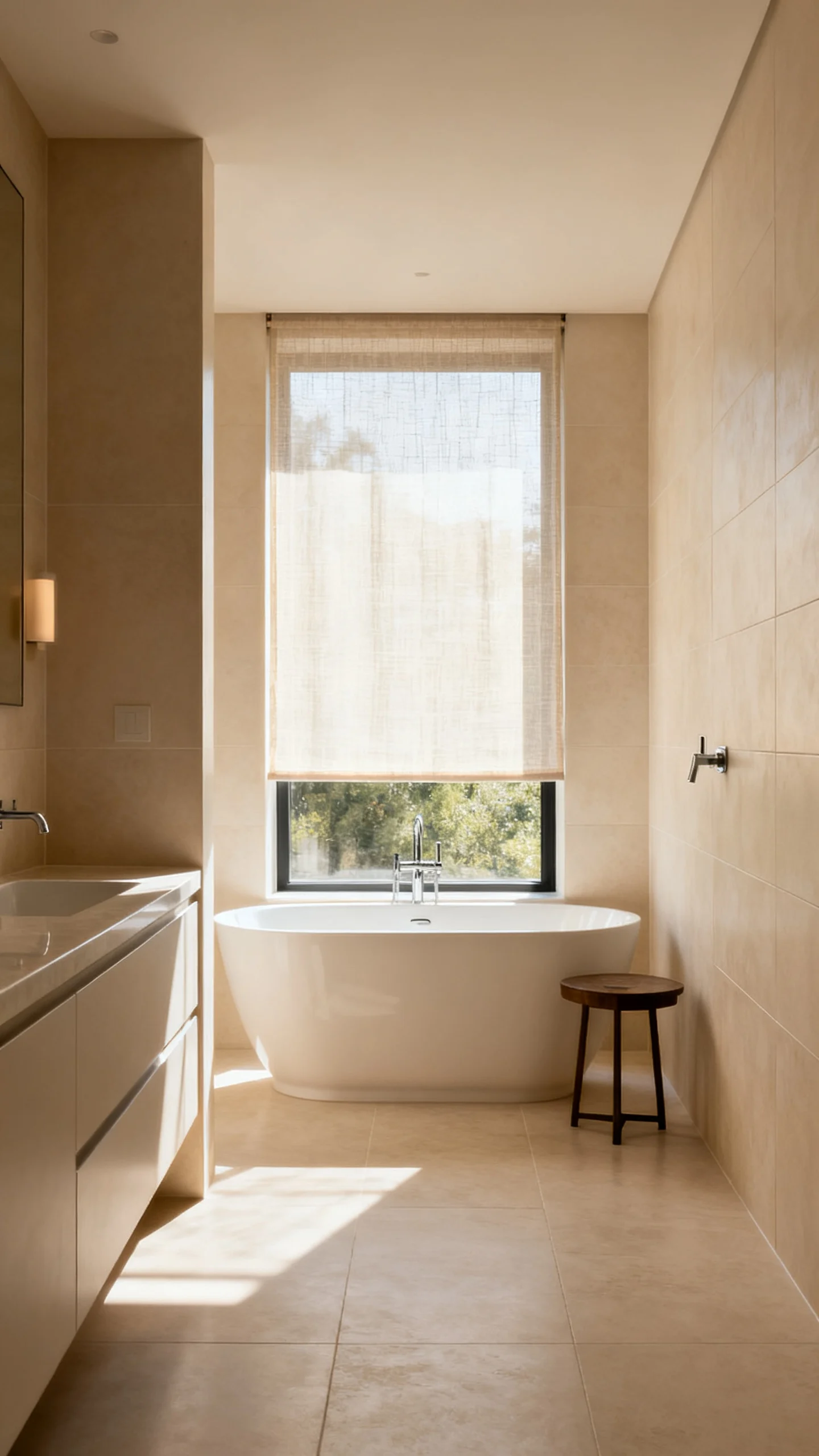
If your remodel includes a tub, try a layout that makes it the end-of-path reward—set under a window or on the far wall so you walk toward it like a mini retreat. The flow feels luxurious: vanity first for daily routines, then bath zone beyond for unwinding.
Style it like a magazine spread: a slim tub deck, a floor-mounted filler, and airy linen curtains. Add a small stool for bath salts and a towel—functional, but visually light so the pathway stays open.
Idea 9: The Compact “Three-in-a-Row” Layout (Small Bath, Big Ease)
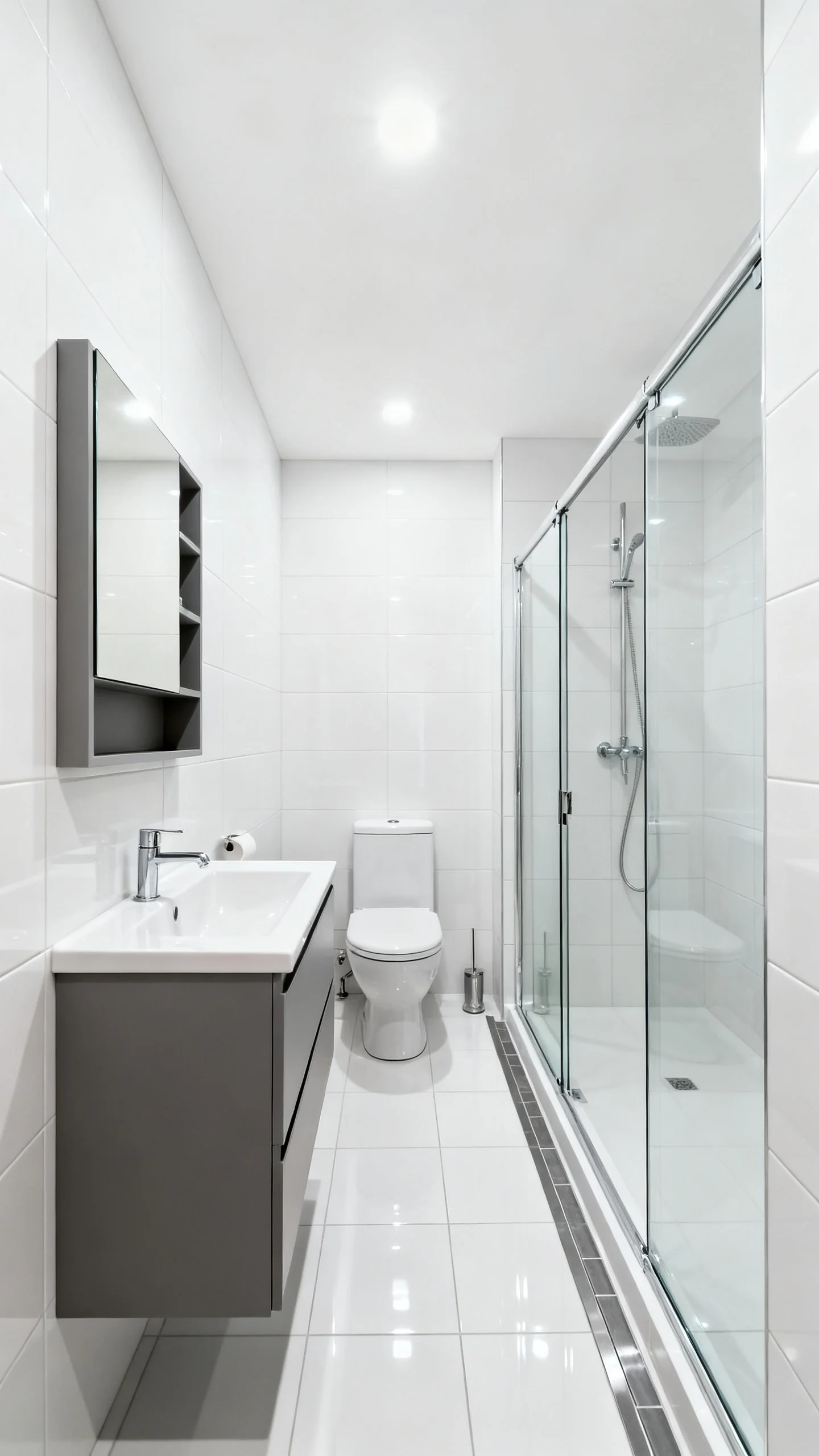
In tighter bathrooms, a linear “three-in-a-row” layout can feel surprisingly spacious: vanity, toilet, and shower aligned along one wall with a clear strip of floor opposite. With the right finishes, it reads crisp and intentional rather than cramped.
Go bright and streamlined—wall-hung vanity, recessed medicine cabinet, and a glass shower enclosure that barely registers. The uninterrupted floor line does the heavy lifting, making the room feel like it breathes.
Idea 10: The Shared Bathroom Split (Two Stations, No Traffic Jam)
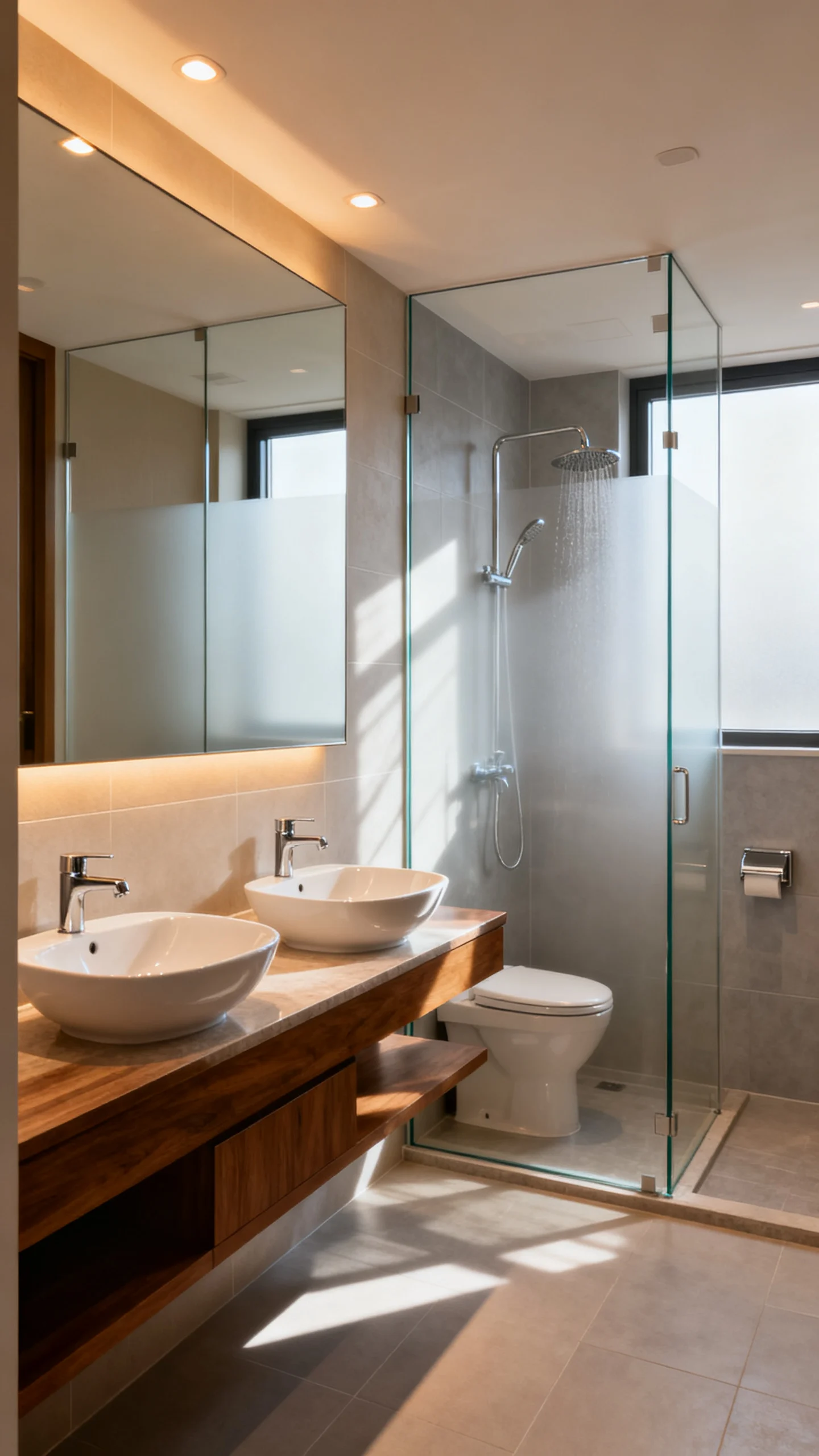
For a bathroom that multiple people use at once, split the layout into two functional stations: a vanity zone outside the wet area, and a shower/toilet zone behind a door or glass partition. The flow is calmer because routines can overlap without stepping on each other.
Keep the look cohesive by repeating materials—same countertop stone, same hardware finish, and matching wall color—so it still feels like one designed space. The layout becomes the secret to the serenity.
FAQ
What bathroom layout feels the most open during a remodel?
Layouts that protect sightlines tend to feel the most open—think a frameless glass shower, a floating vanity, and a clear view to a focal point (like a mirror or a window) rather than a fixture blocking the entry.
How do you improve bathroom flow without changing everything?
Small layout shifts that impact movement make a big difference visually, like changing the shower enclosure to clear glass, repositioning a vanity for a straighter walking path, or creating a more intentional entry view so the room feels less crowded.
Is it better to see the vanity or the shower when you walk in?
Many remodels feel more polished when the vanity is the first focal point because it reads like décor (mirror, lighting, styling). A shower can also be beautiful, but the vanity usually delivers the most “designed” first impression.
What layout idea helps a shared bathroom feel less chaotic?
A split layout with separate zones—an outer vanity area and an inner wet/toilet area—creates smoother circulation and lets more than one person use the bathroom comfortably at the same time.
Which layout detail makes a small bathroom feel less cramped?
Keeping one side visually open helps the most: a wall-hung vanity, a recessed cabinet, and a glass shower enclosure maintain a continuous floor-and-wall read, which makes the room feel wider and easier to move through.