
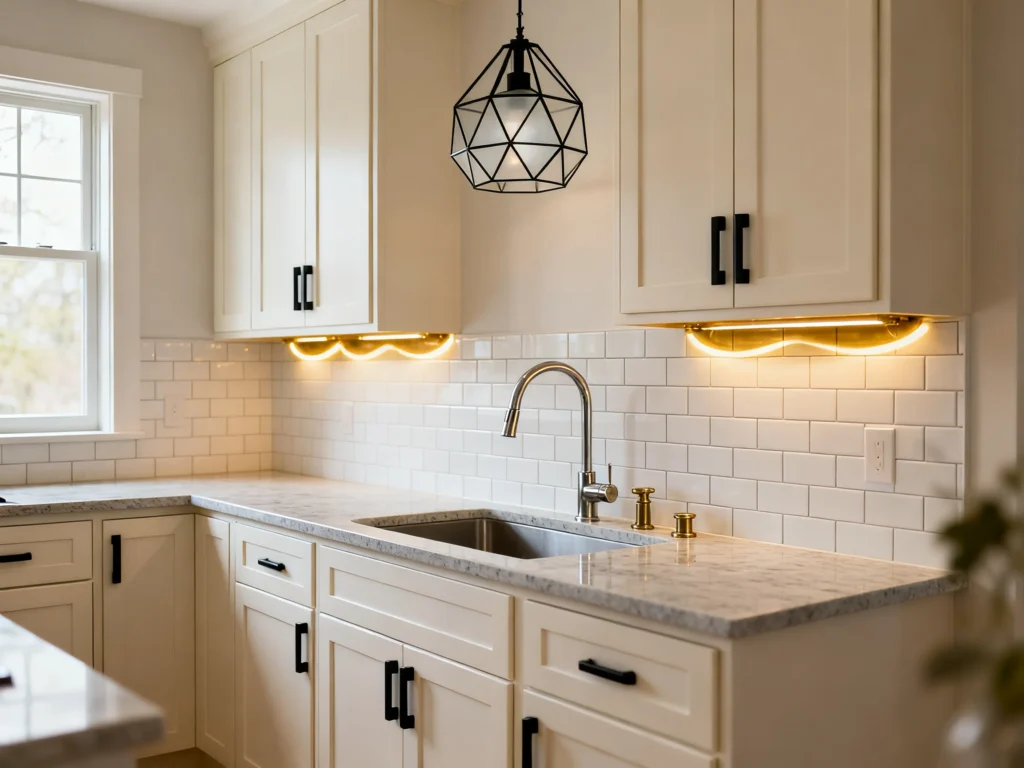
Budget Small Kitchen Remodels That Look Designer
Small kitchens can absolutely read “designer”—even on a tight budget—when you spend in the right places and make smart, high-impact changes. The goal isn’t more stuff; it’s cleaner lines, better function, and cohesive finishes that feel intentional.
Use the tips below to plan a budget-friendly small kitchen remodel that looks custom, photographs beautifully, and works harder every day.
1) Refresh Cabinets the Designer Way: Paint + New Hardware
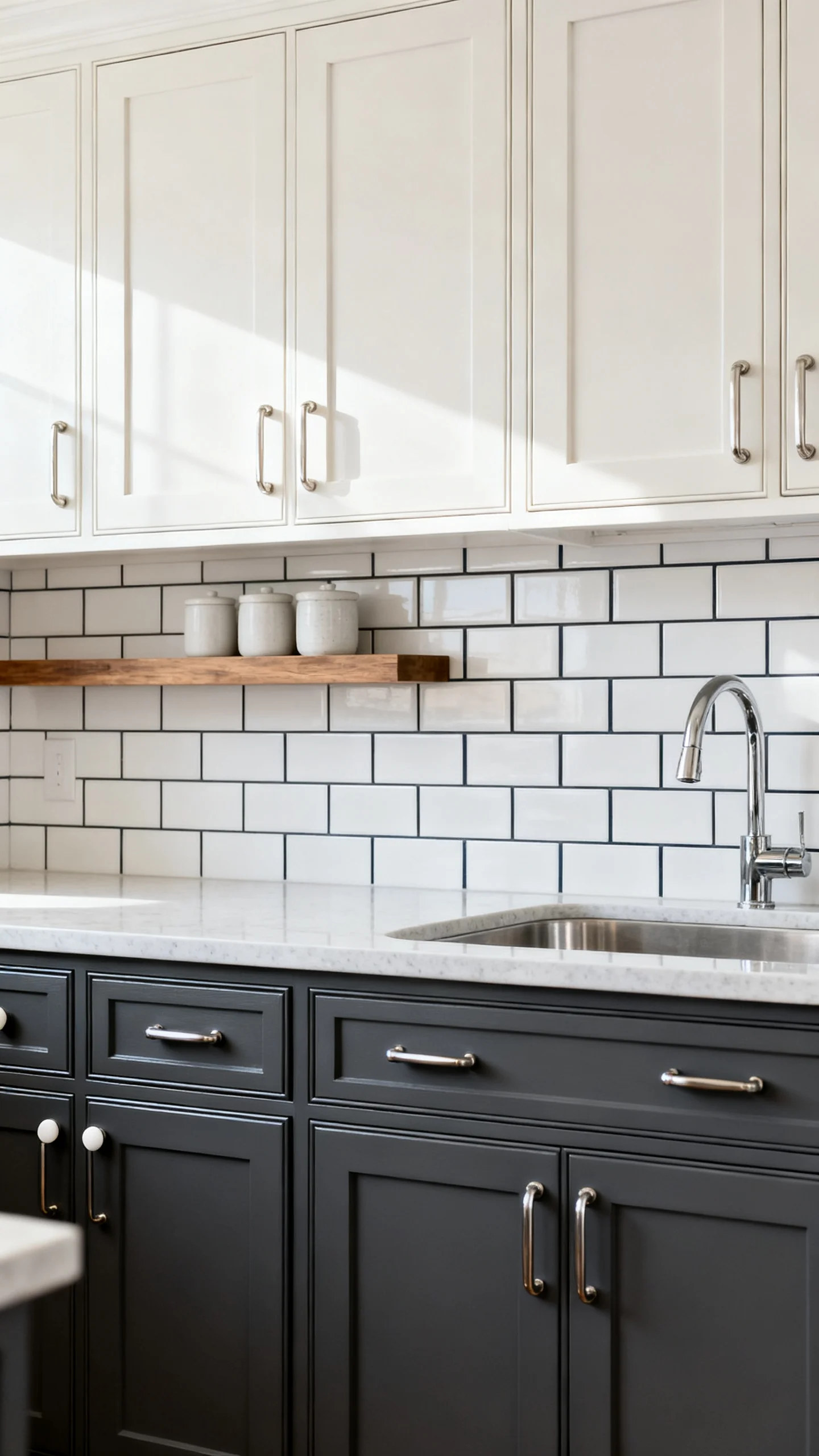
If your cabinet boxes are solid, keep them and upgrade the finish. A smooth, durable cabinet paint job can mimic the look of new custom cabinetry at a fraction of the cost. Use a bonding primer (especially over glossy finishes), then a cabinet-grade enamel in satin or soft semi-gloss for wipeability.
Hardware is the “jewelry.” Stick to one finish (matte black, brushed nickel, or champagne bronze) and repeat it consistently. For a high-end proportion, choose pulls around 1/3 the drawer width (for example, a 12-inch pull on a 36-inch drawer). If you’re switching from knobs to pulls, use a jig for consistent placement and fill old holes carefully for a seamless look.
2) Choose a Simple, Timeless Backsplash (and Install It Strategically)
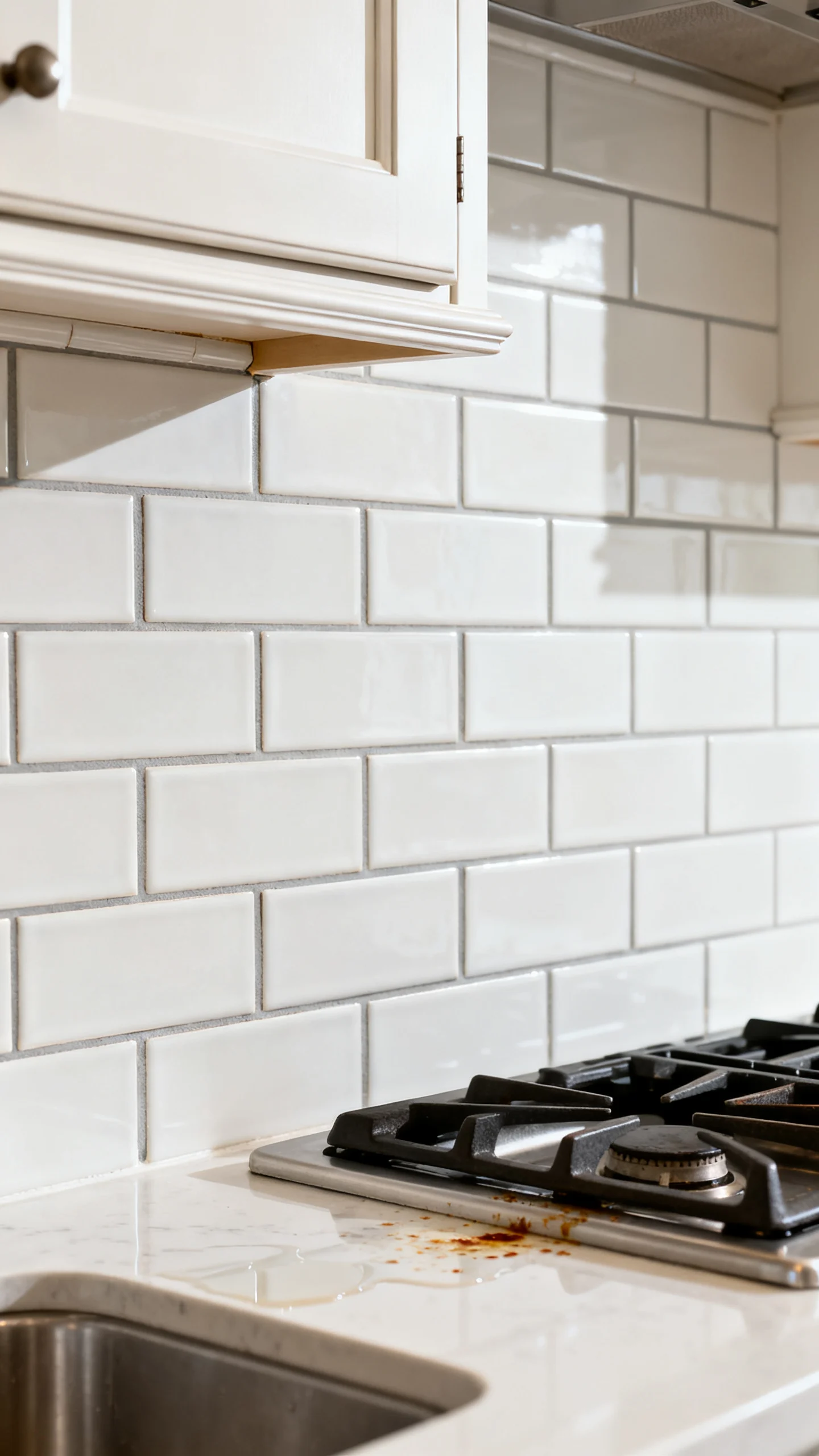
A backsplash is one of the most photographed surfaces in a small kitchen, so pick something that looks classic up close. Budget-friendly winners: 3×12 ceramic subway, 2×8 stacked tile, or porcelain that mimics zellige (without the price tag).
For a designer read, take tile to the underside of upper cabinets and run it to the edge of walls or cabinets—avoid awkward “stops” in the middle of a run. Use a grout color that blends (white tile + warm light gray grout is forgiving), and keep grout joints consistent (often 1/16–1/8 inch depending on tile). Clean lines beat busy patterns in a compact space.
3) Upgrade One “Anchor” Countertop Area Instead of Everything
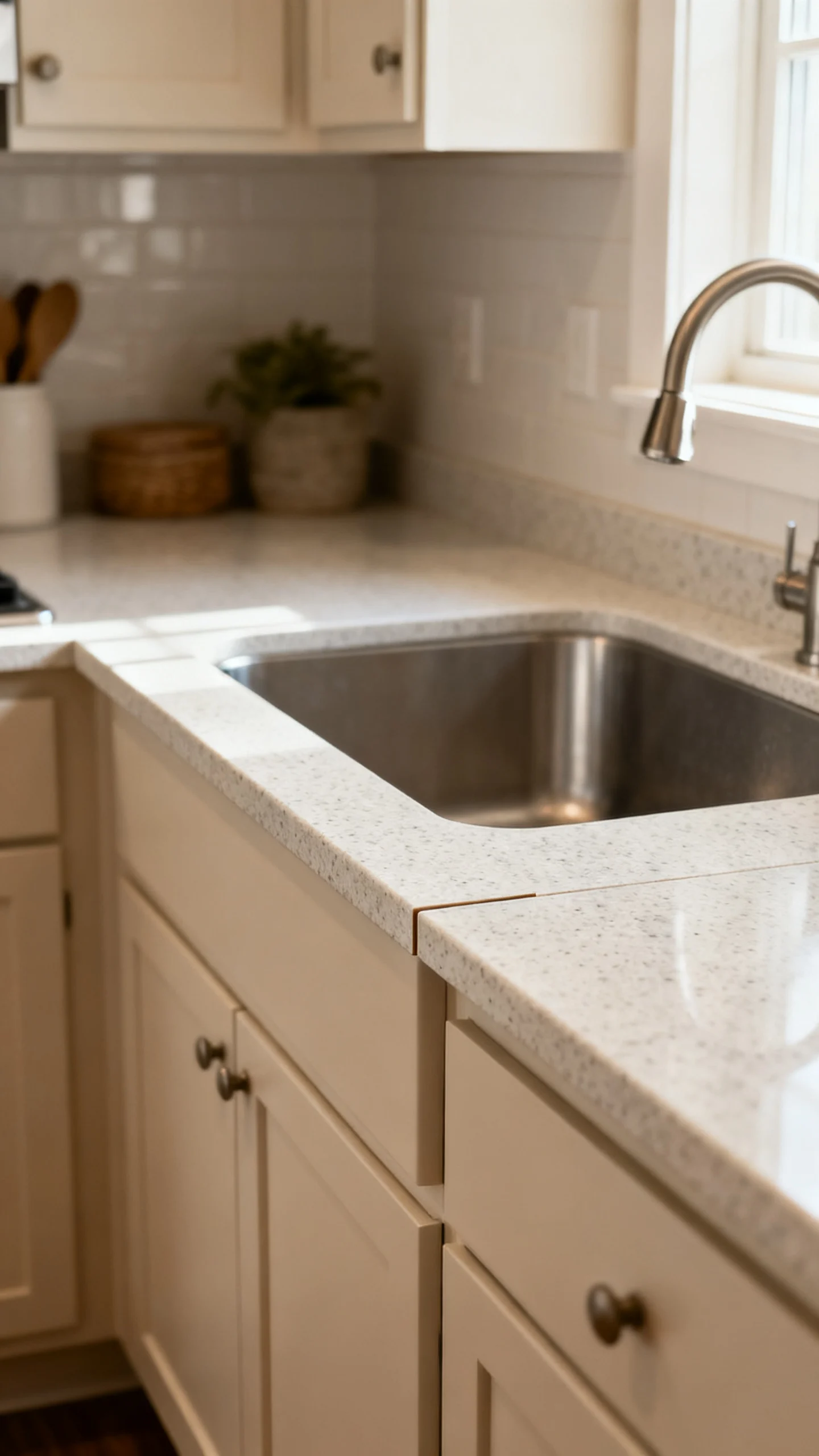
If replacing all countertops is out of reach, focus on the area your eye lands on first—often the sink run or the main prep zone. A single-slab look can be faked with smart seams: ask your fabricator to place seams where they’re least visible (near corners, not across the focal point).
Budget materials with designer payoff: quartz remnants for small kitchens, butcher block (sealed well), or durable laminate with a modern edge profile. If you go butcher block, plan for a water-safe finish and keep it away from heavy splash zones unless you’re committed to maintenance.
4) Replace the Sink and Faucet for Instant “New Kitchen” Energy
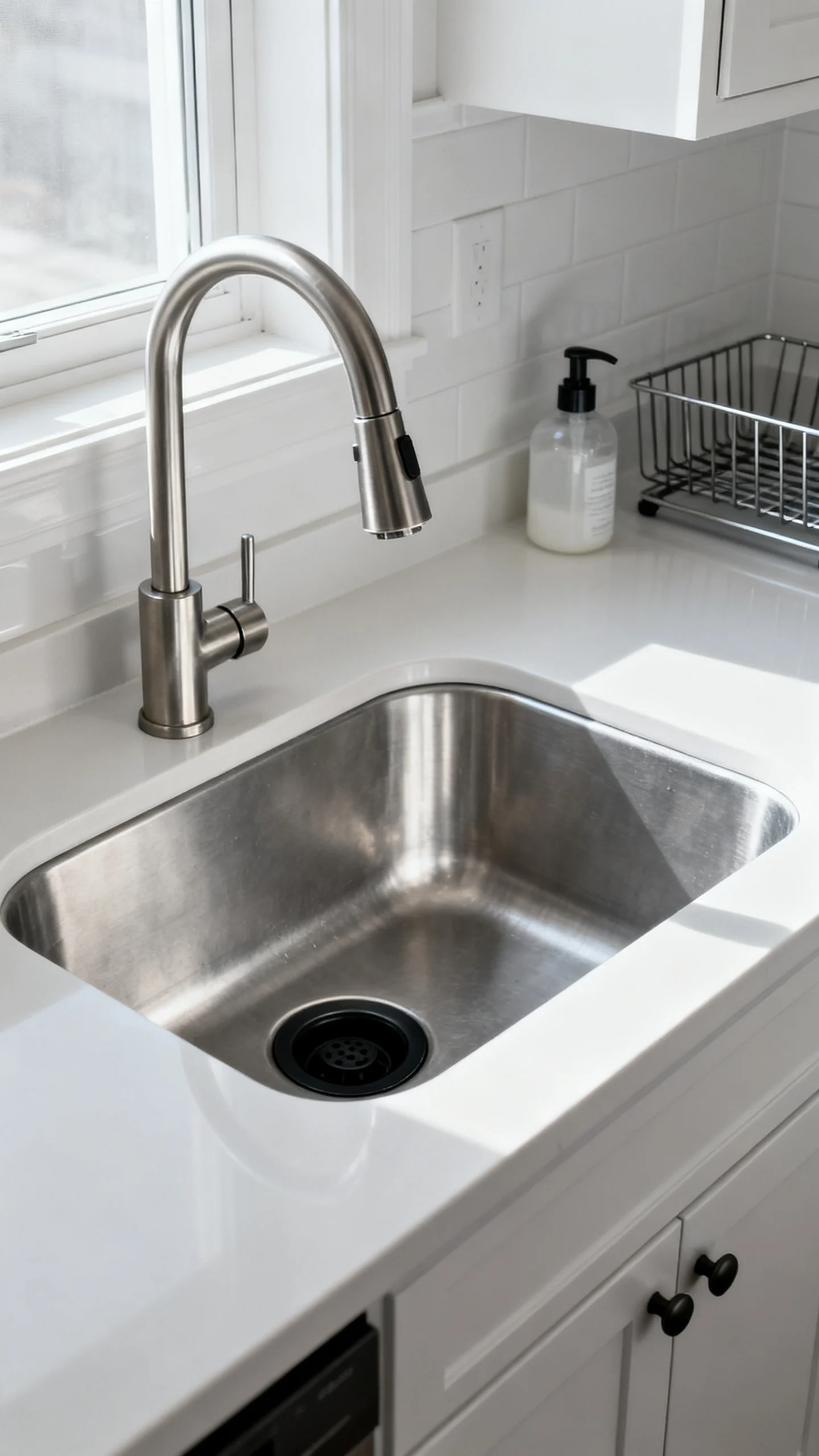
A new faucet is one of the fastest ways to make a kitchen look renovated. A high-arc pull-down in a matching metal finish looks current and improves daily function. Pair it with a sink that fits your cabinet base: many small kitchens do great with a 24–27 inch single-bowl sink for sheet pans and big pots.
Check clearances before buying: make sure the faucet height won’t hit a window ledge or low upper cabinet, and confirm the sink depth won’t interfere with plumbing in a tight base cabinet. If you can’t replace the sink, upgrade the drain, strainer, and disposer button/air switch for a subtle “new build” feel.
5) Use Under-Cabinet Lighting to Create a Layered, High-End Glow
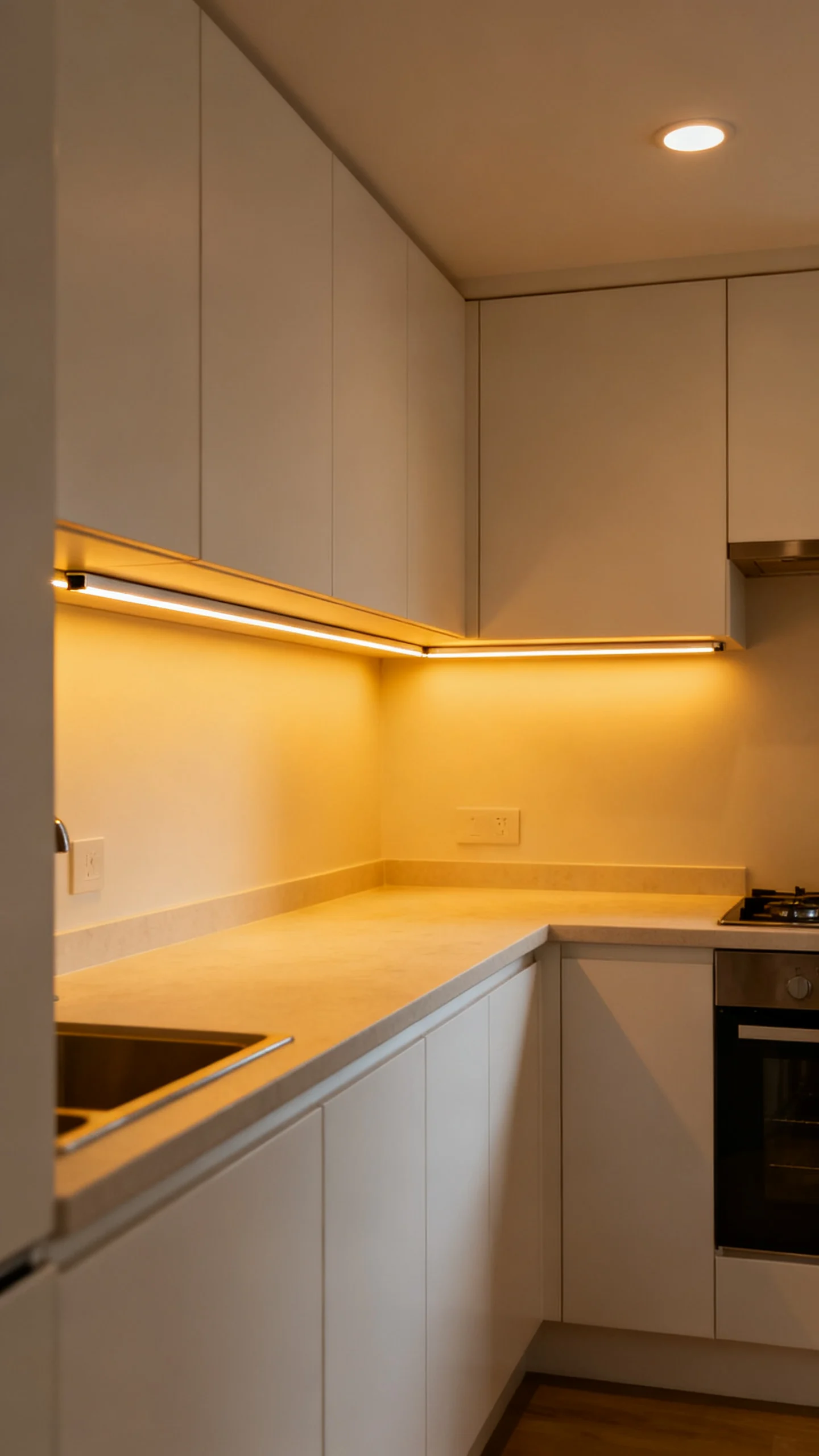
Designer kitchens rarely rely on one ceiling light. Under-cabinet lighting makes even modest finishes look elevated because it adds depth and eliminates harsh shadows on countertops. LED tape lights in an aluminum channel (with a diffuser) look much more custom than visible puck lights.
Choose a warm, flattering color temperature—2700K to 3000K is ideal for most kitchens. If you’re remodeling, have an electrician add a dedicated switch; if not, plug-in kits can still look clean when cords are routed neatly. Place lighting toward the front of the cabinet (not the back) so it washes the counter evenly.
6) Optimize Layout with Micro-Moves (Not a Full Tear-Out)
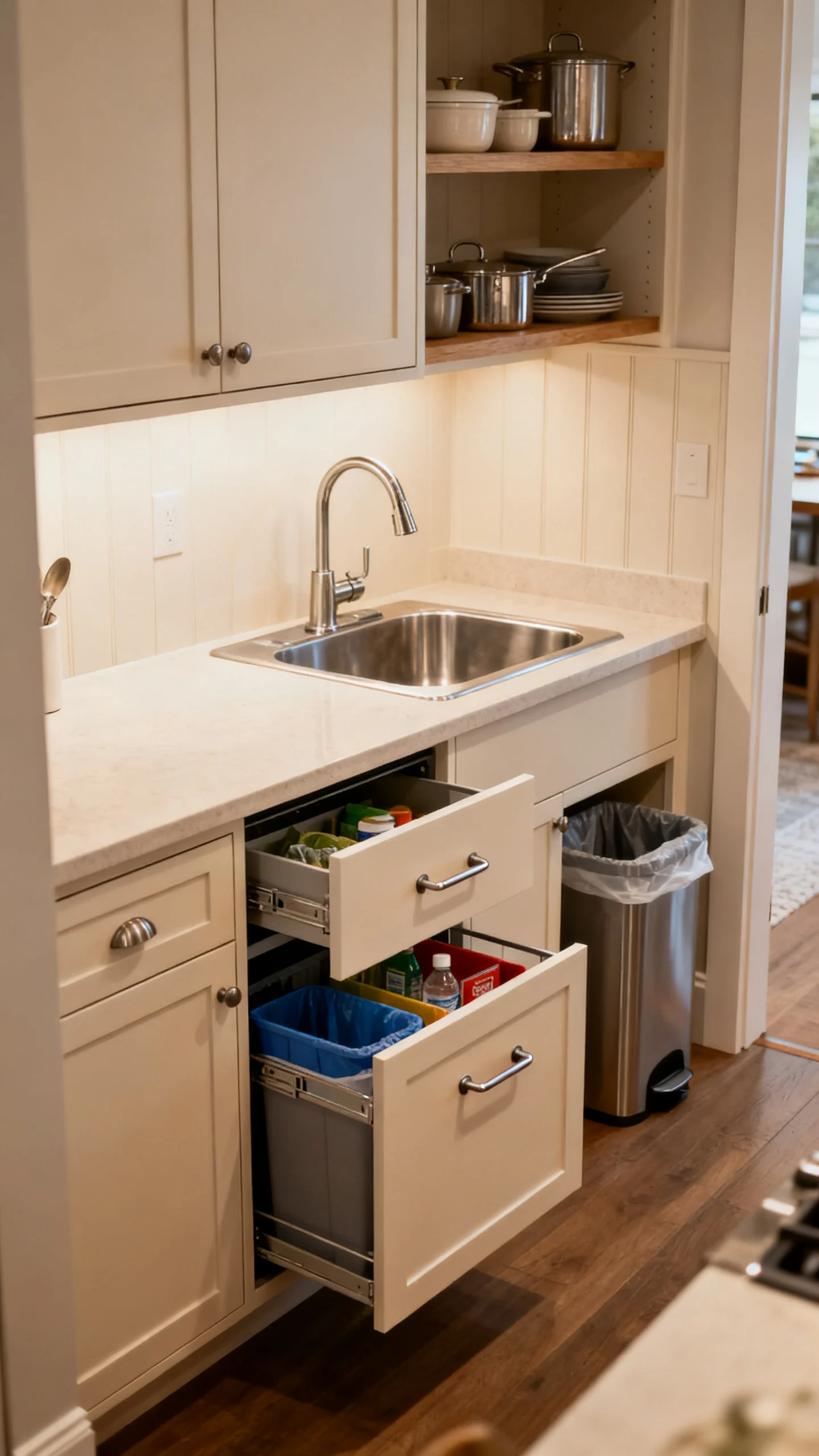
In small kitchen remodels, tiny layout shifts can feel like a big renovation without moving walls. Consider swapping a hinged door for a drawer base, narrowing filler panels to gain a few inches, or relocating the trash pull-out next to the sink (where it belongs).
Keep clearances comfortable: aim for about 36 inches for a one-cook walkway and 42 inches if two people often pass through. If you’re adding an island in a small kitchen, measure carefully—an oversized island can make the whole room feel cramped, no matter how pretty it is.
7) Add “Custom” Details: Panels, Light Rails, and Trim That Look Built-In
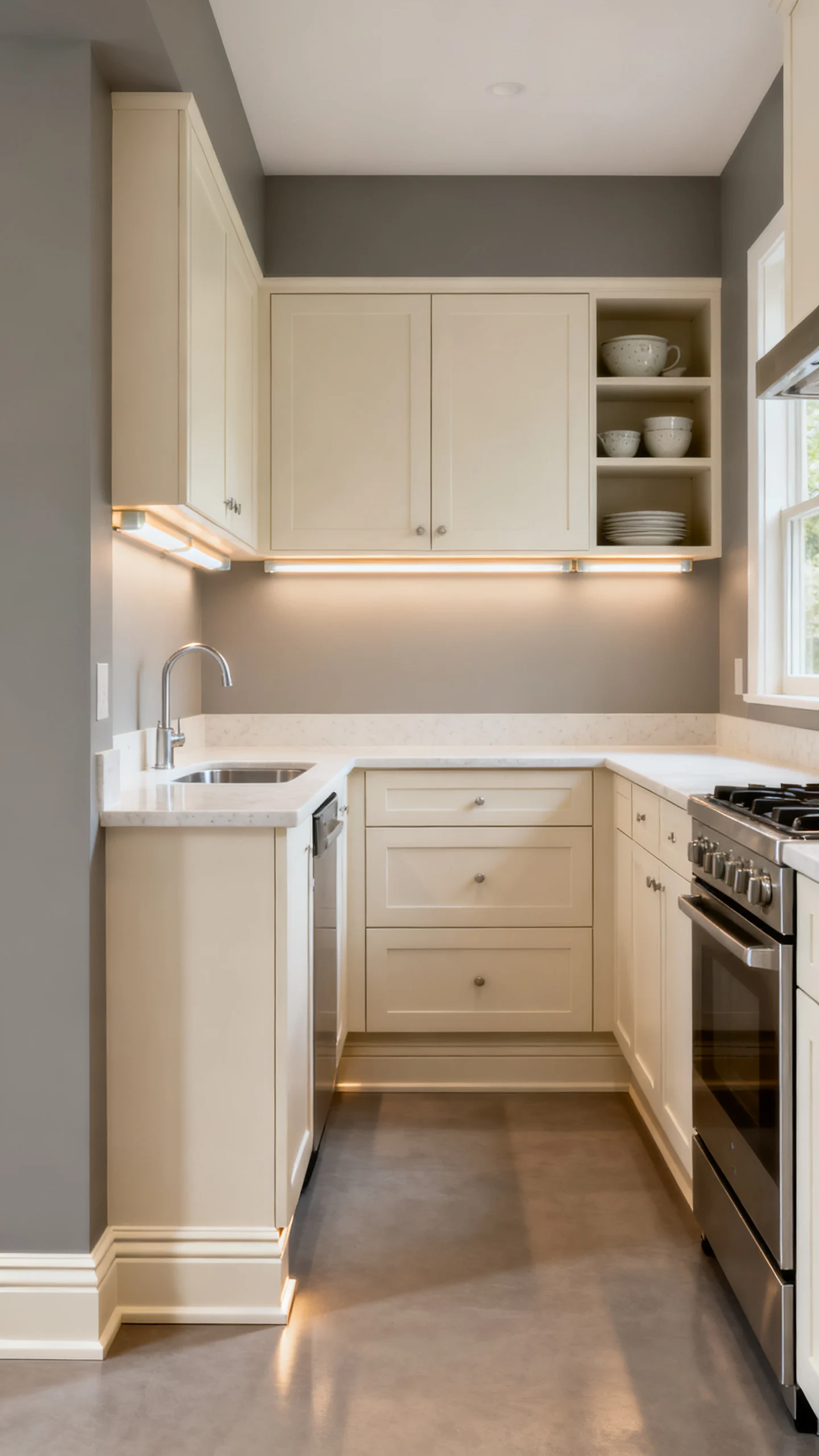
Small kitchens look more expensive when cabinets appear integrated rather than “dropped in.” Affordable upgrades include end panels on exposed cabinet sides, a simple light rail under uppers to hide under-cabinet lighting, and filler panels scribed to the wall for a tighter fit.
For an instant designer move, take cabinets to the ceiling if possible—either by adding a stacked top cabinet, a simple soffit-style extension, or finished trim that closes the gap. That dead space above uppers collects dust and screams “builder.” Closing it in reads custom and makes the kitchen feel taller.
8) Pick One Cohesive Metal Finish (and Repeat It Like a Pro)
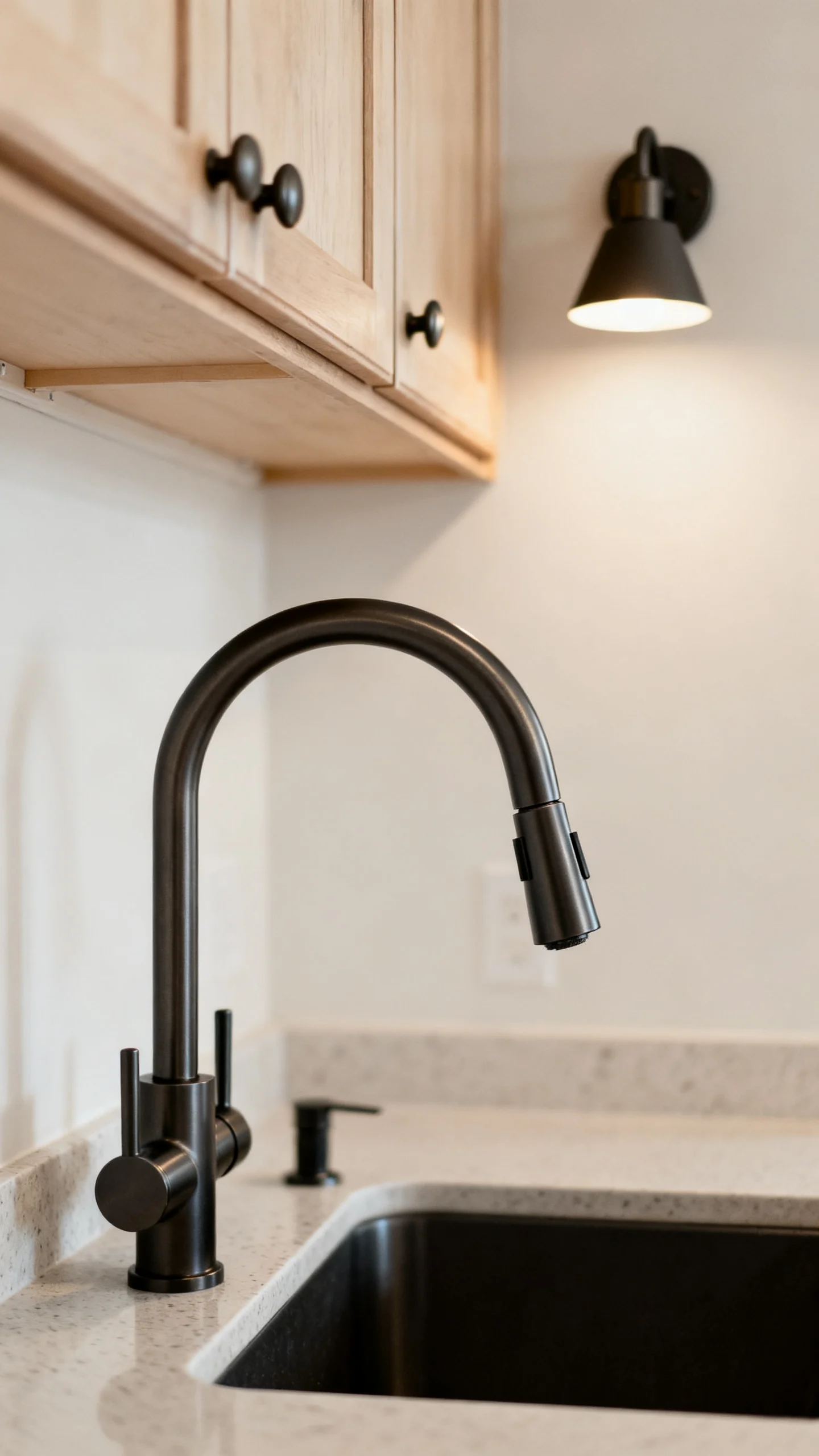
Mixing finishes can be gorgeous, but in a small kitchen on a budget, cohesion looks more expensive. Choose one dominant finish for faucet, cabinet hardware, and lighting. If you want a second metal, use it sparingly (for example: stainless appliances + brushed nickel hardware).
Also watch undertones: warm metals (brass/champagne bronze) pair well with creamy whites and warm woods; cooler metals (chrome/brushed nickel) shine with crisp whites and gray-leaning surfaces. Consistency is what makes the remodel look intentional—even if you’re working with off-the-shelf pieces.
9) Choose a Durable, Design-Forward Floor Without Blowing the Budget
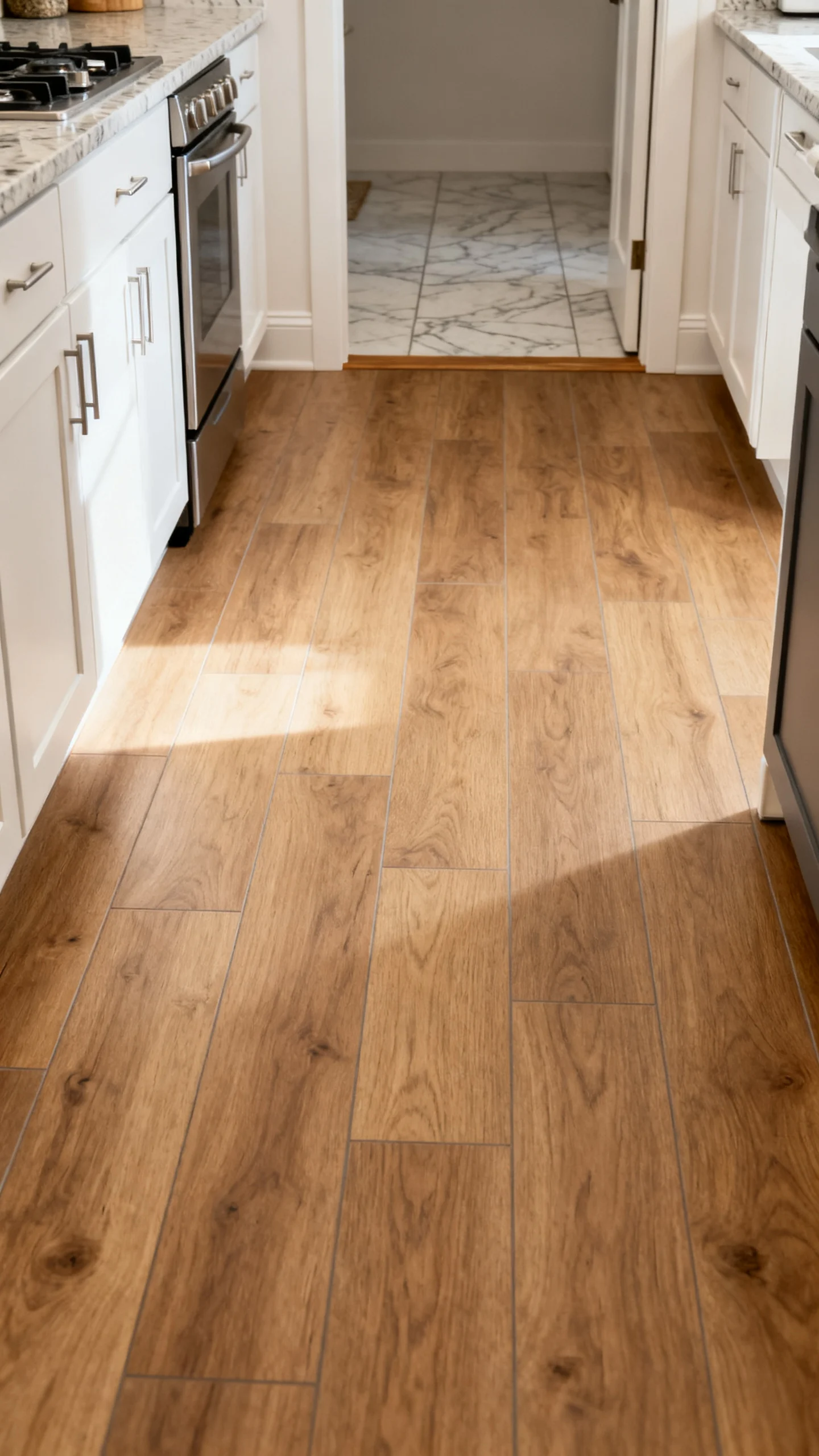
Flooring sets the tone. If your current floor is dated or damaged, a replacement can make the entire kitchen look “done.” Budget-friendly options with designer appeal include luxury vinyl plank (LVP) in a natural oak tone, or porcelain tile that convincingly mimics stone or wood.
For a small kitchen, fewer seams and a quieter pattern usually look more upscale. If you’re using planks, consider a wider plank (often 7 inches+) for a modern feel, and lay it in a direction that visually lengthens the space. Prioritize water resistance and a wear layer that can handle kitchen traffic.
10) Spend Where It Shows: Statement Lighting and a Clean Vent Solution
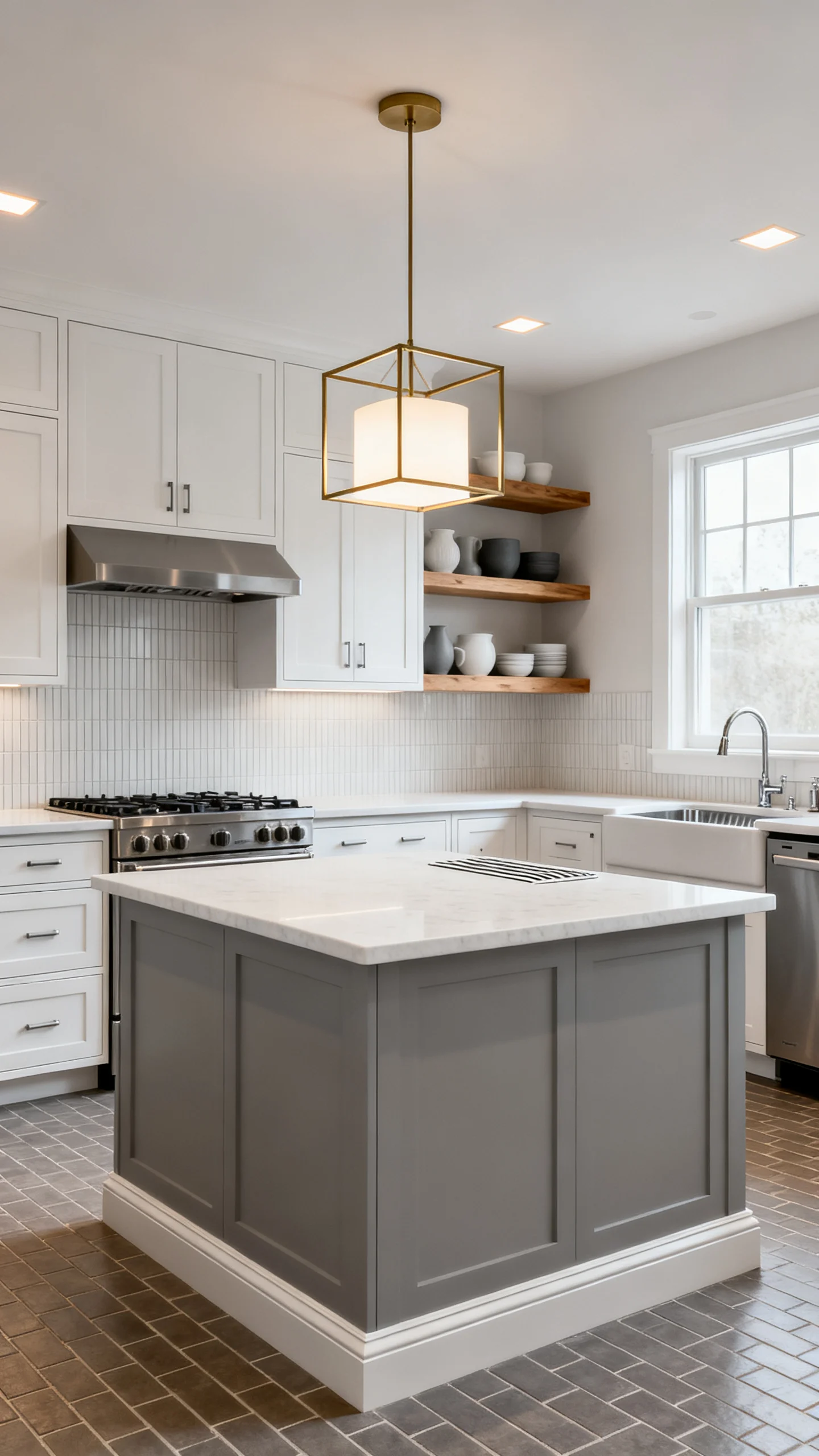
One standout light fixture can make a budget kitchen look curated. In a small space, choose a fixture with strong shape but the right scale—too large overwhelms. If you have a low ceiling, a semi-flush or compact pendant keeps sightlines open while still feeling special.
Also, don’t ignore the vent hood area. If you have a microwave over the range that can’t move, make it look intentional with a simple backsplash detail behind it and matching trim lines. If you can upgrade, a slim hood plus a small open shelf or tidy upper cabinets can create that airy “designer kitchen” moment without a full renovation.
FAQ
What’s the best “bang for your buck” in a small kitchen remodel?
Cabinet refresh (paint or reface) plus new hardware and under-cabinet lighting usually delivers the biggest visual change for the least cost. It updates the largest surfaces and adds that layered, high-end glow that makes everything else look better.
How do I make builder-grade cabinets look custom on a budget?
Add end panels on exposed sides, close the gap to the ceiling with a trim solution, and use consistent hardware in a modern size. A clean backsplash run and under-cabinet lighting also help cabinets look intentional instead of stock.
Is it cheaper to keep my existing kitchen layout?
Yes—keeping plumbing and major electrical in place typically saves the most money. Instead, improve function with micro-changes like adding drawers, optimizing trash storage near the sink, and upgrading lighting and surfaces that are most visible.
What countertop material looks designer but stays affordable?
Quartz remnants can be ideal in small kitchens, and modern laminates can look surprisingly elevated with a sleek edge profile. Butcher block can also look high-end if it’s sealed properly and used away from heavy water exposure.
What lighting color temperature is best for a designer-looking kitchen?
Most kitchens look best at 2700K to 3000K for a warm, inviting feel that still reads clean. Pair under-cabinet task lighting with a ceiling fixture for layered light that flatters finishes and improves usability.