
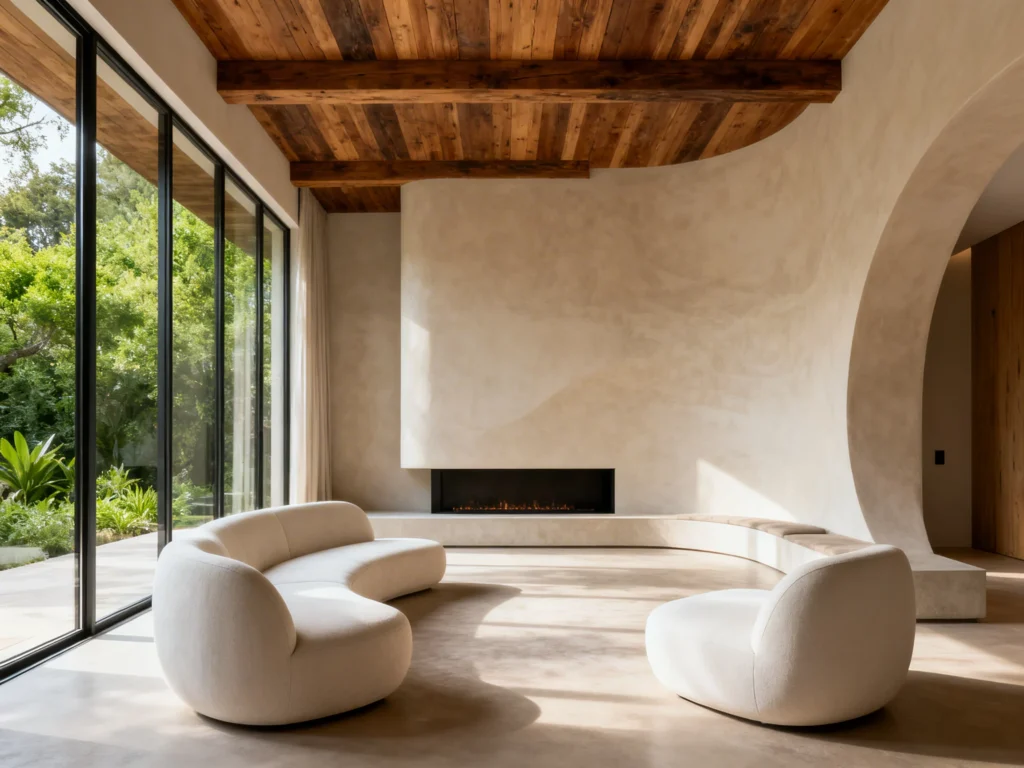
Residential Architecture Design Trends Shaping Modern Homes
Today’s most inspiring residential architecture trends aren’t just about how a home looks from the street—they’re about how it feels where life actually happens. The modern living room is becoming the clearest canvas for these shifts, blending structure, light, material, and mood into spaces that feel intentional and effortlessly livable.
Below, explore ten Pinterest-ready living room visions that translate architecture-forward trends into distinct, scroll-stopping scenes—each with its own silhouette, texture story, and atmosphere.
Idea 1: Sunken Conversation Living Room with Sculpted Steps
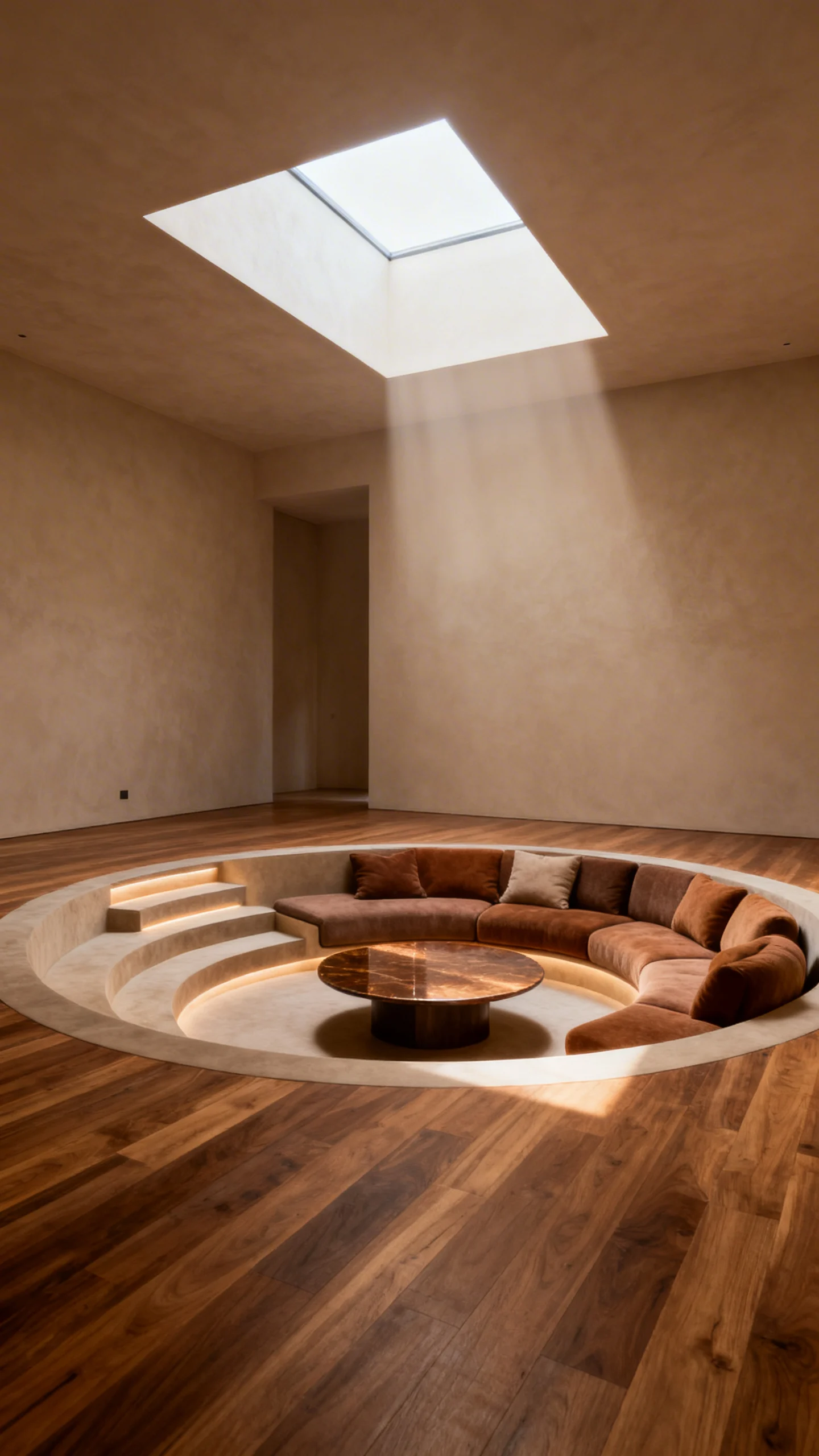
A modern revival of the “conversation pit,” this living room trend is pure architectural drama: a subtly lowered lounge zone wrapped in wide, built-in steps. The floor change creates an instant sense of intimacy, like the room is gently holding your seating arrangement in place.
Picture creamy plaster walls, a low-profile sectional in warm oatmeal bouclé, and a monolithic coffee table in honed travertine. Add recessed perimeter lighting at the step edge, and the whole space glows like a design hotel—soft, grounded, and irresistibly social.
Idea 2: Wall-to-Wall Glass with Disappearing Frames
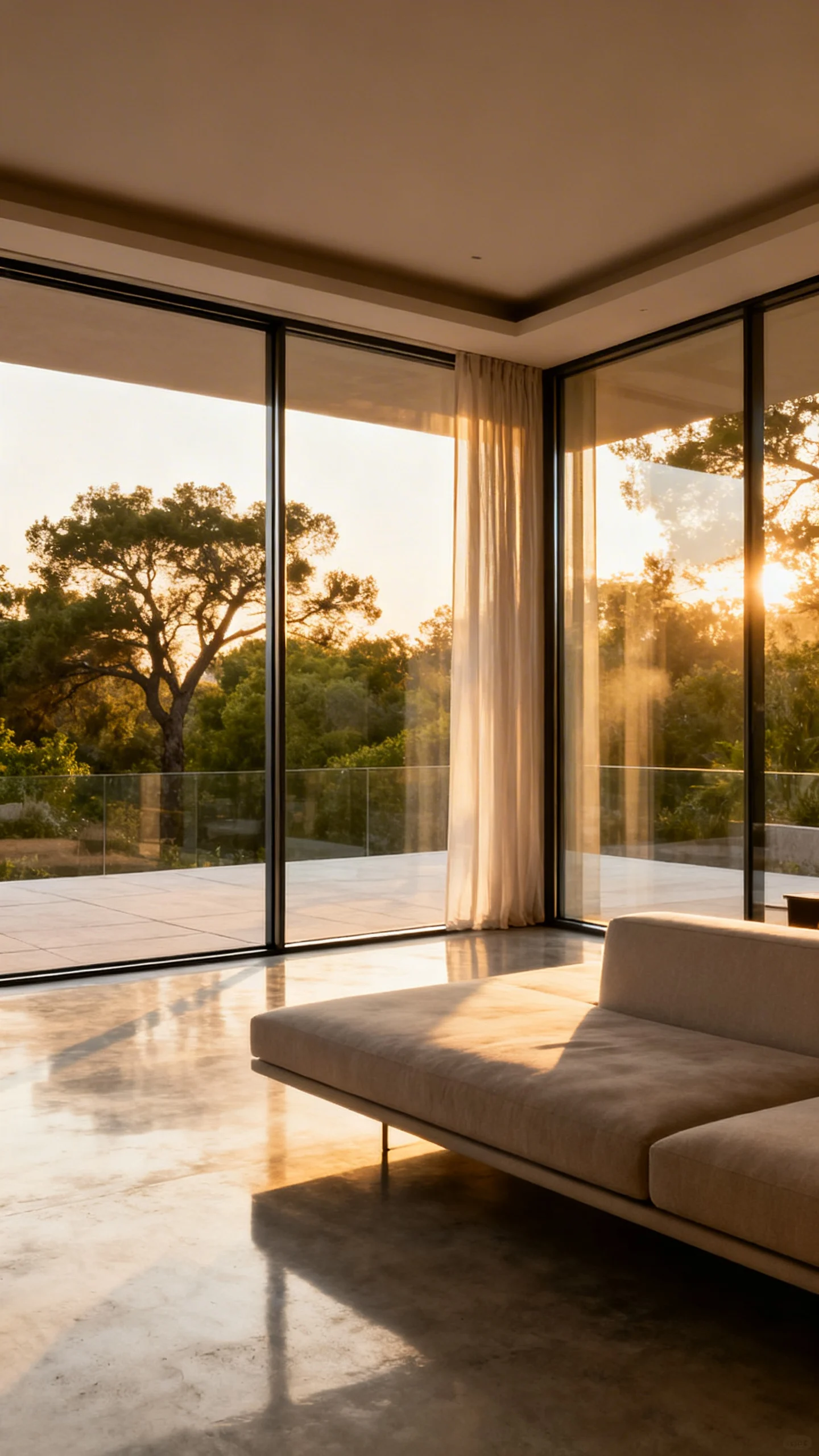
One of the biggest residential architecture trends shaping modern homes is the push toward nearly invisible barriers between indoors and out. In the living room, that translates to expansive glazing with ultra-thin frames—so the view becomes the artwork.
The vibe is airy and cinematic: a floating sofa in linen, a slim black fireplace ribbon, and a ceiling that seems to hover above the landscape. Keep the palette quiet—stone, oak, and matte black—so the architecture and the light do the talking.
Idea 3: Curved Architecture Moments (Arches, Radius Corners, and Soft Lines)
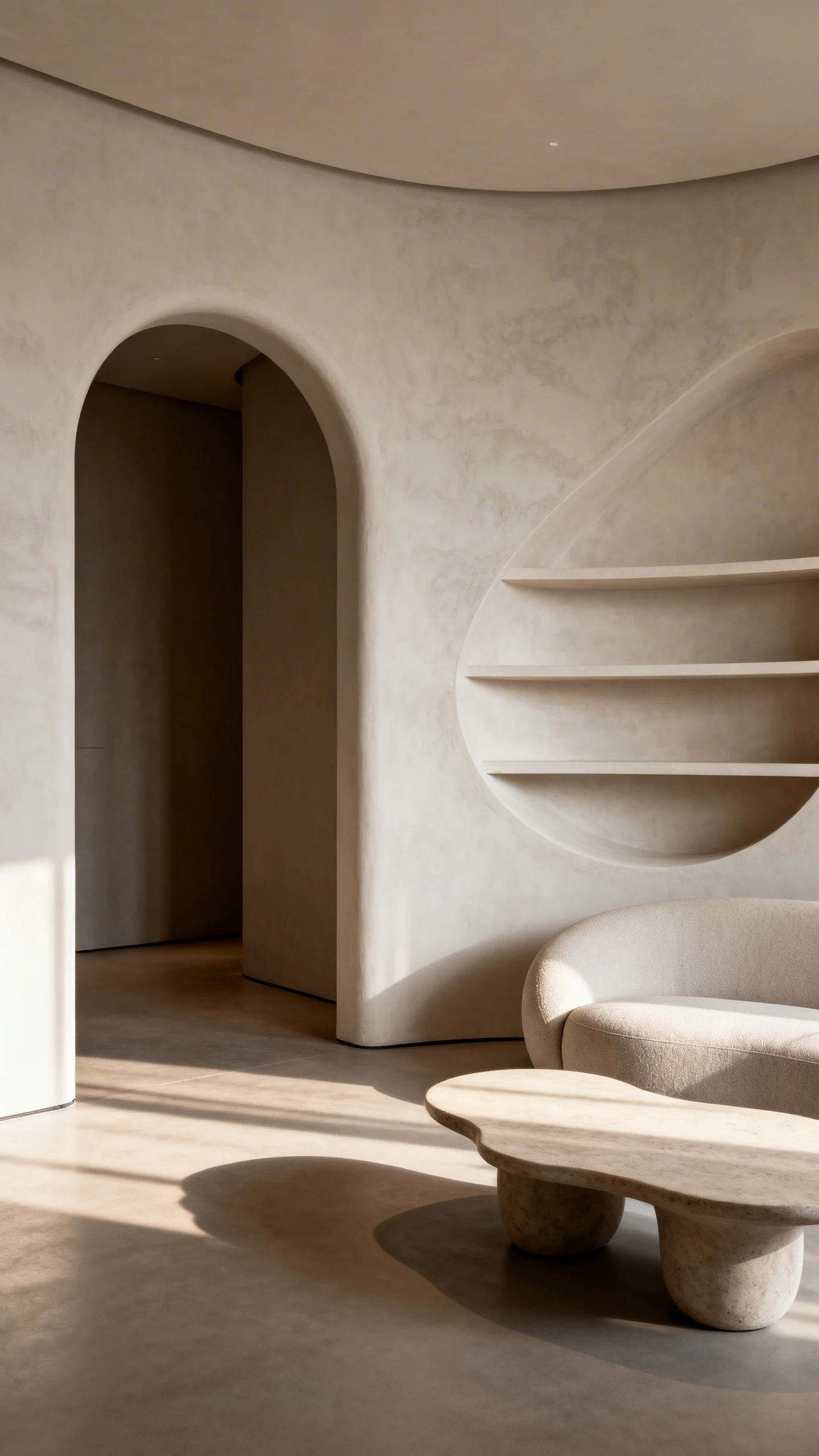
Straight lines are making room for softer geometry. A living room with radius corners, arched openings, or a curved feature wall feels instantly more calming—like the space is designed to move you through it gently rather than direct you.
Imagine a curved plaster media wall, a rounded niche with stacked books and ceramics, and a circular rug anchoring sculptural seating. Finish it with a globe pendant or paper lantern lighting for a modern, cloud-like softness that still reads architectural.
Idea 4: Exposed Structure as Decor (Beams, Columns, and Honest Materials)
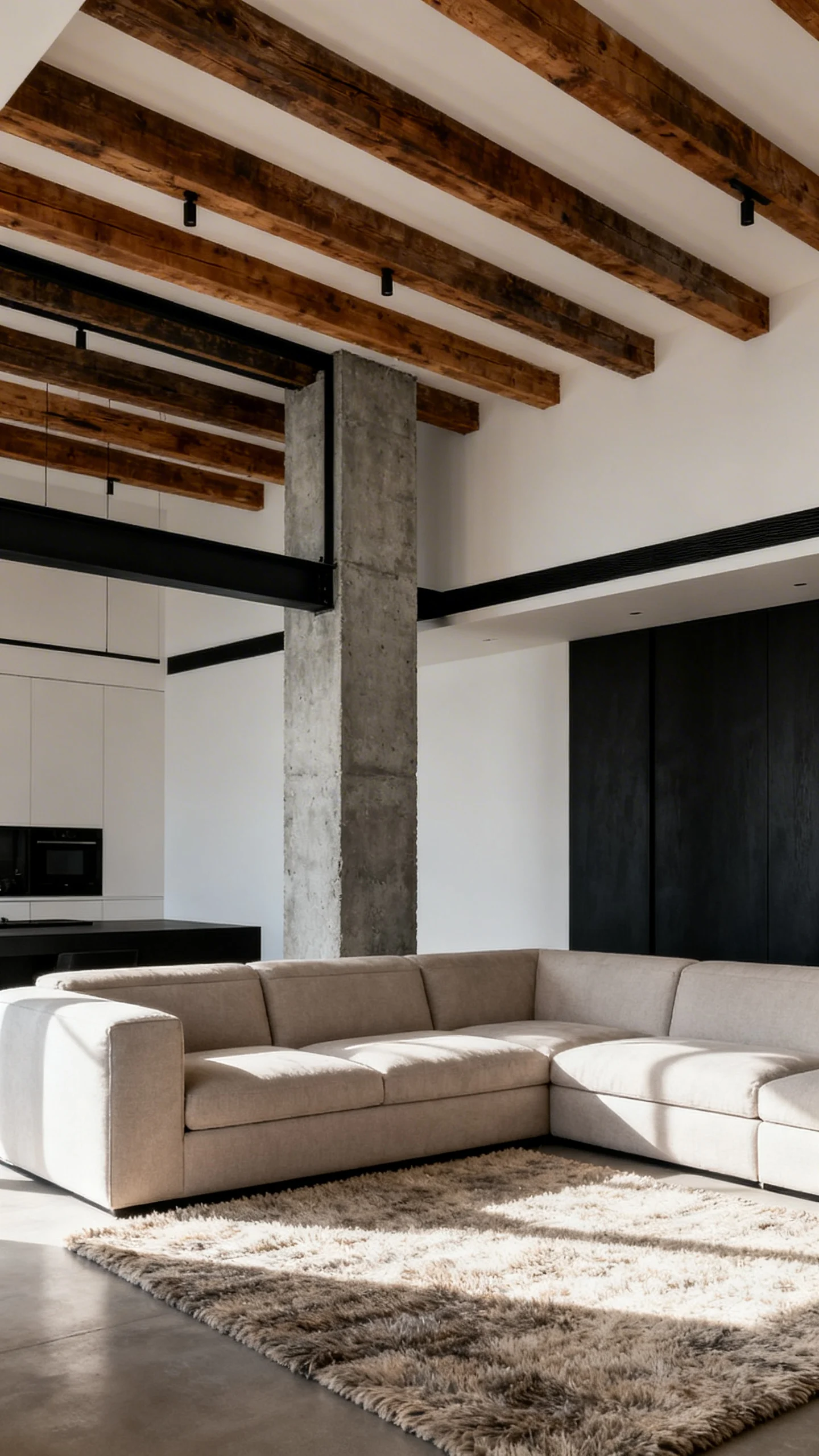
Modern homes are embracing “honest” architecture—letting the structure show up as part of the aesthetic. In the living room, exposed beams or a single bold column becomes the focal point, giving the space depth and a sense of real craftsmanship.
Set the scene with warm wood overhead, a charcoal sectional below, and a textured rug that feels handwoven. Concrete, timber, and steel can feel surprisingly cozy when paired with layered lighting and soft-edged accessories like oversized cushions and wool throws.
Idea 5: Plaster Everything (Limewash Walls and Seamless, Tactile Surfaces)
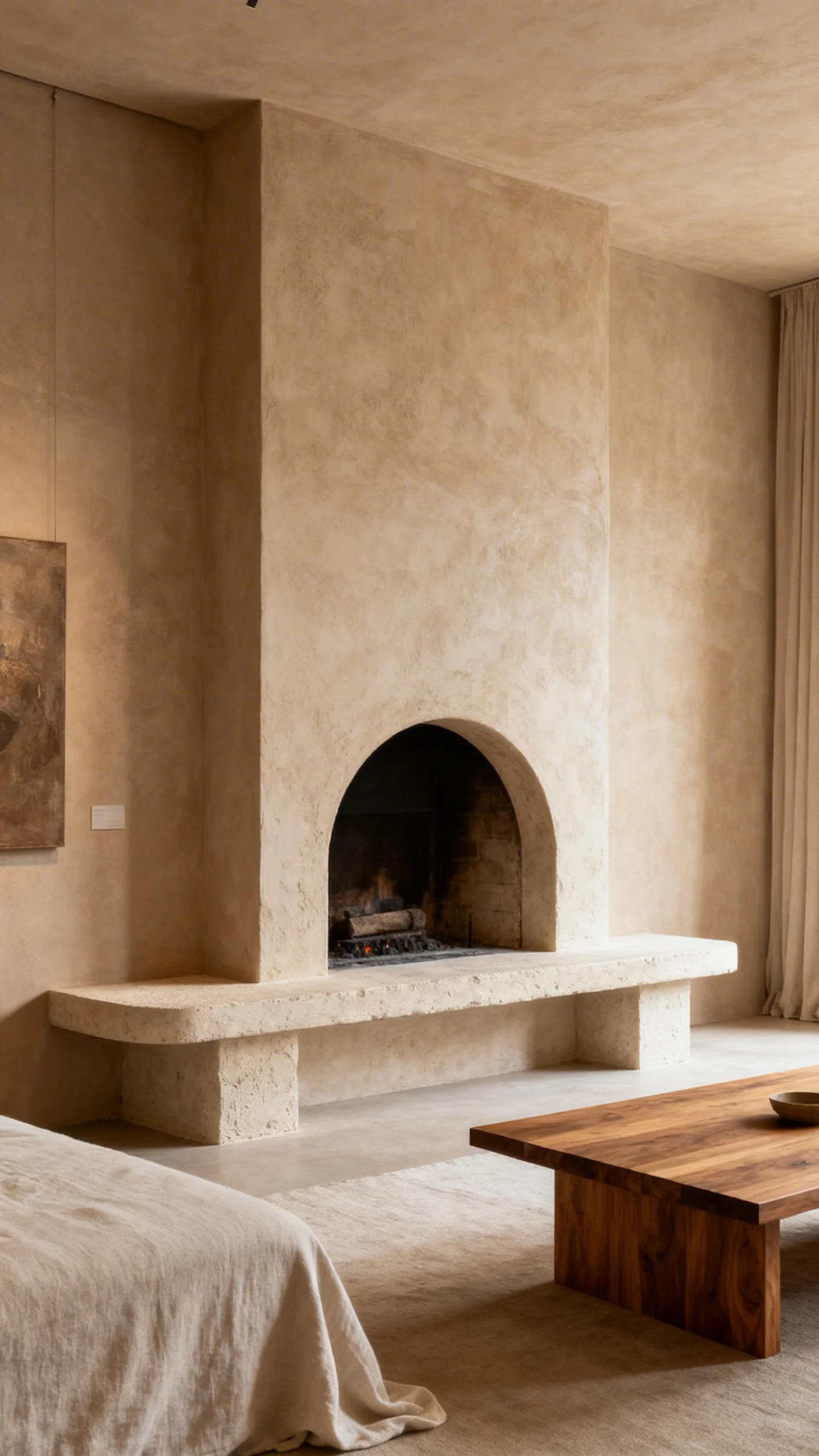
Plaster finishes are defining modern residential architecture because they look both ancient and new—matte, dimensional, and ever so slightly imperfect. In a living room, limewash or plaster walls create a museum-like backdrop that still feels warm and human.
Style it as a tonal moment: sandy walls, an ivory sofa, and a mix of ceramics in chalky whites. Add a plaster fireplace surround or built-in ledge, and the room reads as calm, collected, and quietly expensive without feeling showy.
Idea 6: Built-In “Architectural Furniture” (Benches, Ledges, and Integrated Storage)
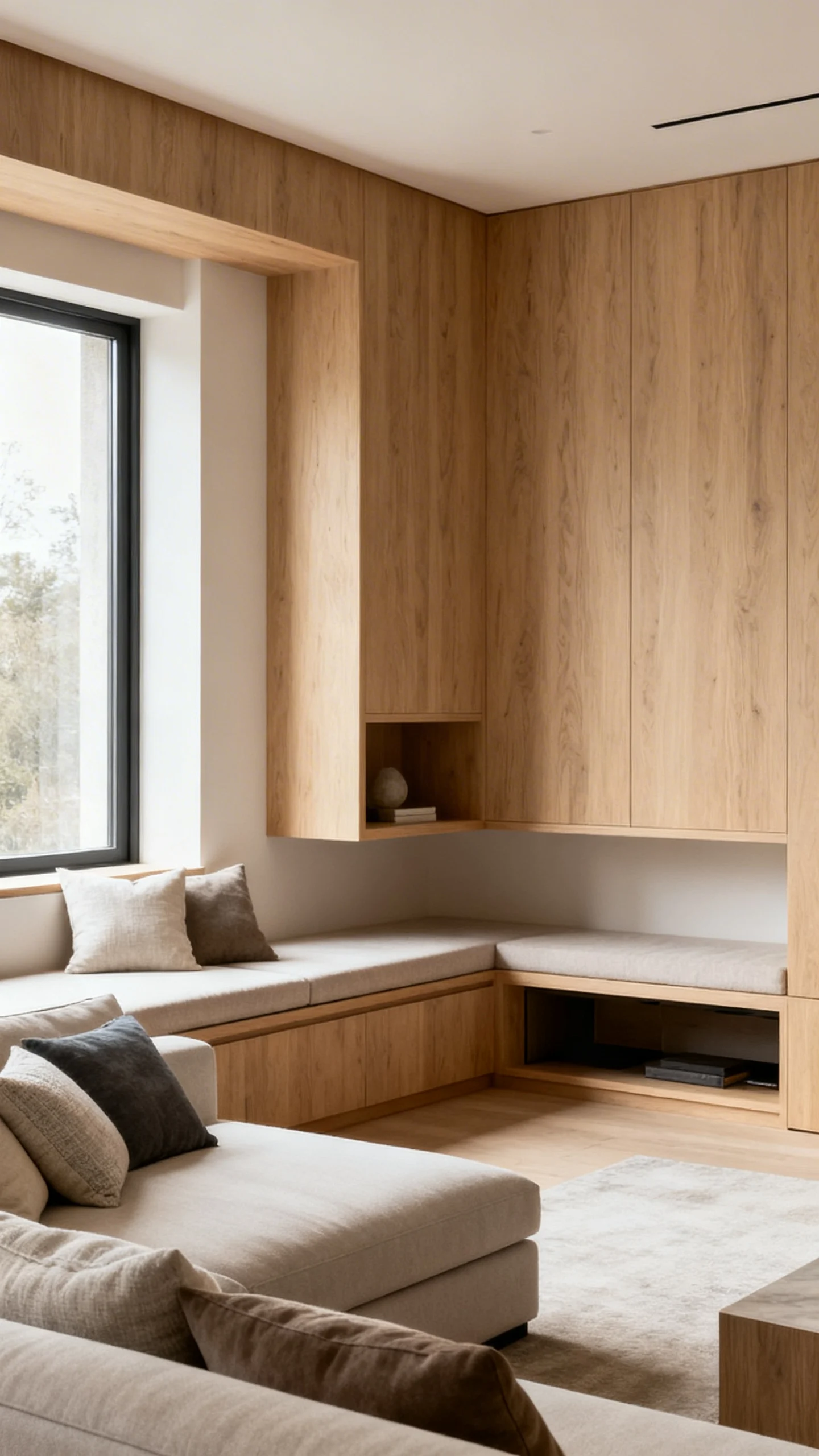
Architecture is stepping in where bulky furniture used to be. Built-in benches, low ledges, and integrated storage make the living room feel custom—like the home was designed around how you actually relax, gather, and display the things you love.
Picture a full-length window bench in white oak with hidden drawers, topped with tailored cushions in a subtle stripe. Nearby, a flush built-in wall unit holds books and art with clean negative space, giving the room a serene, gallery-forward rhythm.
Idea 7: Double-Height Living Rooms with Statement Light Sculptures
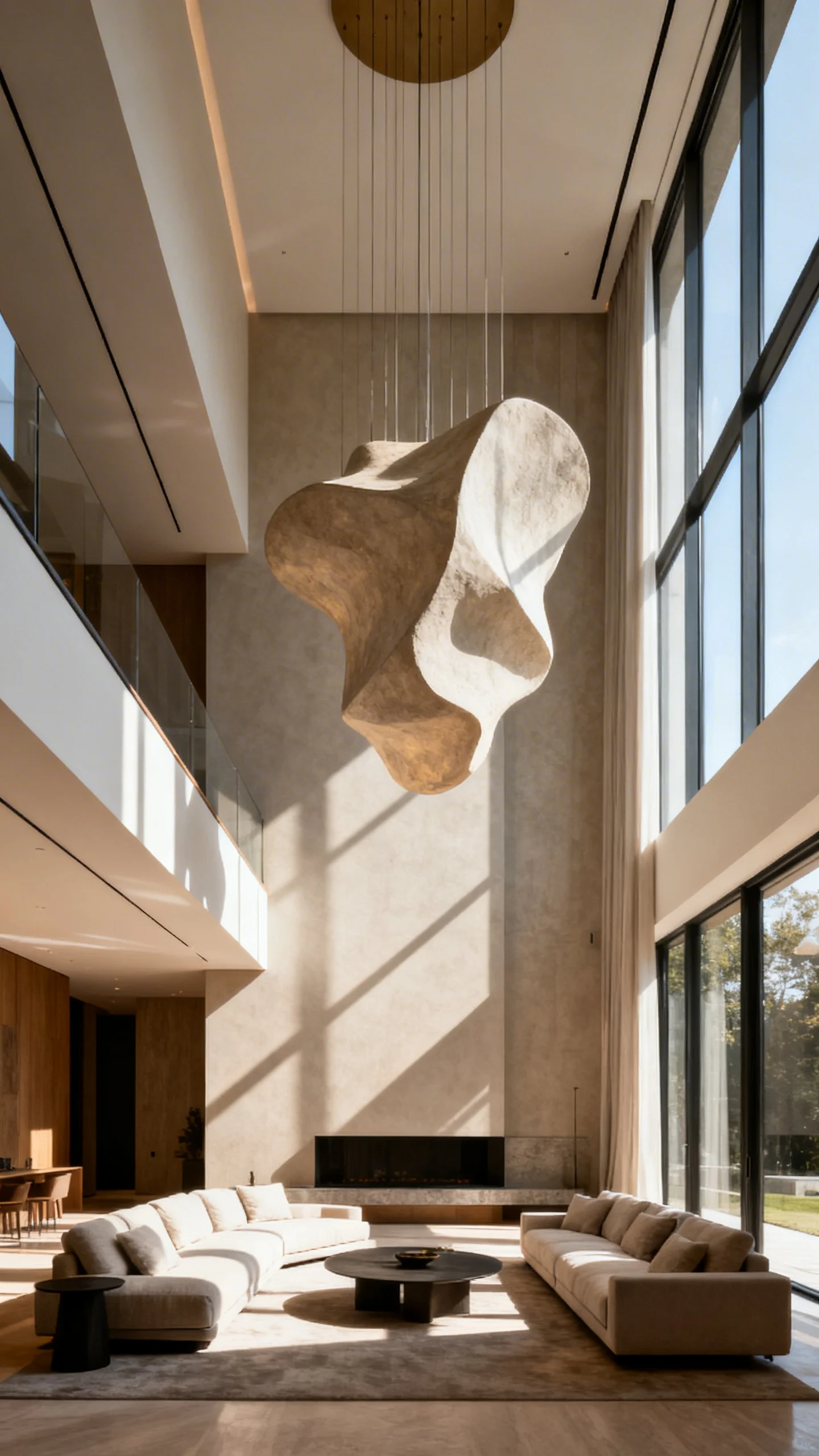
Vertical volume is back in a big way. A double-height living room creates that breathy, modern-home feeling—where daylight travels farther, and the space feels like it has its own weather.
Lean into the scale with a bold pendant: a cascading glass sculpture, a cluster of linen lanterns, or a minimalist linear chandelier that slices through the air. Balance the height with grounded pieces—low seating, a chunky stone coffee table, and tall drapery that frames the architecture like theater curtains.
Idea 8: Indoor-Outdoor Living Rooms with Courtyard Energy
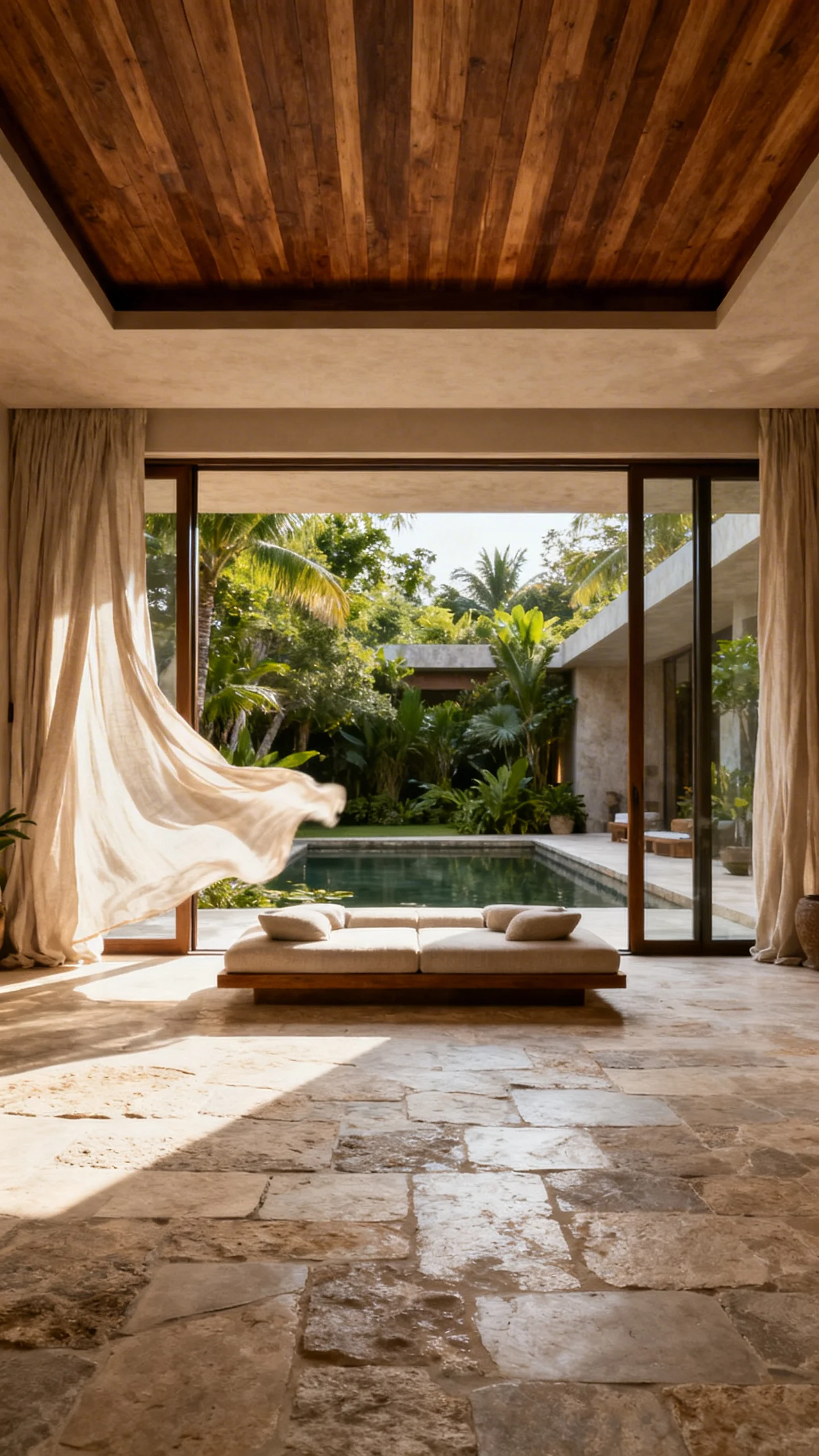
Residential architecture is increasingly organized around outdoor rooms, and the living room becomes the bridge. Think: a courtyard-facing space with wide openings, a continuous floor line, and greenery that feels like it’s part of the interior styling.
The look is relaxed-modern: textured stone underfoot, a soft modular sectional, and sculptural planters that echo the home’s geometry. With the right glazing and warm evening lighting, the living room feels like it expands after sunset—moody, breezy, and resort-like.
Idea 9: Minimalist Fireplaces as Horizontal Architecture
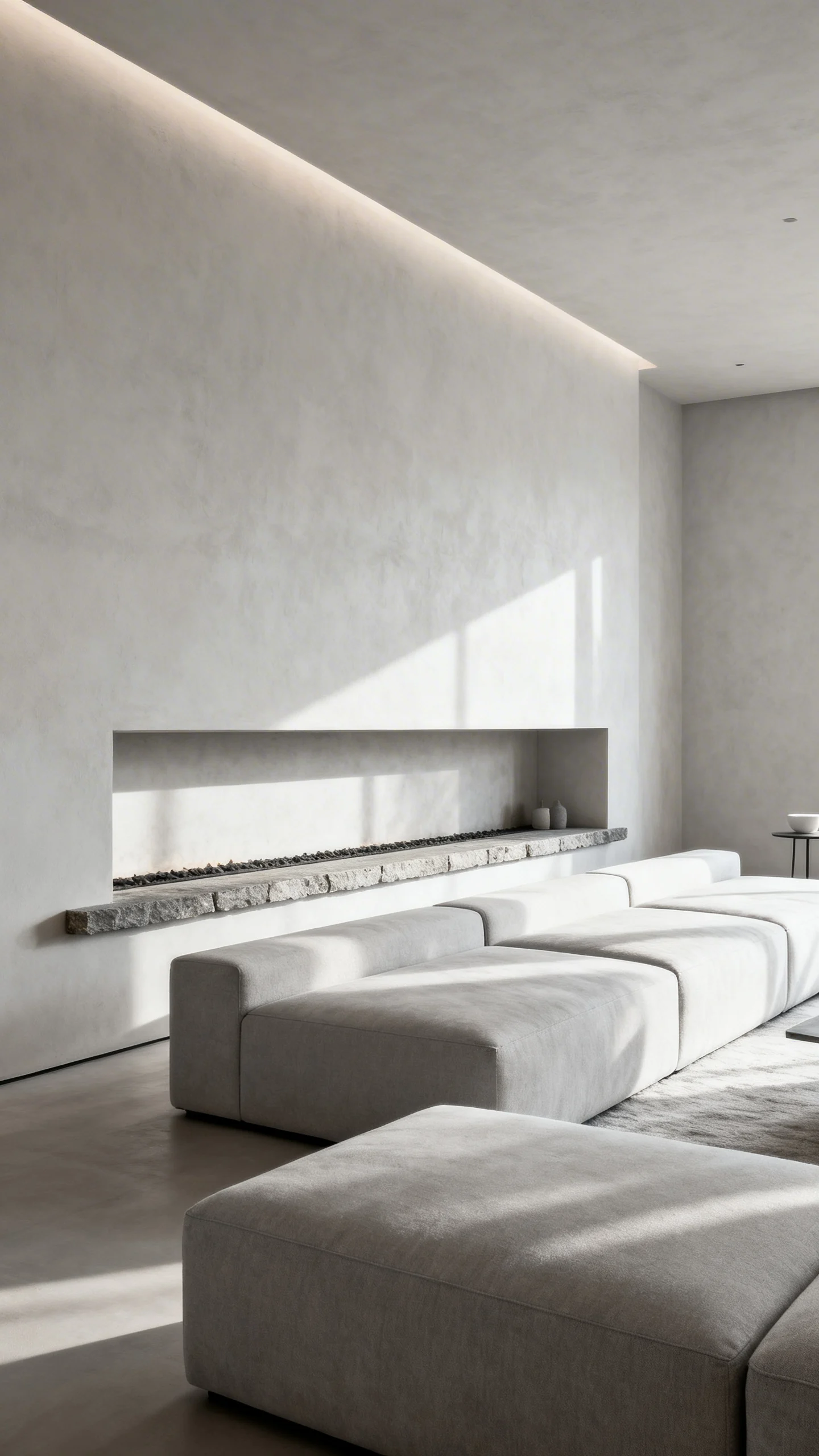
Fireplaces are shifting from ornate centerpieces to sleek architectural lines. A long, horizontal hearth—often set into a plaster or stone wall—turns the living room into a clean composition of light, shadow, and proportion.
Envision a slim flame ribbon under a thick floating mantel ledge, styled with a single oversized ceramic vessel. Pair it with warm wood slats or a stone slab feature, and the room feels modern and calming—like the architecture is quietly framing every moment.
Idea 10: Mixed Material Blocks (Stone + Wood + Metal in Clear, Modern Forms)
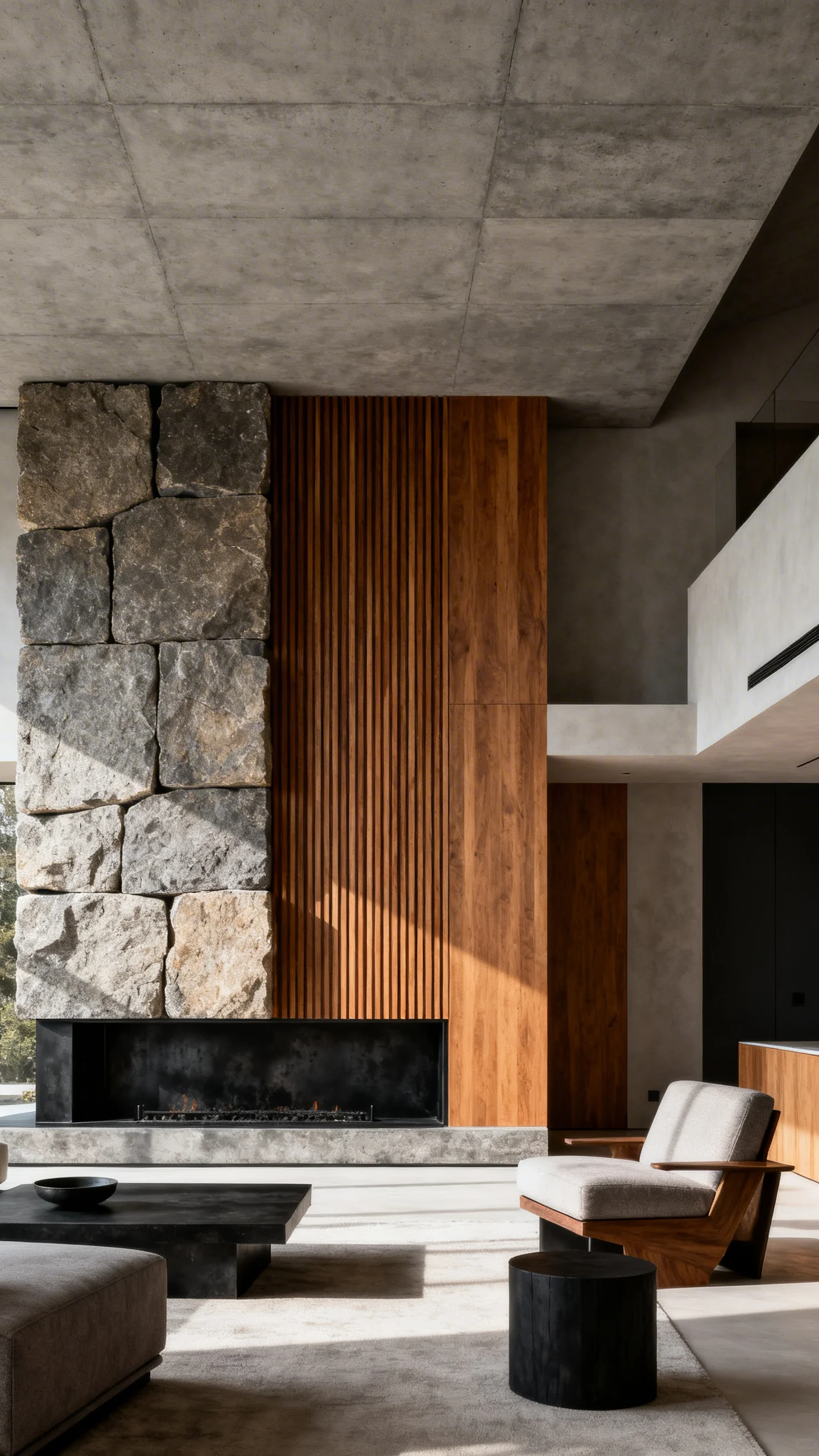
One of the most defining modern home trends is material contrast used with restraint—bold, blocky elements that feel architectural rather than decorative. In the living room, it might look like a stone feature wall meeting vertical oak paneling, finished with thin black metal details.
The mood is modern and tactile: a warm leather chair beside a stone plinth side table, a wool rug that softens the hard edges, and art that plays with geometry. Everything feels intentional—like the home’s architecture is the styling.
FAQ
What’s the biggest residential architecture trend showing up in modern living rooms?
More architectural simplicity with stronger material presence—think plaster, stone, oak, and glass used in larger, cleaner forms. The living room becomes less about decorative clutter and more about shape, light, and texture.
How do modern architecture trends make a living room feel more “livable”?
Many trends focus on comfort through layout and flow: built-ins that reduce visual noise, better daylight, and zones that encourage conversation. The result feels calmer and easier to live in, even when the look is minimal.
Are curved walls and arches still considered “modern”?
Yes—curves are a major modern direction right now, especially when paired with simple finishes like plaster, light wood, and understated furnishings. They add softness without losing that clean, contemporary edge.
What materials define modern residential architecture in living rooms?
Plaster/limewash, natural stone (travertine, limestone), warm woods (white oak, walnut), blackened metal accents, and large expanses of glass. These materials photograph beautifully and create depth without busy patterns.
How can a living room feel architectural without a full renovation?
Focus on architectural-looking elements you can see at a glance: a plaster-like wall finish, a long linear fireplace surround, a built-in style shelving moment, or lighting that reads as sculptural. The goal is a space that feels shaped, not just furnished.