
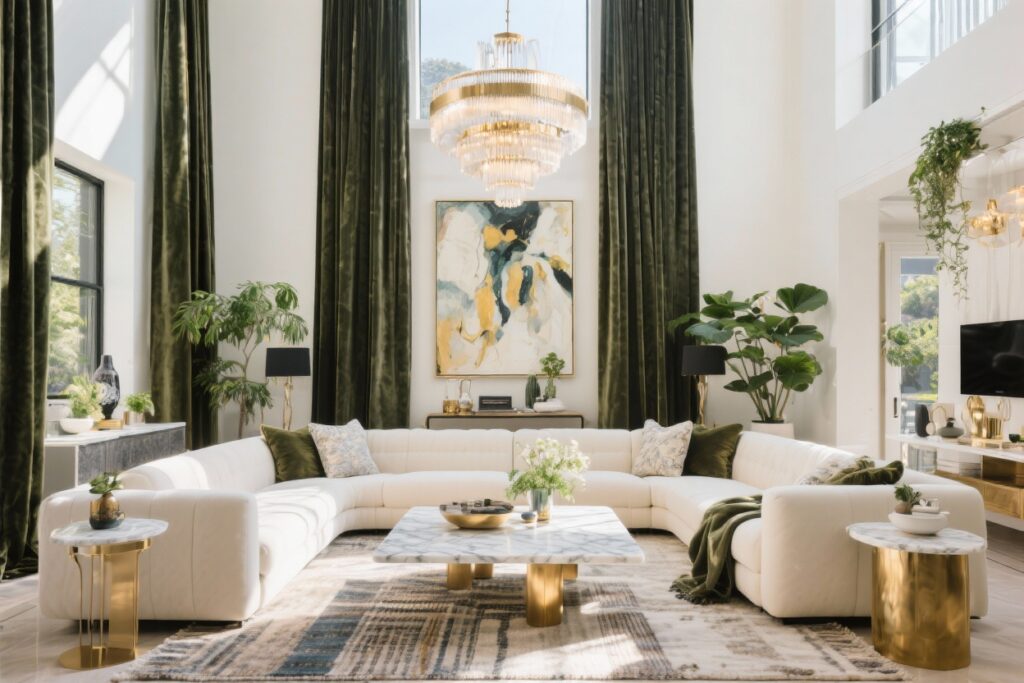
You don’t need a billionaire budget to make your living room look like it belongs in a glossy magazine. You just need smart choices, a little restraint, and a few strategic splurges. Ready to make your space look expensive without selling a kidney? Let’s do it.
1. Choose a Cohesive Color Story (And Stick to It)
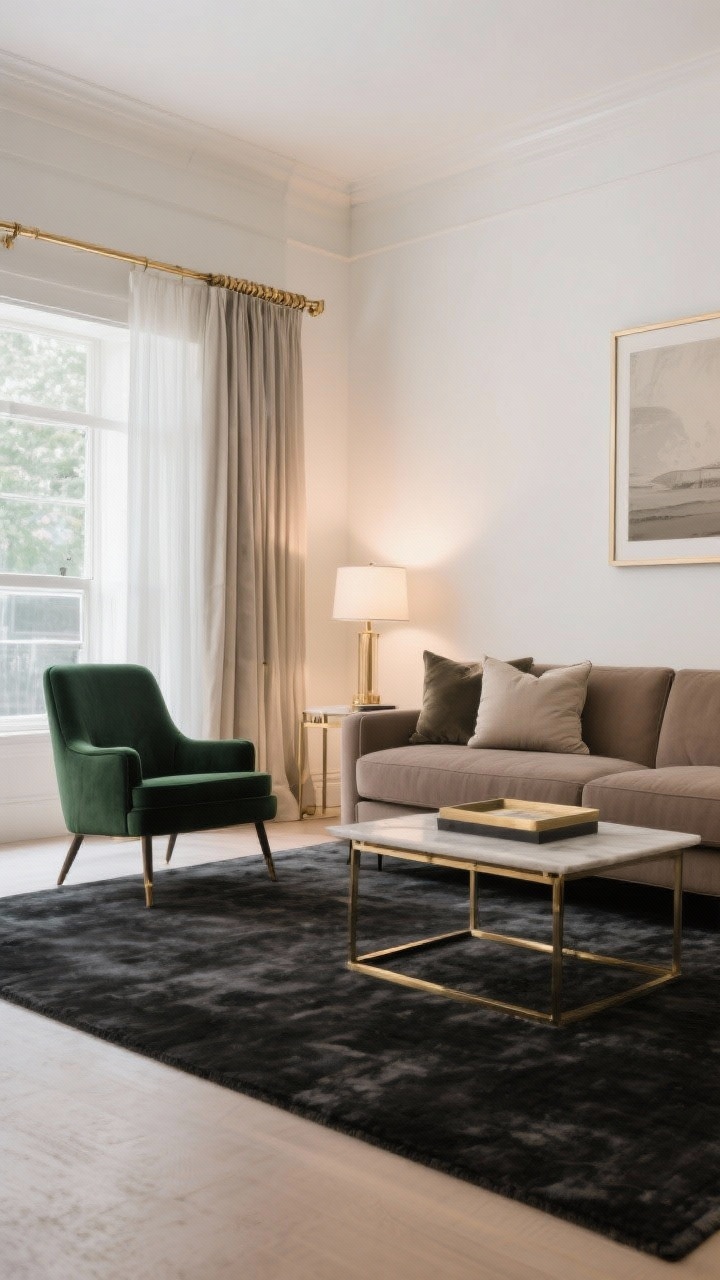
Luxury starts with cohesion. Pick a tight palette—think two main colors and one accent—and use it across your furniture, textiles, and decor. That consistency instantly makes a room feel high-end, even if half of it came from a discount store.
How to Build Your Palette
- Base tones: Warm whites, taupe, stone, or charcoal keep things sophisticated.
- Accent shade: Deep navy, forest green, oxblood, or muted cognac add depth.
- Metallics: Choose one—brushed brass, blackened steel, or antique bronze—and repeat it.
FYI: Painting your walls a soft, enveloping neutral can make inexpensive furniture look suddenly elevated. And if you love color, go tonal—multiple shades of the same hue reads rich, not chaotic.
2. Elevate Seating With Shape, Scale, And Fabric
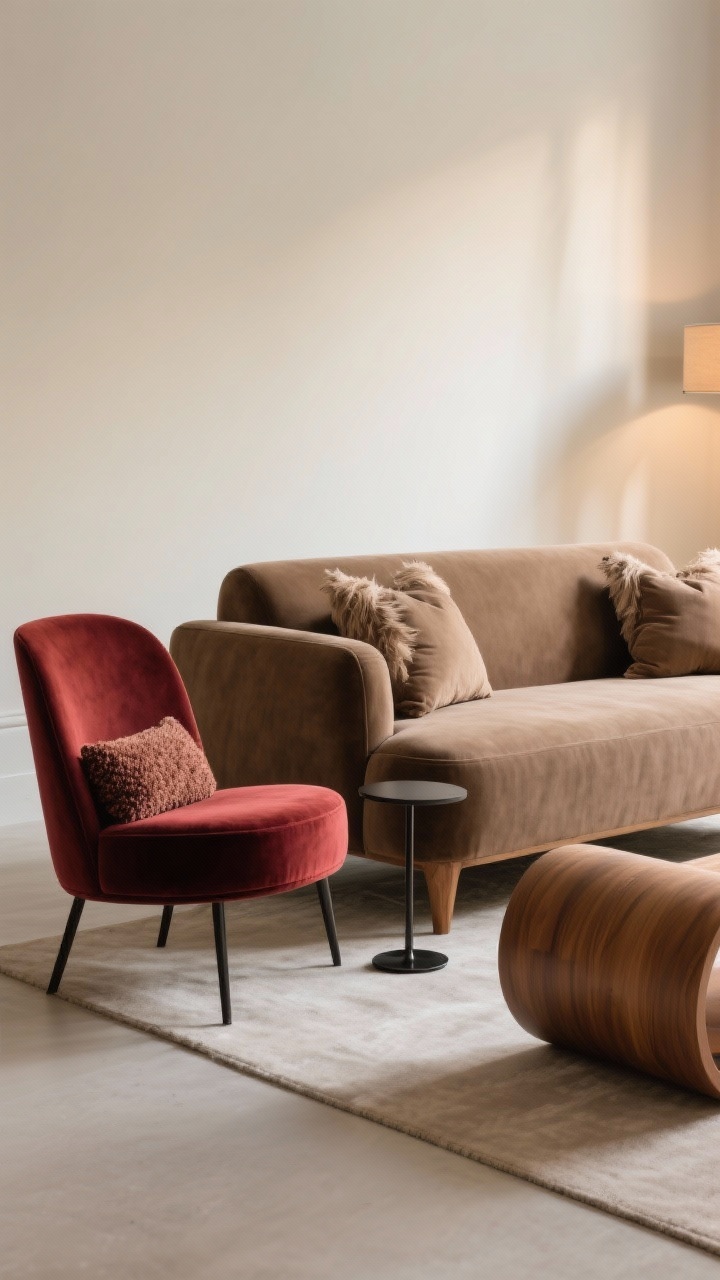
Your sofa and chairs are the headliners. Go for clean lines with a touch of curve—think tuxedo sofas, barrel chairs, or a sculptural chaise. Scale matters: pieces that are too small make a room feel cheap; pieces that are too bulky feel clumsy.
Fabric Upgrades That Scream Luxe
- Velvet or mohair: Instant glam, especially in saturated tones.
- Performance linen: Tailored, breathable, and kid-proof—bless.
- Textural bouclé: Adds depth without visual noise.
Pro tip: Swap flimsy sofa legs for solid wood or metal ones. It’s a small tweak with major impact. And don’t forget cushions—plump, feather-filled inserts look and feel infinitely more expensive.
3. Layer Lighting Like You Mean It
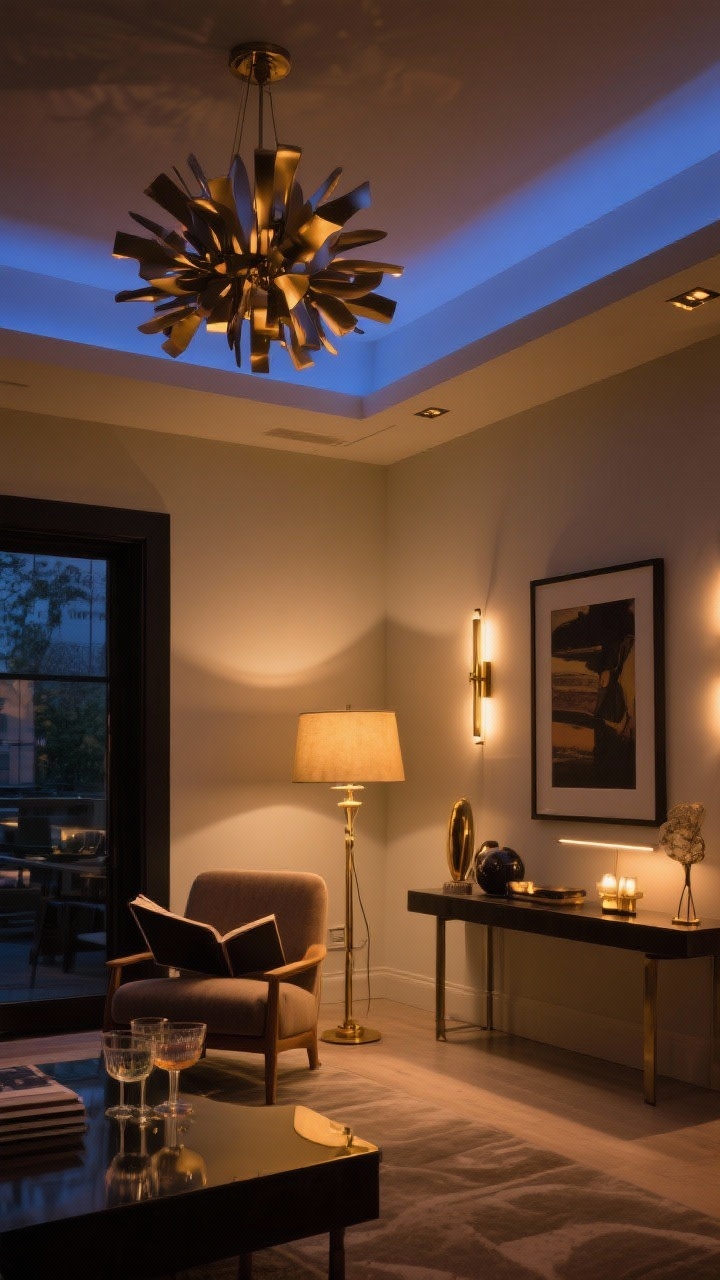
Nothing kills a luxe vibe like overhead glare. You want layers: ambient, task, and accent lighting. Mix floor lamps, table lamps, sconces, and a statement pendant to create mood and dimension.
Simple Lighting Formula
- Overhead: A bold chandelier or sculptural pendant to anchor the room.
- Task: A floor lamp by the sofa or reading chair.
- Accent: Picture lights, sconces, or a lamp on a console to highlight art and objects.
Use warm bulbs (2700–3000K) and add dimmers. Dimmers are the difference between “office waiting room” and “cocktail lounge at home.” IMO, they’re the most affordable luxury upgrade you can make.
4. Layer Textures And Materials (The Designer Secret)
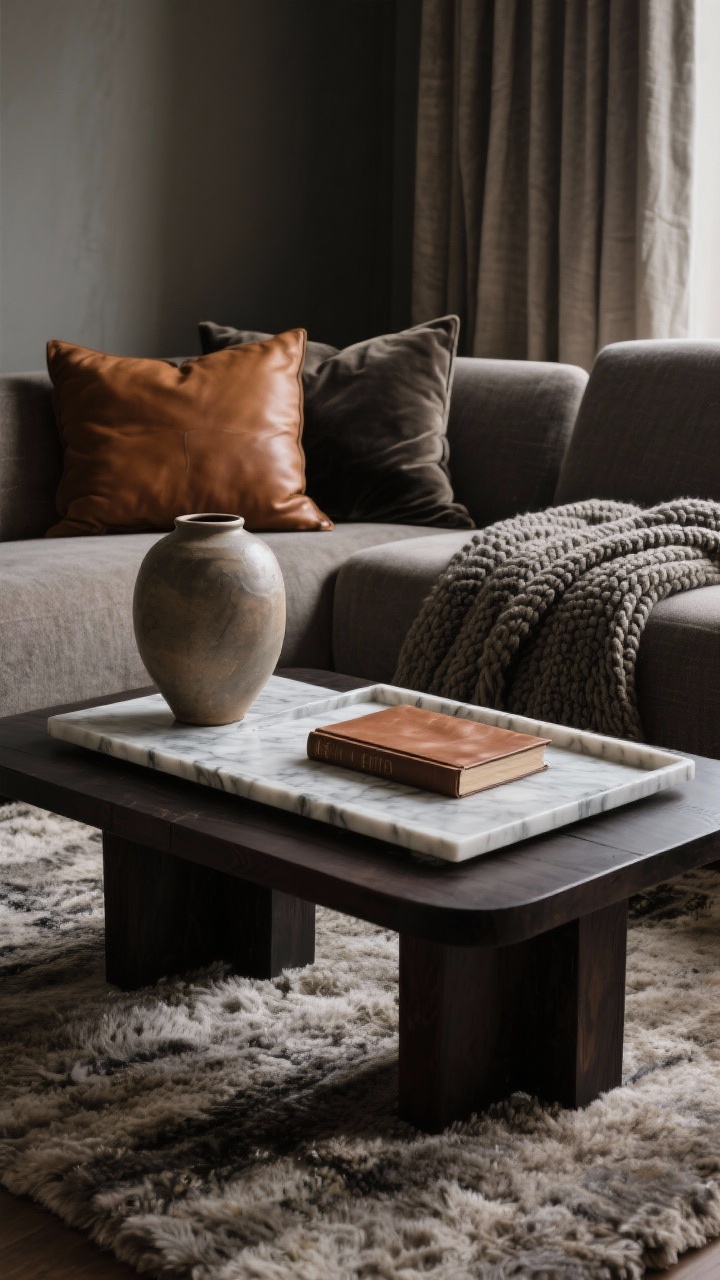
High-end rooms always have contrast. Mix soft with sleek, matte with glossy, organic with polished. The tension creates that rich, collected look you’re after.
Texture Mix To Try
- Rug: Wool, silk-blend, or a plush textured weave for softness underfoot.
- Coffee table: Stone, glass, or dark wood to ground the room.
- Textiles: Combine linen curtains, velvet pillows, and a chunky knit throw.
- Accents: Marble tray, ceramic vase, and a leather-bound book or two.
Keep the palette tight but the materials varied. That’s how you get visual interest without visual chaos. Bonus points if you add something unexpected, like a woven bench or a travertine side table.
5. Curate Art And Decor Like A Gallery
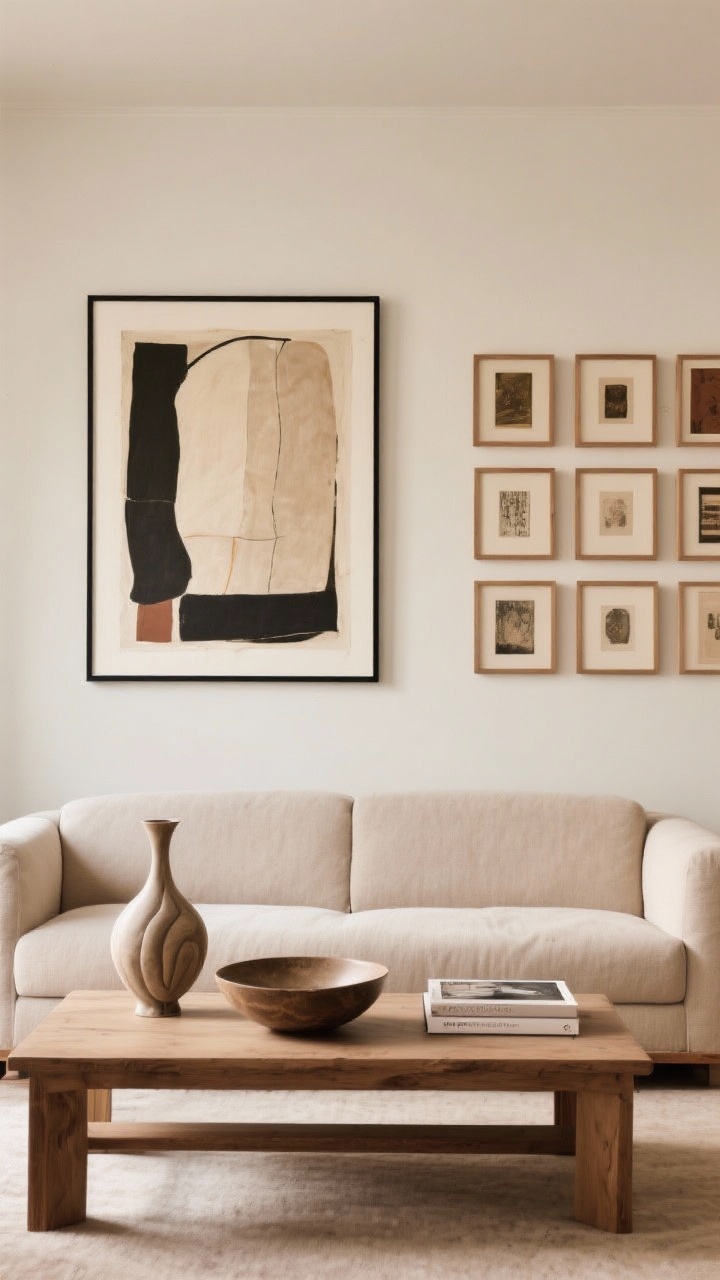
Art doesn’t have to be pricey to look pricey. The trick is scale, framing, and composition. Go bigger than you think—oversized art feels intentional and anchors the space.
Gallery-Worthy Moves
- Large focal piece: One big canvas or photograph over the sofa beats a tiny print any day.
- Grid or salon wall: Use matching frames for a polished grid, or mix frames for a collected vibe.
- Quality frames: Thin black metal, natural wood, or antique brass—consistency is key.
Decor-wise, strive for fewer, better pieces. A sculptural vase, a statement bowl, and a couple of art books beat a dozen knickknacks. Edit ruthlessly. If it doesn’t add beauty or function, it’s out.
6. Add Architectural Moments (No Renovation Required)
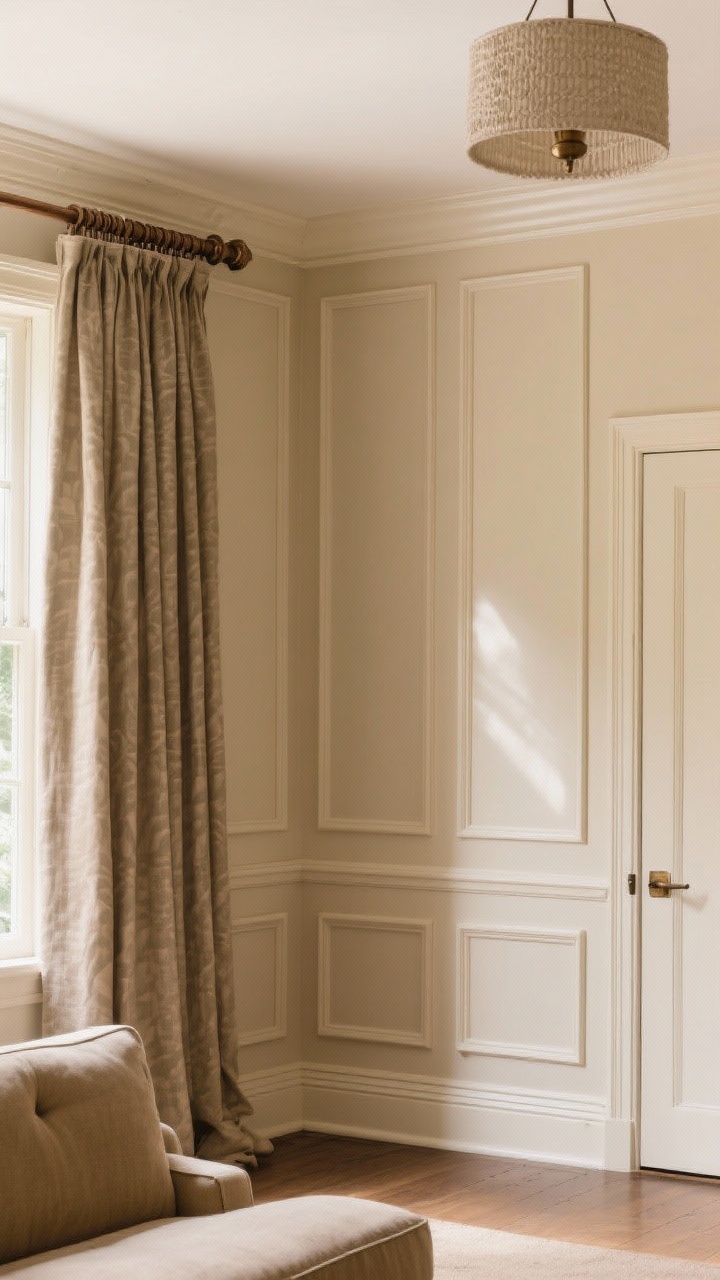
You don’t need crown molding to create character—though if you can add it, do. Small architectural details go a long way. Think wall paneling, picture-frame molding, or even a simple, oversized baseboard update.
Easy, High-Impact Upgrades
- Panel molding: Apply trim in squares or rectangles and paint it to match the wall color.
- Statement curtains: Hang them high and wide to make ceilings feel taller and windows larger.
- Upgraded hardware: Swap drawer pulls, door handles, and curtain rods for substantial, cohesive finishes.
Don’t forget the ceiling. A subtle color shift (two shades lighter than the walls) or a textured fixture can make the whole room feel custom. And yes, a chic fireplace mantle—even a faux one—adds instant gravitas.
7. Style Like A Designer: Balance, Negative Space, And Greenery
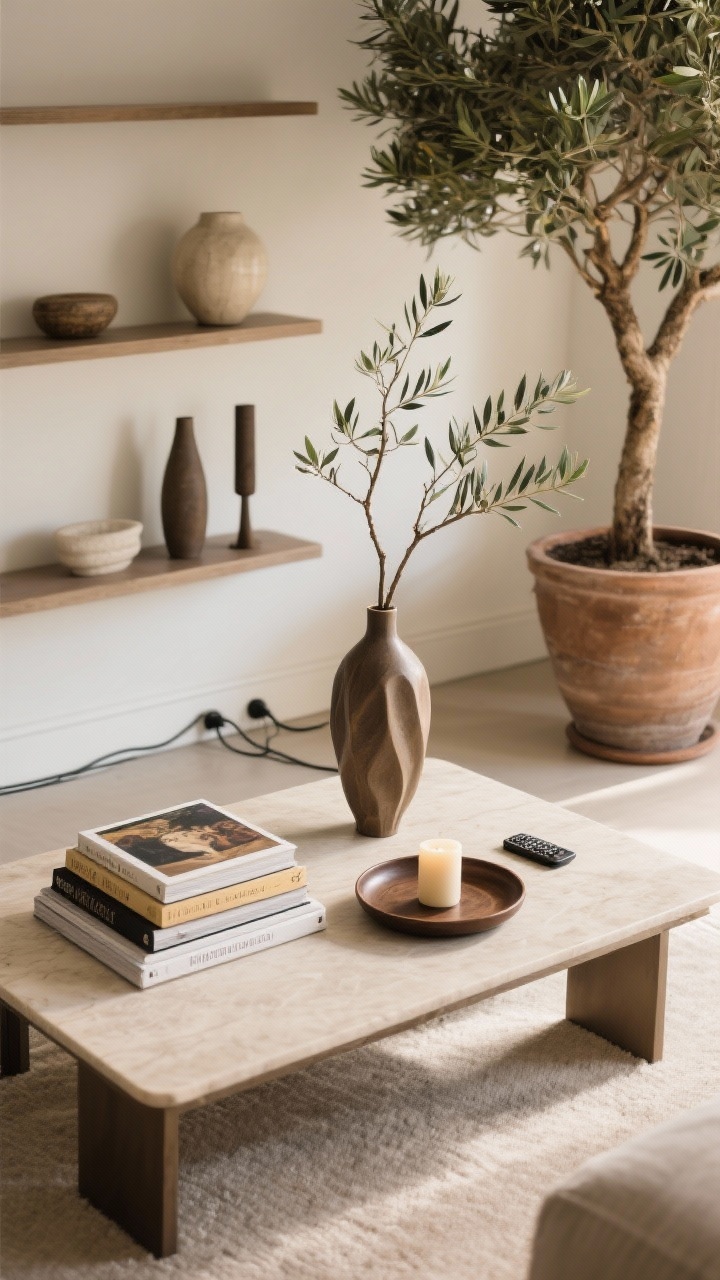
How you arrange things matters as much as what you buy. Aim for balance, not symmetry. Let your room breathe with negative space—cramming every surface kills the luxe vibe fast.
Coffee Table And Shelf Styling
- Follow the “low, medium, high” rule: A stack of books (low), a tray or bowl (medium), a tall branch arrangement (high).
- Use trays: They corral remotes and candles and make everything feel purposeful.
- Group in threes: Odd numbers and varied heights look effortless.
Greenery is the final touch. A large potted tree (olive, ficus, rubber plant) or a vase of dramatic branches adds life and movement. Choose fewer, bigger plants over lots of small ones—more impact, less clutter. FYI: real or high-quality faux both work; just keep them dust-free.
Bonus Micro-Details That Read “Lux”
- Rug size: Large enough that front legs of seating sit on it—tiny rugs shrink rooms.
- Cord control: Hide wires with cord covers or baseboard channels—instant polish.
- Scent: Candles or diffusers with layered notes (amber, cedar, bergamot) complete the experience.
Finally, edit. Then edit again. The most luxurious rooms feel calm, collected, and a little bit restrained—like they’re confident enough not to try too hard. Which, tbh, is the ultimate flex.
Ready to upgrade? Start with one section—lighting or textiles—and build from there. Small, thoughtful changes add up fast. Your living room is about to look expensive, and your secret is safe with me.