
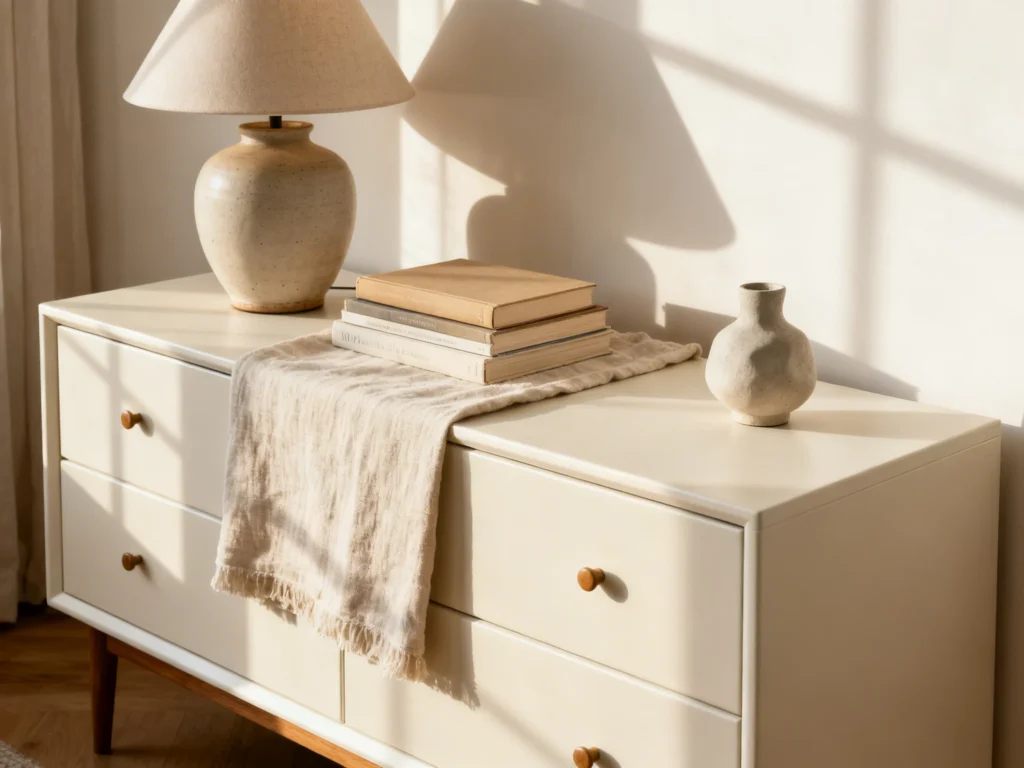
Furniture Remodeling on a Budget That Feels Designer
Designer-looking furniture isn’t about spending big—it’s about creating a finished, intentional moment. When a piece feels curated (even if it started as a thrift-store find), it elevates the whole room: the palette looks calmer, the styling looks more editorial, and everything around it suddenly feels more “done.”
These budget-friendly furniture remodeling ideas focus on high-impact, photo-ready transformations—think color, texture, and styling swaps that make your space feel like a magazine spread without the designer price tag.
1) Go Monochrome for Instant “Custom” Energy
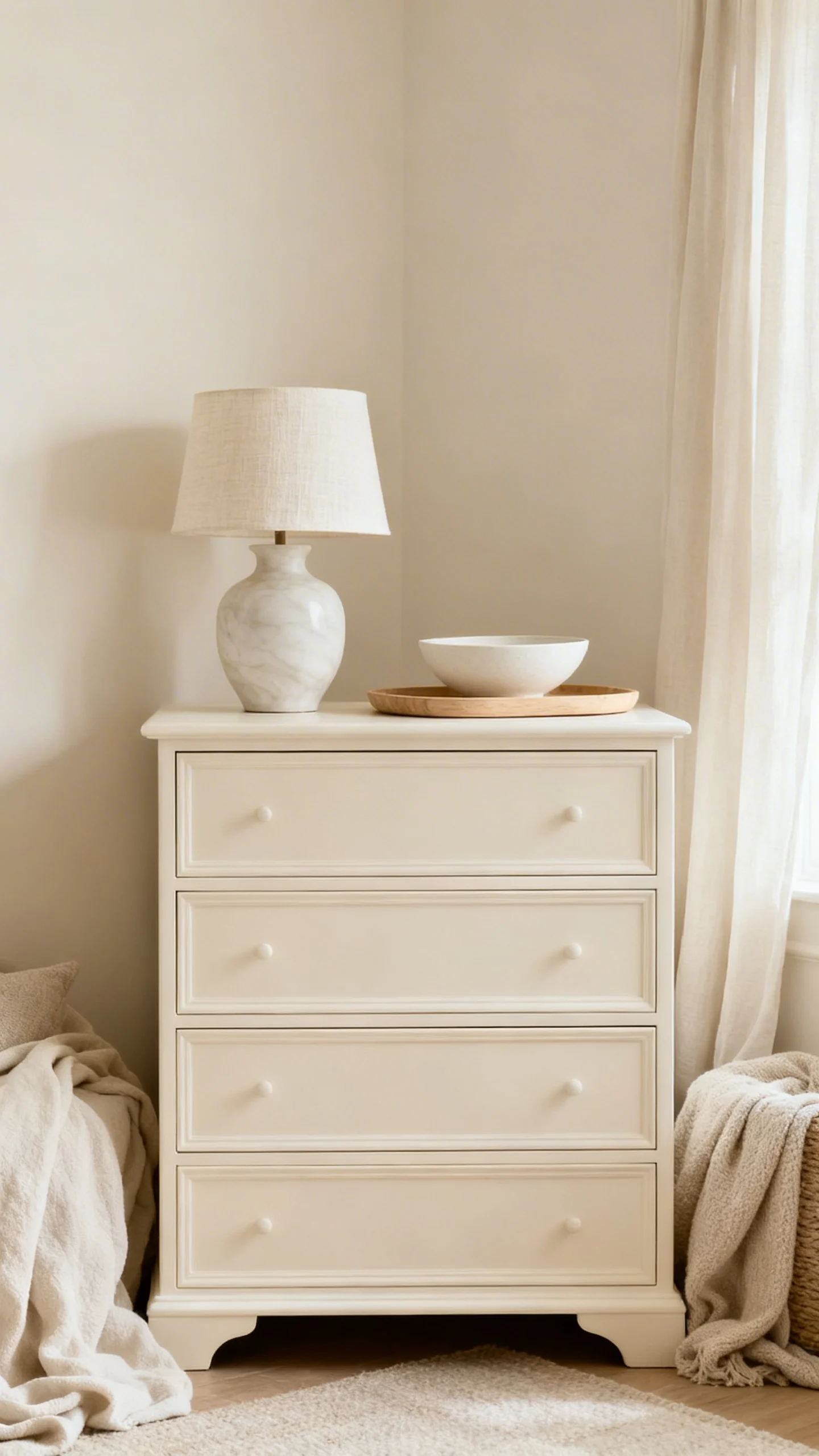
A monochrome piece—where the furniture and surrounding styling live in the same color family—reads expensive and intentional. Picture a dresser in warm creamy white with tonal decor: alabaster vase, linen shade, and a soft ivory runner. It looks calm, curated, and quietly luxe.
Try this: choose one soothing shade (creamy white, mushroom, clay, dusty olive) and give your furniture a fresh coat. Then style it with two to three objects in the same family—vary textures (ceramic + linen + woven) so it feels layered, not flat.
2) Add a “Statement Edge” with Two-Tone Blocking
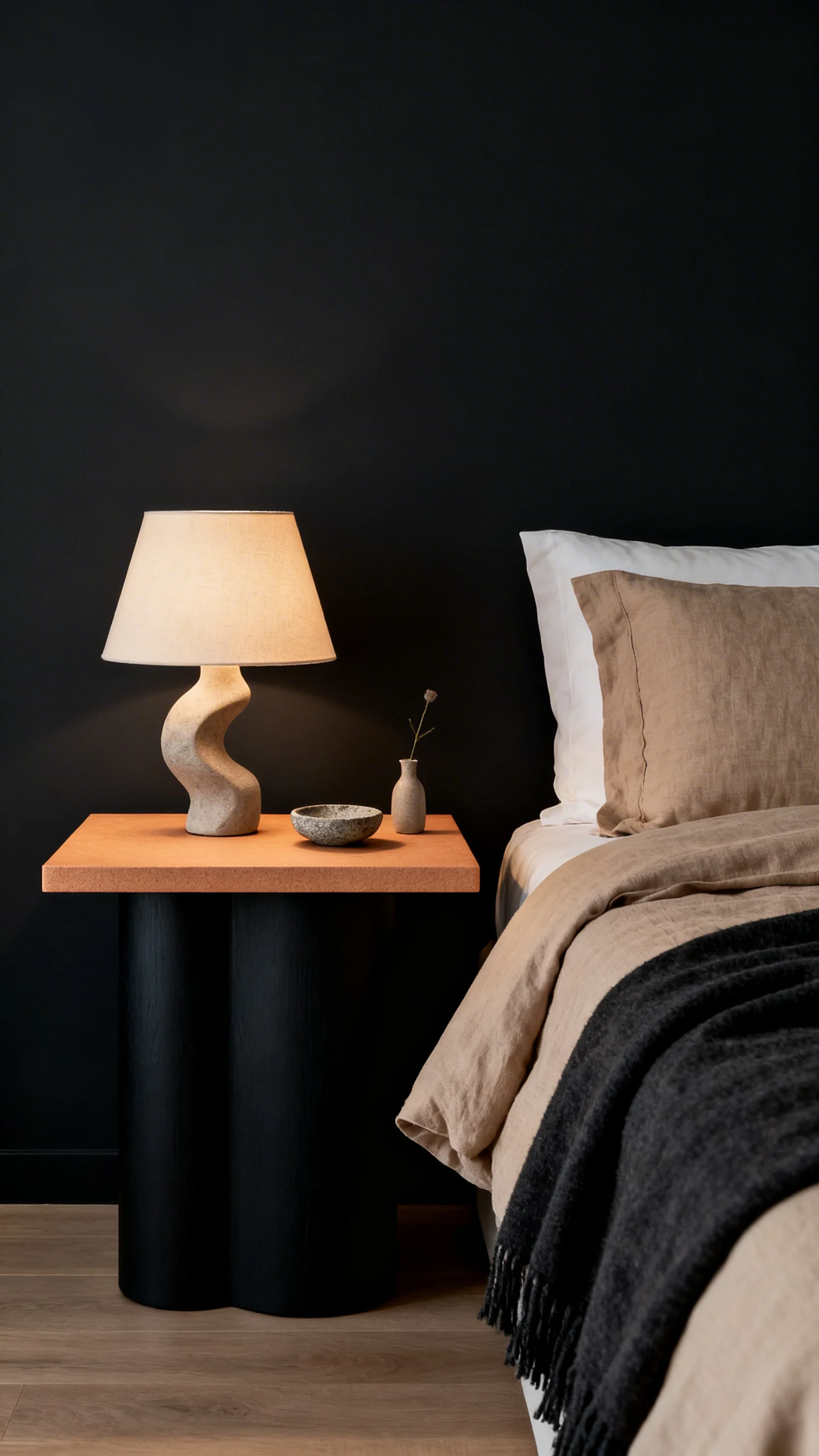
Two-tone color blocking makes basic shapes feel designed. Think: a nightstand with a deep, inky base and a lighter top—suddenly it looks boutique. This is especially pretty with moody hues (charcoal, forest, navy) paired with warm neutrals (oat, sand, soft white).
Try this: paint the body in your darker shade and keep the top lighter (or flip it). Finish the look with a simple lamp and one graphic accessory (a black frame or striped catchall) to make the contrast feel crisp and editorial.
3) Create a “Luxe Wood” Look with Warm Stain Tones (Even on a Budget)
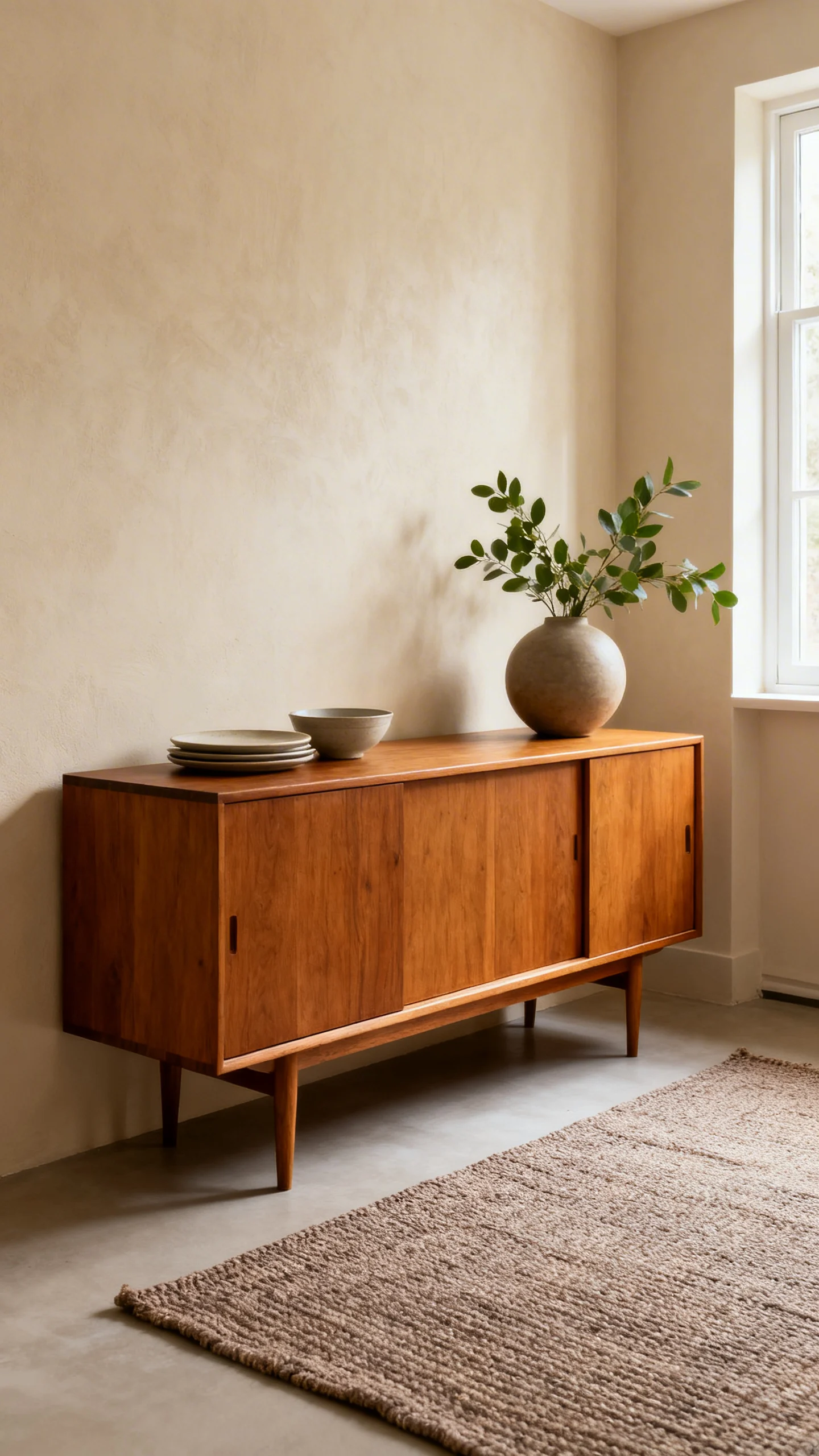
Warm wood is having a moment, and it instantly adds that designer warmth that makes a space feel inviting. A once-tired table or cabinet can read “high-end Scandinavian” or “modern organic” when it’s refreshed into a honey, walnut, or caramel tone.
Try this: aim for a consistent warm finish across the whole piece (no patchy tones) and keep styling minimal—one oversized bowl, a stack of books, and a small bud vase. The simplicity lets the “new” wood glow like a featured showroom piece.
4) Dress It Like a Designer: Oversized Art + One Sculptural Object
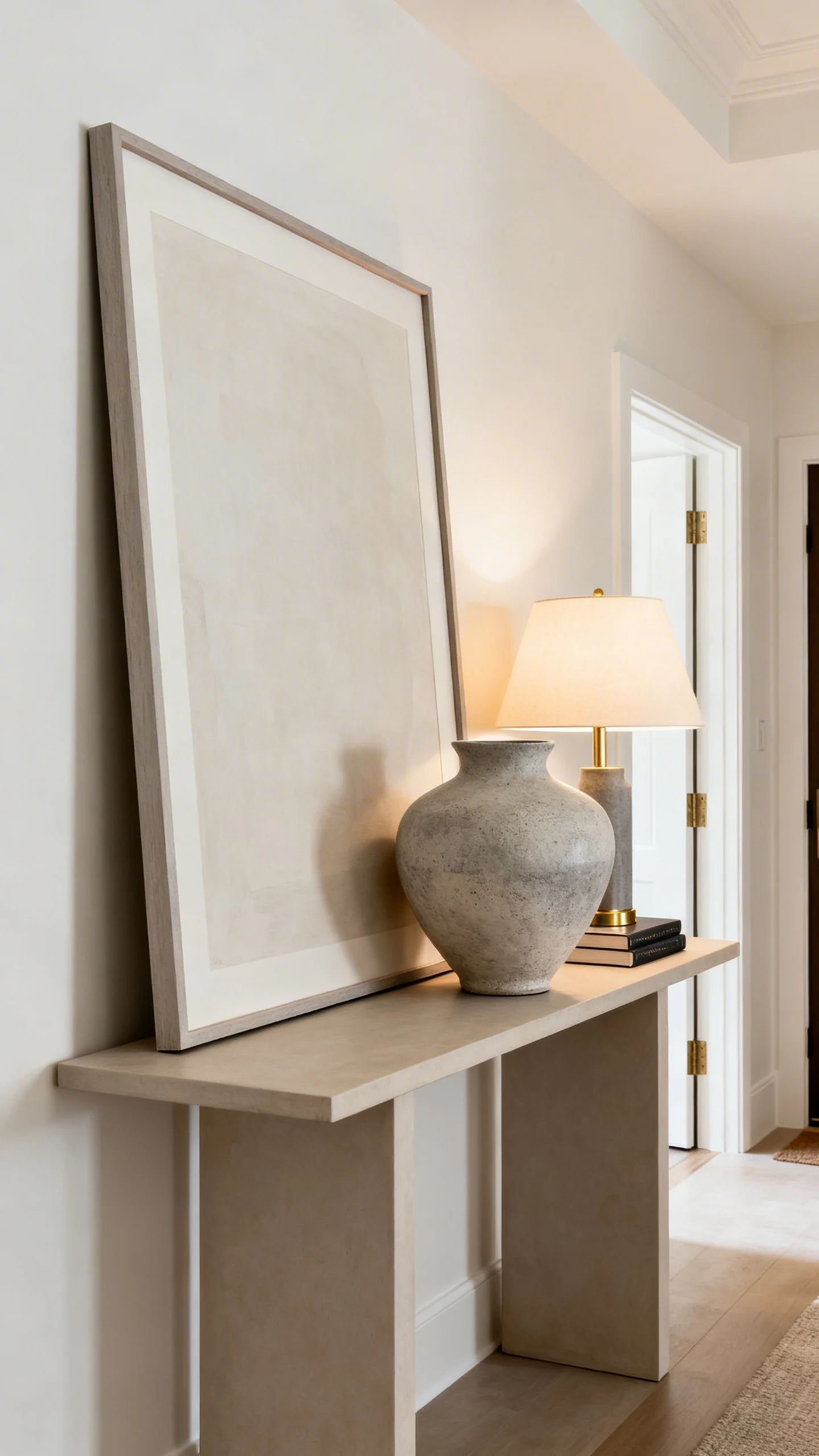
Sometimes the most budget-friendly “remodel” is what happens on top of the furniture. A basic console looks instantly expensive when it’s anchored by oversized art (or a large mirror) and styled with one sculptural, touchable object—like a chunky knot sculpture, curvy vase, or stone bowl.
Try this: lean a large frame (thrifted, or a printable in a big mat) behind your decor, then add one statement piece and one practical piece (a tray or catchall). Keep it to 2–3 items for that clean, designer restraint.
5) Upgrade the Finish Vibe: From “Shiny & Dated” to “Soft & Modern”
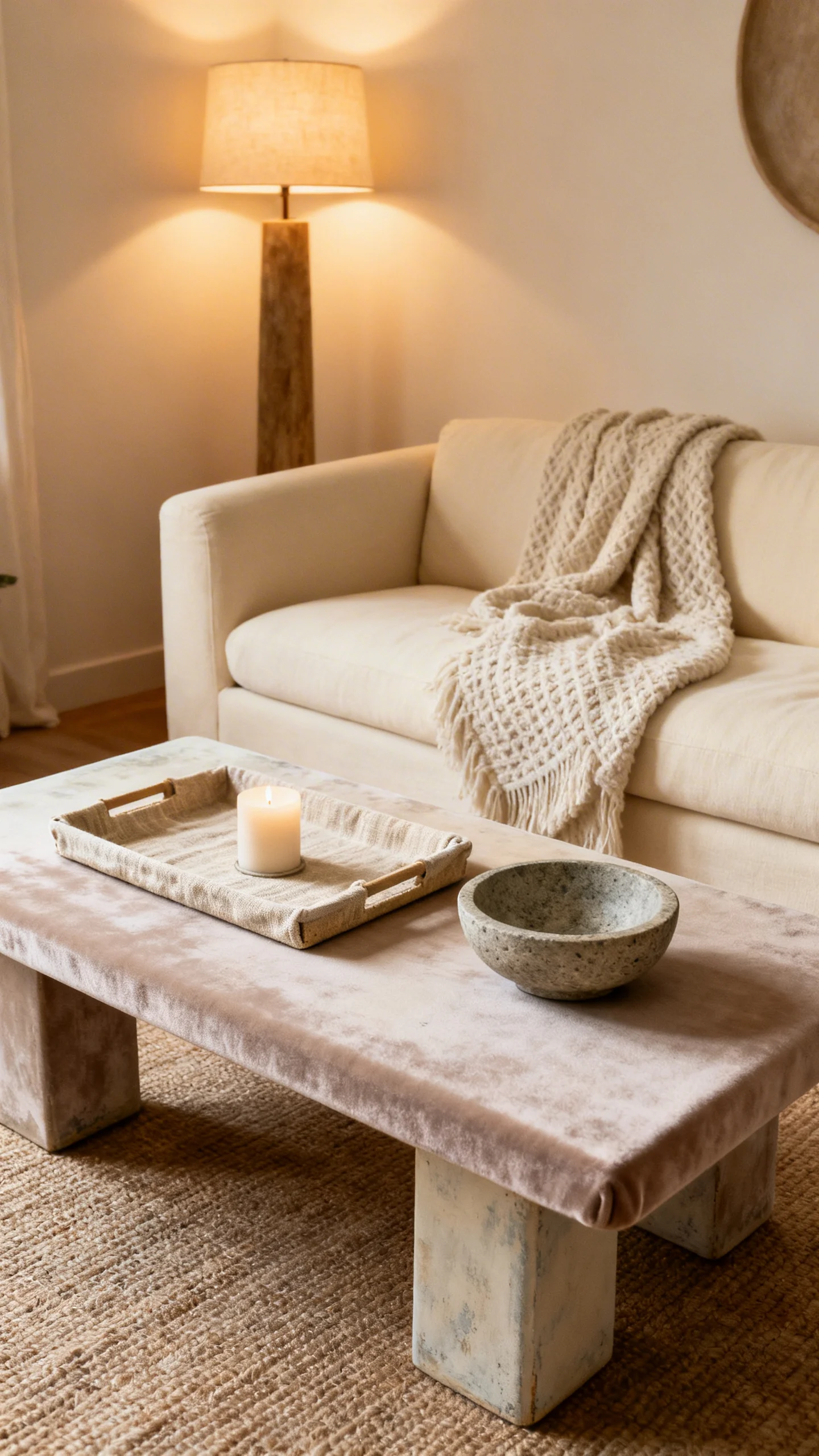
Many budget pieces look inexpensive because they’re too glossy or too orange-toned. A softer, modern finish reads designer: think velvety matte, satin, or gently weathered—like it’s been loved, not manufactured yesterday.
Try this: choose a muted, complex color (sage-gray, putty, fog blue, warm taupe) and keep the final look low-shine. Then add a tactile element nearby—like a bouclé stool, linen curtain, or nubby rug—to reinforce that soft, elevated vibe.
6) Add “Boutique Detail” with Trim, Cane Look, or Subtle Pattern
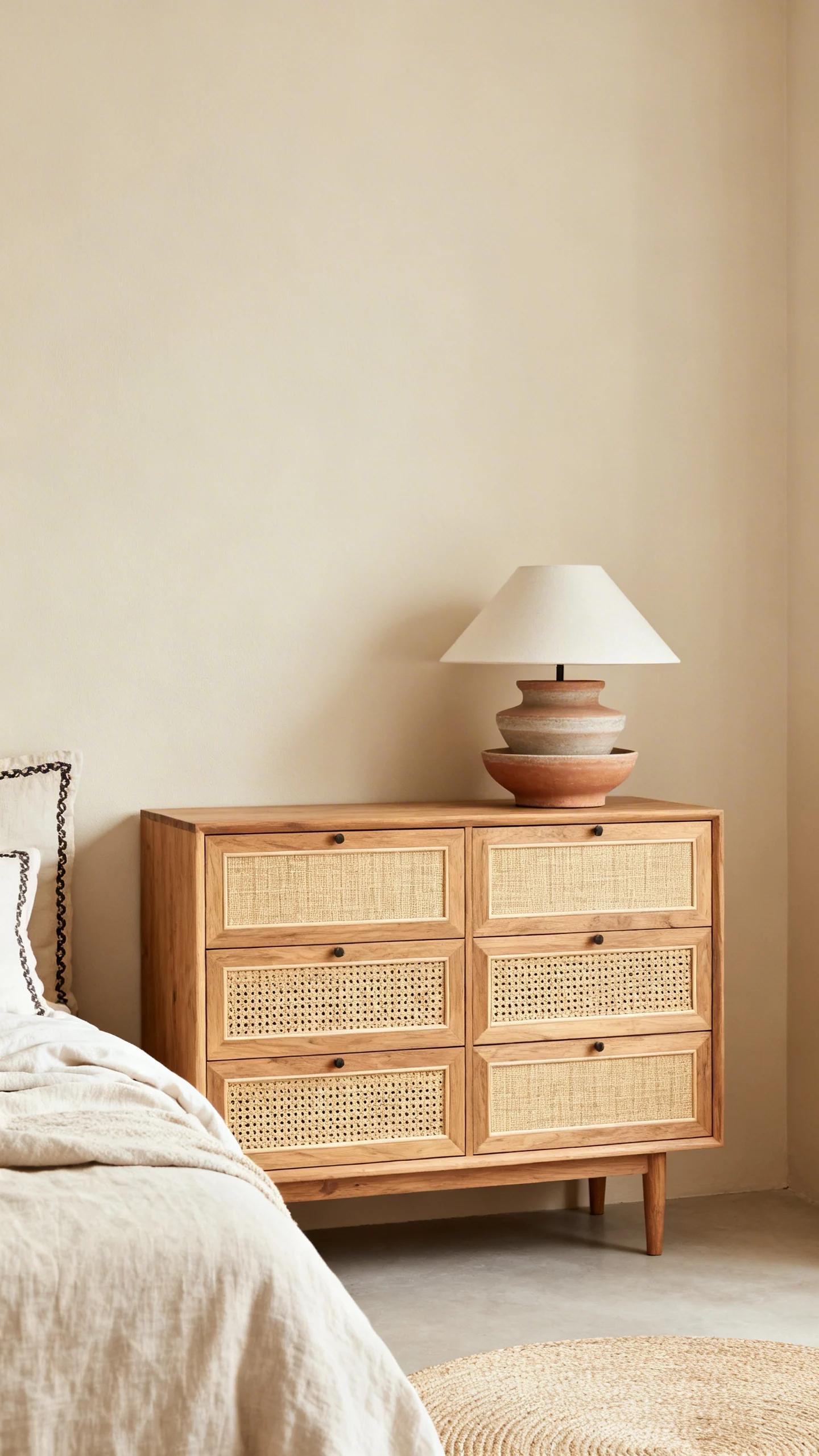
Designer furniture often has one special detail: a slim border, an inset panel, or a hint of texture. On a budget, you can recreate that boutique feeling with simple surface upgrades—like a cane-look panel, a thin trim border, or even a subtle geometric pattern on drawer fronts.
Try this: pick one repeating detail and apply it consistently (all drawers, both doors, the full front). Keep the color palette calm so the detail reads refined—warm white + natural texture is especially Pinterest-perfect.
7) Make It Look Built-In (Without Actually Building Anything)
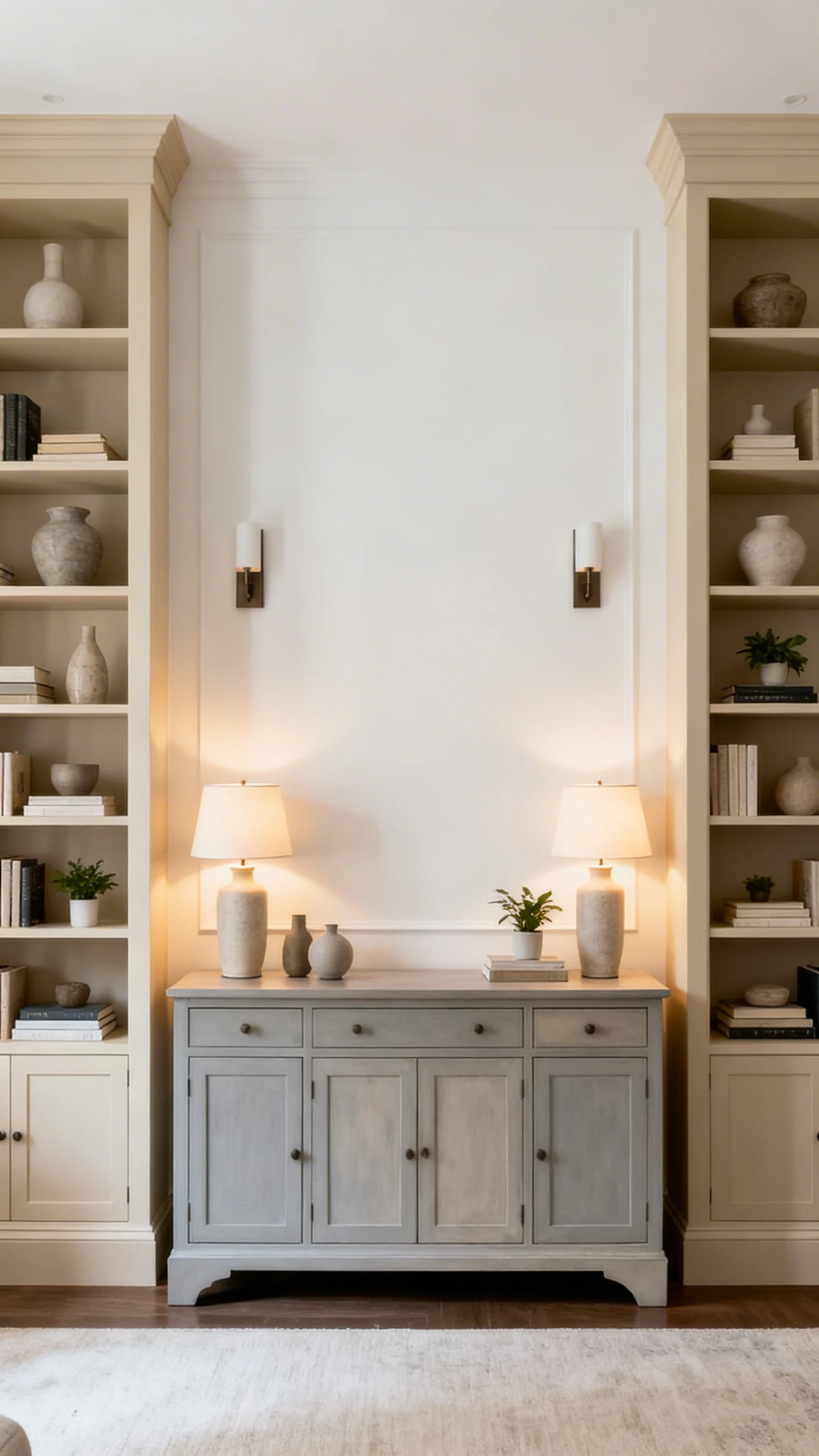
Built-ins feel designer because they look intentional and architectural. You can mimic that same effect by “framing” furniture with styling and placement: two matching bookcases around a dresser, or a sideboard centered with symmetrical lamps and art.
Try this: place your remodeled piece in a spot where it looks anchored—center it on a wall, add matching baskets or stools nearby, and hang art a little larger than you think. The result: a polished, custom-looking zone that photographs beautifully.
8) Reupholster the Look with a Throw + Pillow Pairing (No Sewing Required)
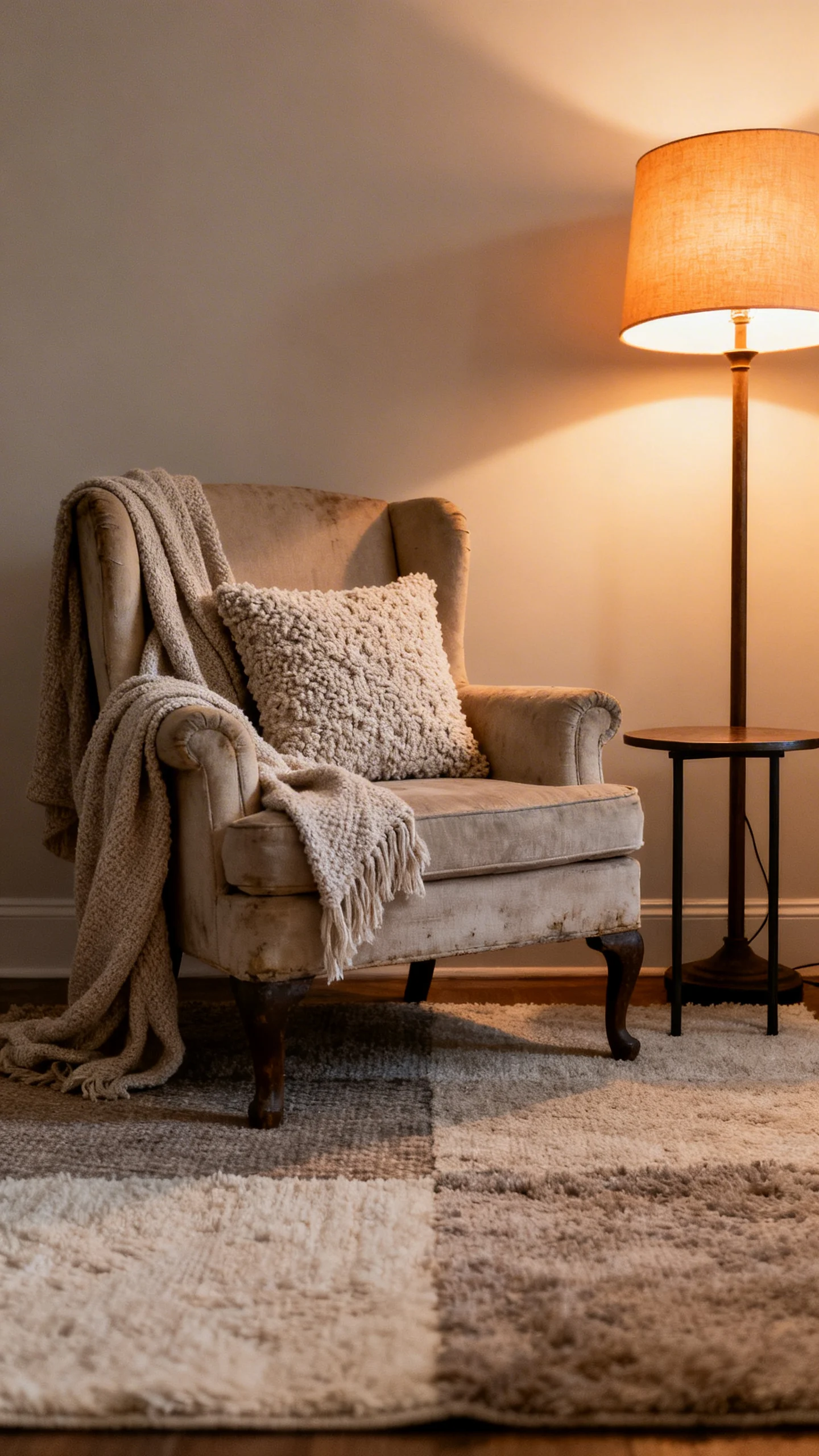
If you’re remodeling seating on a budget, focus on the “first glance” surfaces. A tired chair or bench looks instantly refreshed when it’s styled like a showroom: a textured throw draped casually, plus one pillow that introduces pattern or contrast.
Try this: choose a throw in a rich texture (chunky knit, faux mohair, linen blend) and a pillow that feels boutique (block print, stripes, or a subtle plaid). Keep colors grounded—cream, camel, black, olive, or terracotta—so the finished look feels designer, not crafty.
9) Use a “High-Low” Styling Formula: Thrifted Base + One Elevated Accent
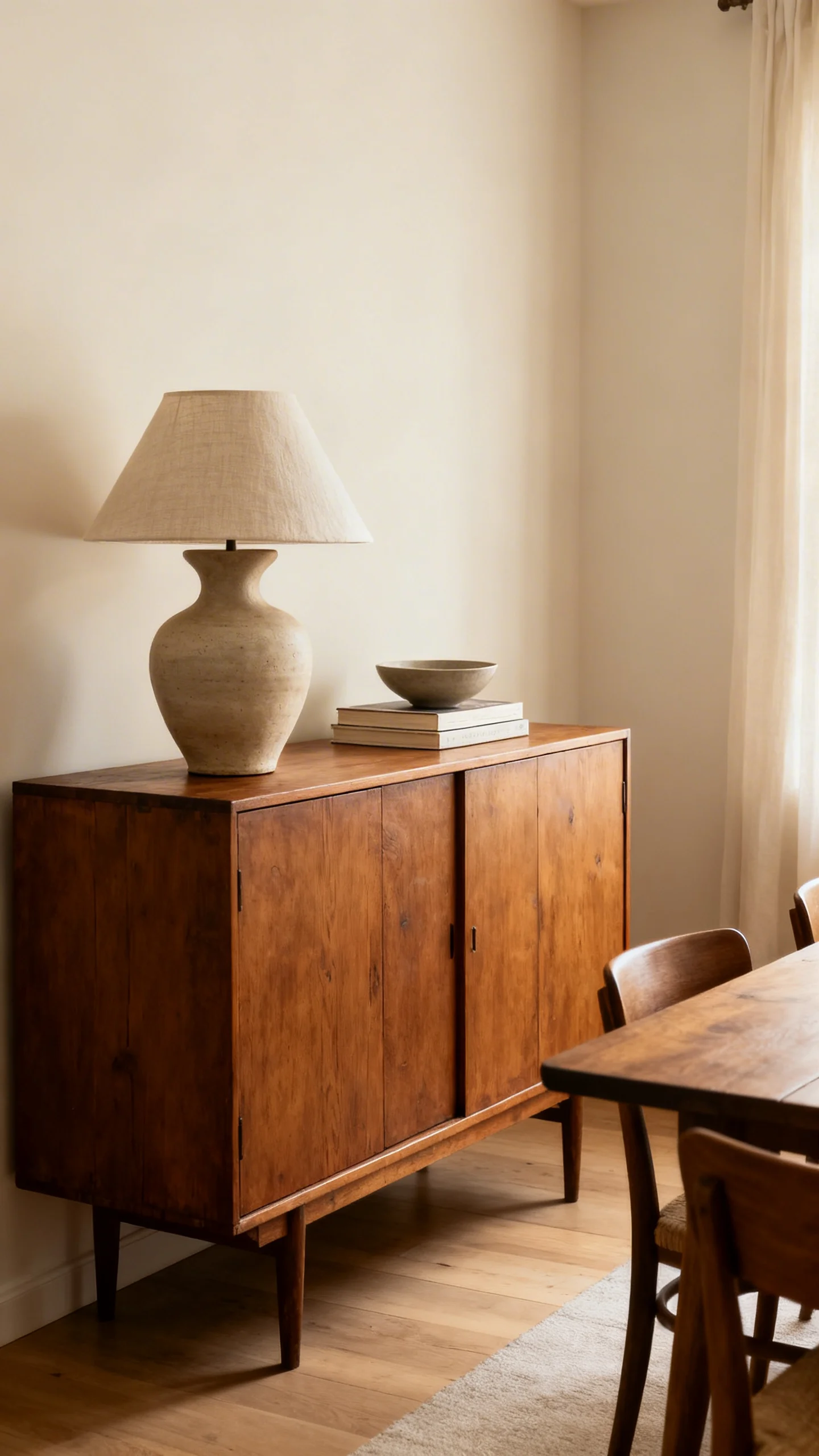
The designer secret isn’t buying everything expensive—it’s mixing. A thrifted piece looks elevated when you pair it with one item that reads high-end: a sculptural lamp shape, a large ceramic vase, or a streamlined mirror. This contrast makes the whole vignette feel curated.
Try this: remodel the furniture in a classic, quiet finish (warm white, deep navy, black, or natural wood tone), then add one “hero” accessory. Keep the rest simple: a small stack of books and a tray to make it feel intentional, not cluttered.
10) Finish with a “Styled Shelf” Moment: Layers, Height, and Negative Space
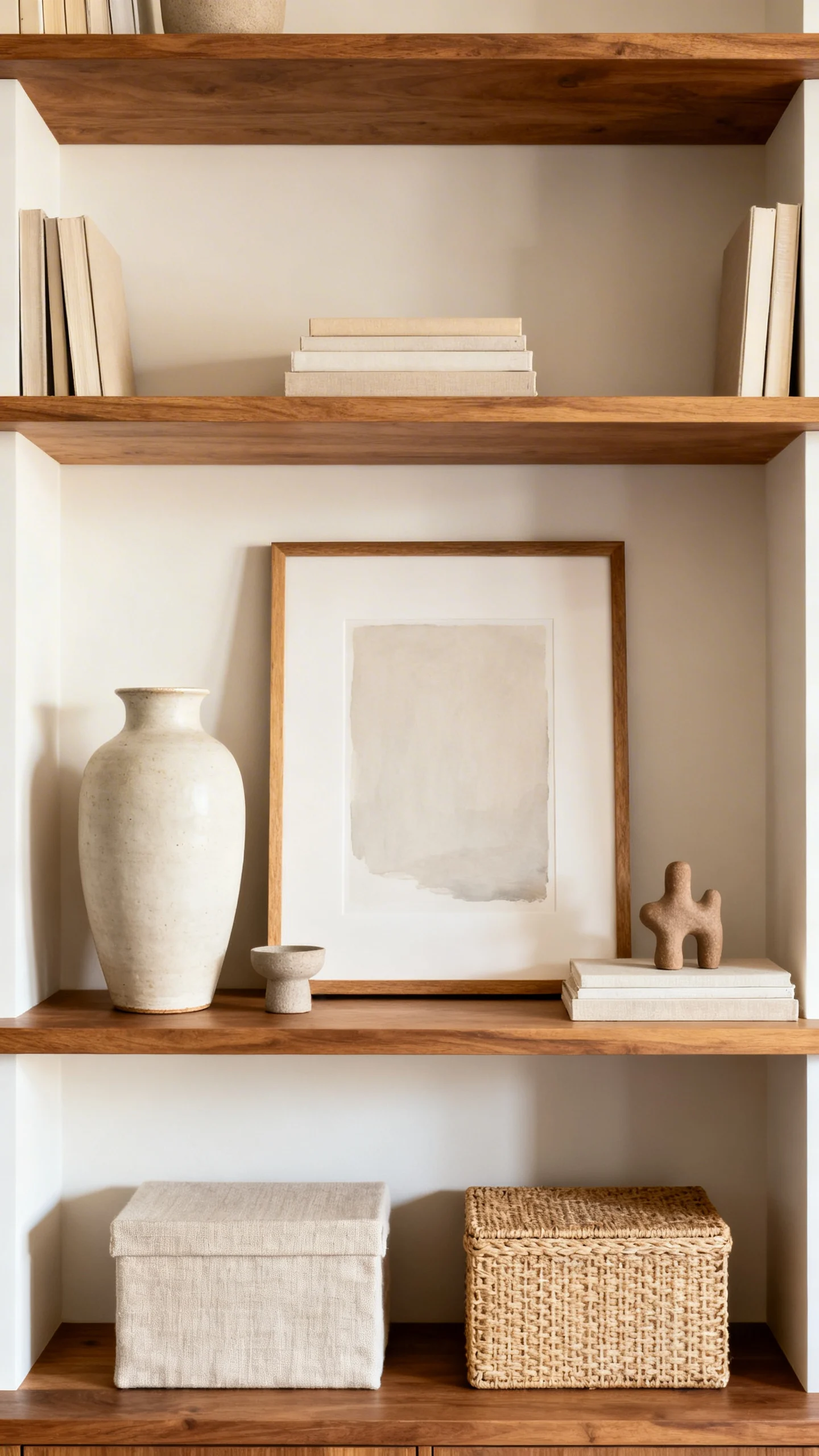
The final step that makes budget remodeling feel designer is the styling edit. Designers leave breathing room. They balance tall and low pieces. They repeat materials so everything feels connected. The result is that effortless, scroll-stopping calm.
Try this: style in thirds—one tall element (lamp or vase), one medium (frame or candle), one low (tray or bowl). Repeat one material twice (black accents, light wood, brass tone, or white ceramic) and leave a little empty space so the piece looks elevated and “finished.”
FAQ
What’s the fastest budget-friendly way to make furniture look designer?
Choose a sophisticated color (warm white, deep charcoal, olive, or muted blue) and keep the styling minimal: one oversized art piece behind it, plus 2–3 tactile accessories. The calm, edited look is what reads high-end.
How do I pick a paint color that won’t look cheap?
Avoid overly bright primaries and go for complex, muted tones—think mushroom, putty, fog, slate, deep navy, or soft black. These colors photograph beautifully and instantly make thrifted shapes feel more “boutique.”
What styling makes remodeled furniture look more expensive?
Scale and texture. Use one larger statement item (big art, a tall lamp, or an oversized vase) and add texture with linen, ceramic, woven fibers, or stone. Keep the rest uncluttered so it feels intentional.
Can I remodel mismatched thrifted furniture so it looks cohesive?
Yes—unify your pieces with a consistent palette and repeated materials. For example, paint two different side tables the same warm white and style them with matching tones (black frames, linen shades, or similar ceramic vases) so the room reads curated.
How do I avoid the “DIY gone wrong” look?
Keep the design simple: one main color, one detail (like subtle texture or gentle contrast), and a restrained styling moment. The more you lean into clean lines, tonal palettes, and negative space, the more your budget remodel will feel designer.