
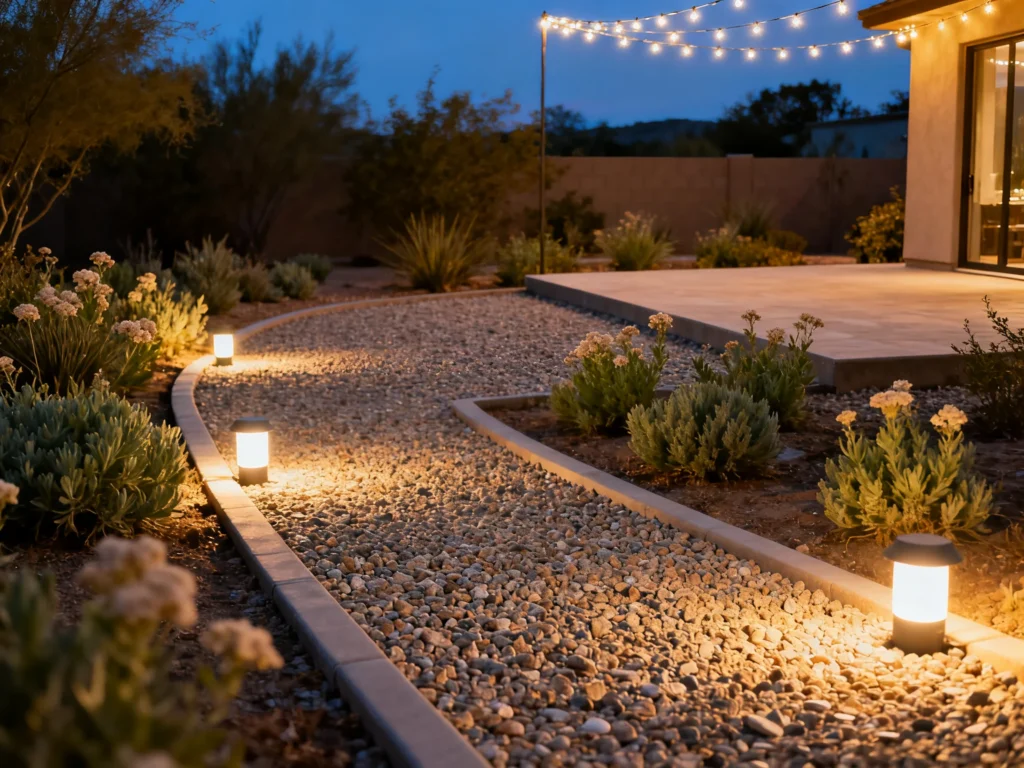
Backyard Landscaping on a Budget Using Gravel, Plants, and Lighting
A beautiful backyard doesn’t require a huge overhaul or a pricey patio. With gravel for structure, plants for softness, and lighting for atmosphere and safety, you can create an outdoor space that looks finished—without the finished-at-any-cost budget.
Use the tips below to plan a clear layout, choose the right gravel, place plants strategically, and layer lighting so your backyard feels inviting from day to night.
1) Start With a Simple Layout: One Main Path + One Destination
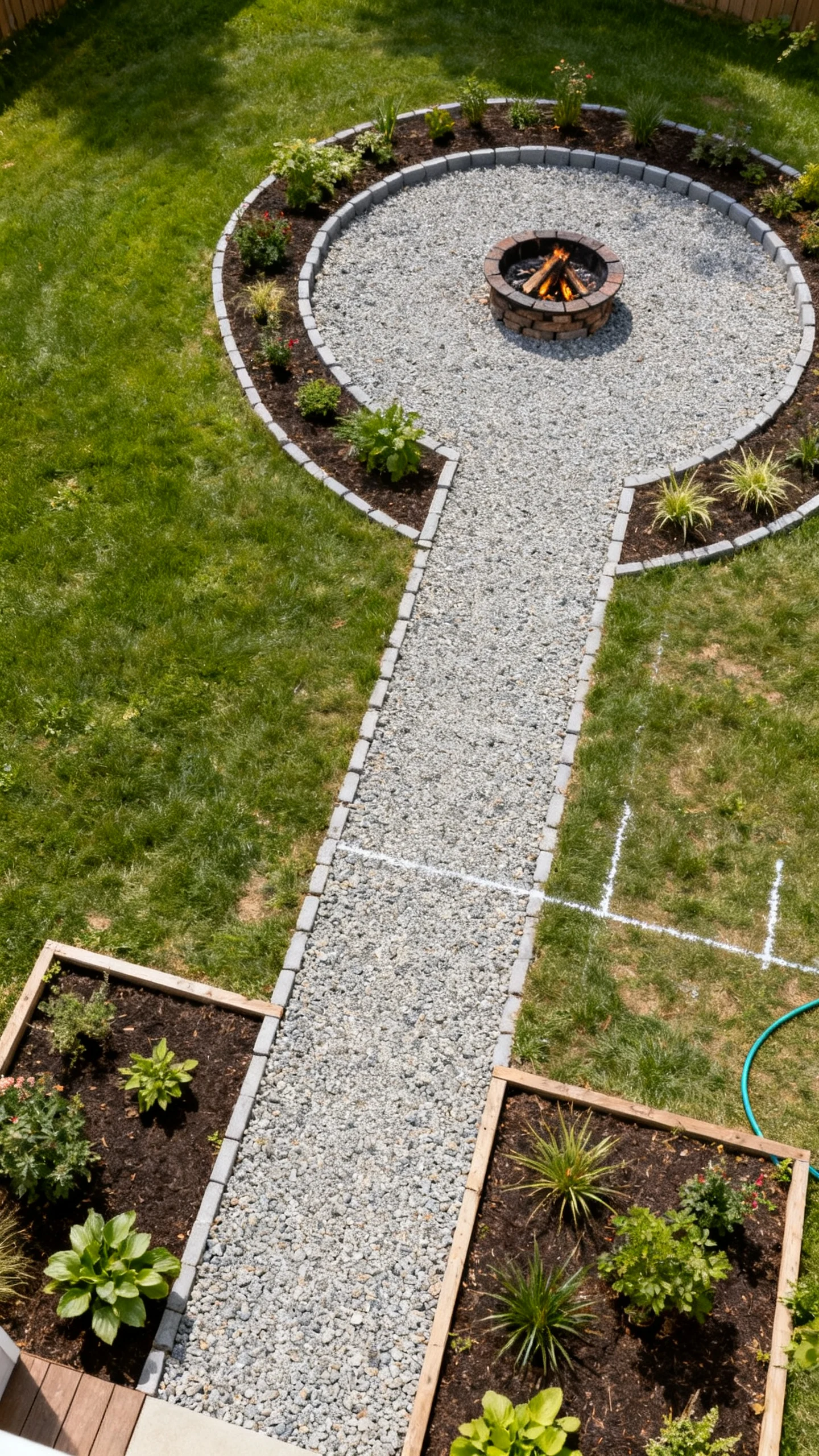
Budget-friendly landscaping starts with fewer, better decisions. Sketch a basic plan: one primary walkway (typically 3–4 feet wide so two people can pass) leading to one “destination” zone (a small gravel patio, a fire pit circle, or a bench nook). Keep secondary paths narrow (24–30 inches) to save gravel while still creating access for watering and maintenance.
2) Pick the Right Gravel Size for the Job (Comfort + Stability)
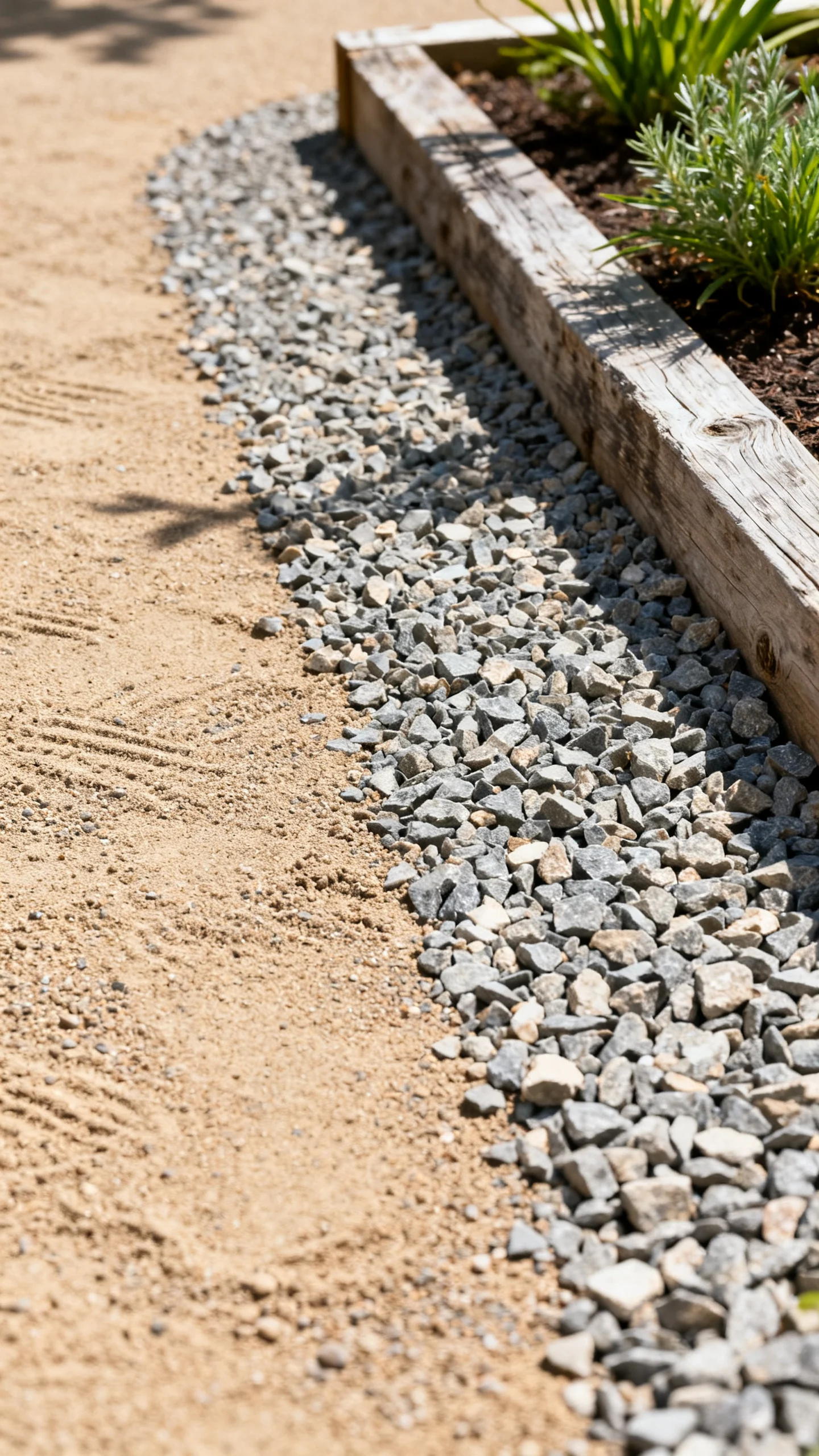
Gravel choice affects how your backyard feels underfoot and how much it shifts. For paths and seating areas, aim for 1/4-inch minus (often called decomposed granite fines or crushed stone fines) or 3/8-inch crushed gravel for better “lock-in.” Avoid rounded pea gravel in high-traffic paths—it rolls and migrates. Save pea gravel for low-traffic pockets or decorative dry creek beds.
3) Build a Weed-Resistant Base Without Overbuilding
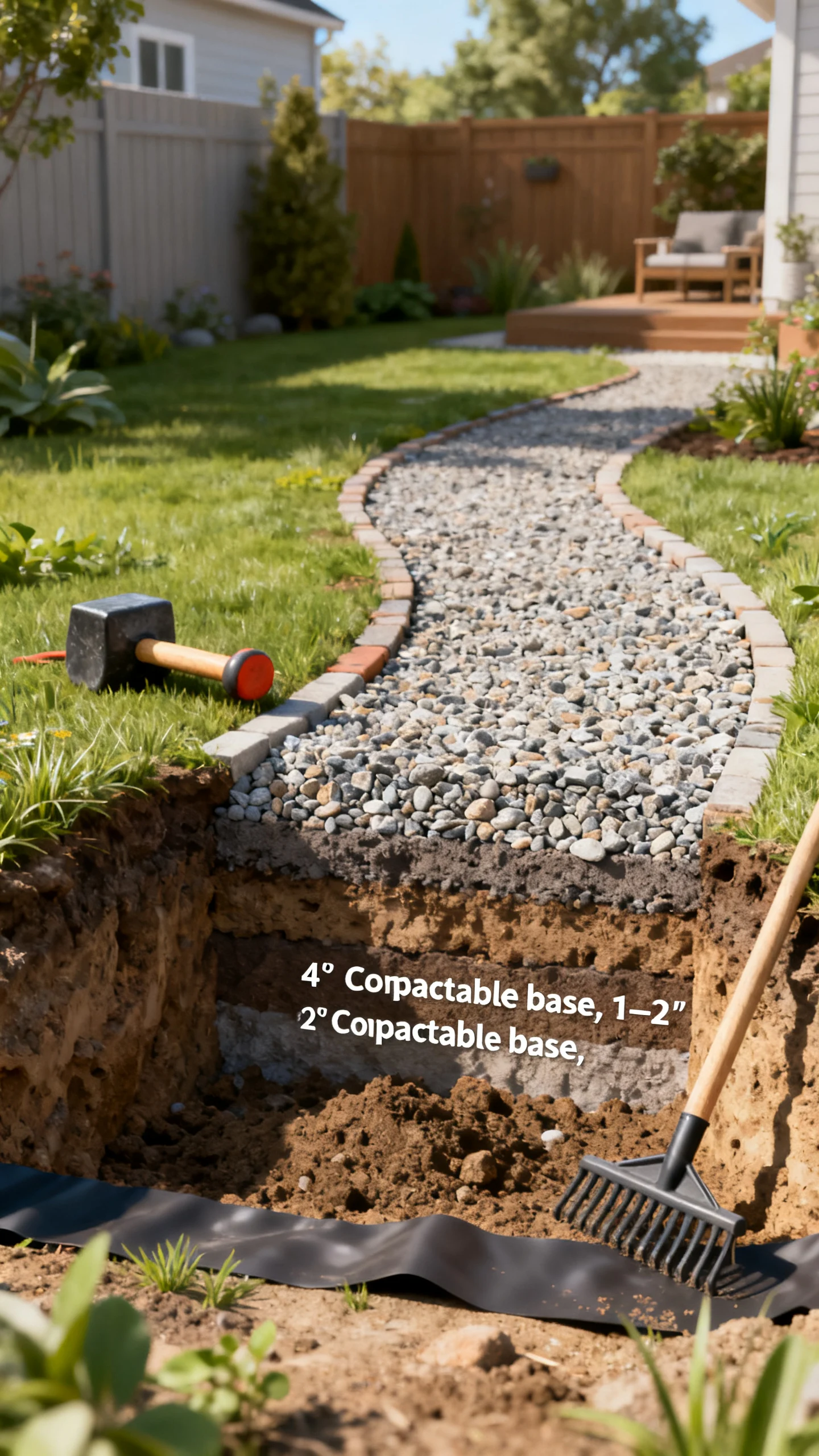
For a tight budget, prioritize a smart base where it matters: main walkways and seating zones. Excavate 3–5 inches, then add 2–4 inches of compactable base (road base or crushed stone), tamp it, and top with 1–2 inches of your finish gravel. Use a quality woven landscape fabric under the base layer (not thin plastic) to reduce weed growth while still allowing drainage.
4) Edge Everything: The Cheapest Way to Make Gravel Look “Designed”
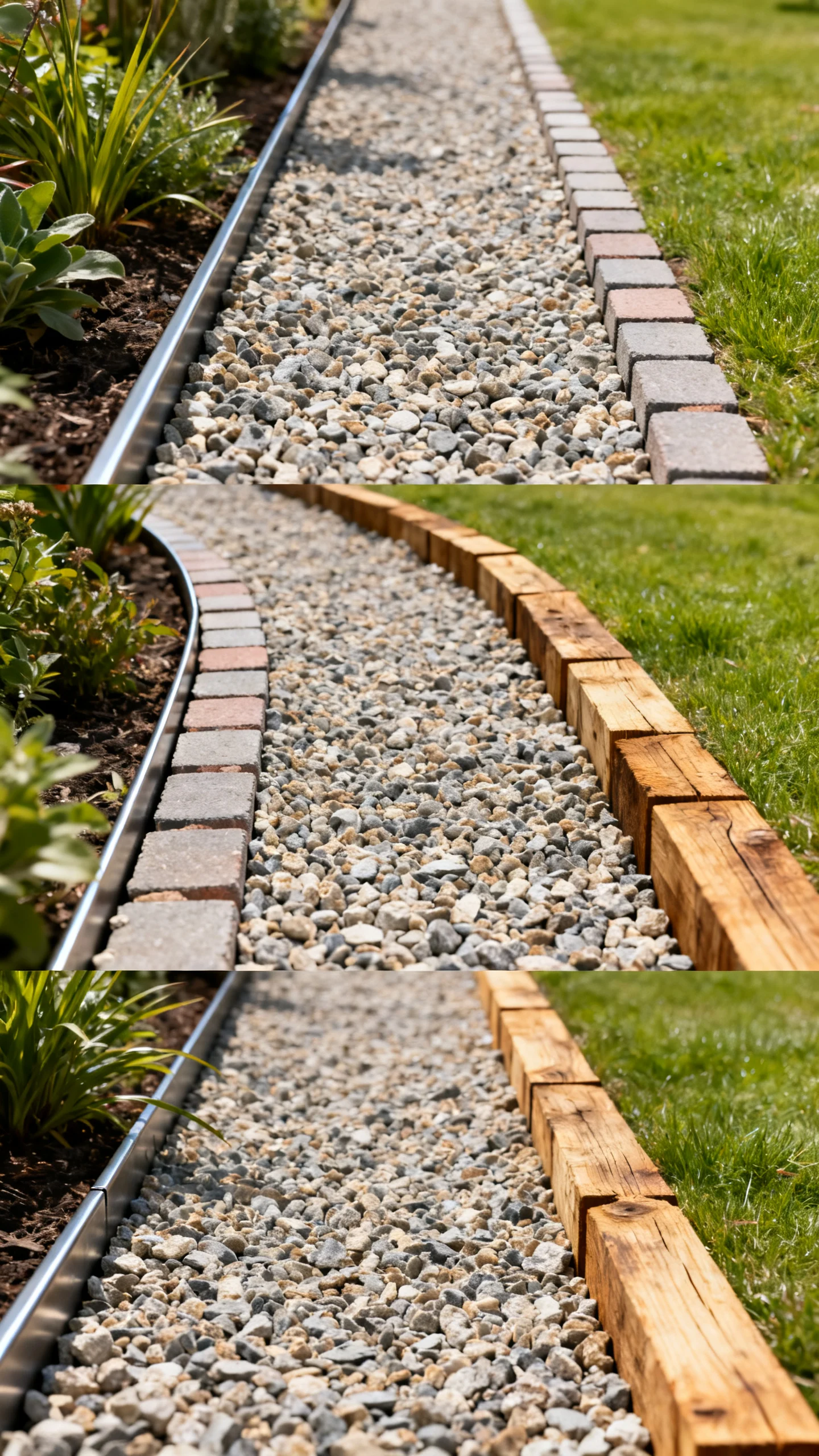
Edging keeps gravel from wandering into plant beds and lawn, and it instantly makes the layout look intentional. Budget options include steel edging (sleek and durable), paver borders, or pressure-treated timber (rustic and affordable). Set edging at least 1/2 inch above the gravel level to catch stray stones, and plan gentle curves instead of tight turns—tight curves are harder to edge cleanly.
5) Create a Gravel Patio Pad With Clearances That Actually Work
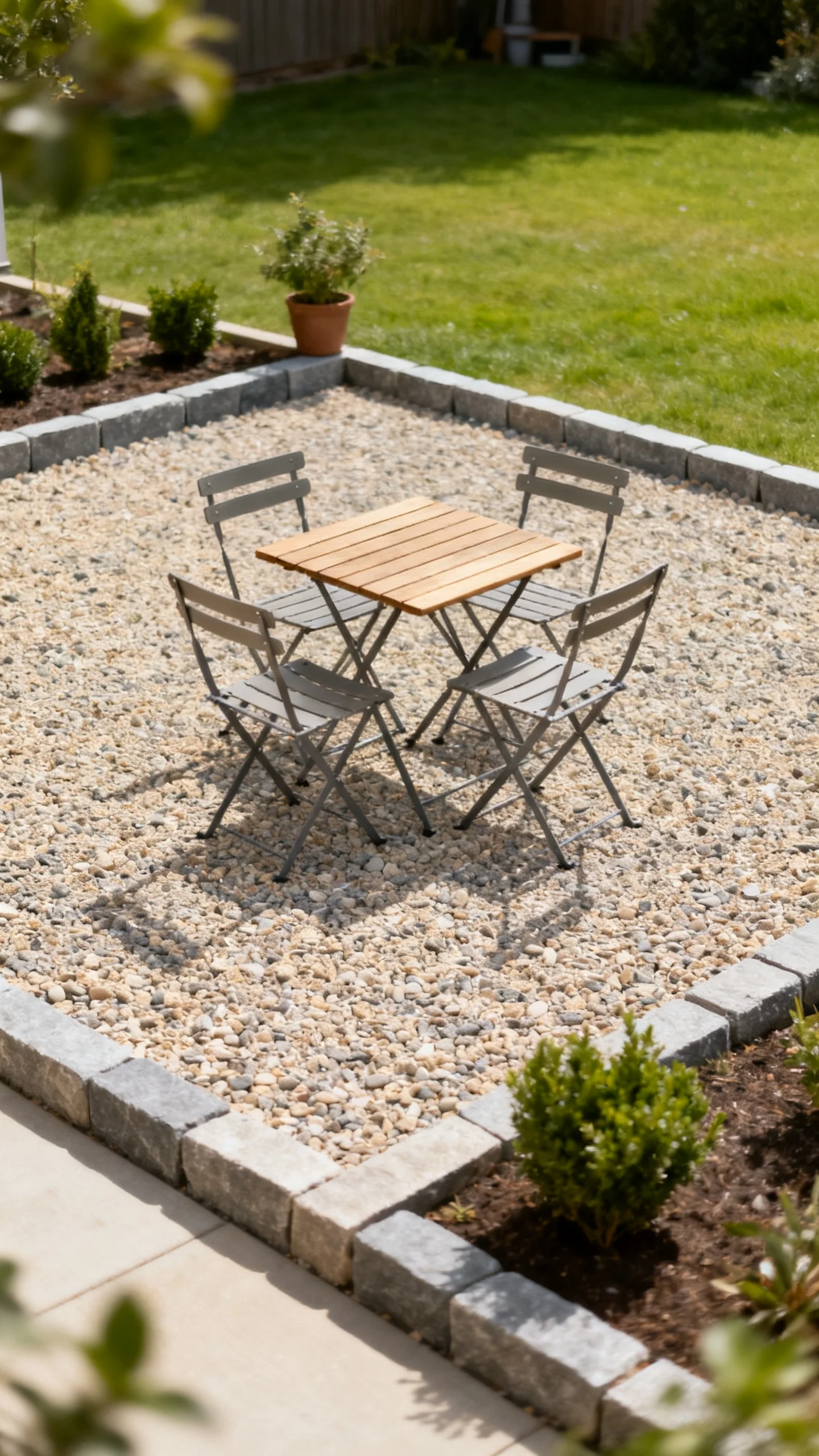
A gravel patio is one of the most cost-effective outdoor “rooms.” Size it to your furniture: for a small bistro set, plan at least 6×6 feet; for a 4-person dining setup, aim for 10×10 feet; for lounge seating, 12×12 feet is a comfortable starting point. Keep 36 inches of circulation space around table edges where possible so chairs can slide out without catching on edging or plants.
6) Use Plants to Soften Edges and Hide Budget Materials
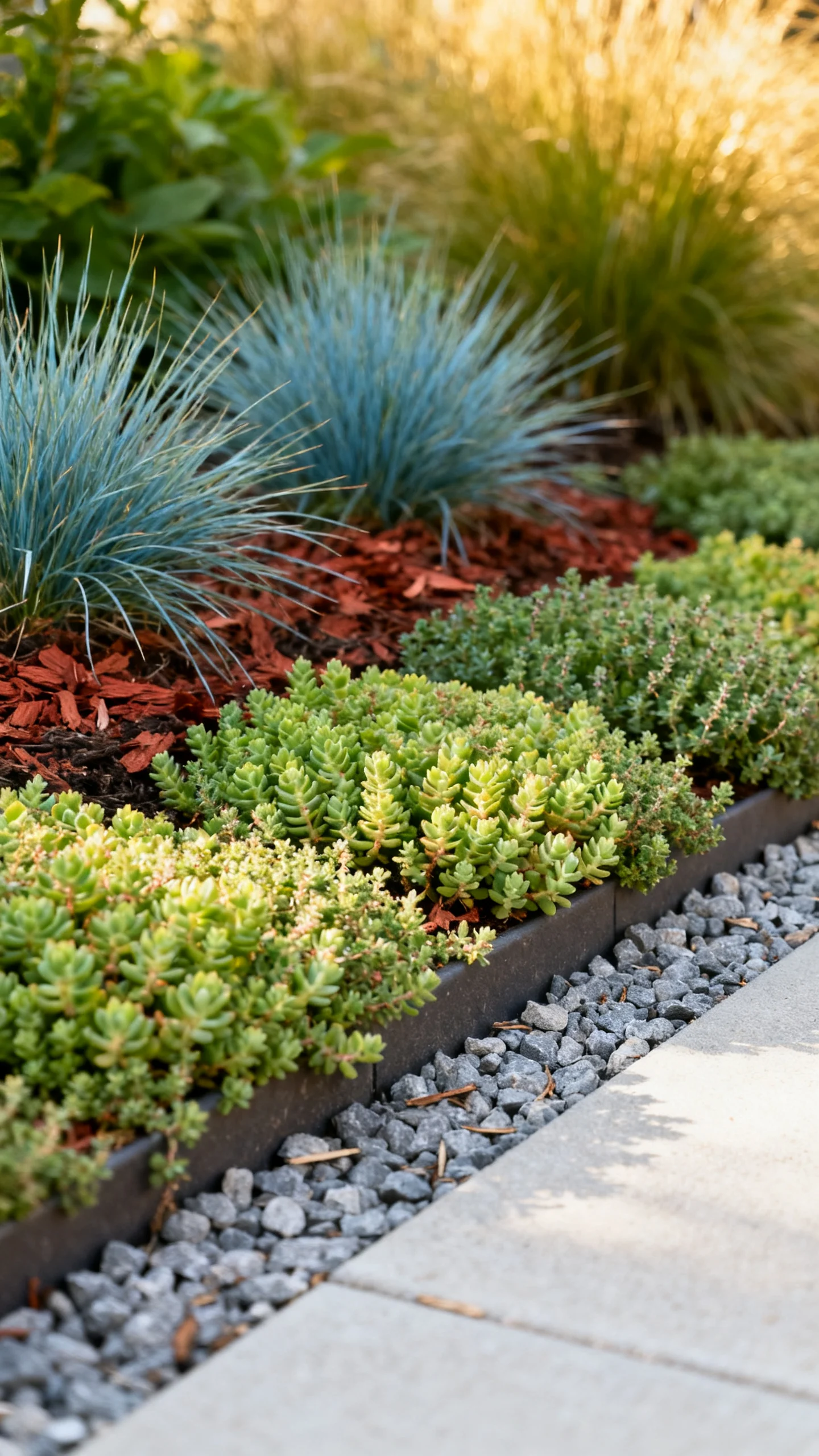
Gravel can feel stark on its own—plants make it look lush and layered. Place low, mounding plants along path edges to soften lines and reduce visible edging, but keep them set back 6–12 inches from the gravel to avoid constant trimming. In planting beds, use one or two repeating plant varieties for a cohesive look (and easier shopping). Group plants in threes or fives for visual impact without buying dozens of different types.
7) Choose Budget-Friendly Planting Strategies: Small Sizes, Big Placement
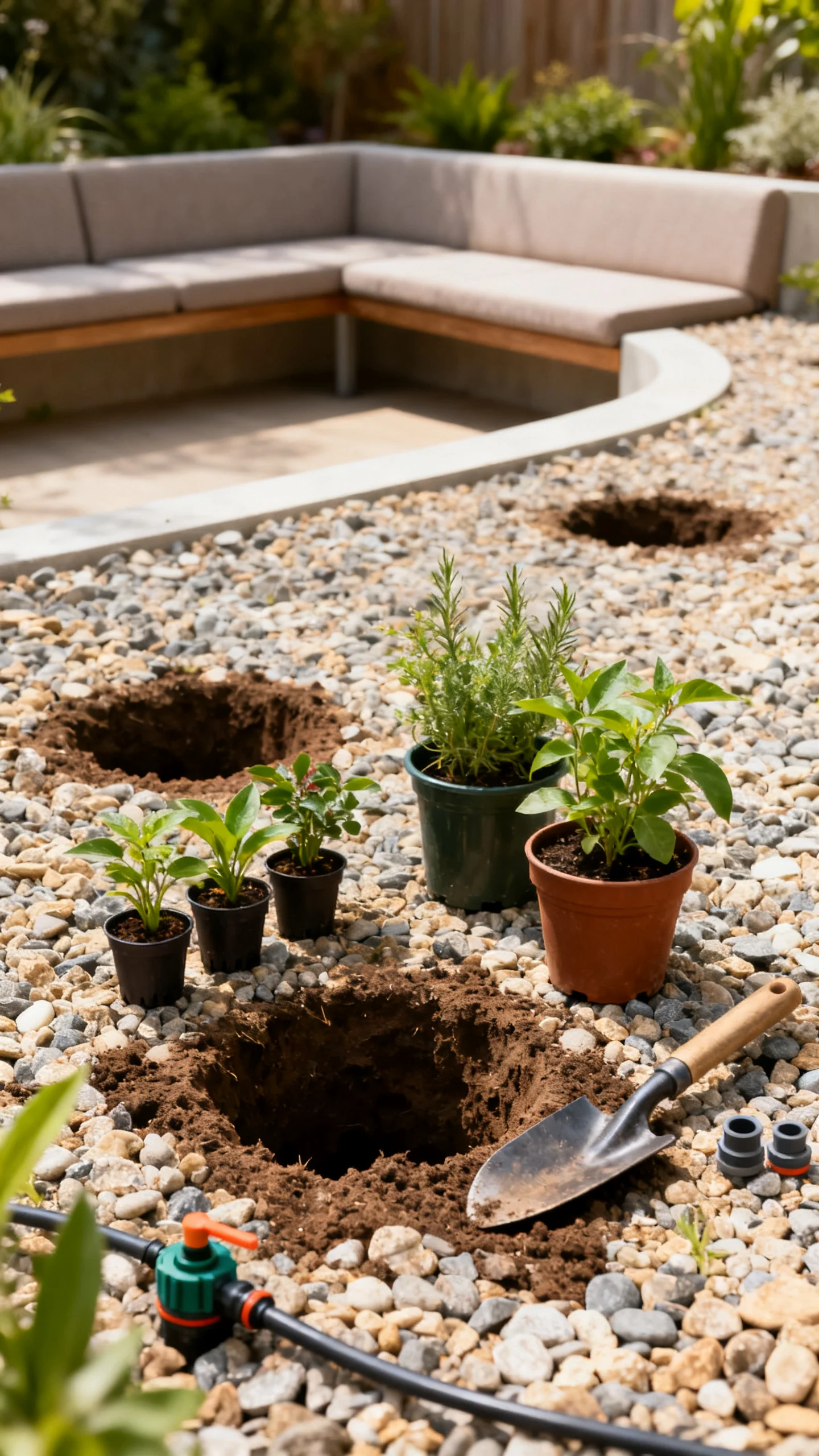
To save money, buy smaller plants (4-inch or 1-gallon) and plant them closer in key focal areas—like near seating—while spacing them properly elsewhere. As a quick guideline, space most medium perennials 18–24 inches apart, and small shrubs 3–5 feet apart (check the mature width on the label). Mulch planting beds (not gravel) to reduce watering needs; reserve gravel for paths and patios to keep maintenance simple.
8) Light the Layout First: Path Lights for Safety and Flow
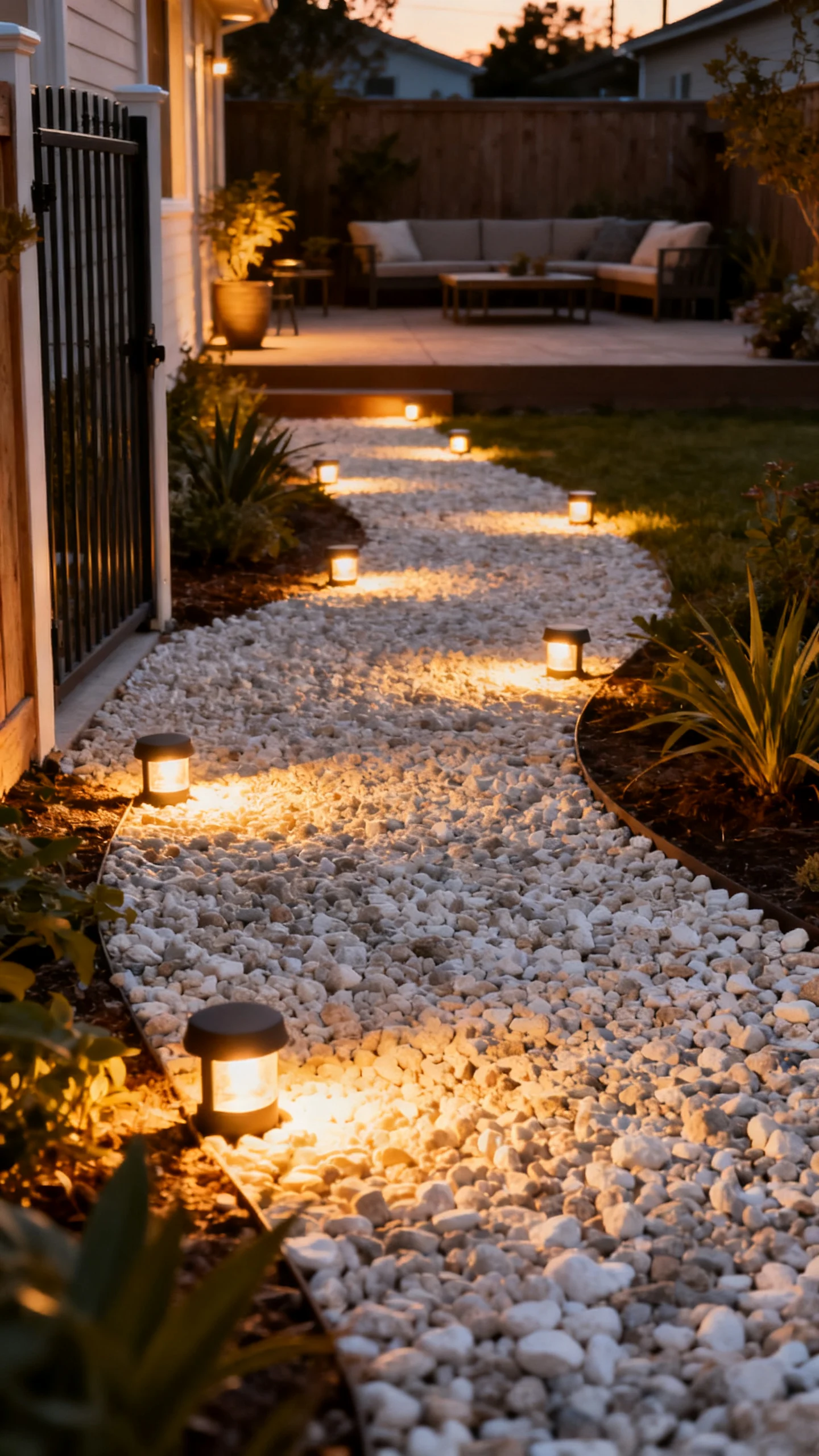
Lighting is where a budget backyard turns magical—especially when it also solves navigation at night. Start with path lighting: place lights 6–8 feet apart in a staggered pattern rather than lining them up like an airport runway. For steps or grade changes, add a light at the top and bottom for safety. Solar path lights can work in full sun, but low-voltage LED kits are more reliable for consistent brightness and longer evenings.
9) Add Warm Ambient Glow: String Lights + Shielded Spots
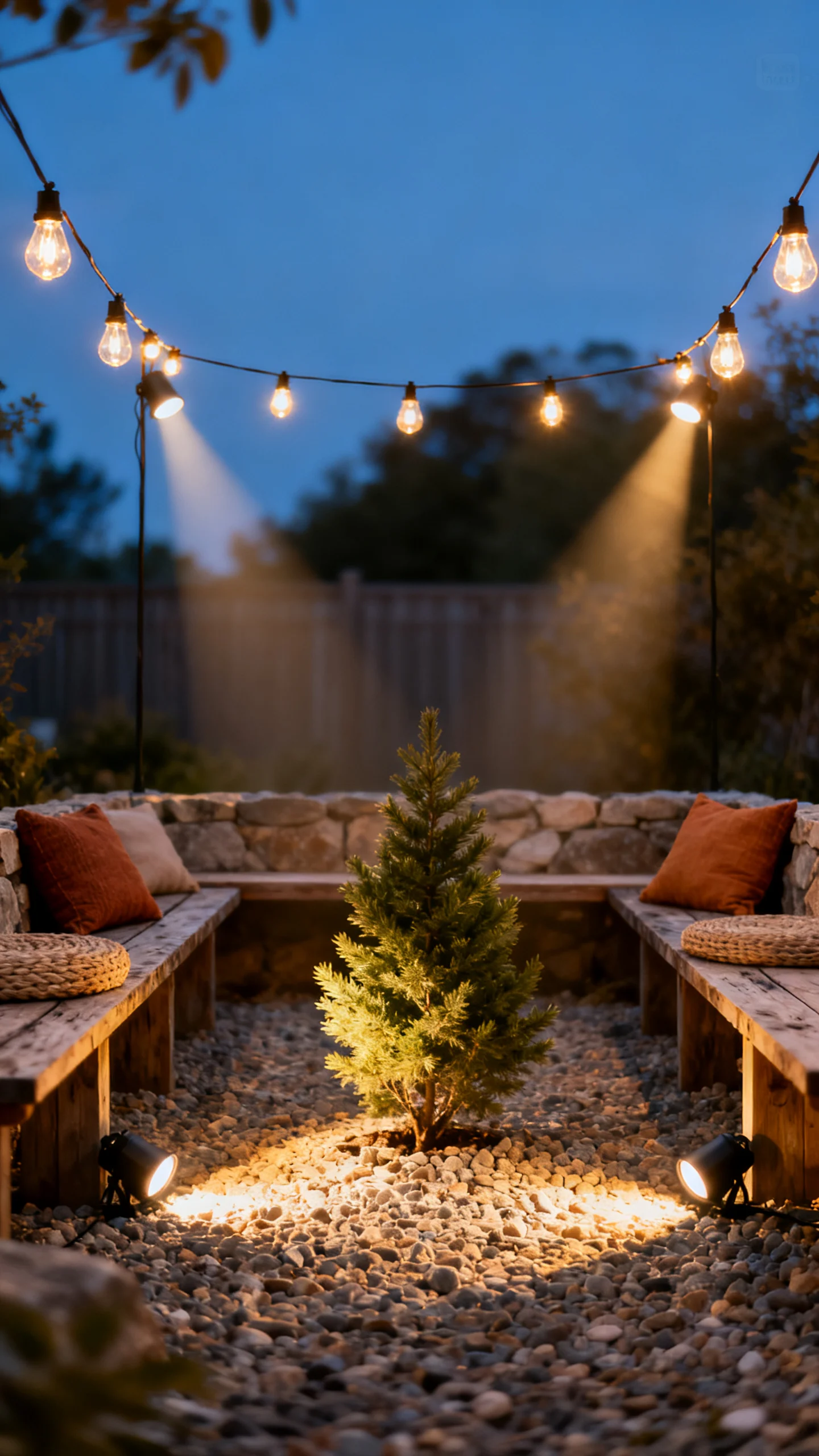
Once paths are handled, layer in ambiance. Use outdoor-rated string lights over the gravel patio or seating area, hung high enough for clearance—at least 7 feet above walking areas is a good target. Anchor them to a house fascia, sturdy posts set in concrete, or a pergola frame. Then add a couple of shielded uplights aimed at a small tree or tall shrub to create depth; keep beams pointed down or into foliage to reduce glare.
10) Make Maintenance Budget-Proof: Control Gravel Drift and Plant Watering
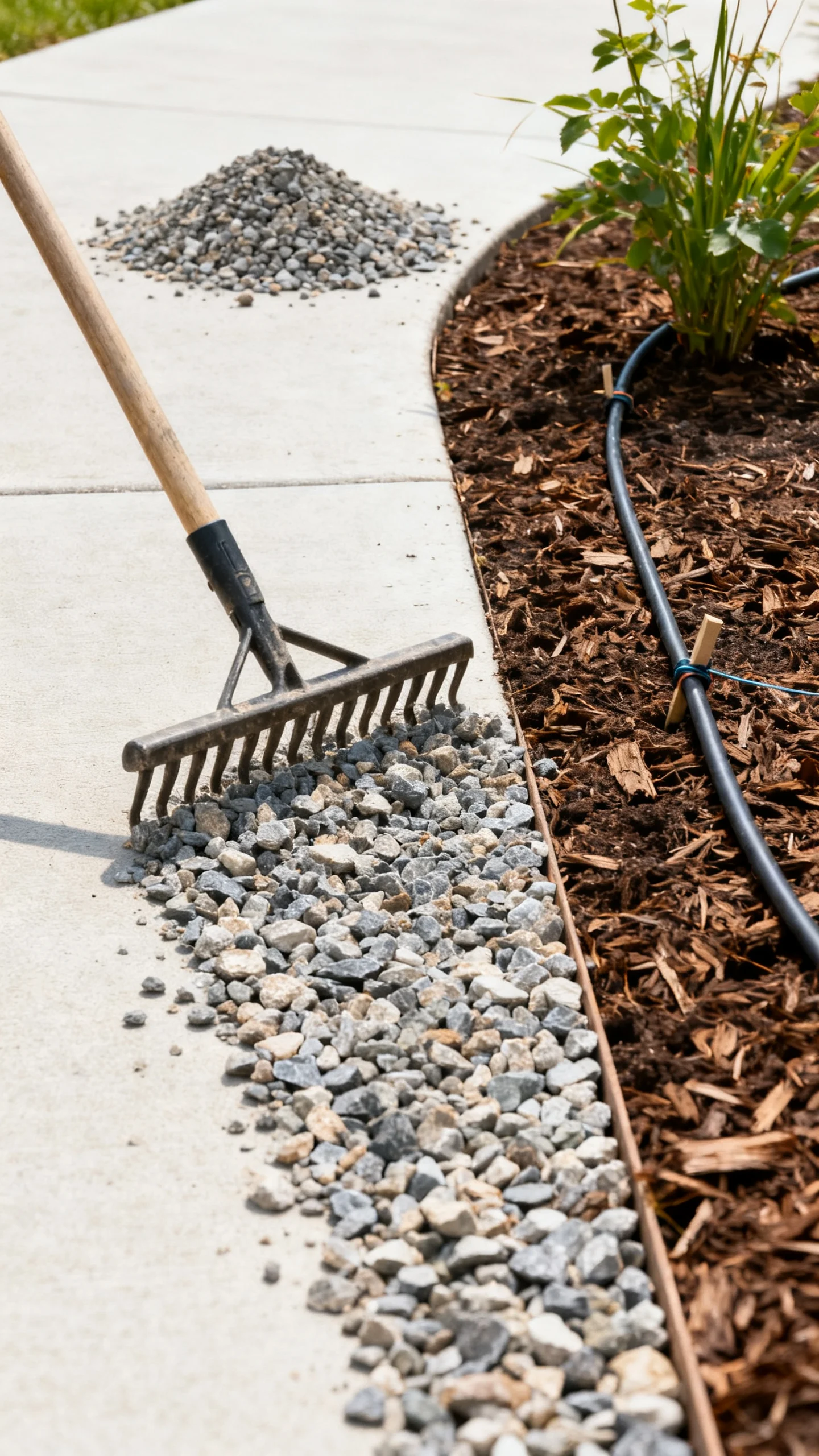
The cheapest landscaping is what you don’t have to redo. Rake gravel back into place monthly (a stiff landscape rake works well), and top up thin spots annually. In plant beds, install a simple drip line or soaker hose under mulch to reduce water waste and keep plants thriving with less effort. Use a leaf blower gently on low power to clear debris from gravel without blasting stones into your planting areas.
FAQ
How much gravel do I need for a backyard path or patio?
Multiply length x width to get square feet, then decide depth. For a 2-inch finish layer, you’ll need about 0.17 cubic yards per 100 square feet (and more if you’re building a compacted base). Many suppliers provide calculators; measure carefully and add 5–10% extra for settling and touch-ups.
Is landscape fabric necessary under gravel?
It’s not mandatory, but it helps reduce weeds and keeps gravel from sinking into soil over time. Choose a woven, permeable fabric for better durability and drainage. Pair it with proper edging and a compacted base in high-traffic zones for the best results.
What’s the most budget-friendly lighting for a backyard?
Solar lights are the lowest upfront cost and are great in full sun, but brightness varies. Low-voltage LED kits cost more initially yet deliver more consistent light and often look more polished. A smart budget approach is solar for secondary areas and low-voltage for the main path and seating zone.
Will gravel make my backyard hotter in summer?
Gravel can hold heat, especially darker stone in full sun. To balance comfort, mix in planting beds and shade elements (like a small tree near seating), and choose lighter-colored gravel where possible. Even a simple umbrella over a gravel patio can make the space feel cooler.
How do I keep gravel from getting into my lawn and planting beds?
Install edging and keep it slightly higher than the gravel surface. Maintain a clean edge line with periodic raking, and avoid placing gravel right next to turf without a border. If gravel migration is persistent, widen the edging or add a narrow “buffer strip” of pavers between gravel and grass.