
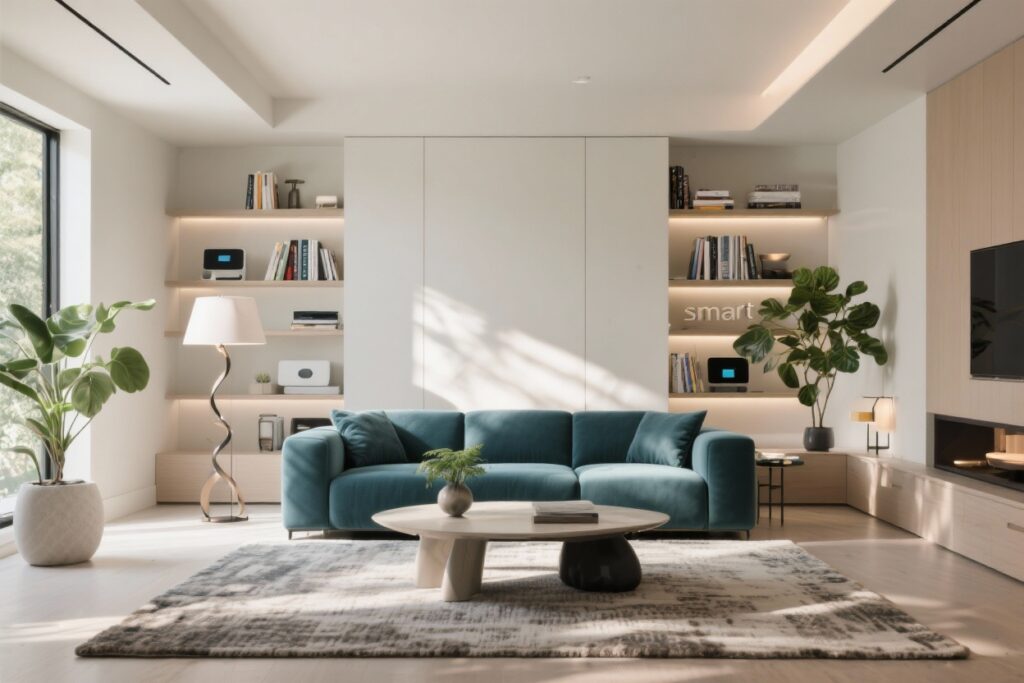
Your living room can look genius-level chic without a PhD in design or a new mortgage. The trick? Edit what you have, layer what you love, and add a few clever details that whisper “I’ve got great taste.” Ready to make your space appear more smart? Let’s play stylist.
1. Curate, Don’t Crowd
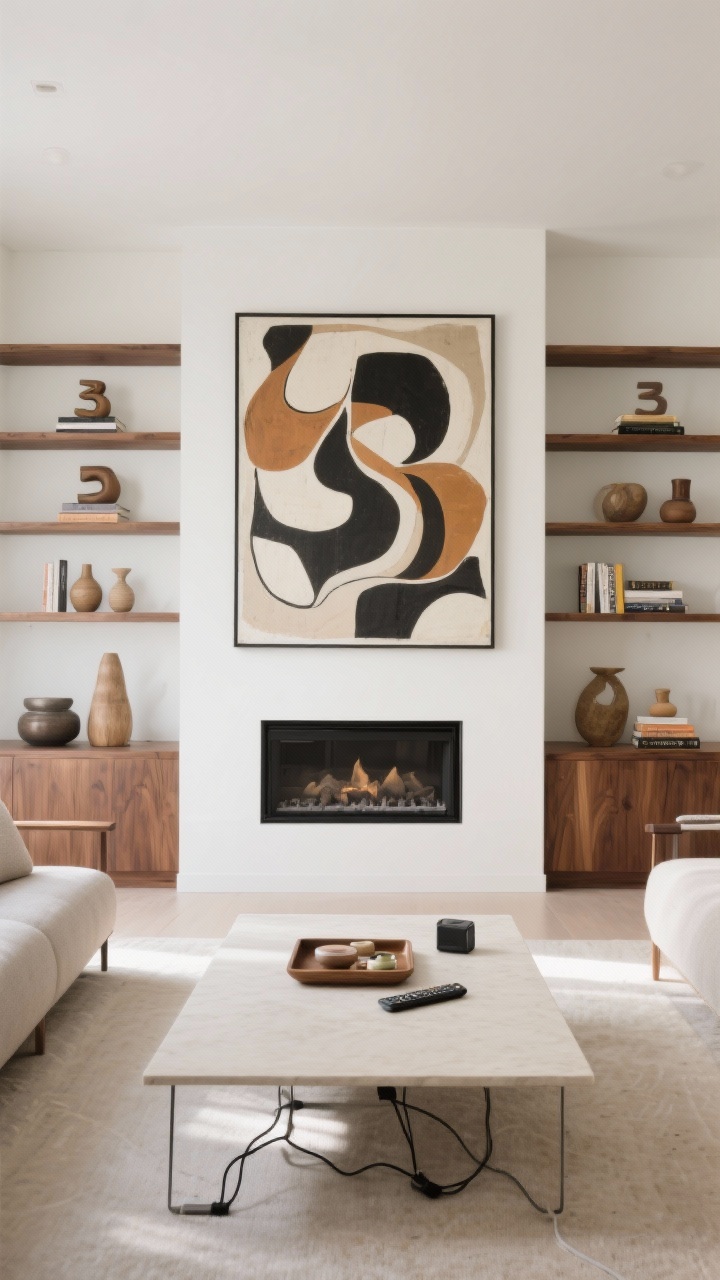
Smart rooms feel intentional, not chaotic. That means fewer random knickknacks and more considered pieces. Edit first, style second.
What to remove
- Anything you don’t love or use weekly. Harsh but fair.
- Duplicate decor (three candles that look identical? Pick the best one).
- Visual noise: tangled cords, scattered remotes, bulky chargers.
Then curate
- Create a focal point (art, fireplace, statement bookshelf).
- Group decor in odd numbers (3s or 5s) with varying heights.
- Leave negative space on surfaces—smart rooms breathe.
FYI: If a piece doesn’t support the vibe or the function, it’s clutter. Bonus points for trays to corral loose stuff—instant polish.
2. Master a Tight Color Story
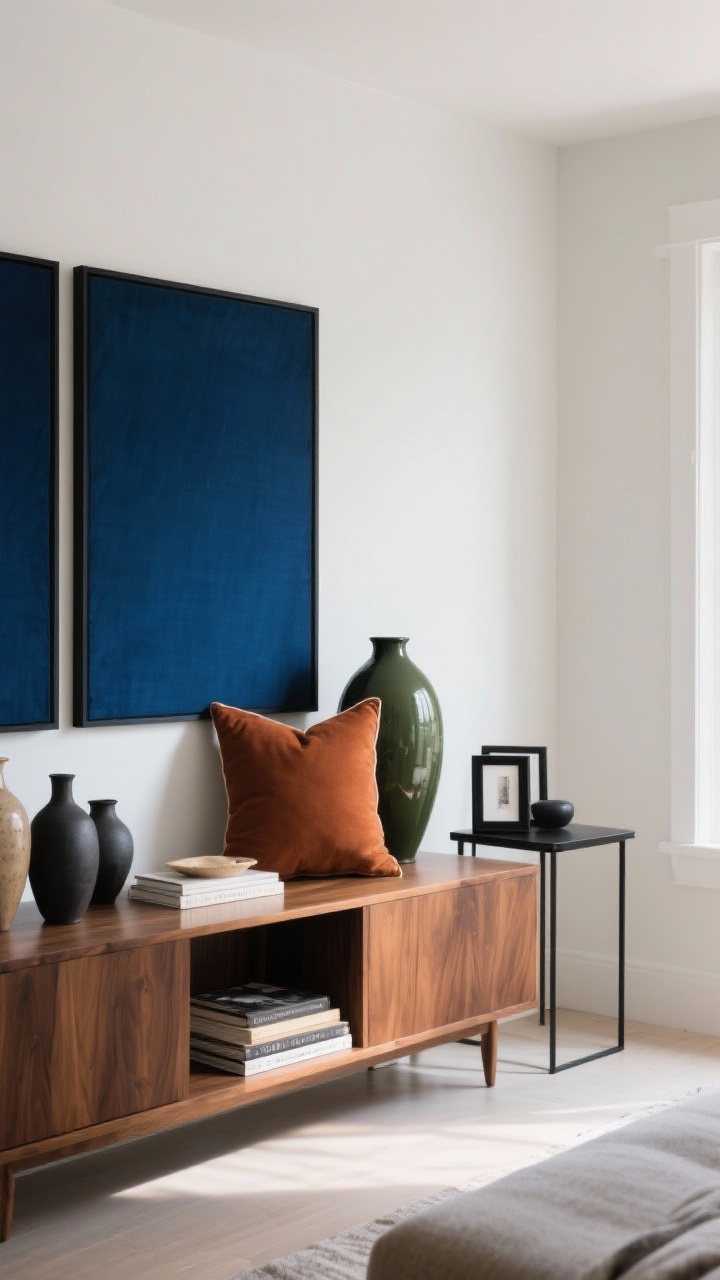
Nothing says “I planned this” like a disciplined palette. Choose a base, a supporting neutral, and one or two accent hues—then stick to them.
Easy palette formula
- Base: Warm white, soft gray, or greige walls.
- Neutral anchor: Charcoal, camel, or walnut wood tones.
- Accent: Deep blue, olive, rust, or black for contrast.
Bring your palette into textiles, books, vases, frames—subtle repetition reads smart. And yes, a pop of black grounds a room like magic. IMO, it’s the eyeliner of interiors.
3. Upgrade Lighting Like You Mean It
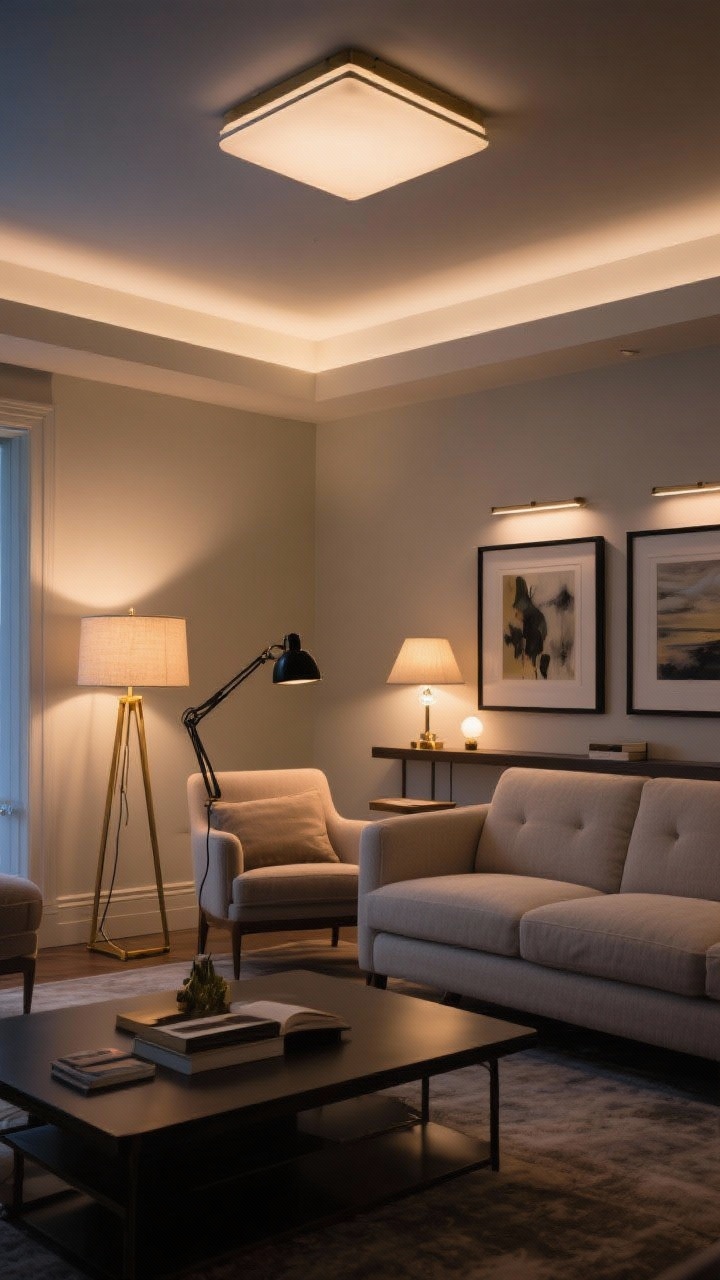
Overhead lighting alone is a vibe killer. Layer light sources for depth and mood—that’s what makes a living room feel sophisticated and, well, expensive.
The 3-layer lighting rule
- Ambient: A dimmable ceiling fixture or flush mount.
- Task: A floor lamp by the sofa, swing-arm lamp by a chair.
- Accent: Picture lights, sconces, or a tiny lamp on a shelf.
Swap builder-grade shades for linen or parchment. Add smart bulbs for warm dimming and schedules—effortless mood shift. And please, hide lamp cords; visible wires cheapen the look fast.
4. Style Surfaces With Intent
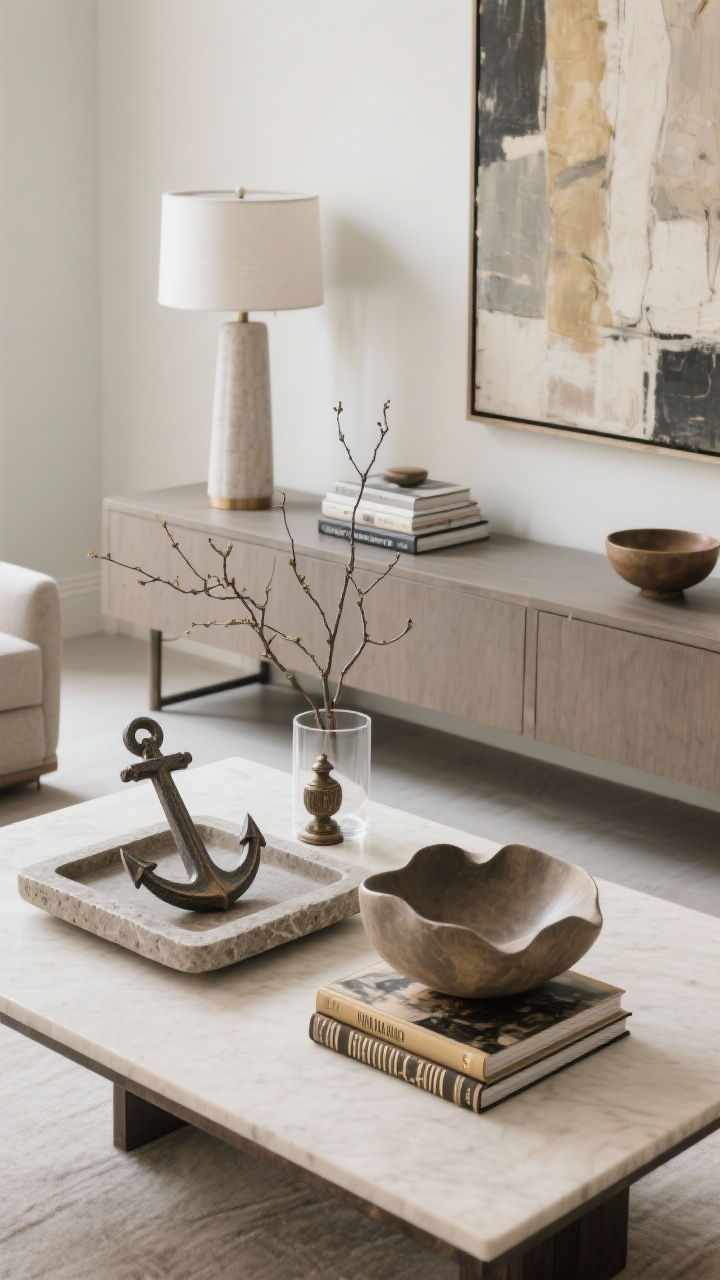
Coffee tables, consoles, and sideboards are your style billboards. Keep them edited, balanced, and tactile. You’re telling a story, not stacking a yard sale.
Coffee table recipe
- One large anchor: a tray or sculptural bowl.
- Books: 2-3 beautiful hardcovers with interesting spines.
- Organic element: branches, low florals, or a textured stone.
- Personality piece: a small artifact, candle, or objet.
Console styling tips
- Pair a tall lamp with a large art piece or mirror.
- Balance with a stack of books and a low bowl or box.
- Leave at least one-third of the surface clean for airiness.
Rule of thumb: vary height, texture, and shape. Repetition is elegant; clutter is not.
5. Edit Fabrics and Textures (But Keep It Tactile)
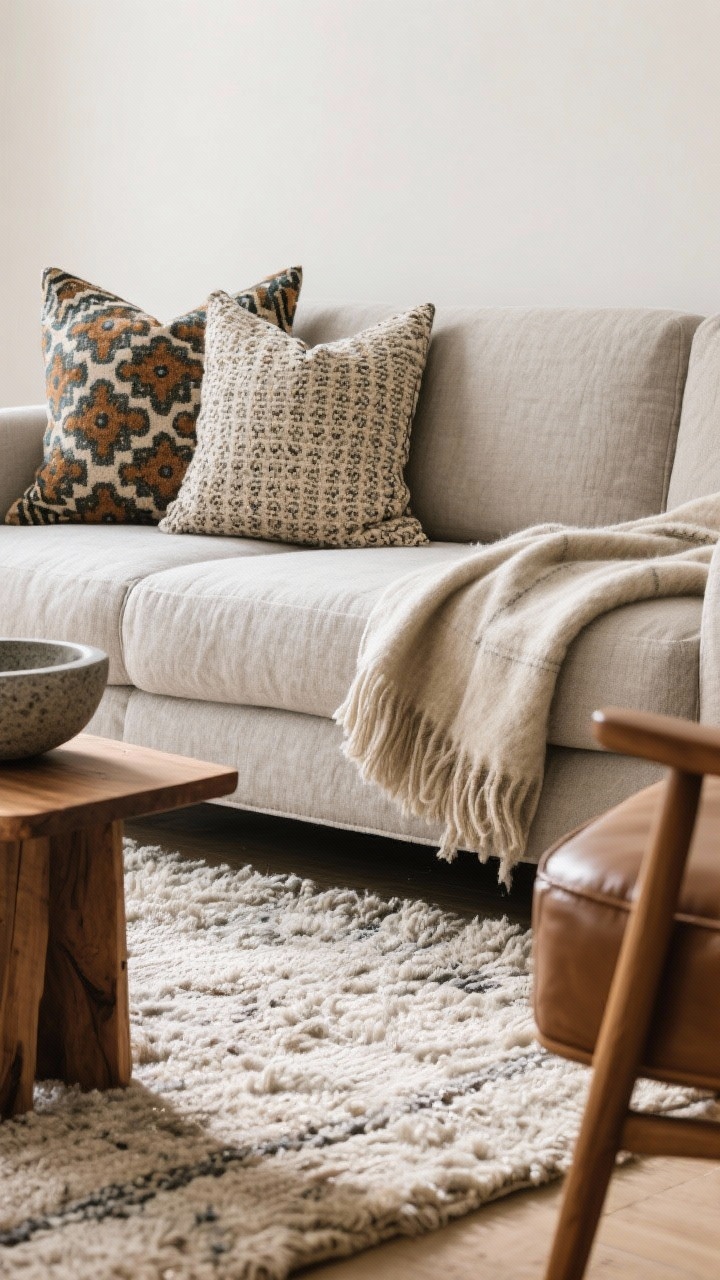
Smart-looking spaces mix textures that feel elevated but not fussy. Think nubby linen, smooth leather, warm wood, cool stone—like a charcuterie board of materials.
Textile checklist
- Pillows: 2-3 patterns max; mix scale (one bold, one small, one solid).
- Throw: One high-quality throw draped neatly (not like it survived a tornado).
- Rug: Go larger than you think—front legs of furniture on the rug, minimum.
Choose natural fibers where you can (wool, linen, cotton). They sit better, age better, and read “considered.” If you love color, keep the foundation neutral so the bright stuff looks intentional, not chaotic.
6. Add Art, Books, And A Little Brainy Charm
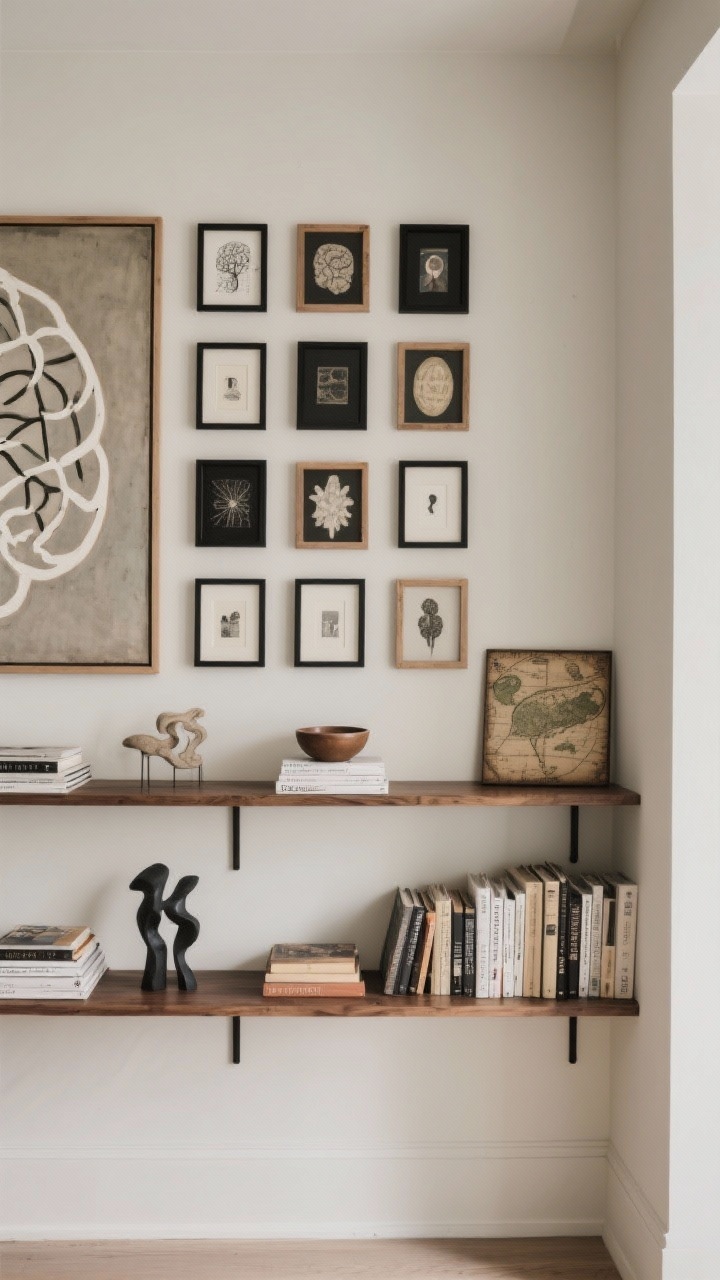
Want your living room to appear more smart? Show your interests—just do it with restraint. Art and books add depth, but the key is curation.
Art that elevates
- Hang art at eye level (center around 57–60 inches from the floor).
- Use oversized pieces or a tight grid gallery for calm impact.
- Mix frames in black, wood, or brass—but keep finishes consistent per wall.
Books and objects
- Style shelves in thirds: books, objects, negative space.
- Stack horizontally to vary rhythm; top with a small bowl or candle.
- Include a few conversation starters: a vintage find, travel piece, or sculptural object.
FYI: A single commanding artwork beats ten flimsy pieces. Go big where you can—it instantly looks smarter.
7. Get The Layout And Details Laser-Right
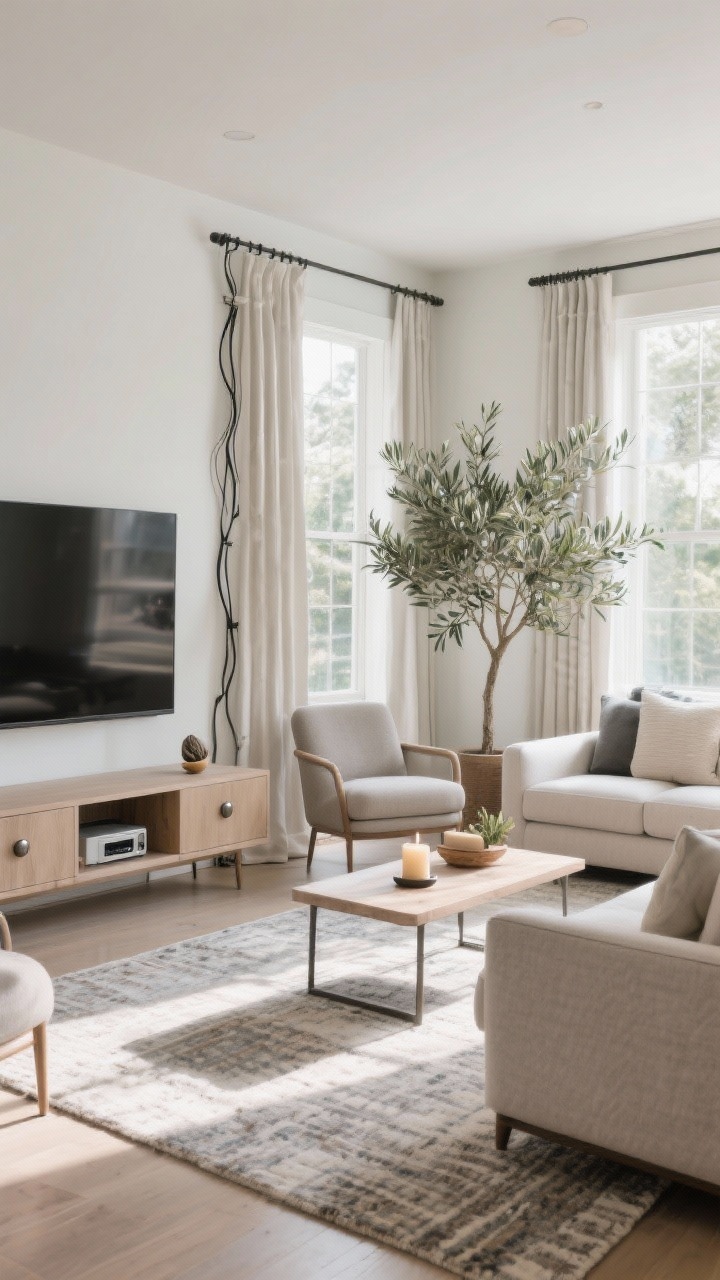
Function is the quiet hero of a smart-looking room. If the layout flows and the details are tidy, everything feels elevated—even on a budget.
Layout fixes that change everything
- Conversation zone: Place seating 7–9 feet apart to talk comfortably.
- Rug sizing: Anchor front legs of sofas and chairs on the rug.
- Pathways: Leave 30–36 inches for circulation and 18 inches between sofa and coffee table.
Detail upgrades
- Hardware: Swap cheap knobs on media units for solid metal or leather pulls.
- Window treatments: Hang curtains high and wide; use lined panels for fullness.
- Tech cleanup: Hide routers in ventilated boxes and use cable channels for TV wires.
- Greenery: One large-scale plant > five tiny ones. Choose olive tree, ficus, or monstera.
Finally, add a quiet scent signature—cedar, fig, or soft citrus. People won’t know why your living room feels so put-together; they’ll just know it does.
Wrap-Up: You don’t need a top-to-bottom makeover to make your living room appear more smart. Curate, simplify, and layer with intention. Tweak your lighting, nail your color story, and let a few great pieces shine. Little changes, big brainy vibes. You’ve got this.