
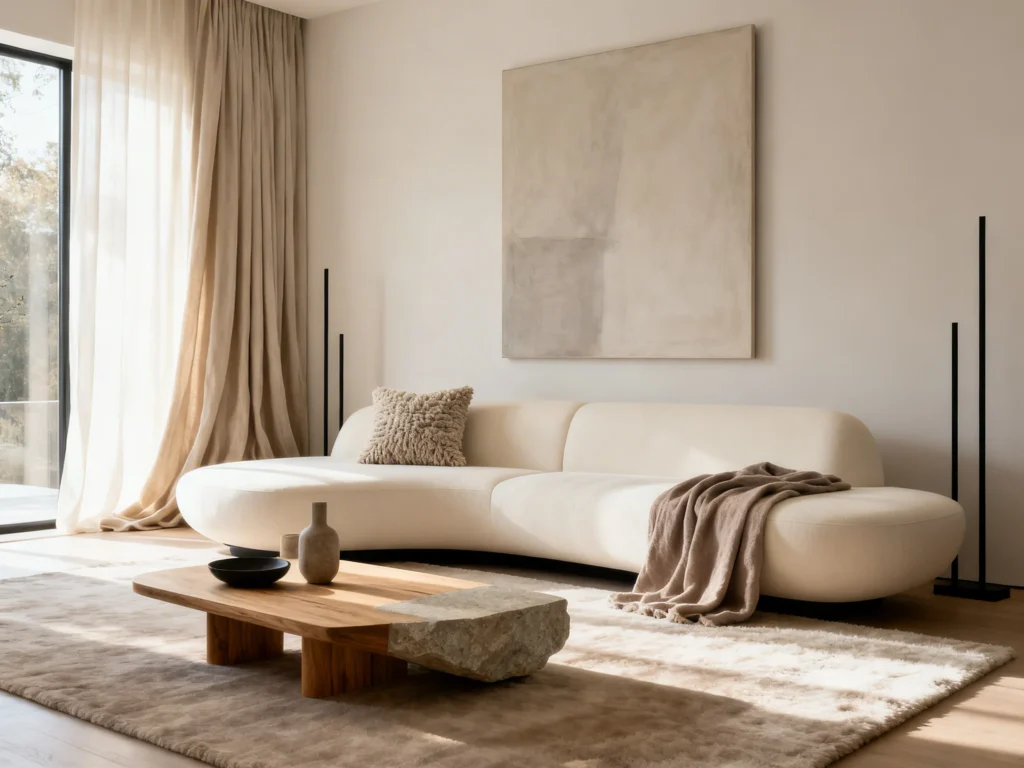
How to Make a Minimalist Living Room Look High-End
A minimalist living room can feel calm and intentional—or a little too bare. The difference between “simple” and “high-end” is almost always about proportion, texture, and curated styling rather than adding more stuff.
Use the tips below to keep your living room clean-lined and airy, but with that elevated, magazine-finished look that feels quietly expensive.
1) Choose an Elevated Neutral Palette (Not Just “White”)
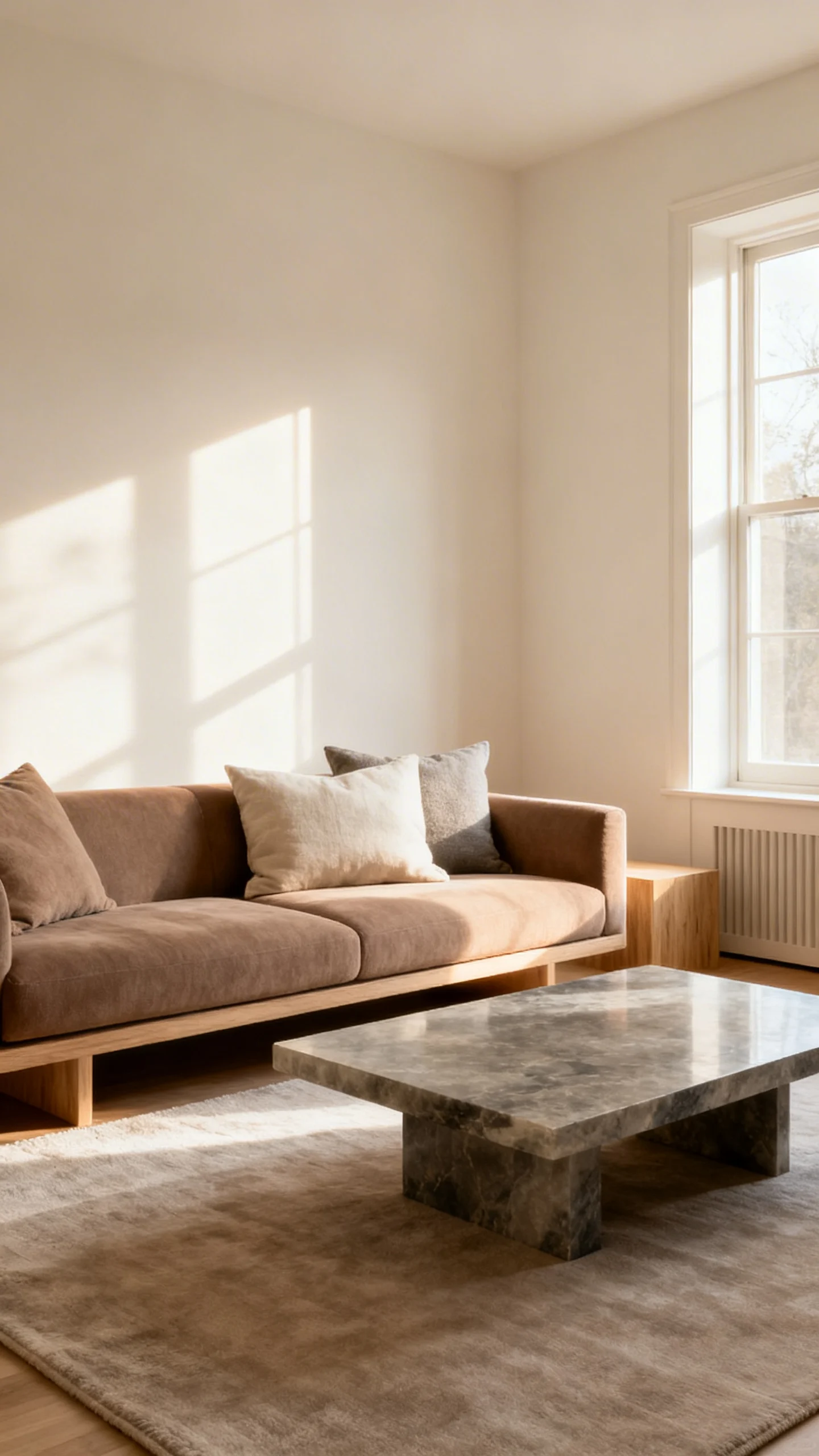
The most high-end minimalist living rooms look layered even when the palette is restrained. Think creamy ivory, warm taupe, soft greige, and smoky stone—tones that glow rather than glare. The result is a space that feels serene, luminous, and intentional, like a boutique hotel suite.
Action ideas: Swap bright-white textiles for warmer creams (curtains, pillows, throw). Add one “anchoring” shade (like mushroom or graphite) through a single piece—an accent chair, a throw, or a sculptural vase.
2) Invest in One Statement Sofa Shape (Clean, Sculptural, Grounded)
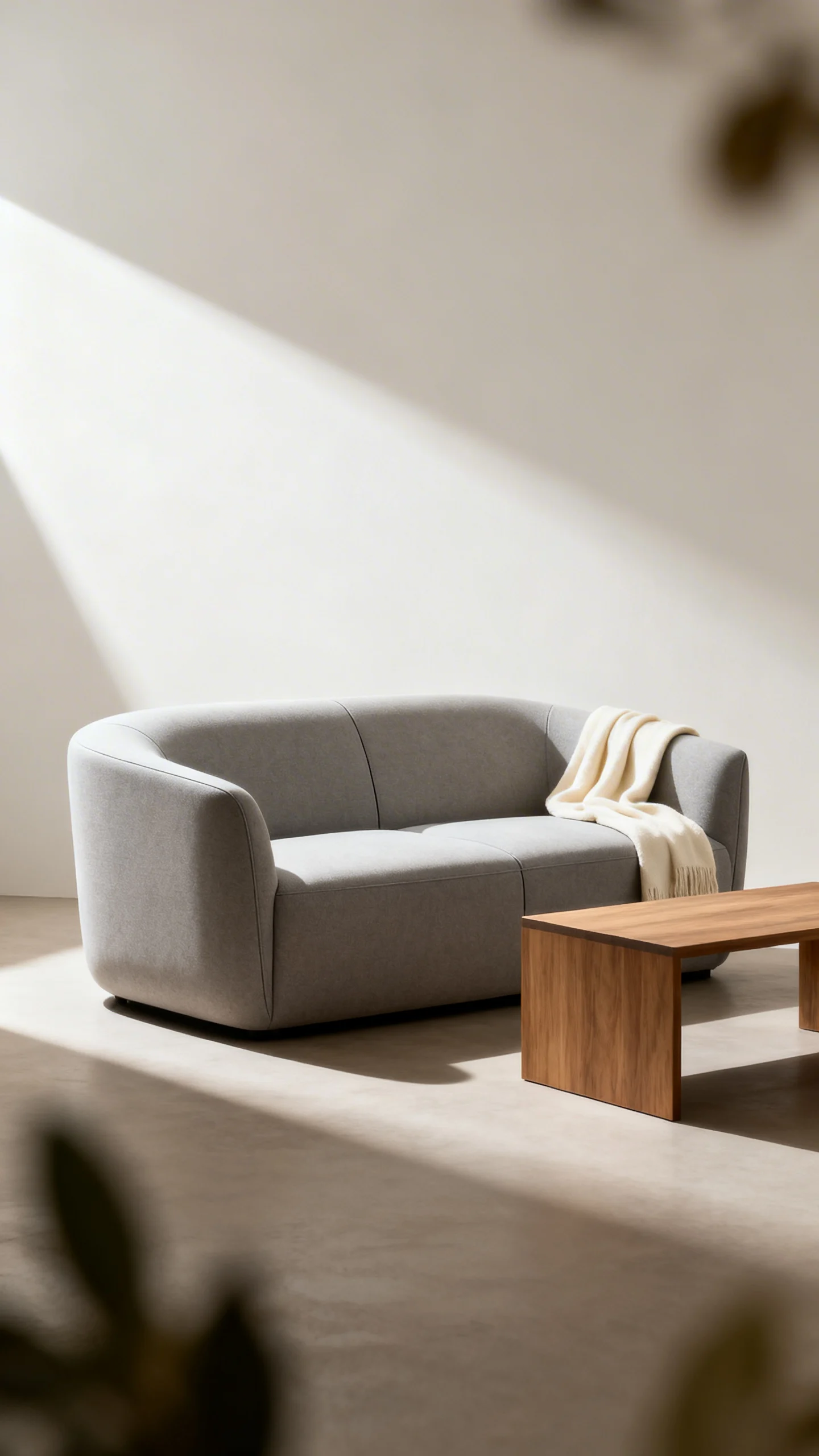
In a minimalist living room, the sofa is the star—so its silhouette should feel designed. A high-end look comes from a low, grounded profile; tailored upholstery; and a shape that reads sculptural from across the room. Picture a long, clean-lined sofa with plush-but-structured cushions that looks effortless, not slouchy.
Action ideas: Choose a sofa in a textured neutral (bouclé, basketweave, or performance linen-look). Style it with fewer pillows, but make them substantial—two large squares plus one lumbar feels curated.
3) Layer Texture Like a Stylist: Bouclé + Linen + Wood + Stone
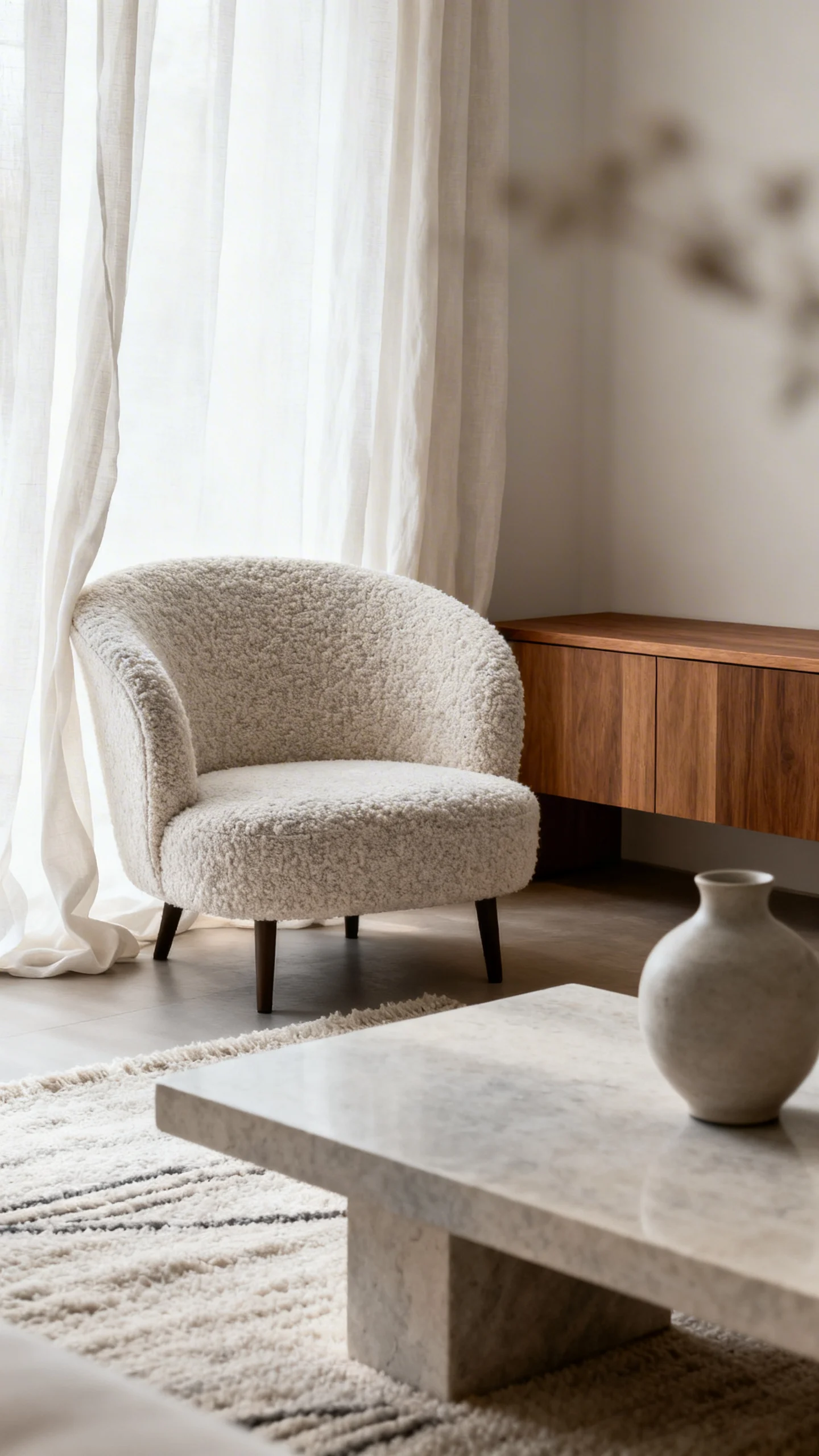
Minimalism becomes “high-end” when it’s tactile. The room can stay simple, but the surfaces should invite you in: nubby bouclé, airy linen, warm wood grain, and a touch of stone or ceramic. The final look is soft, dimensional, and expensive—without adding visual clutter.
Action ideas: Add a textured throw (chunky knit or brushed wool) draped with intention over one sofa corner. Introduce stone vibes with a travertine-look tray or a matte ceramic bowl on the coffee table.
4) Go Oversized on the Rug for a Gallery-Scale Foundation
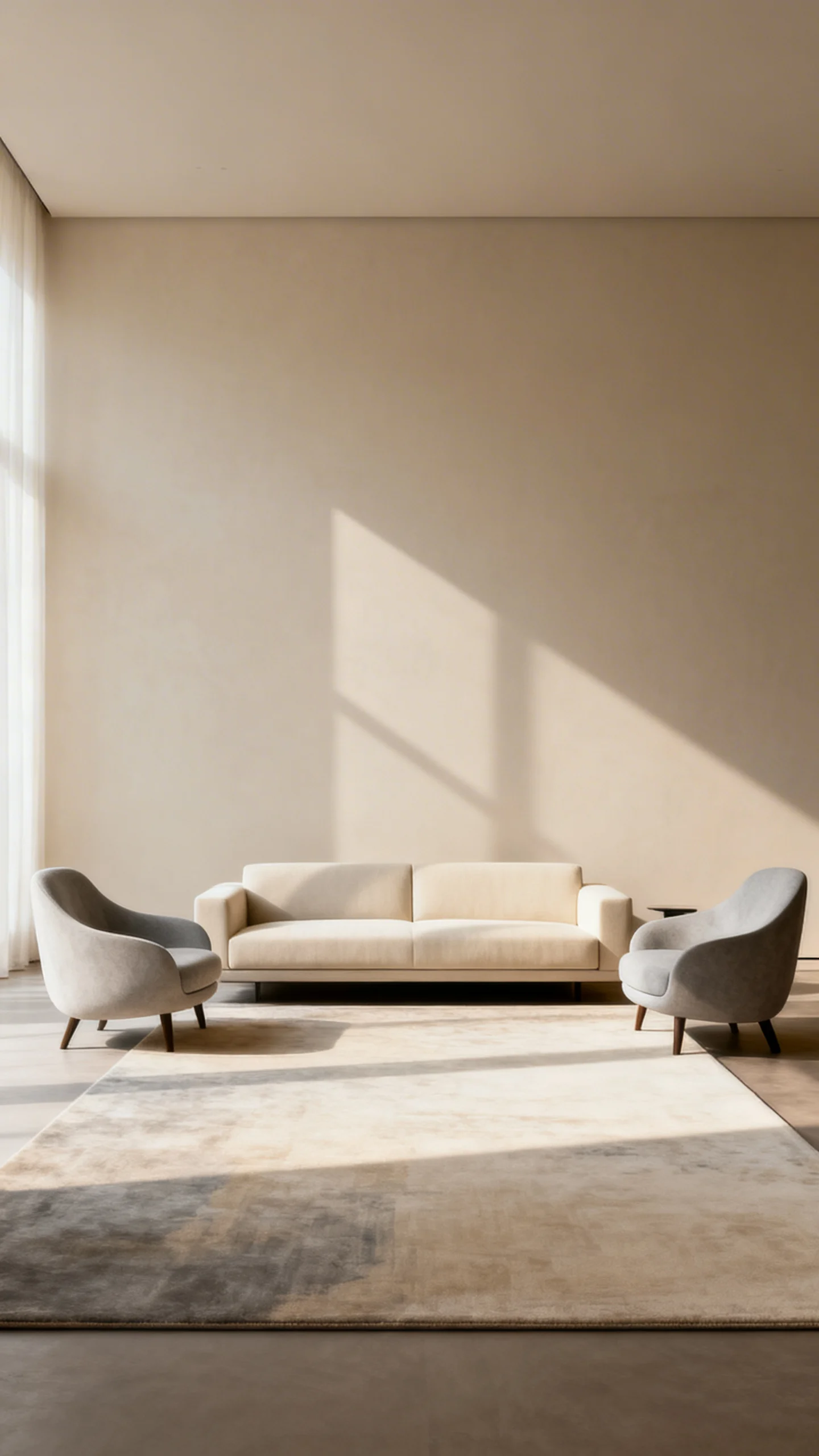
A too-small rug is the fastest way to make a minimalist living room feel unfinished. High-end rooms feel generous and grounded, with furniture sitting comfortably on the rug so the layout looks purposeful. Visually, it creates a calm “platform” that makes the whole space feel more expansive.
Action ideas: Pull the rug forward so the sofa’s front legs sit on it, and the seating area reads as one cohesive zone. Choose a low-contrast rug (ivory-on-ivory pattern, subtle stripes, or a soft heathered weave) to keep the minimalist mood.
5) Style the Coffee Table with the “Three-Object” Rule
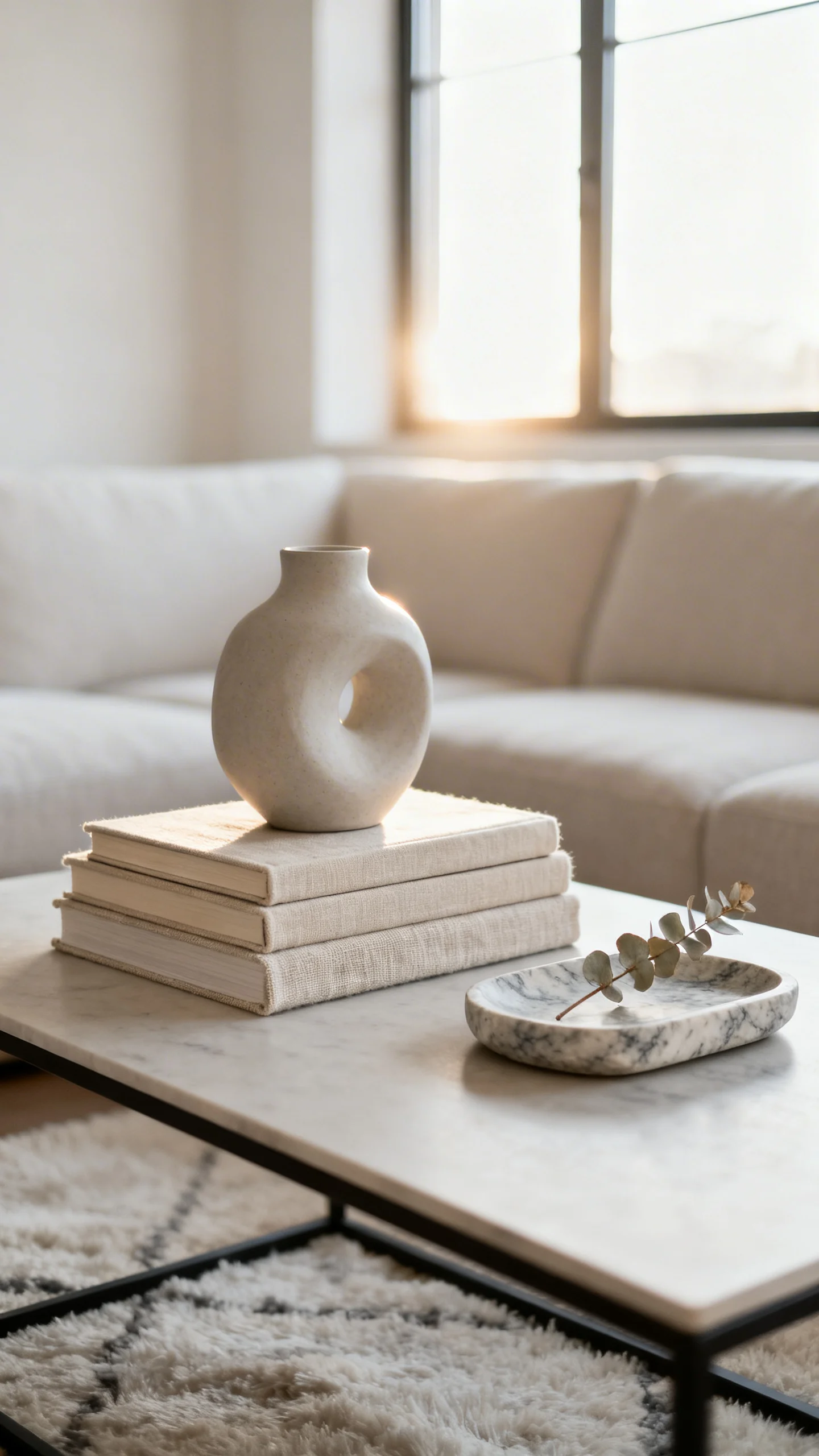
Luxury minimalism isn’t empty—it’s edited. A high-end coffee table moment looks like a still life: balanced, a little sculptural, and never overcrowded. The room feels finished the way a magazine spread does, with just enough detail to feel intentional.
Action ideas: Use a tray to “contain” the look, then add three pieces with varied heights (a short bowl, a medium candle, a taller vase). Finish with one beautiful book with a neutral cover to keep the palette quiet.
6) Add One Large-Scale Artwork (Calm, Abstract, or Monochrome)
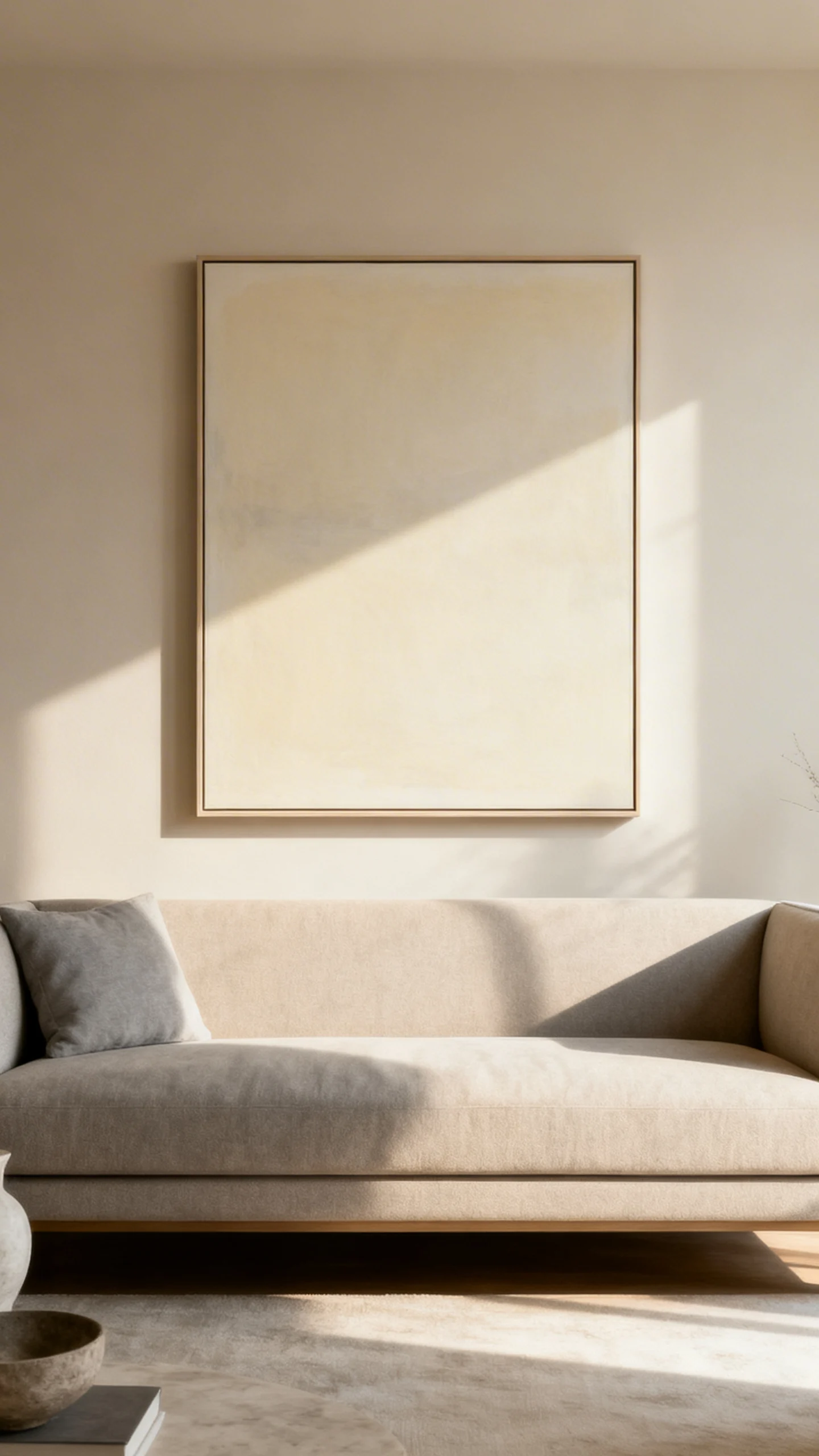
Minimalist living rooms look instantly more high-end when the wall art is bold in size but quiet in tone. A single large piece creates gallery energy and keeps the space from feeling like it’s waiting for something. Think moody abstract neutrals, tonal line art, or a soft landscape with lots of negative space.
Action ideas: Choose art with a limited palette that echoes the room (cream, charcoal, sand, muted olive). If you prefer sets, keep it minimalist: two matching frames with generous white space.
7) Create “Quiet Contrast” with Black or Dark Bronze Accents
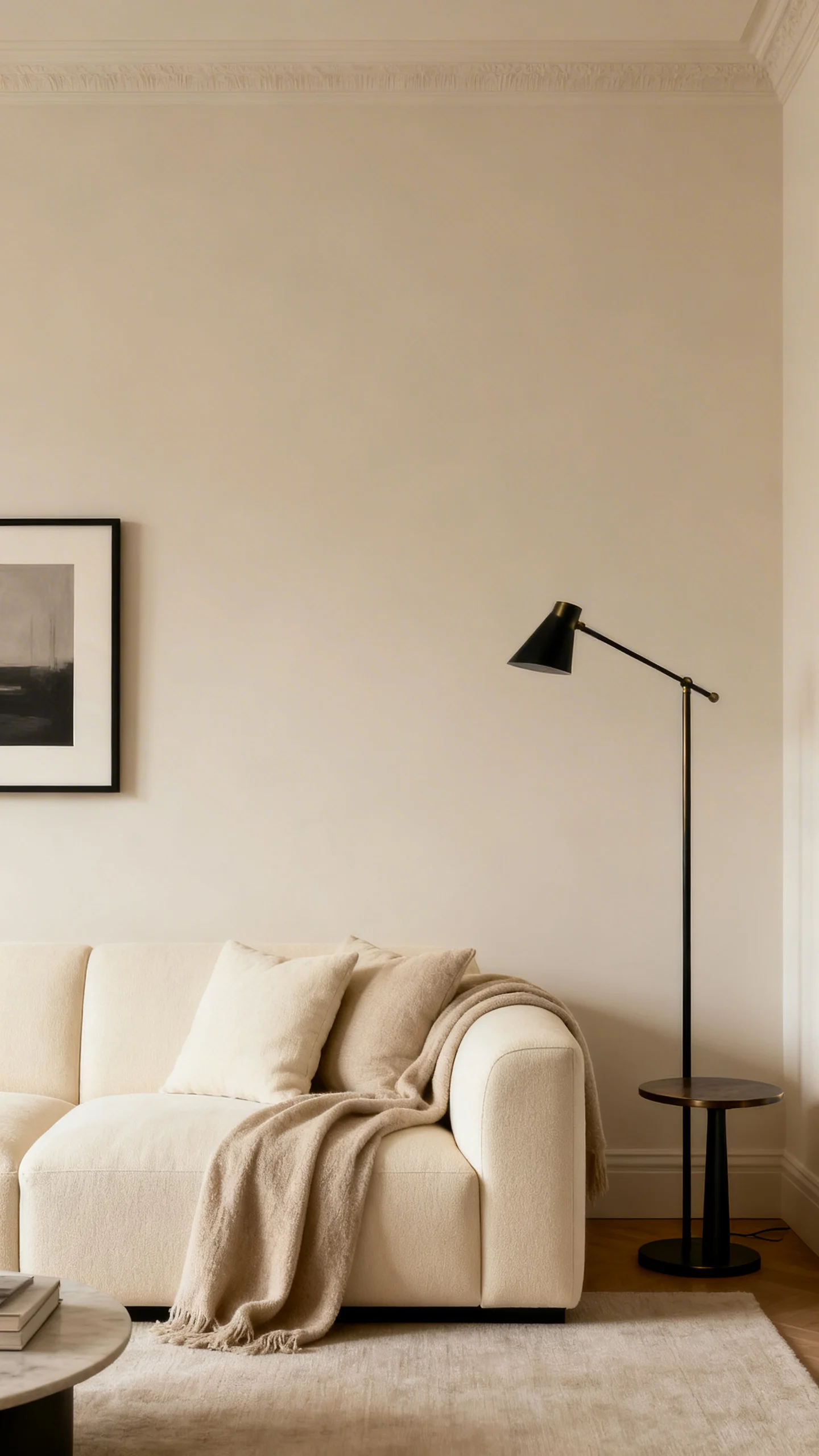
High-end minimalism often has a whisper of contrast—just enough depth to make the neutrals look richer. A few black or deep bronze accents sharpen the room and add that designer edge, especially against creamy fabrics and pale woods.
Action ideas: Add one dark element on purpose (a slim floor lamp, a sculptural vase, or a minimal side table). Repeat the dark tone once more across the room—two placements look intentional, not random.
8) Use Curtains to Add Height and Softness (Even in Minimal Spaces)
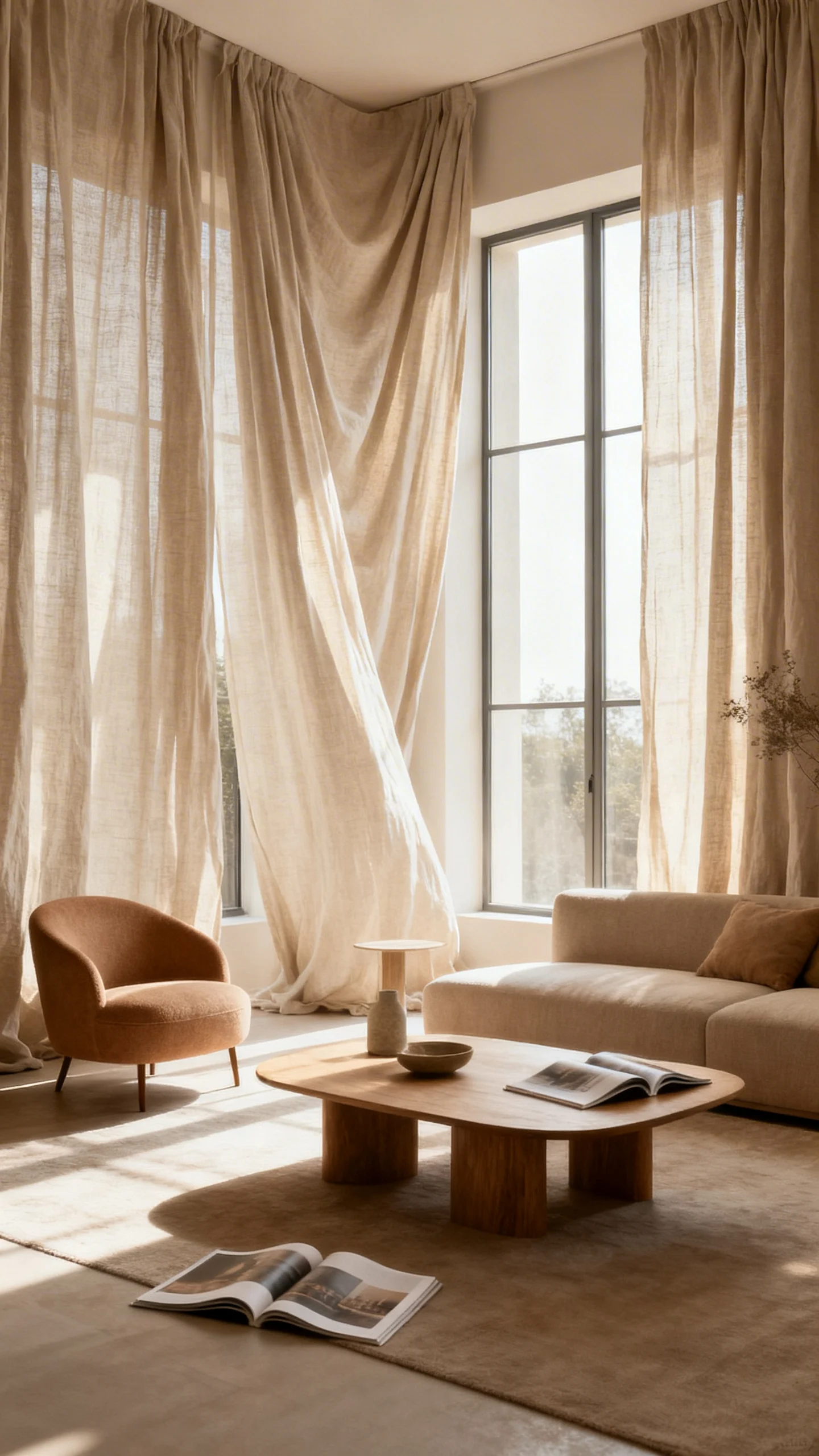
Minimalist living rooms can skew hard or flat without softness. Curtains add instant polish—like finishing the outfit with a great coat. The look you’re after is airy, tall, and serene, with fabric that drapes beautifully and diffuses light.
Action ideas: Choose light-filtering linen or linen-look panels in warm white or oatmeal. Keep styling clean: panels that puddle slightly or kiss the floor feel more luxe than anything too short.
9) Add a Sculptural Accent (One Piece That Feels Like Art)
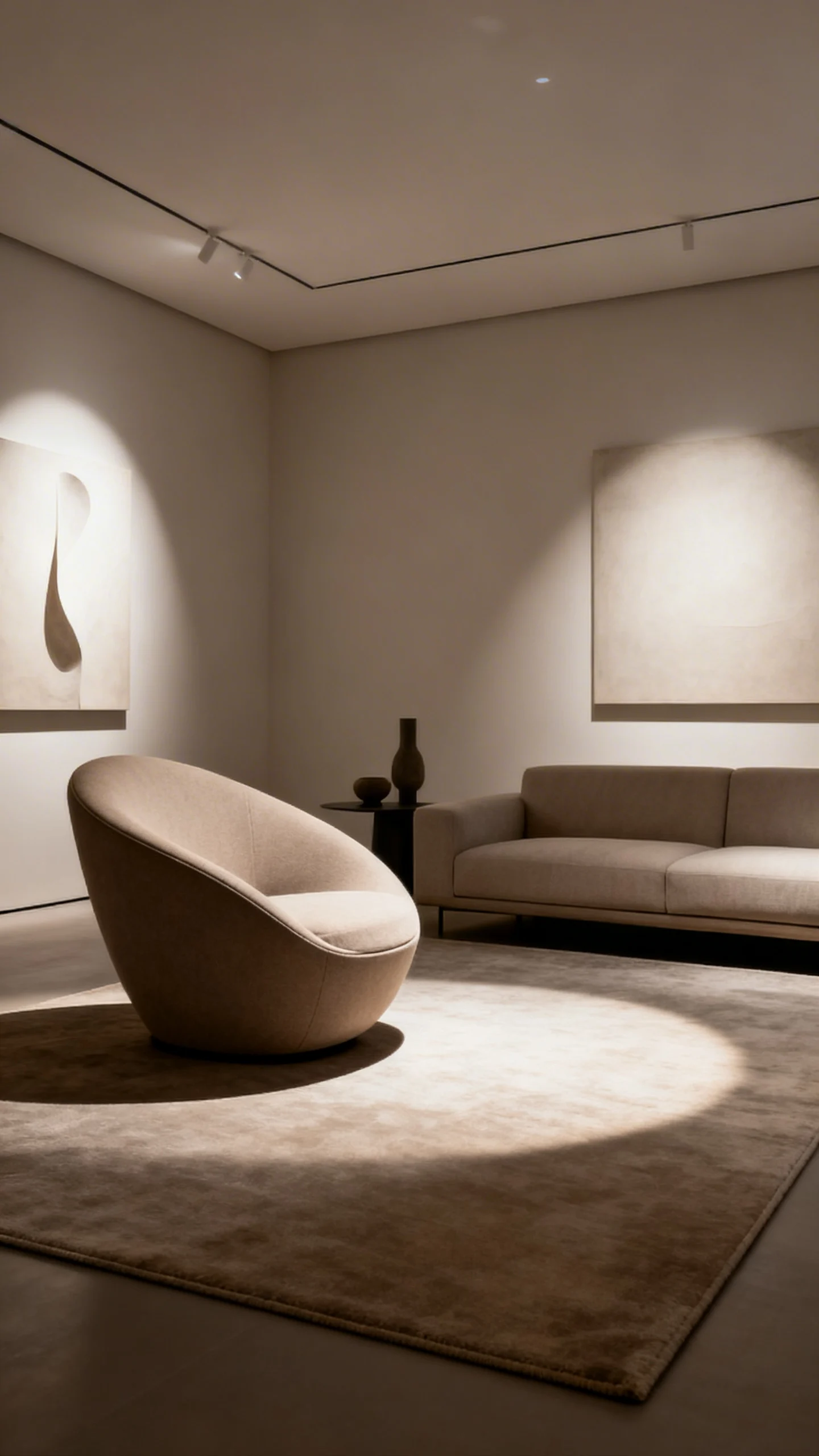
A high-end minimalist living room almost always includes one “what is that?” moment—something sculptural that reads like art. It could be a curvy accent chair, a statement vase, or a modern pedestal side table. The room stays calm, but it gains personality and a designer point of view.
Action ideas: Choose one curvy or architectural shape in a neutral material (plaster, ceramic, light wood). Keep surrounding decor extra simple so the statement piece feels intentional, not busy.
10) Edit the Room Like a Boutique: Clear Surfaces, Curated Corners
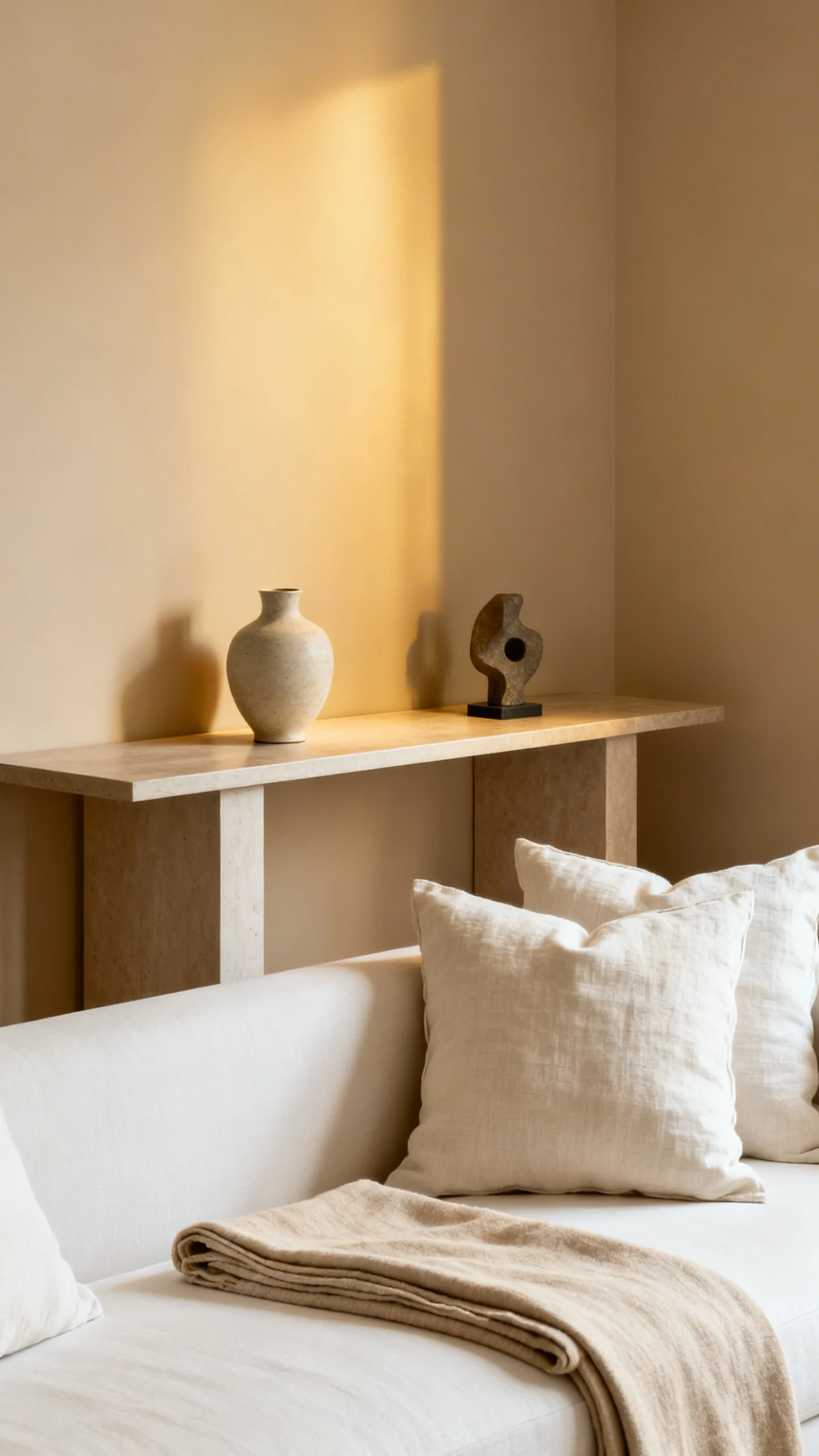
“High-end” minimalism is as much about what you remove as what you add. When surfaces are clear and corners are styled on purpose, the living room feels expensive, calm, and ready to photograph at any moment. The goal is breathing room—with a few perfect moments.
Action ideas: Clear one surface completely (coffee table, console, or side table), then restyle it with just 1–3 items you truly love. Create one intentional corner—like a chair with a small table and a soft throw—so the room feels designed, not empty.
FAQ
How do I keep a minimalist living room from feeling cold?
Warm up the look with creamy neutrals, natural textures (linen, bouclé, wood), and soft lighting. Even one plush throw and a textured rug can make the space feel inviting while staying minimalist.
What colors look most “high-end” in a minimalist living room?
Quiet, nuanced neutrals photograph beautifully: ivory, oatmeal, greige, taupe, stone, and soft charcoal. These tones feel expensive because they’re gentle, layered, and easy on the eyes.
How many decor pieces should a minimalist living room have?
Fewer than you think, but each should feel intentional. Aim for a handful of larger, more sculptural pieces rather than lots of small items—one statement artwork, one vase, one tray moment, and one plant or branch arrangement can be plenty.
What’s the easiest upgrade that makes the biggest difference?
Oversizing your rug and upgrading your textiles (pillows, throw, curtains) delivers an immediate high-end effect. These changes make the room look more finished and thoughtfully layered without adding clutter.
How do I make a small minimalist living room look expensive?
Keep the palette light and cohesive, use a larger rug to visually expand the seating area, and choose a few statement pieces with clean silhouettes. Clear surfaces and one large artwork will make the room feel intentional, not cramped.