
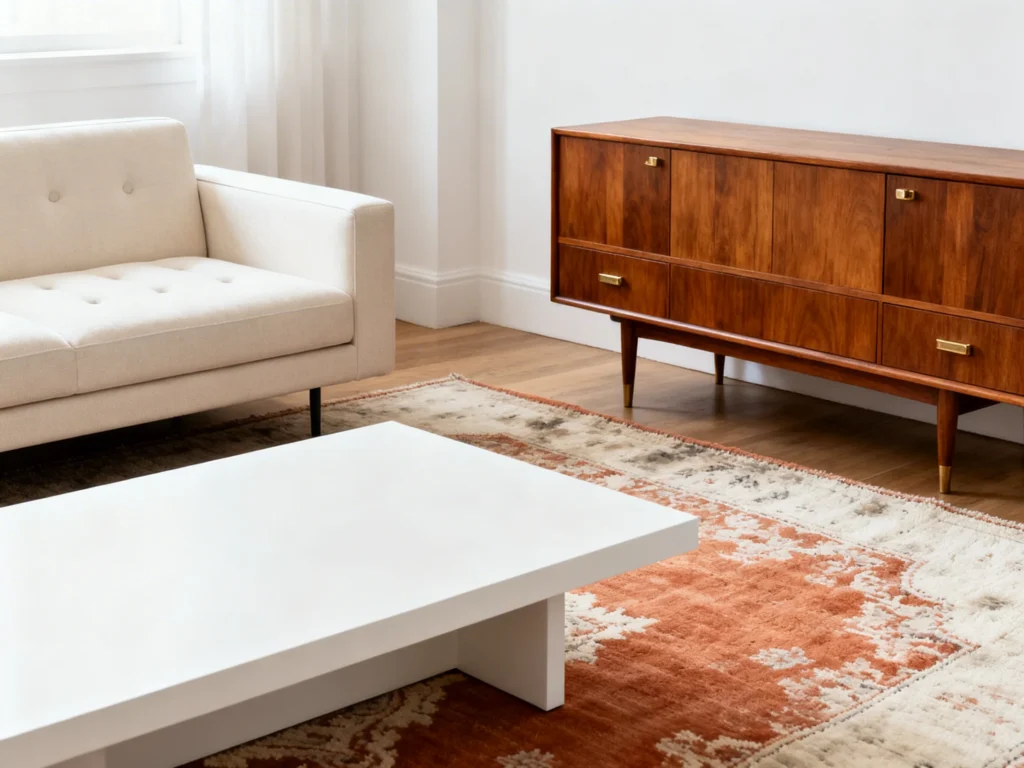
How to Mix Vintage Interior Design Style With Modern Decor
Mixing vintage interior design style with modern decor is all about balance: honoring the character of older pieces while keeping the overall room feeling clean, current, and livable. Done well, it looks intentional—like you curated it over time, not like you’re stuck between two eras.
Below are ten practical, room-ready tips to blend decades seamlessly, with clear proportions, placement rules, and material guidance you can actually use.
1) Pick a “lead era” and keep the mix to a 70/30 ratio
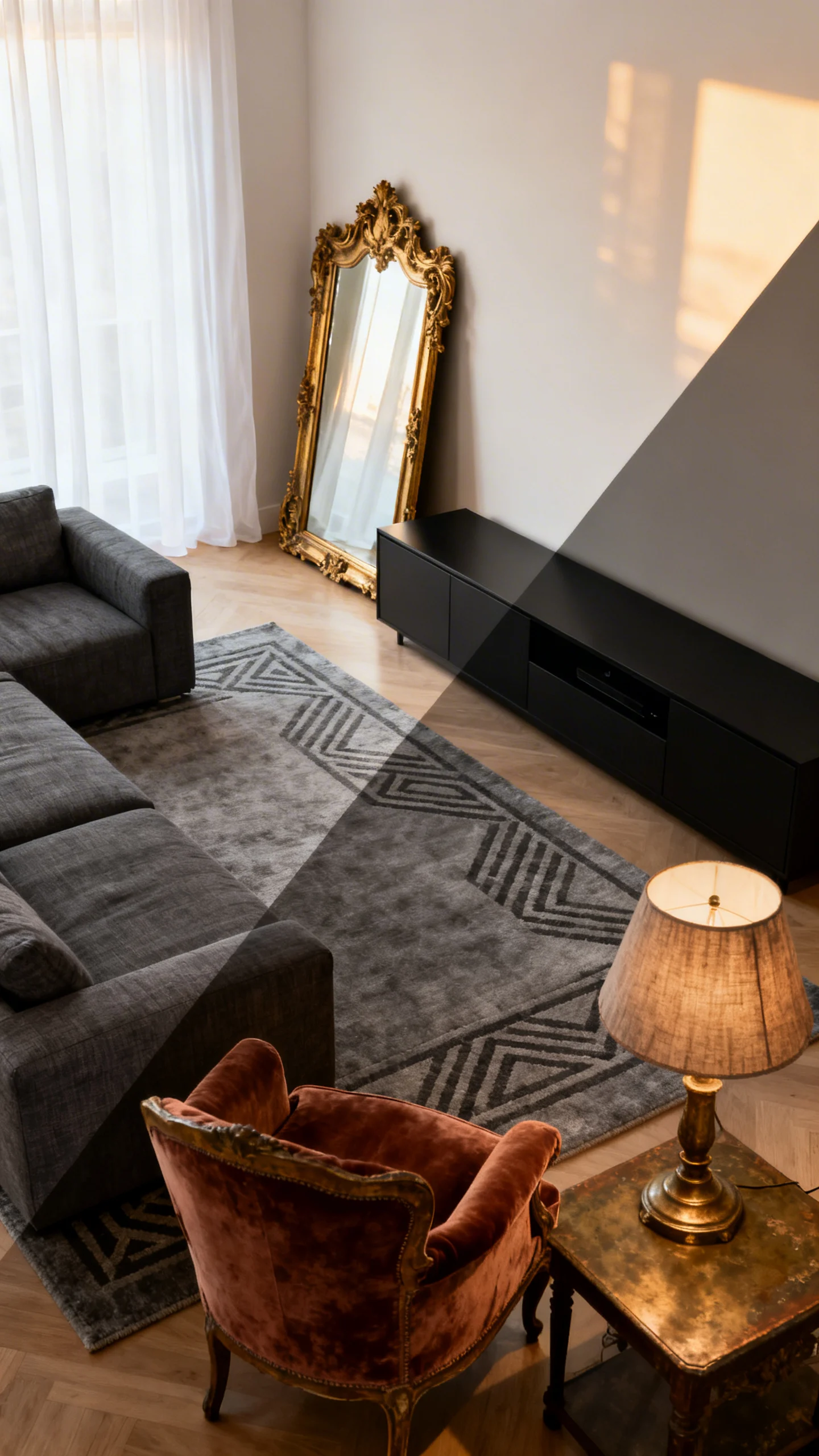
Start by choosing which style will visually lead: modern (clean lines, minimal silhouettes) or vintage (ornate details, patina, classic forms). Then aim for roughly 70% lead era and 30% accent era. This keeps the room from looking like a showroom collision and makes every contrasting piece feel deliberate.
How to apply it: in a modern-led space, keep big-ticket items (sofa, bed frame, main rug) modern, then add vintage accents like a brass lamp, an antique mirror, or a carved side table. In a vintage-led space, anchor with a vintage dining table or dresser, then introduce modern lighting, streamlined seating, or a simple area rug to “edit” the look.
2) Use one bridge color (plus one metal) to connect the decades
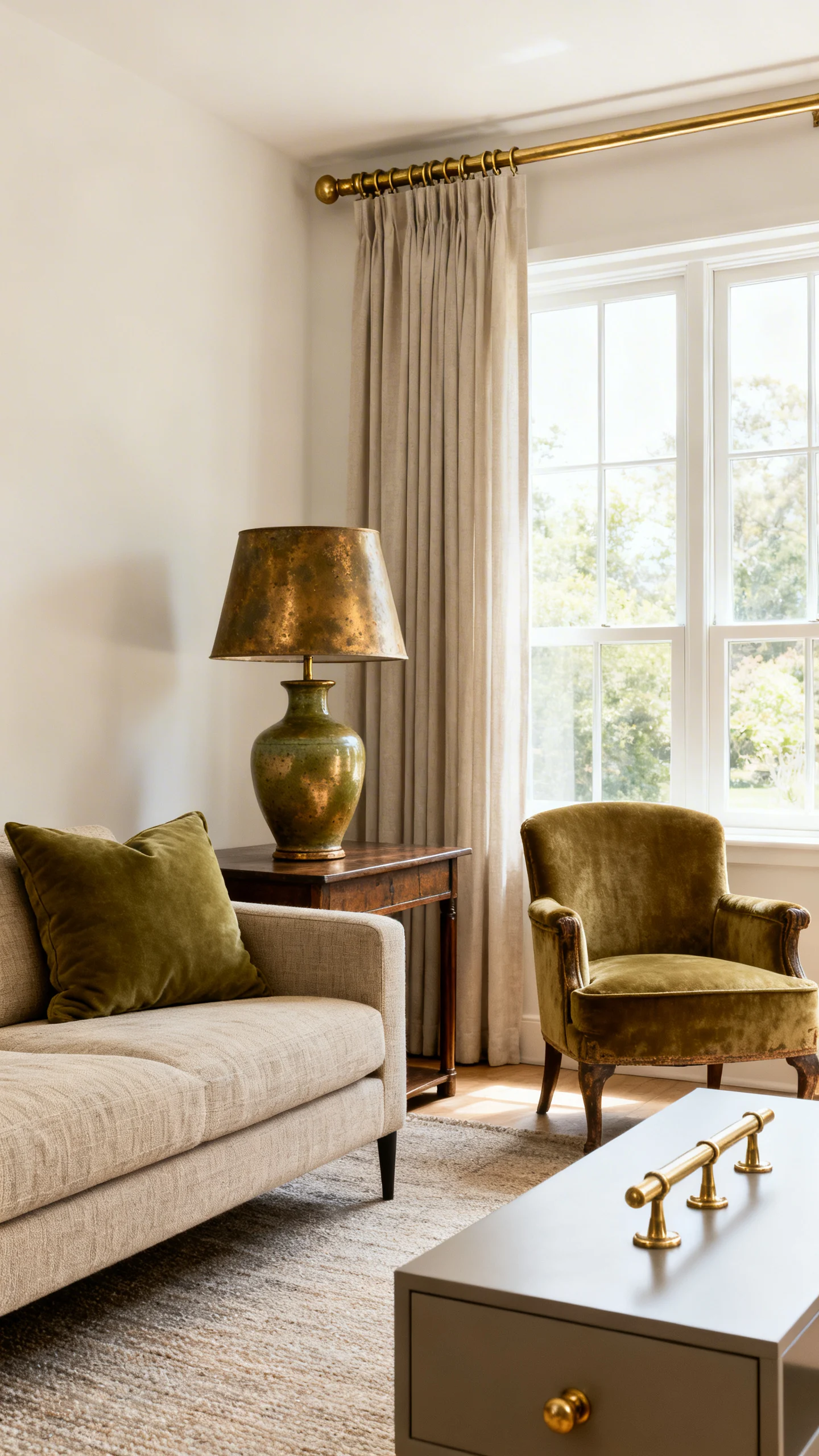
A bridge color is the fastest way to make vintage and modern feel like they belong together. Choose one consistent color that repeats in at least three places (for example: warm white, olive, camel, inky navy). Then pick one primary metal finish (aged brass, polished nickel, matte black) and repeat it across hardware and lighting.
Practical formula: 60% neutrals, 30% bridge color, 10% accent. If your vintage pieces are warm-toned (walnut, brass, amber glass), balance them with warm whites and creamy textiles rather than stark, icy grays. If you love cool modern finishes (chrome, stainless), echo that coolness with a muted blue-gray or crisp white in textiles.
3) Make one vintage “hero” piece the focal point—then simplify around it
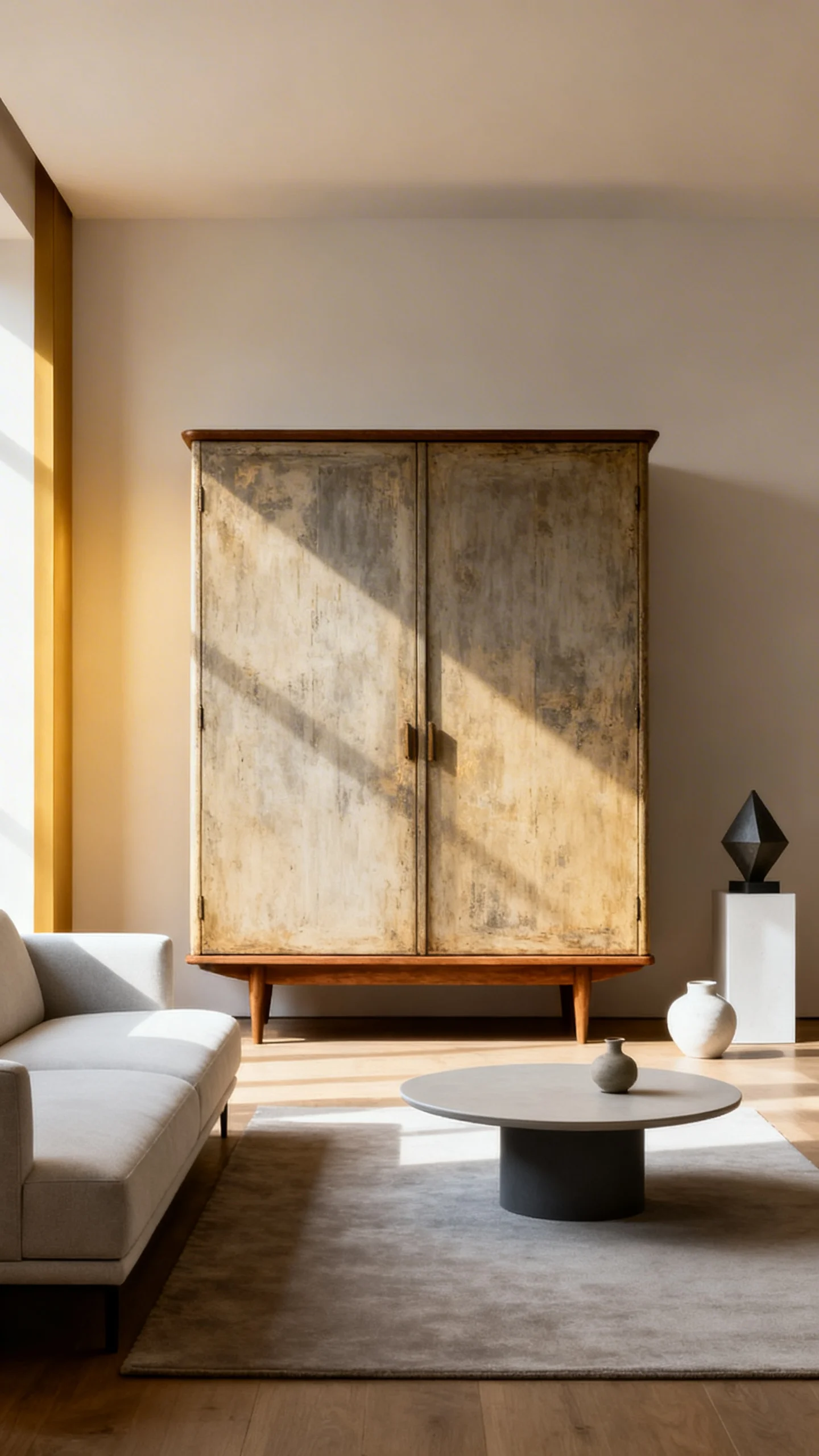
Choose one statement vintage item per room—think an antique armoire, a mid-century sideboard, a Persian rug, or a gilded mirror—and give it breathing room. The key is contrast: surround it with modern, quieter shapes so the vintage piece reads as collectible, not clutter.
Spacing tip: leave 3–6 inches of negative space around the hero piece where possible (between it and adjacent furniture), and keep nearby decor minimal. If the hero is visually heavy (dark wood, ornate carving), pair it with modern pieces on slimmer legs or in lighter upholstery to avoid a crowded, “all heavy” look.
4) Match scale and proportions, not style labels
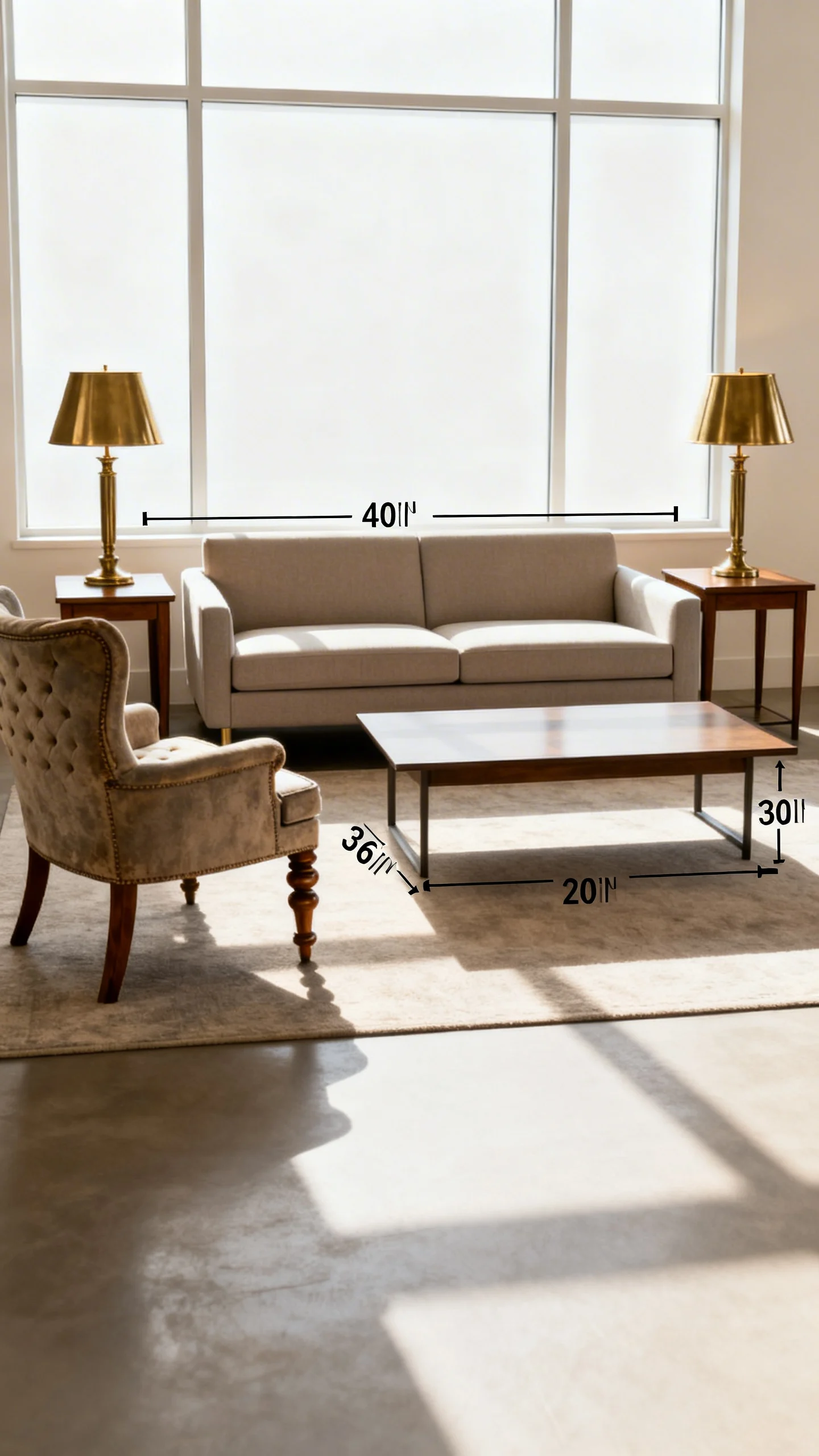
Vintage and modern mix best when the proportions make sense together. A delicate antique chair can look lost next to an oversized modern sectional; an ultra-low modern coffee table can look off next to tall, formal vintage seating.
Quick checks: keep seat heights within about 2 inches of each other in the same conversation area. Aim for a coffee table that’s roughly 1/2 to 2/3 the length of your sofa, and about 1–2 inches lower than the sofa seat height. For dining, leave 10–12 inches between the seat and tabletop underside for comfort—especially important if you’re pairing a vintage table with modern chairs (or the reverse).
5) Let modern pieces “edit” the room: clean silhouettes, hidden storage, simple rugs
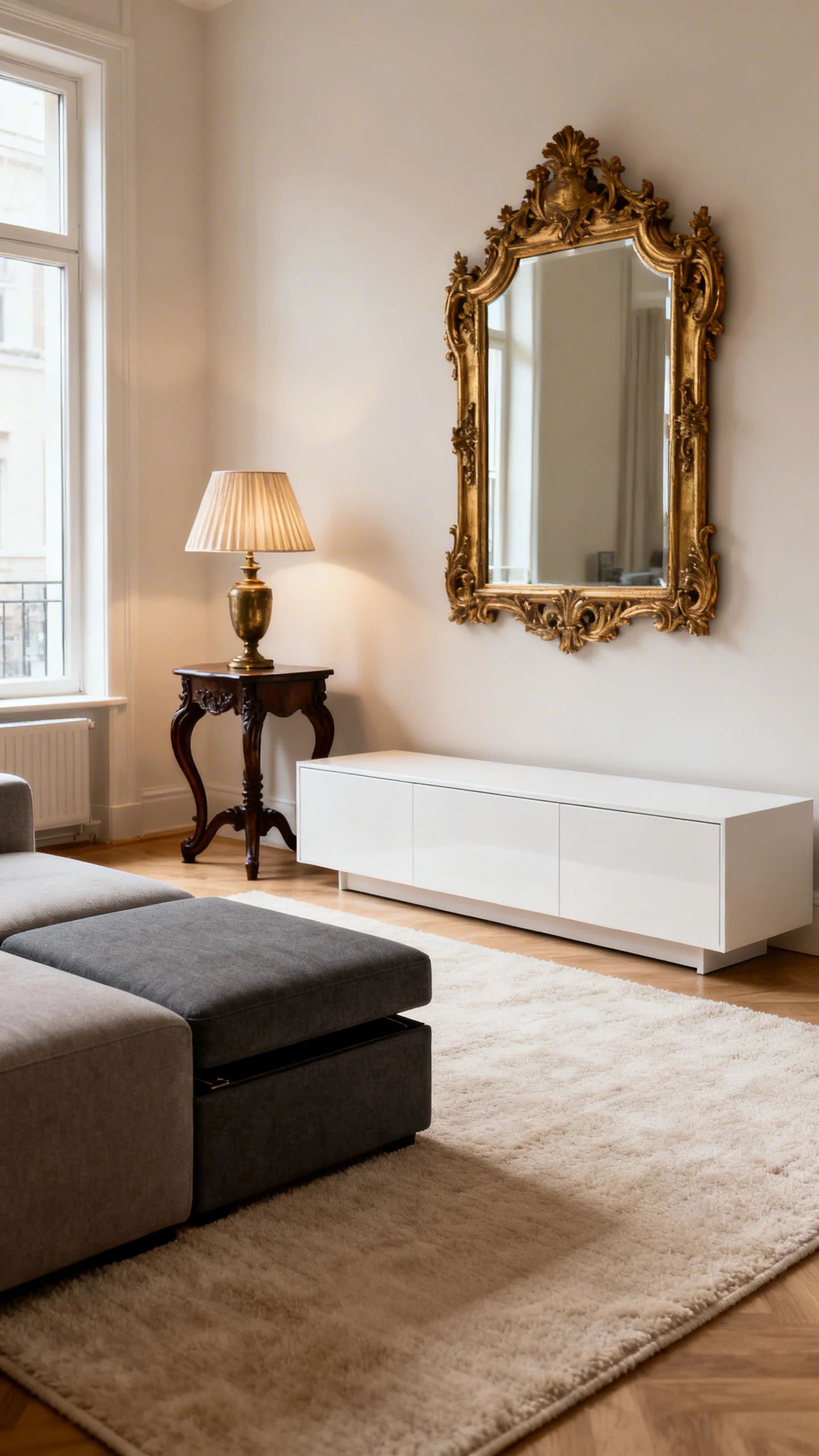
Vintage brings detail; modern brings calm. Use modern decor strategically to keep the overall look crisp: a streamlined sofa, a flat-front media console, or a solid-color rug can reduce visual noise and make vintage accents feel elevated.
Material pros/cons: modern performance fabrics (easy-clean weaves) are ideal if your vintage pieces are delicate or hard to maintain—this combo keeps the room practical. For rugs, a low-pile modern wool or a simple jute can ground an ornate antique mirror or a carved wood chest without competing. If your vintage items are already textural (tufting, fringe, carved wood), choose modern pieces with smoother finishes (lacquer, matte paint, glass).
6) Create a “finish storyline”: repeat wood tones and patina intentionally
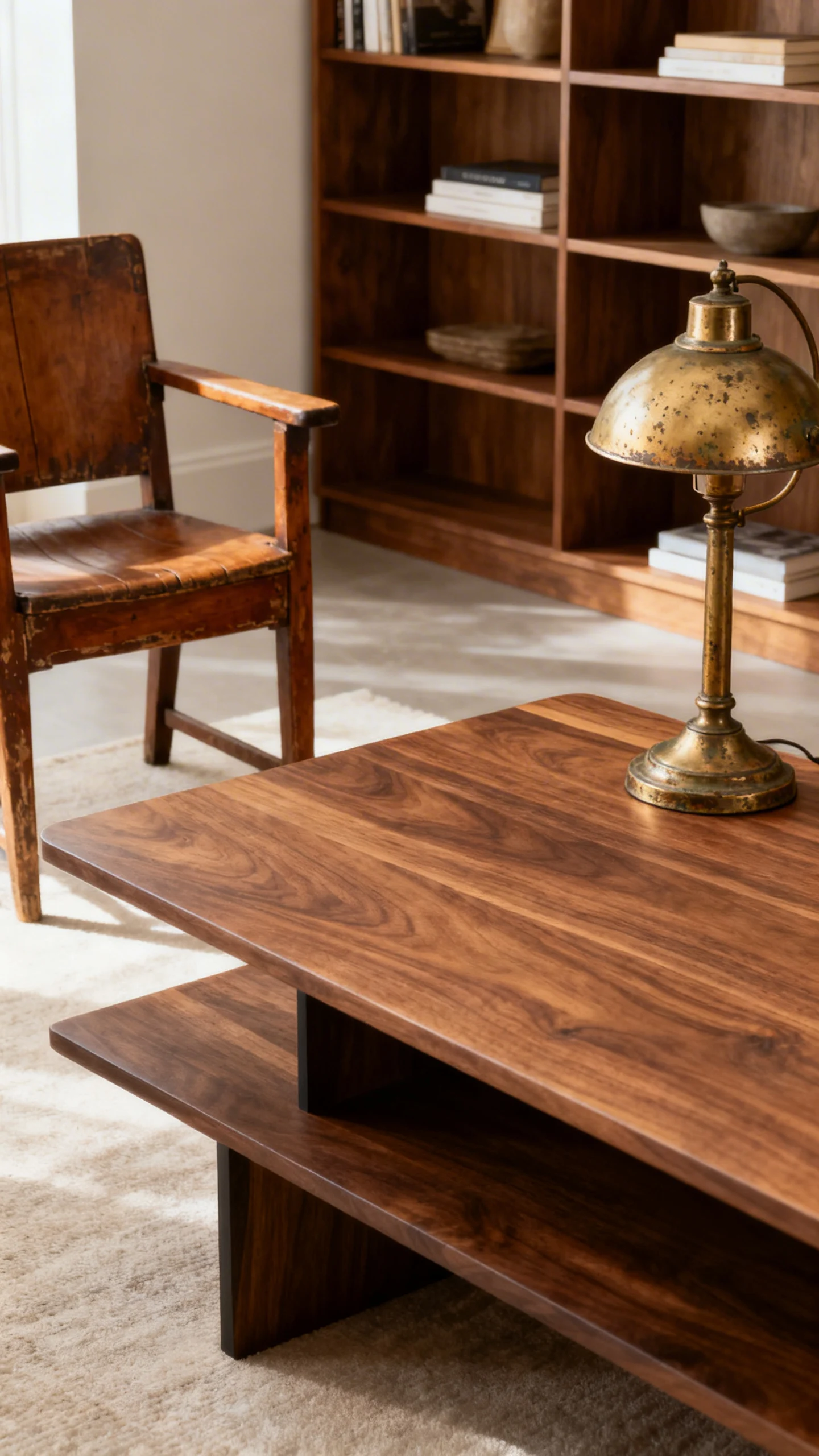
The most common mixing mistake is random wood tones. You don’t need a perfect match, but you do need a storyline: pick one dominant wood family (warm walnut, medium oak, painted black) and let other woods be supporting characters.
Easy rule: keep your dominant wood on the largest wooden surfaces (dining table, sideboard, bed). Then limit additional wood tones to one or two variations. If your vintage piece has patina (scratches, worn edges), echo that softness with matte finishes rather than ultra-gloss modern pieces everywhere. If you love glossy modern lacquer, use it sparingly near patina so the contrast feels intentional.
7) Mix old and new in the same vignette (not in separate corners)
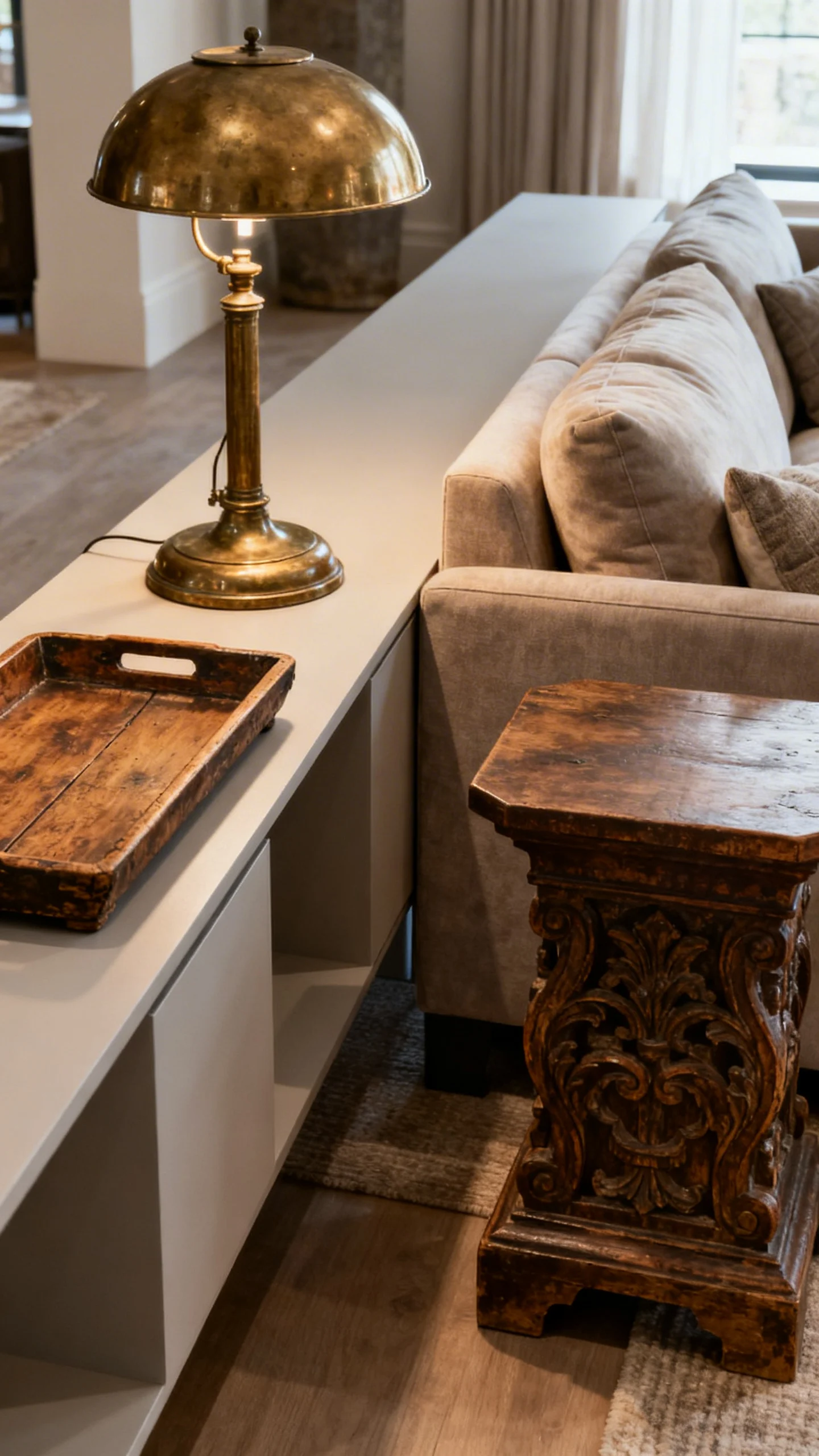
For a truly cohesive look, blend eras within one styled moment: a modern console with a vintage lamp; a vintage dresser with modern art above; a contemporary sofa with an antique side table. This prevents the room from splitting into “the modern side” and “the vintage side.”
Vignette recipe: one anchor (table/console), one tall element (lamp or vase), one vertical layer (art or mirror), and one small object (book, bowl). Keep height differences clear—vary by at least 3–5 inches between objects—so the arrangement feels styled, not stacked.
8) Upgrade vintage function discreetly (wiring, mounting, and daily-use comfort)
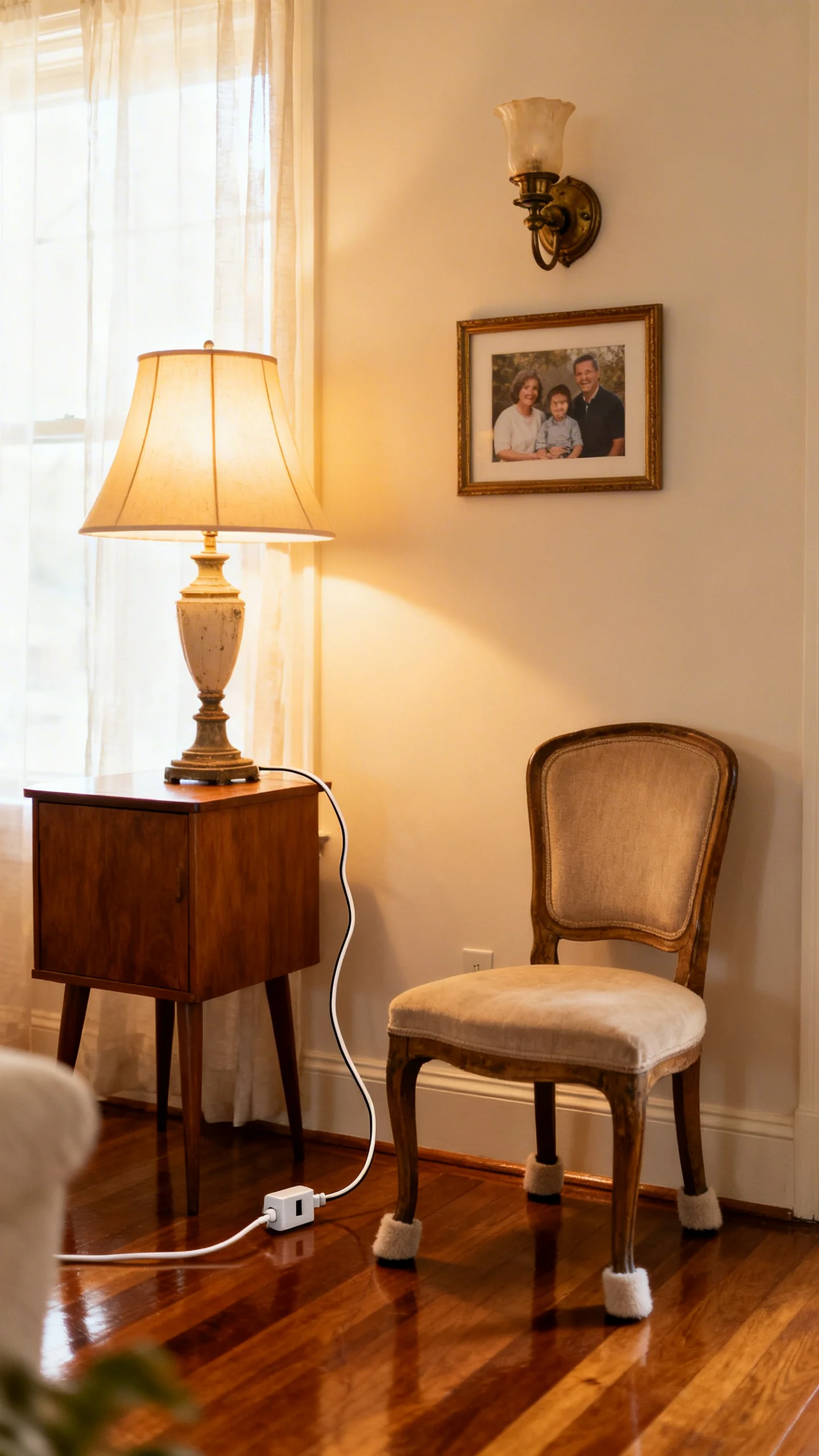
Vintage is charming, but modern living needs modern safety and comfort. Rewire vintage lamps and sconces (especially if cords feel brittle or plugs are ungrounded). Add felt pads to antique furniture feet to protect floors and improve glide. If you’re using vintage dining chairs daily, consider adding tailored seat cushions in a modern textile for comfort and durability.
Clearance and safety notes: for walkways, aim for 30–36 inches of clearance in main paths. If placing a vintage chest at the foot of the bed, leave at least 24 inches between it and the bed edge for easy movement. For wall-mounted pieces, use appropriate anchors—plaster and lath often need different hardware than drywall, and heavy vintage mirrors should be secured with rated hanging systems.
9) Choose modern art and lighting to “timestamp” the room as current
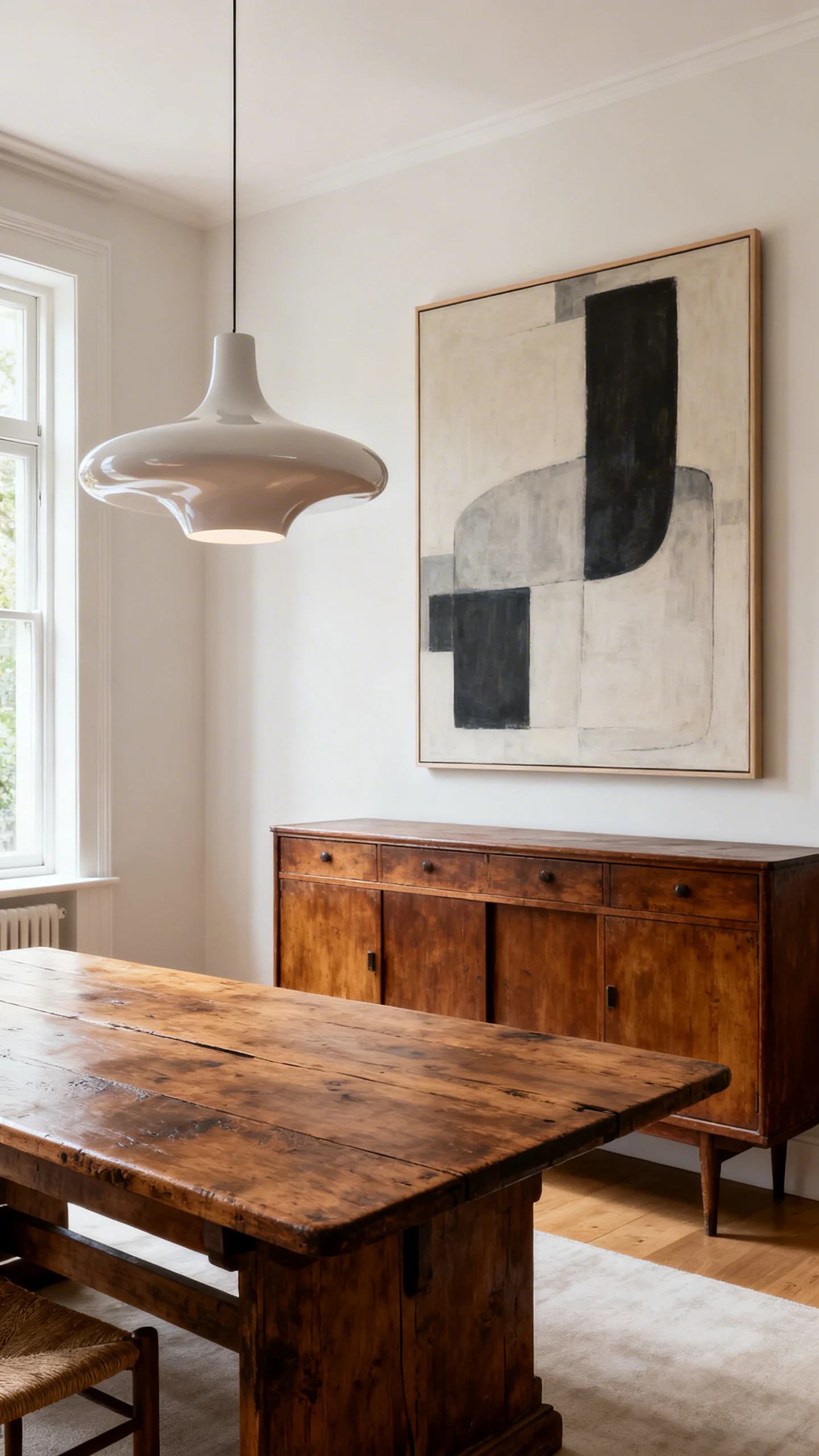
If you want the mix to feel fresh, let art and lighting do the modern heavy lifting. Contemporary artwork above a vintage buffet, or a sculptural modern pendant over an antique table, instantly updates the story.
Practical placement: hang art so the center sits around 57–60 inches from the floor (gallery standard), adjusting slightly for ceilings and furniture. For pendants over dining tables, start with 30–36 inches from tabletop to the bottom of the fixture. If your vintage pieces are ornate, pick modern lighting with simple shapes (globes, cylinders, linear bars) to keep the balance clean.
10) Keep the “collected” look intentional: edit, rotate, and leave negative space
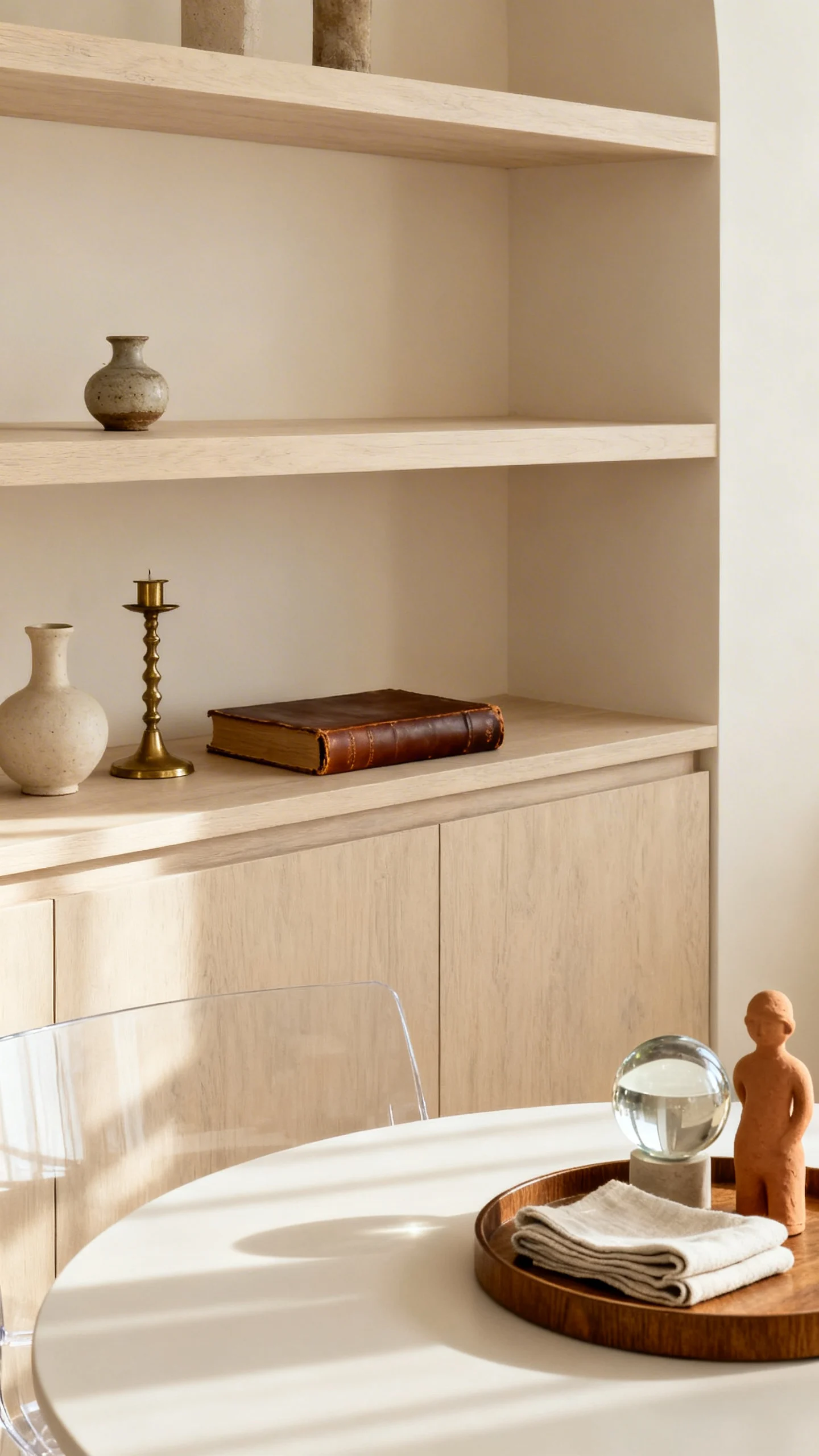
Vintage loves collections, but modern decor thrives on restraint. The secret is editing: leave open surfaces, curate what stays out, and rotate decor seasonally so the room feels layered but not crowded.
Try this approach: style only 60–70% of shelves, leaving 30–40% as breathing room. Group smaller vintage pieces in odd numbers (3 or 5) on trays to read as one visual unit. If you have multiple small antiques, avoid scattering them across every surface—concentrate them in one or two zones so the rest of the room can feel modern and calm.
FAQ
What’s the easiest way to mix vintage interior design style with modern decor without it looking messy?
Use a 70/30 ratio (one style leads), repeat a bridge color, and limit yourself to one primary metal finish. Then create at least one vignette where old and new sit together (like a modern console with a vintage lamp) so the mix looks intentional.
Can I mix different vintage eras (Victorian, Art Deco, mid-century) with modern pieces?
Yes—just keep the room anchored with a modern “editing” layer (simple rug, streamlined sofa, clean-lined storage) and use consistent connectors like one dominant wood tone and one metal finish. If multiple eras compete, simplify the color palette to keep it cohesive.
How do I pair a vintage wood piece with modern white or black furniture?
Focus on undertones. Warm vintage wood looks best with warm whites (cream, ivory) and softer blacks (charcoal, matte black). Add a bridge element—like aged brass hardware or a warm neutral textile—to keep the transition smooth rather than stark.
What modern items work best with antique furniture?
Modern lighting, contemporary art, and streamlined upholstered pieces are the most effective. They update the room without competing with antique details, and they’re easy to swap if you want to change the vibe later.
How can I make vintage pieces more practical for everyday living?
Rewire vintage lighting, add felt pads and protective finishes where needed, and use modern performance textiles for seating. Maintain comfortable clearances (30–36 inches for main walkways, about 24 inches at the foot of a bed) so the room functions as well as it looks.