
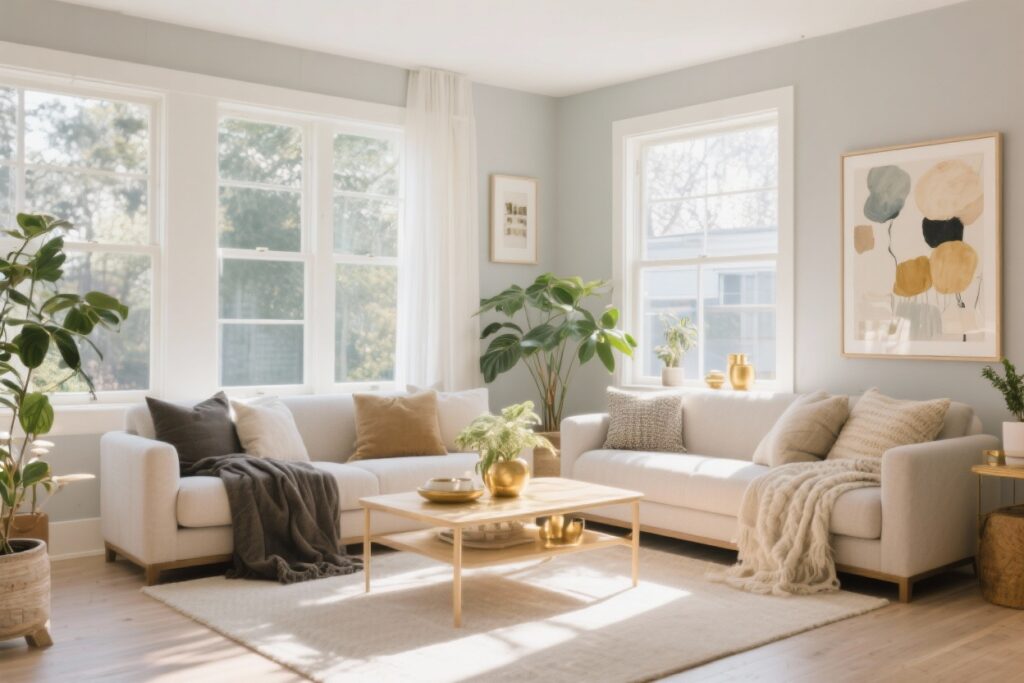
Real talk: winter can be a mood vampire. But what if your home decor is low-key making it worse? If your space feels dull, cramped, or cold, your brain might be screaming “hibernate,” not “thrive.” The good news: a few smart tweaks can seriously lift your vibe. Let’s make your home fight for your happiness, not against it.
1. Light Your Space Like You Mean It
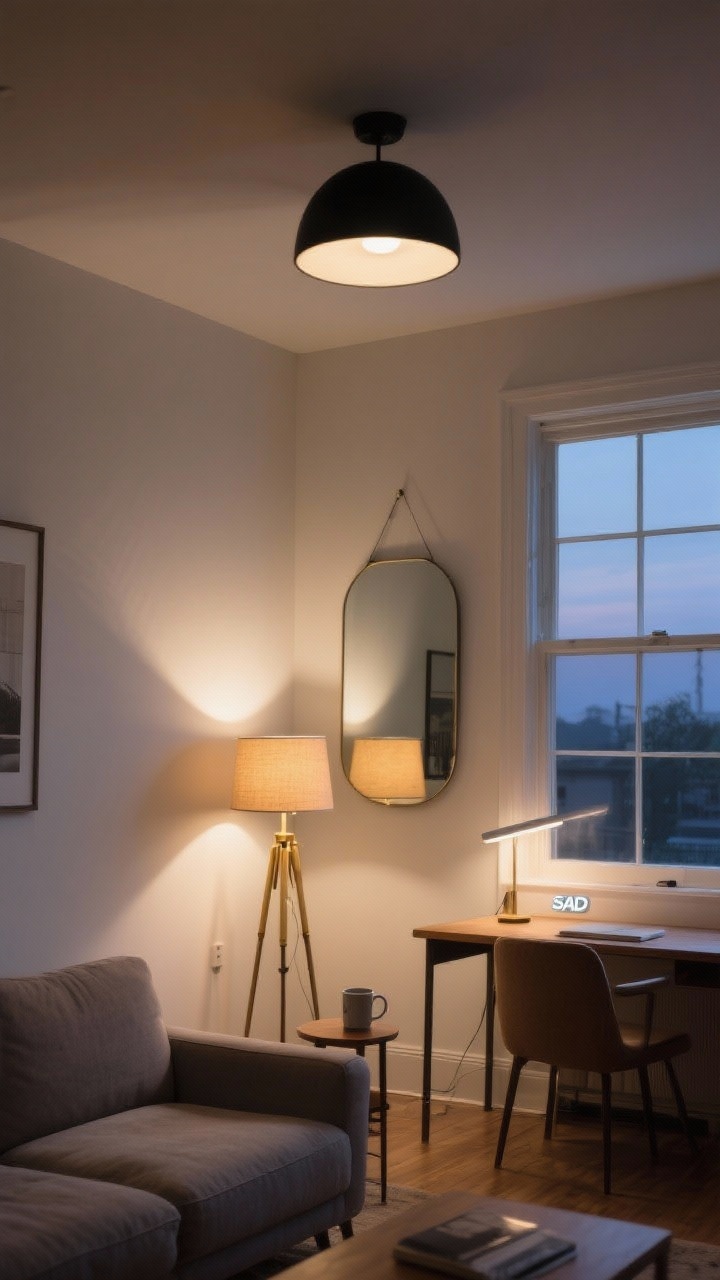
Shorter days don’t have to mean dim moods. Light is a biological cue—it tells your brain when to perk up and when to chill out. If your rooms feel gloomy by 3 p.m., no wonder you’re dragging.
Bright Ideas
- Layer lighting: Overhead + task + accent. Think ceiling fixture, floor lamp by the sofa, and a warm table lamp in the corner.
- Use “daylight” bulbs in the morning (5000–6500K) to energize, then swap to warm bulbs at night (2700–3000K) to wind down.
- Place lamps eye-level when seated. Light grazing walls makes rooms feel bigger and brighter.
- Try a sunrise alarm or a SAD lamp for 20–30 minutes after waking (FYI: not medical advice, just decor-friendly support).
Also, clean your windows. It’s not glamorous, but dust steals light. And hang mirrors opposite windows to bounce sunshine deeper into the room. Free mood boost.
2. Color Palettes That Don’t Sap Your Soul
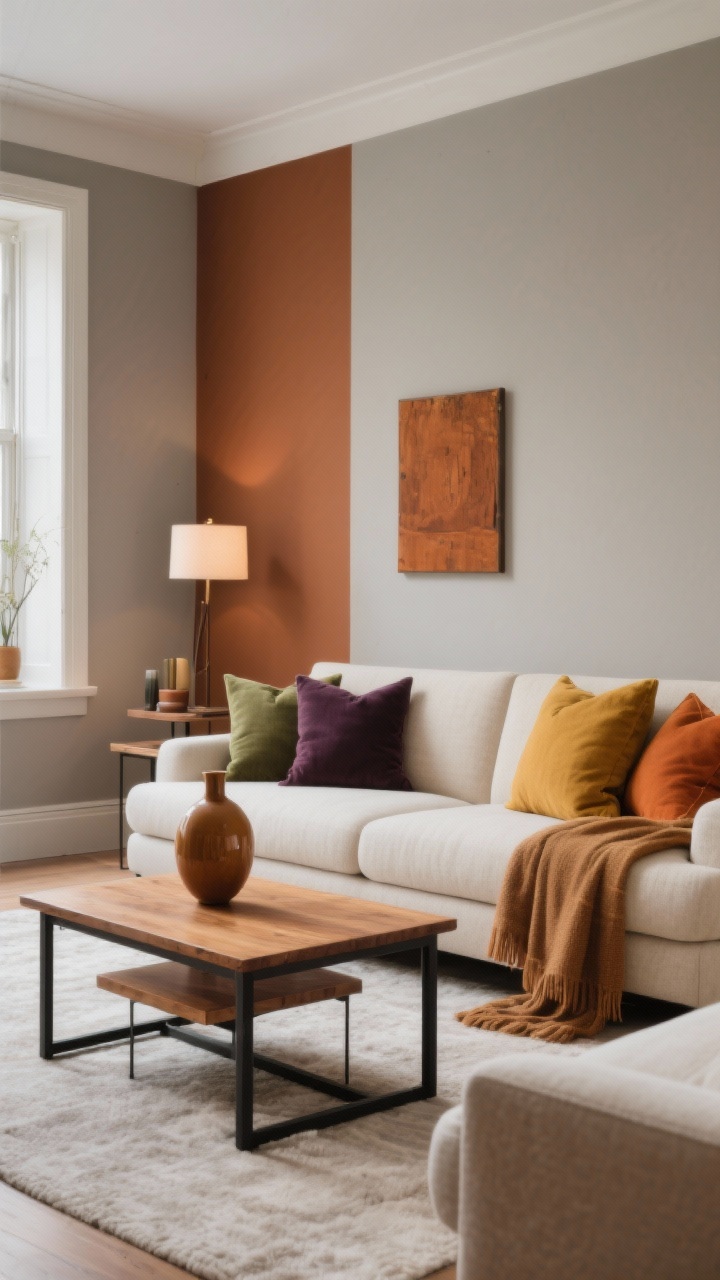
Colors mess with your nervous system—seriously. A room drenched in cool grays can feel sleek in July and icy in January. If your winter self needs comfort, give it visual warmth.
Warm It Up Without Starting Over
- Shift your neutrals: Beige, cream, taupe, or greige with warm undertones beat flat gray.
- Add saturated accents: Terracotta, olive, mustard, aubergine, ochre. A pillow here, a vase there—instant mood.
- Paint a single wall in a cocoon shade (think clay or cocoa) or wrap a small room for a hug-in-a-box vibe.
- Watch the undertones: If your light is cool, choose extra warm textiles to balance it. Opposites soothe.
Not ready to repaint? Swap artwork mats for warmer tones, use wooden frames instead of black metal, and bring in natural wood. Subtle changes, big energy shift.
3. Texture: The Secret Ingredient Your Brain Craves
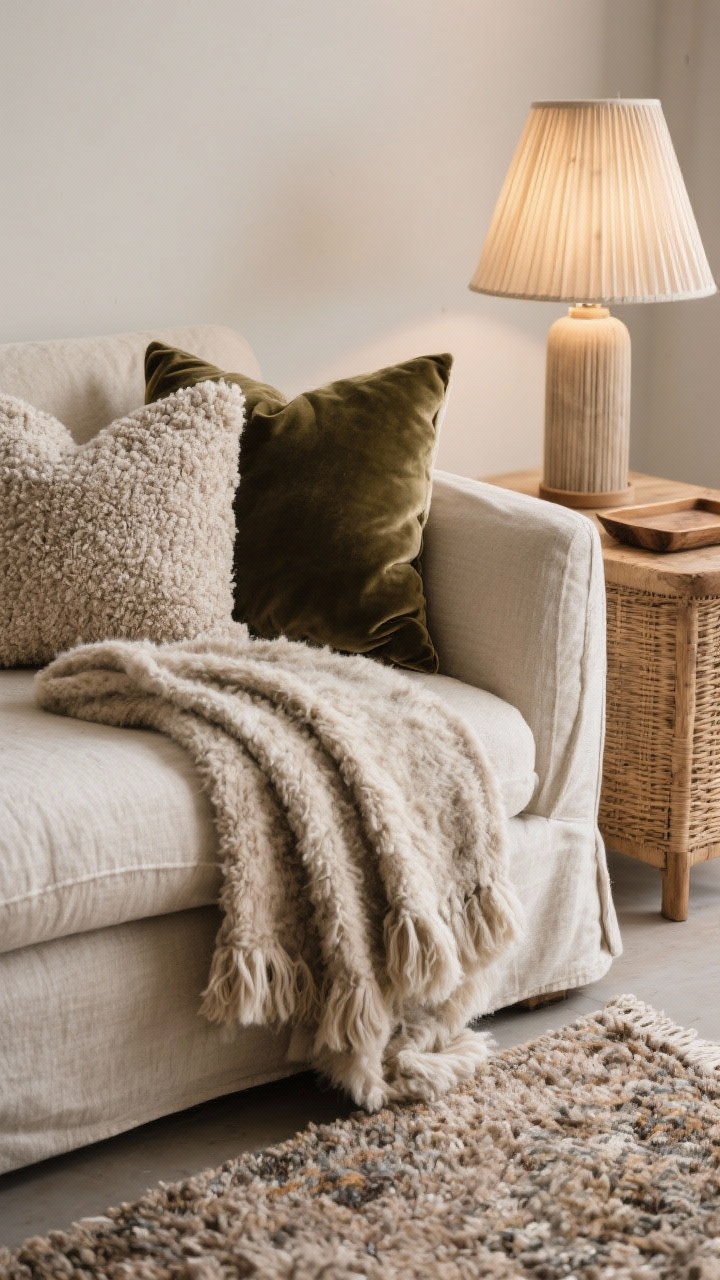
When everything is slick, minimal, and cold, your body won’t relax. Texture equals comfort, and comfort equals calmer nervous system. Science-ish, but also just true.
Layer Like a Cozy Stylist
- Mix materials: Bouclé, wool, linen, velvet, rattan, and raw wood. If it looks touchable, it helps.
- Double up on blankets: One structured (woven) and one drapey (cashmere or faux mohair) for visual depth.
- Area rugs over hard floors or rug layering if you’re extra. Thicker underpads = softer steps and warmer toes.
- Soften hard lines with pleated lampshades, fabric lampshades, or a fabric pinboard.
Keep a “comfort basket” by the sofa with slippers, a throw, and hand cream. Practical and pretty. Also, IMO, heated throw blankets are a winter personality.
4. Declutter the Energy, Not Just the Stuff
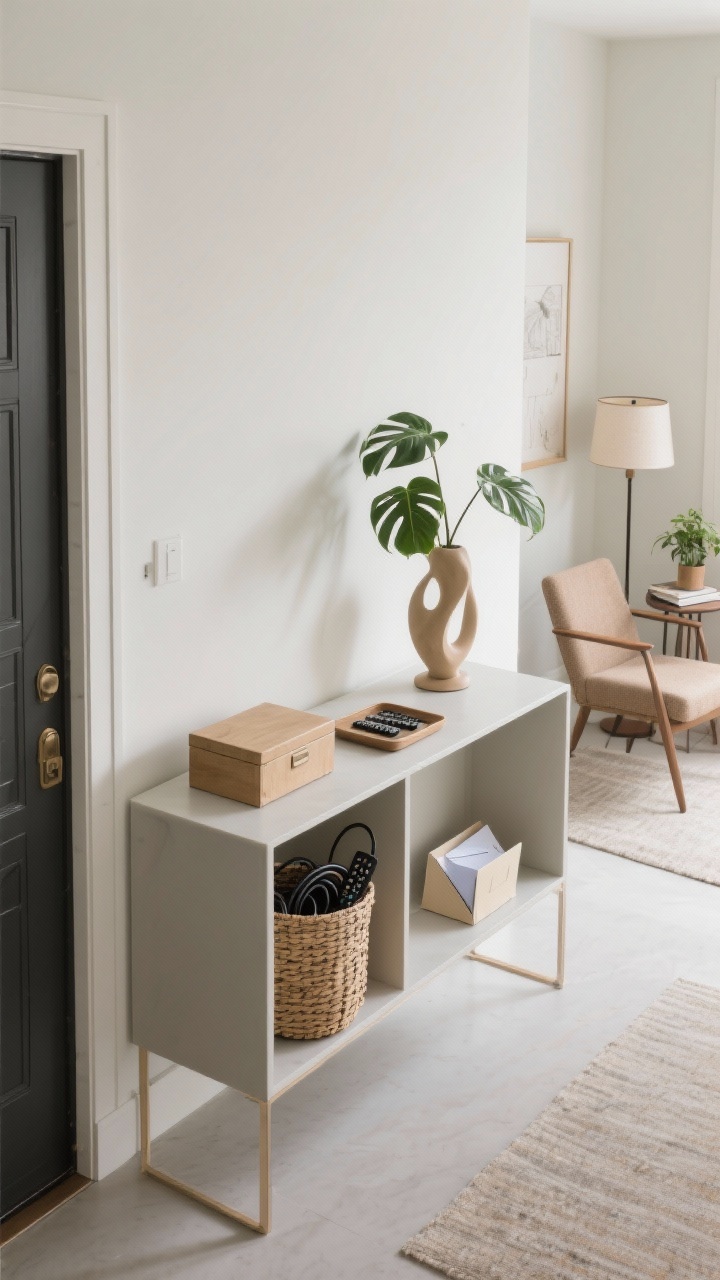
Visual chaos = mental noise. If every surface is busy, your brain never gets to rest. Minimalism is not mandatory, but intentionality is. Curate, don’t hoard.
The Feel-Good Edit
- Clear sightlines: Choose one “hero” per surface: a lamp, a plant, or a stack with a bowl—done.
- Hide the ugly: Basket for remotes, lidded boxes for cords, pretty tray for mail. Out of sight, out of stress.
- Rotate decor seasonally: Store half your accessories and swap every few months. Feels new, costs nothing.
- Create calm corners: Reading chair + floor lamp + side table + plant. One sanctuary beats ten scattered fixes.
Bonus: make your entryway clean and welcoming. First impressions set your home’s mood—especially when it’s dark by 5.
5. Bring Nature In (Your Brain Will Thank You)
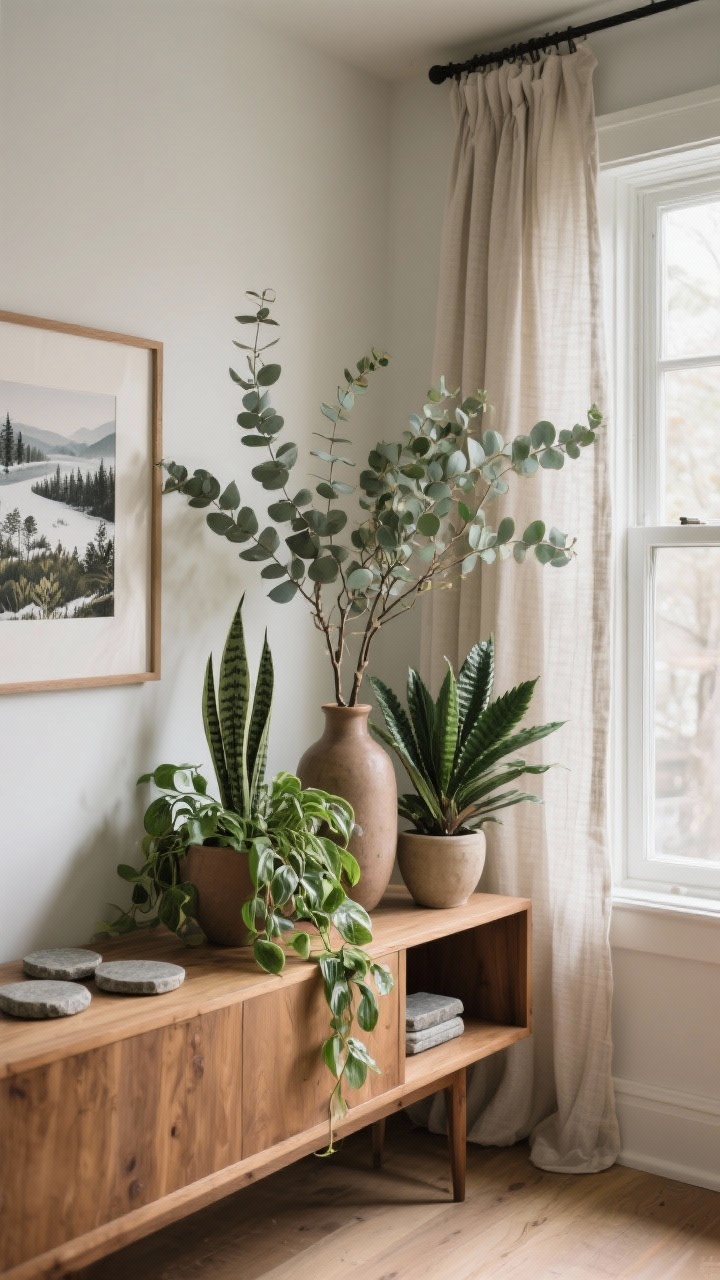
Humans are basically houseplants with emotions. We need light, water, and nature cues. Biophilic design can ease winter blues without turning your home into a greenhouse.
Low-Lift Ways To Add Life
- Real plants like pothos, snake plant, ZZ plant—hard to kill. Cluster in odd numbers for impact.
- Natural materials: Wood bowls, stone coasters, linen curtains, woven baskets. Nature signals = grounding.
- Nature art: Landscapes, botanicals, or moody forest prints. Swap art with the seasons for micro-joy.
- Fresh branches in a tall vase (eucalyptus, willow) last longer than flowers and smell amazing.
Open the windows for five minutes a day. Yes, it’s cold. Also yes, it resets the air and your headspace—FYI, it helps with sleep too.
6. Rethink Layout: Flow Affects Feelings
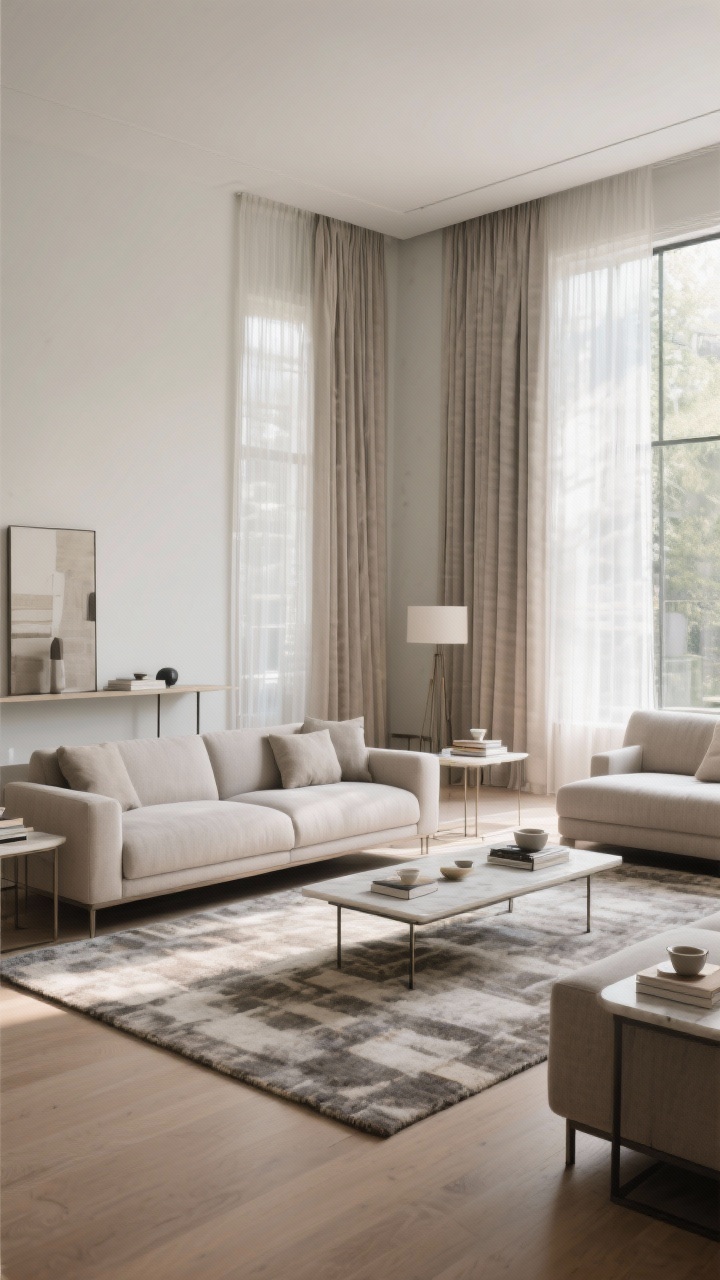
If your sofa faces a wall and your back faces the room, you’ll feel on edge without knowing why. Layouts that feel awkward can keep your body in alert mode. Let’s fix that.
Layout Tweaks With Big Payoff
- Face the light: Position your main seat to catch natural light, not glare. Even side light counts.
- Float furniture: Pull pieces off the walls to create zones. A rug anchors; a console defines.
- Give every seat a surface: A place for tea, books, or tissues is more than practical—it’s nurturing.
- Mind the pathways: 30–36 inches for walkways. If you’re dodging furniture, you’ll feel tense.
- Bedrooms matter: Put the bed where you can see the door but aren’t in line with it. Calmer instantly.
Also, swap heavy blackout curtains for double-layered drapery: sheers for daylight privacy and thicker panels for night. You’ll get light when you need it and warmth when you don’t.
7. Rituals, Scents, and Sound: Mood Styling 101
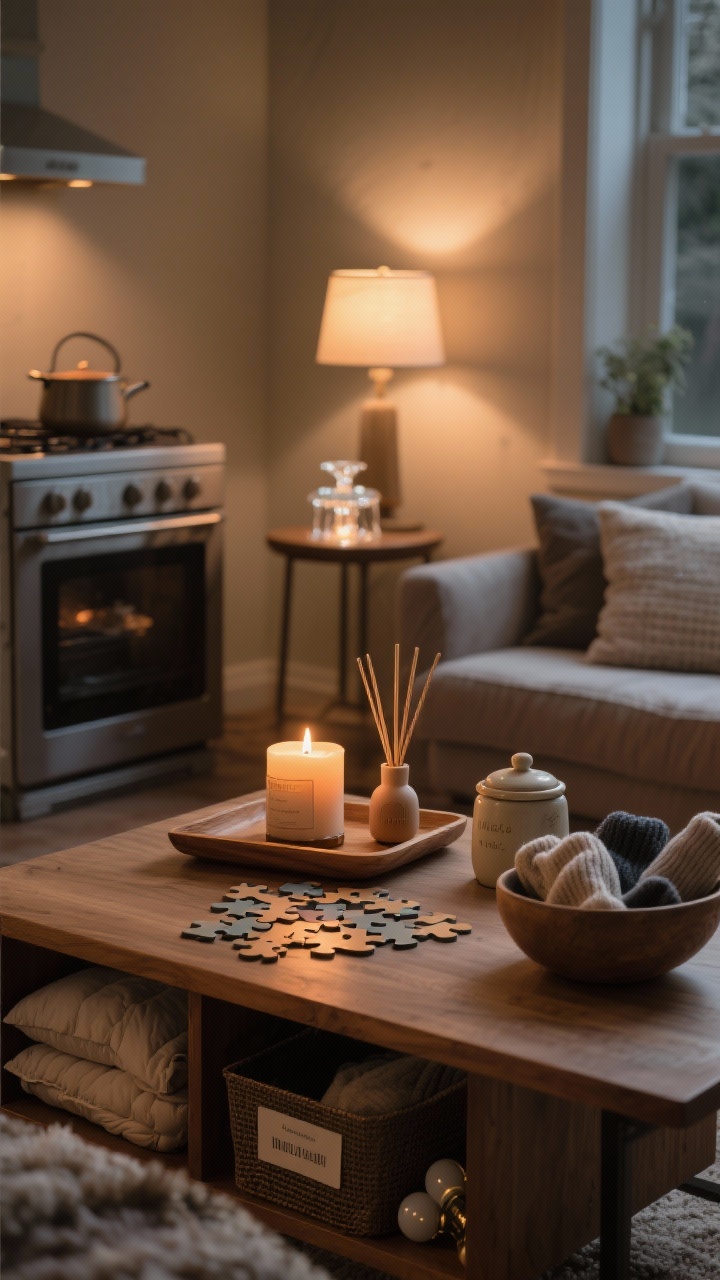
Decor isn’t just visual. Your senses team up to decide how you feel in a room. When light fades, rituals and atmosphere keep your spirit steady.
Style the Experience
- Warm scent profiles: Cedar, vanilla, amber, cardamom. Use candles, diffusers, or simmer pots on the stove.
- Soundscapes: Low-volume playlists, nature sounds, or a tiny tabletop fountain. Silence can feel stark.
- Evening lighting ritual: Turn on lamps from back to front of the room for a gentle dim-down. Cozy on command.
- Micro-joy props: A puzzle on the coffee table, a tea station, a stack of soft socks in a bowl (yes, really).
- Seasonal swap kit: Keep winter pillows, a thicker duvet, and extra lamp bulbs in a labeled bin. Future you says thanks.
Remember: this isn’t about perfection. It’s about making your home a safe, warm cocoon when the outside world goes grayscale. IMO, that’s the real luxury.
Final Thought: If your decor is dim, cold, or chaotic, it might be amplifying seasonal blues. Start with light, layer in warmth and texture, add life, and protect your calm with smart layouts and little rituals. Your home can help you feel better—one lamp, blanket, and eucalyptus branch at a time.