
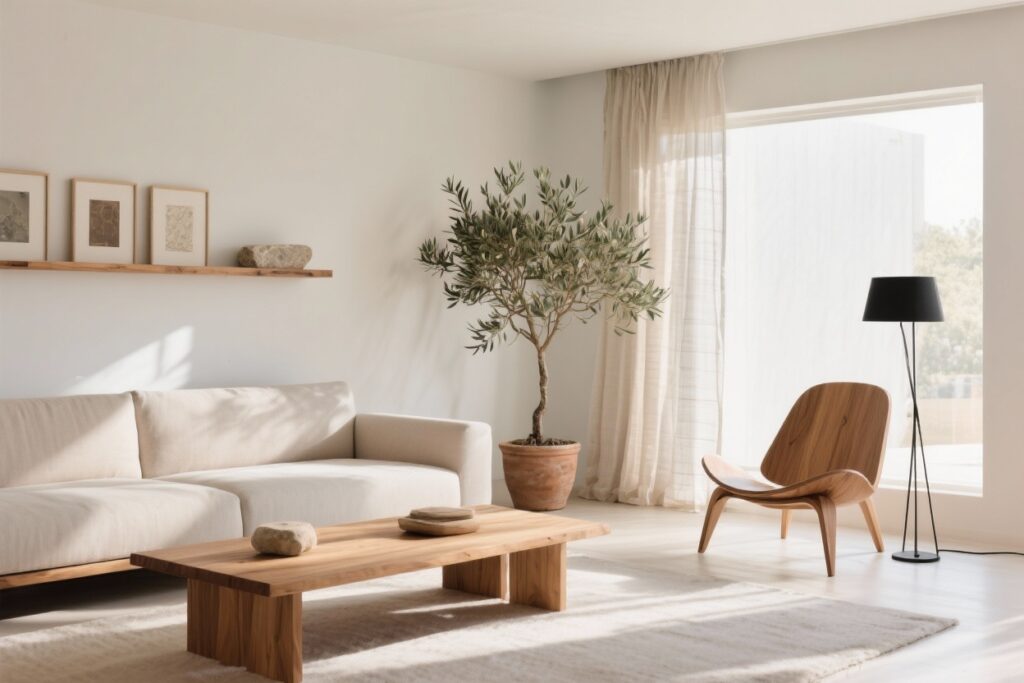
Let’s get real: you want a living room that looks chic, feels calm, and doesn’t require a daily decluttering marathon. Modern minimalism is your best friend—clean lines, smart storage, and just enough personality to keep it from feeling like a waiting room. Ready to give your space that quiet-luxury vibe without losing the cozy? Let’s do it.
1. Edit Ruthlessly, Then Curate Like an Art Director
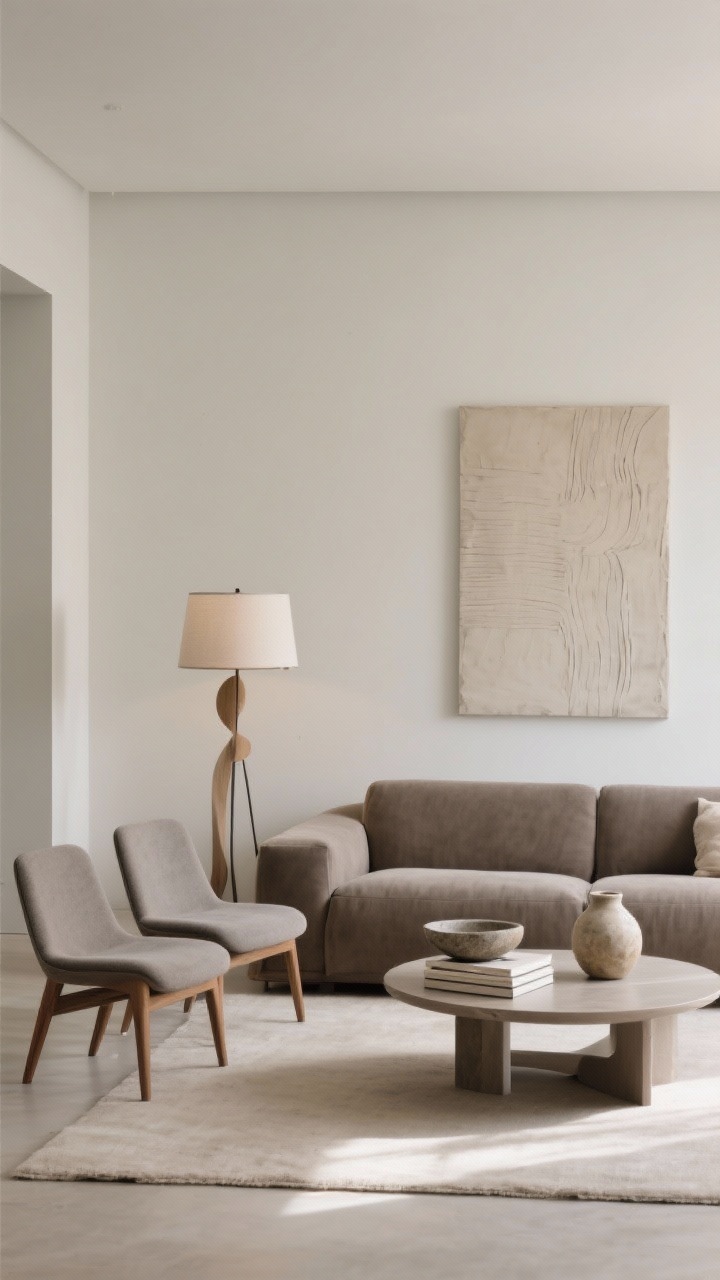
Minimalism starts with subtraction. If it doesn’t serve a purpose or spark genuine joy (yes, it’s a thing), it’s on the chopping block. You’re not moving into a monastery, but you are aiming for fewer, better pieces.
What to Keep
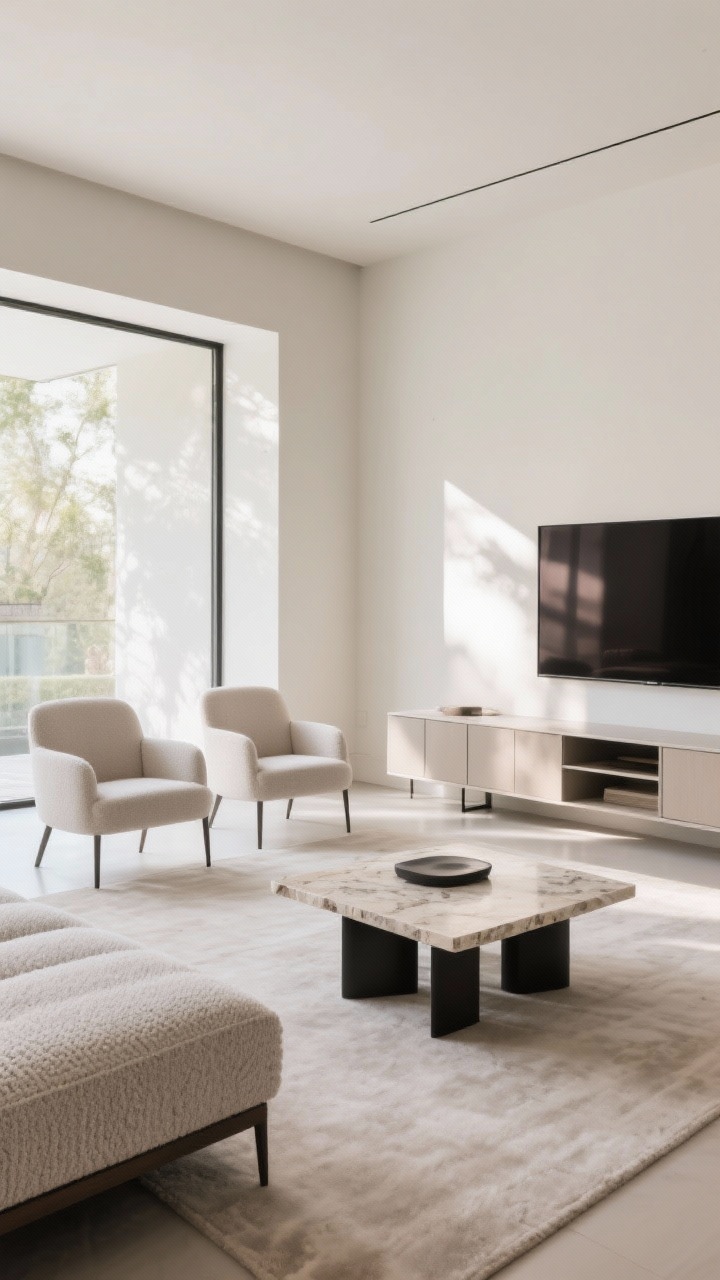
- One hero sofa in a neutral tone (think taupe, warm gray, or cream).
- Two accent chairs with clean lines—wood or metal legs are clutch.
- One coffee table (oval or rectangle) with space underneath so it visually “floats.”
- One focal light—a sculptural floor lamp or a minimal chandelier.
- Statement art instead of a gallery wall—one large piece beats ten small ones.
Now curate. Group objects by material or color to keep it cohesive: a stone bowl, a linen-bound book stack, a ceramic vase. That’s it. Curated, not cluttered.
2. Nail the Palette: Warm Neutrals With a Hint of Contrast
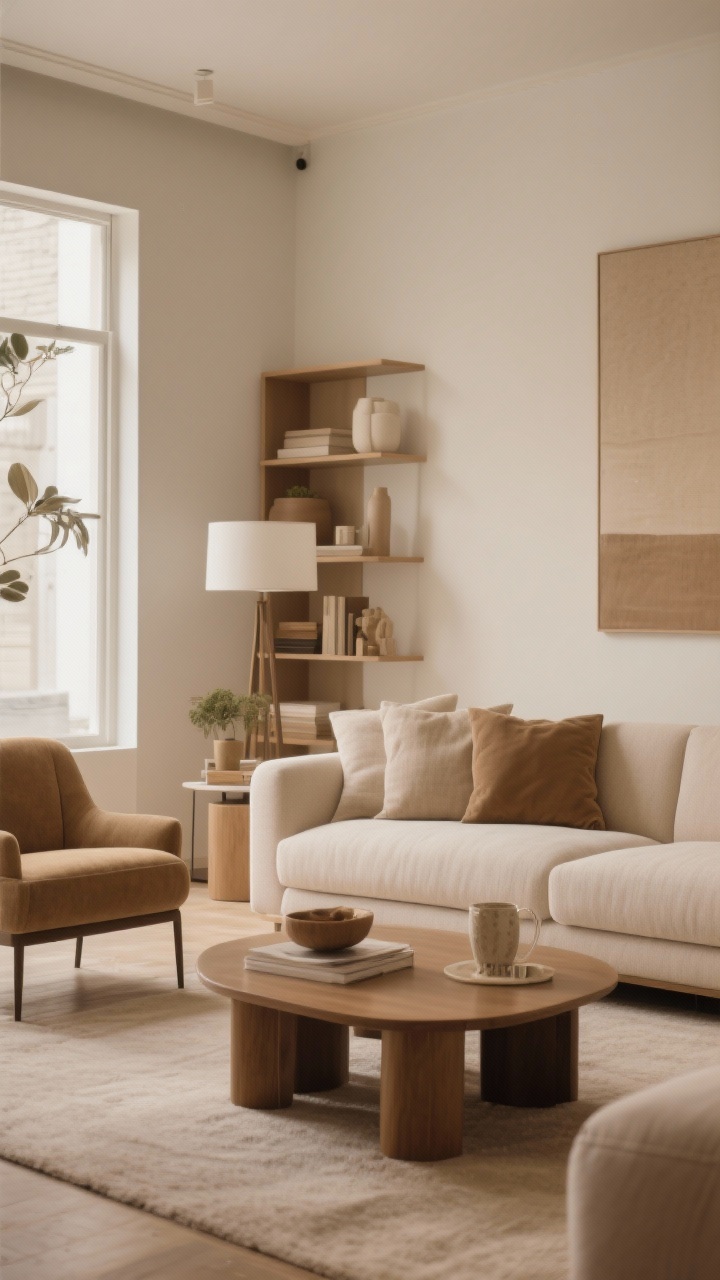
Minimal doesn’t mean sterile. The trick is a tight palette with warmth. Start with creamy whites, soft beige, and warm grays—then add contrast with black, deep charcoal, or walnut for grounding.
Palette Formula
- 60% base: walls, large rug, sofa in soft neutrals.
- 30% mid-tones: wood finishes, textiles, curtains.
- 10% contrast: black frames, dark metal legs, a moody throw.
FYI: If your space is north-facing and cool, choose warm whites (with a yellow or beige undertone). South-facing? You can handle cooler grays and taupes without looking icy.
3. Choose Furniture With Sleek Lines (But Cozy Textures)
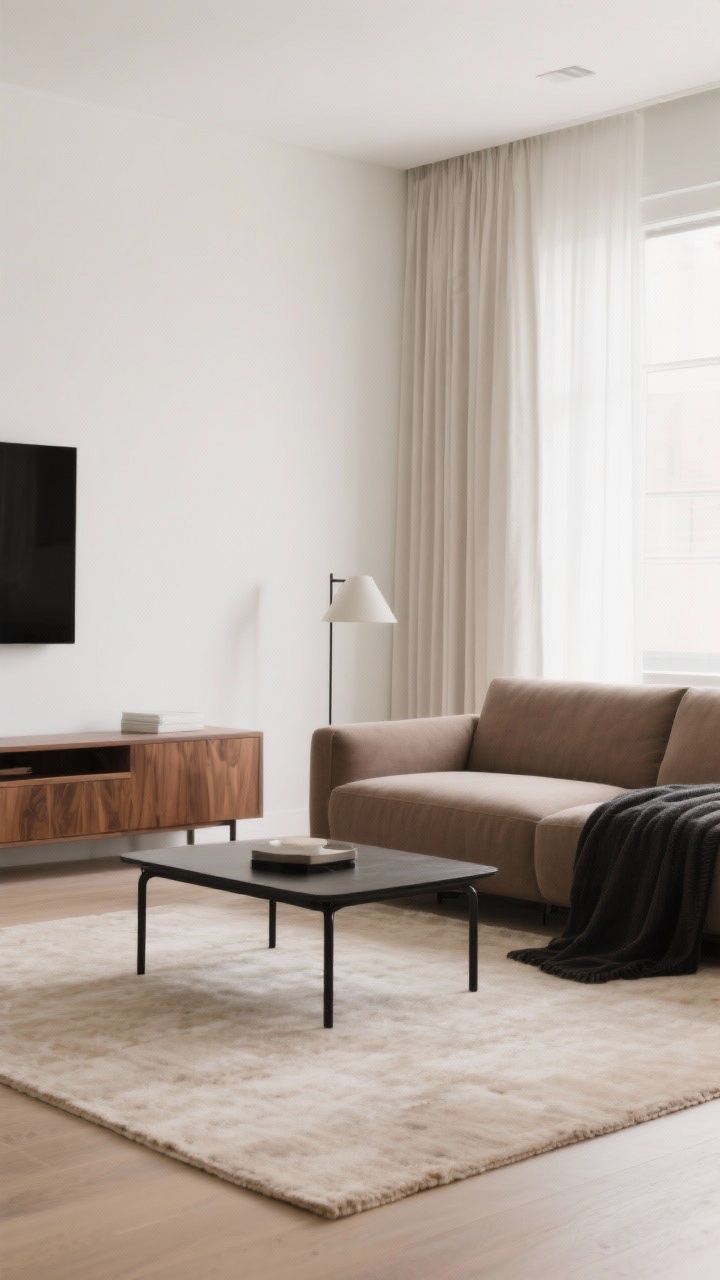
Look for furniture that reads as light and airy. Think slim arms on sofas, tapered legs, and simple silhouettes. Then layer in comfort with texture so it doesn’t feel like “minimalist museum only.”
Smart Furniture Picks
- Sofa: bench seat, low profile, neutral fabric (linen blend, performance boucle).
- Chairs: armless or slim-armed to keep sightlines open.
- Coffee table: wood slab, travertine, or glass top with slim metal base.
- Media console: floating or with legs—closed storage for visual calm.
Pro tip: Open bases keep the room looking bigger. If everything sits directly on the floor, it can feel heavy and cramped.
4. Layer Textures Like a Pro (Because Texture = Warmth)
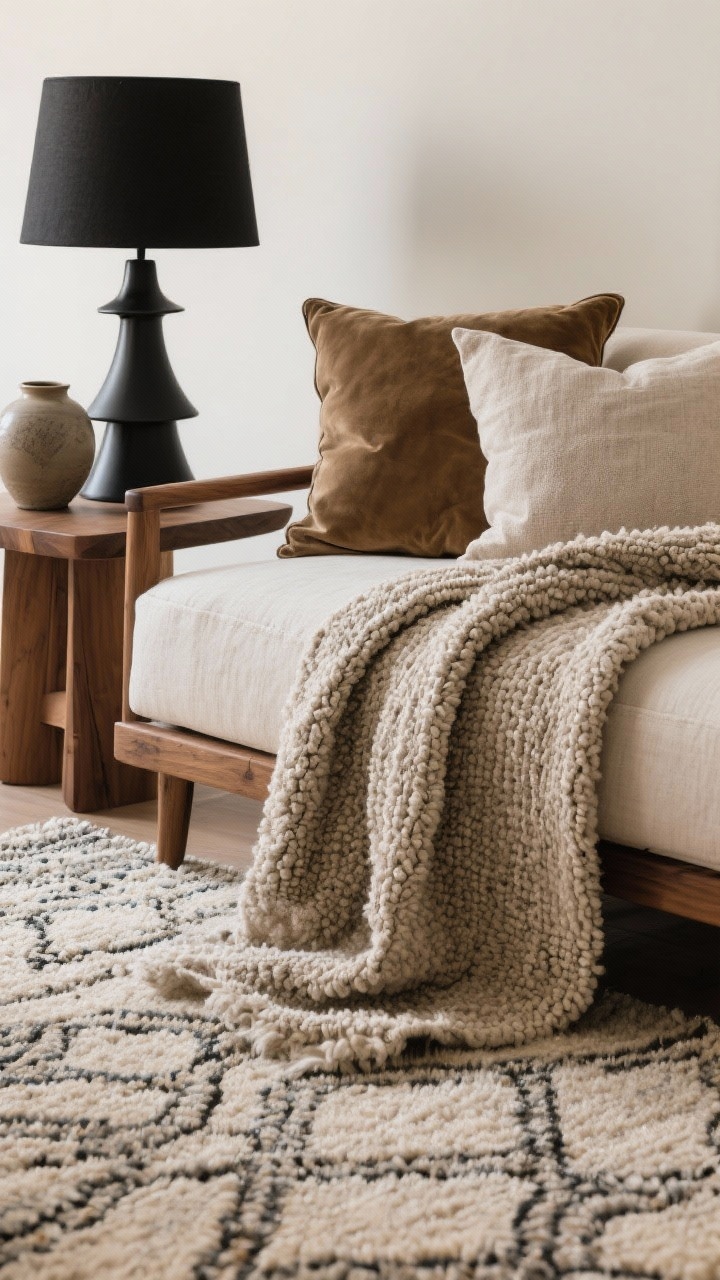
Color is simple; texture is where the magic happens. Layer soft with structured: plush rug, linen curtains, wood table, metal lamp, ceramic vase. The mix keeps it minimal without feeling flat.
Texture Toolkit
- Rug: wool or wool-blend in a solid or subtle pattern—no shaggy chaos.
- Throws: nubby linen in summer, chunky knit in winter.
- Pillows: 2–4 max with tonal variations—boucle, linen, suede. Keep prints subtle.
- Hard finishes: oak, walnut, or ash wood + matte black or brushed nickel metals.
Stick to 3–4 materials repeated across the room. Repetition = cohesion. Cohesion = calm.
5. Make Storage Invisible (So Your Brain Can Relax)
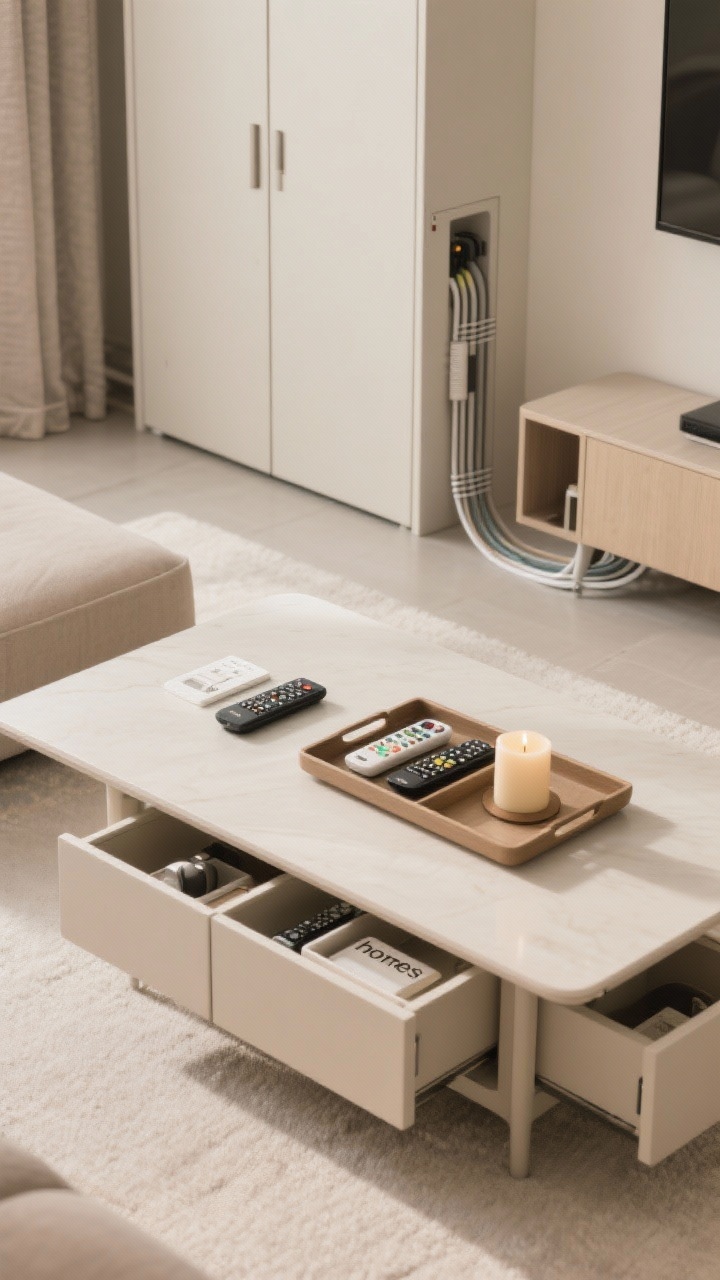
Visual noise is the enemy of minimalism. Hide the everyday stuff—remotes, chargers, random mail—behind clean surfaces. Out of sight, out of mind, out of stress.
Clutter-Proof Moves
- Closed consoles for tech and cables. Use cable sleeves and stick-on cable raceways.
- Nesting tables for flexibility without extra clutter.
- Ottomans with storage for throws and kids’ toys.
- Tray systems on coffee tables to corral remotes and candles.
- Built-ins or floating shelves with cabinet doors on the lower half.
Remember: every surface should have a “home” for small things. If it doesn’t, it will become a clutter magnet—ask me how I know.
6. Master Lighting Layers: Soft, Sculptural, and Dimmable
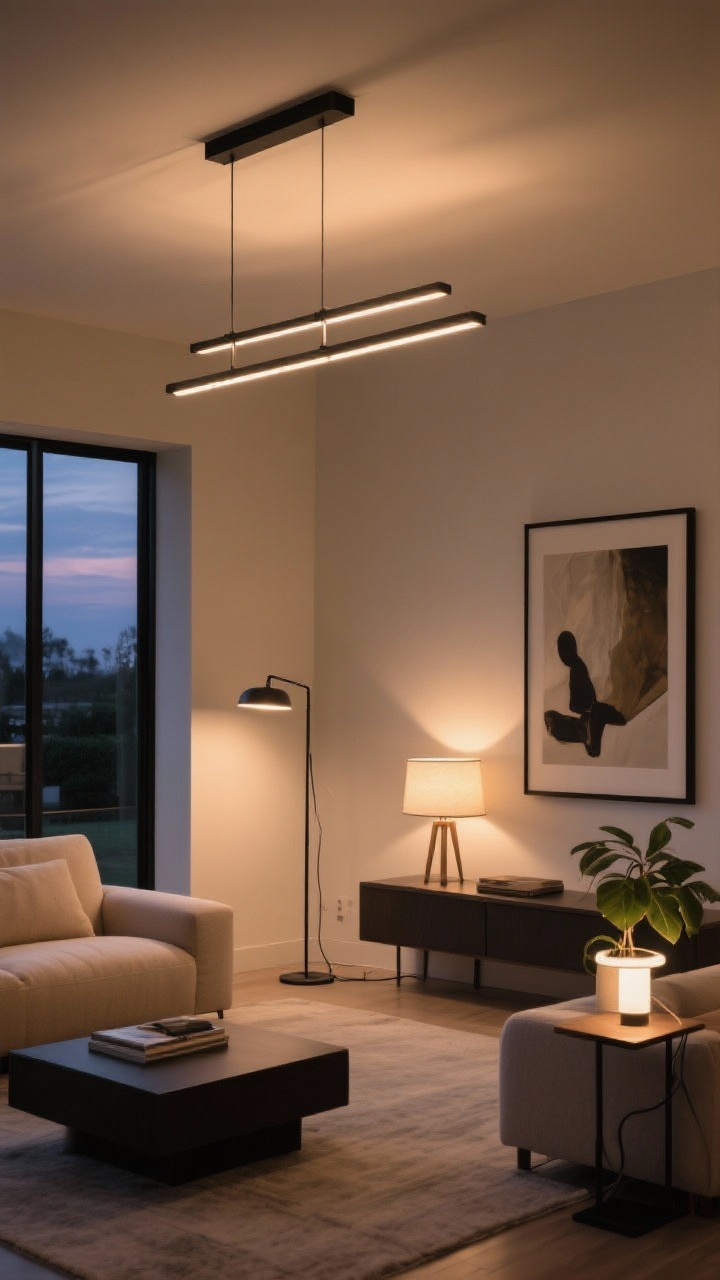
Lighting makes or breaks a minimal room. You want layers—overhead, task, and accent—so the room shifts from “daytime crisp” to “evening cozy” without a fight.
Lighting Game Plan
- Overhead: a simple, sculptural fixture—flush mount or linear chandelier.
- Task: slim floor lamp by the sofa or armchair; a table lamp on the console.
- Accent: picture light over art or a small uplight behind a plant.
- Bulbs: 2700K–3000K warm white, high-CRI if possible. Always dimmable.
Bonus: Plug-in sconces add polish without calling an electrician. Hide the cords with a paintable cord channel for a clean look.
7. Style With Restraint: Fewer Objects, Bigger Impact
Minimal styling doesn’t mean boring. It means intentional. Choose pieces with interesting form—oversized branches, sculptural ceramics, a substantial stone tray—and give them space to breathe.
Styling Rules That Keep Things Chic
- Go big on art: one large canvas or framed photograph over the sofa.
- Books, but edit: 3–5 coffee table books max, stacked, with a bowl or candle on top.
- Greenery: olive tree, rubber plant, or a single branch in a tall vase—no jungle.
- Candles: unscented taper pair or one sculptural candle—keep scents subtle.
- Negative space: leave some surfaces mostly empty. It’s the quiet that makes the few pieces pop.
IMO, the best test is the “snapshot rule”: take a quick phone pic. If your eye doesn’t know where to land, remove something. If it feels flat, add texture, not more stuff.
Bonus Mini-Checklist: Quick Wins This Weekend
- Swap busy pillows for two textured neutrals.
- Corral remotes and coasters with one tray.
- Center a large branch arrangement on the coffee table.
- Hide cords and add a dimmable bulb to your lamp.
- Declutter shelves, leaving intentional gaps between objects.
There you go—seven moves to a modern, minimal living room that feels calm and looks designer-level. Keep the palette tight, the textures rich, and the surfaces clear. Your future self (and your group chat) will thank you.