
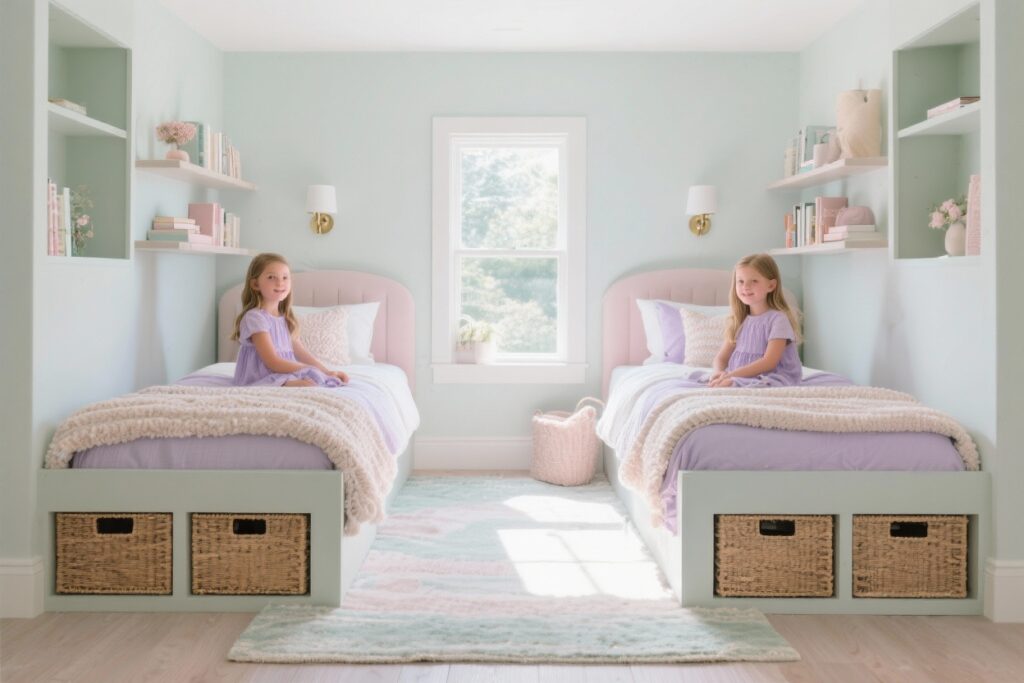
You want a shared girls’ room that’s cute, compact, and conflict-free? Totally doable. The trick is smart layouts, clever storage, and a few design ninja moves that make everyone feel at home—without the eye rolls.
Grab a tape measure and your best “we’ve got this” energy. Here are seven ideas that actually work—and look good doing it.
1. Bunk Beds, But Make Them Boutique
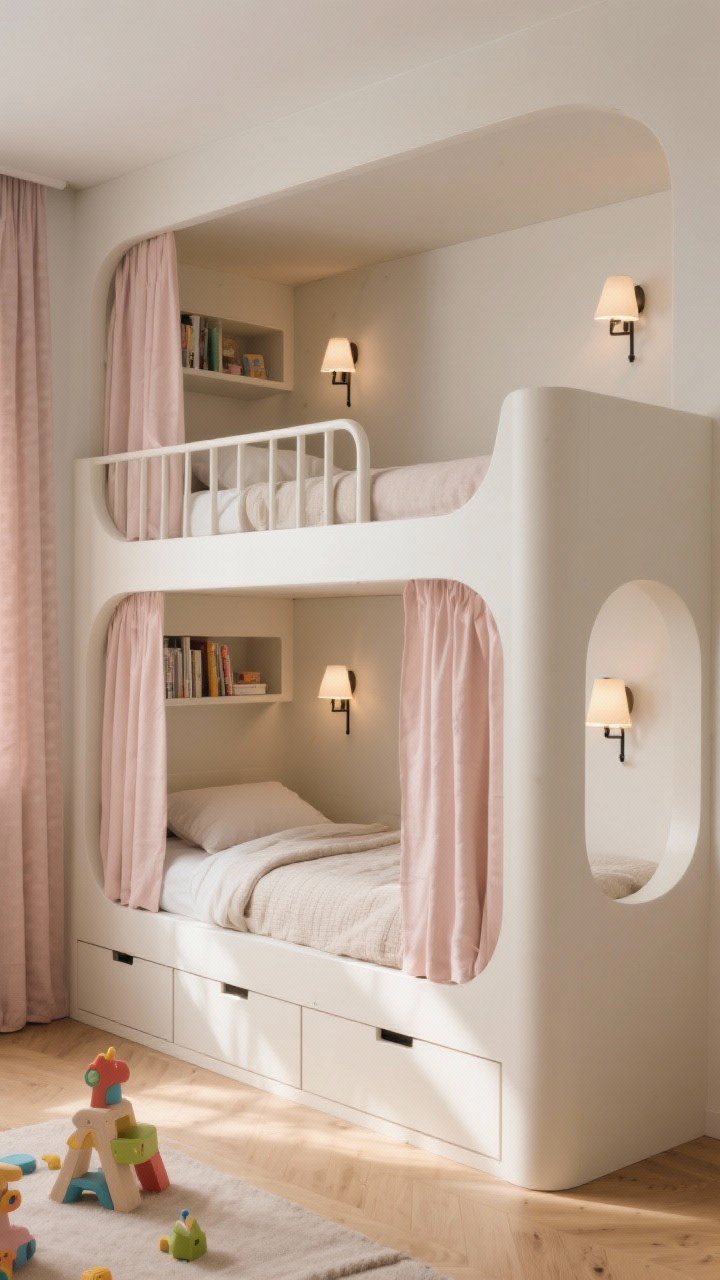
Bunks are the OG space-saver, but they don’t have to scream sleepaway camp. Opt for a sleek built-in bunk with wall-mounted sconces, a privacy curtain, and little shelves for books and treasures.
Why It Works
- Vertical space = more floor space. Suddenly you have room for a desk or play zone.
- Privacy without walls. Curtains give each kiddo a mini-retreat—peacekeeping gold.
- Storage built right in. Drawers under the lower bunk handle pajamas, bedding, or toy chaos.
Pro Tips
- Choose a twin-over-full if ages or sleep patterns vary—older kid gets the bigger bed, little one gets the fort vibes up top.
- Add clip-on reading lights so one can read while the other snoozes.
- Go for rounded edges and sturdy guardrails. Cute is great; safe is non-negotiable.
2. Zone It Like A Studio Apartment
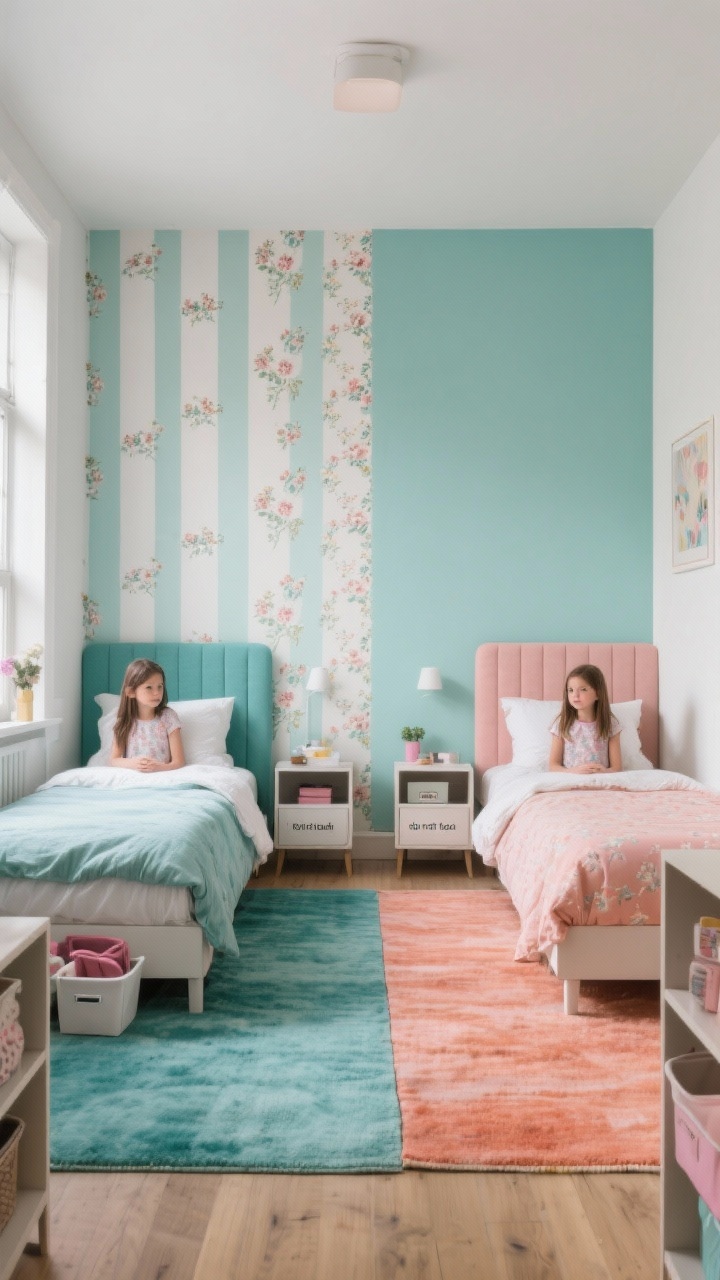
Shared rooms run smoother when each girl knows what’s hers. Create distinct zones using rugs, paint, or furniture placement so the room feels customized—not copy-pasted.
How To Divide Without Drama
- Rugs: One colorful rug by each bed instantly carves out territory.
- Paint or wallpaper halves: Same palette, different patterns. It’s cohesive but personal.
- Headboard walls: Accent walls behind each bed anchor each zone visually.
Peacekeeping Extras
- Give each child a nightstand or wall cubby for their “do not touch” items.
- Label shared storage and set simple rules—what’s communal vs. personal. FYI, labels are magic.
3. Twin Beds With A Smart Divide
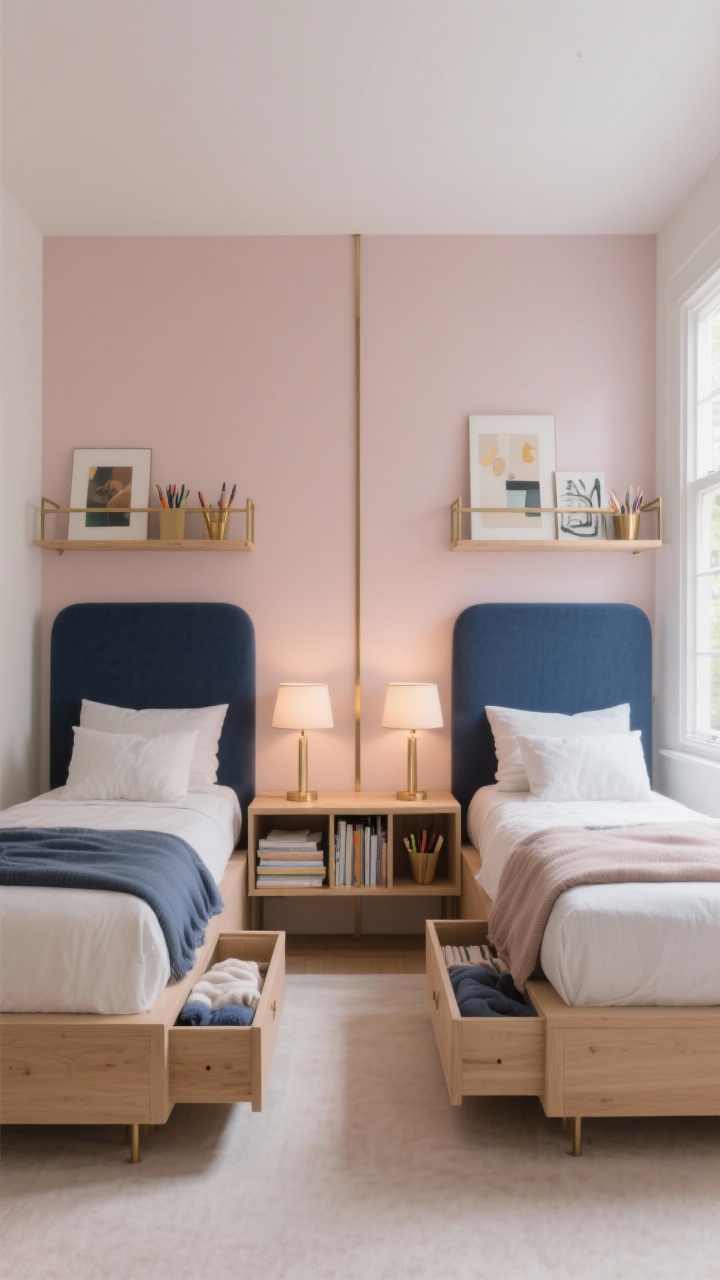
If bunks aren’t your vibe, go classic with side-by-side twins. The secret sauce? A shared nightstand or low bookcase between them that doubles as a visual divider and storage.
Layout That Works In Real Homes
- Symmetry: Matching beds and lamps keep things calm. Layer in different pillows to reflect each personality.
- Underbed drawers: Hide seasonal clothing, extra blankets, or the art supplies that multiply overnight.
- Floating shelves: One above each bed for books and small decor—cute and practical.
Styling Tip
- Pick a tight color palette: two main colors + one metallic or wood tone. The room stays cohesive while each bed gets its own spin.
4. Closet Tetris: Double The Storage, Half The Fights
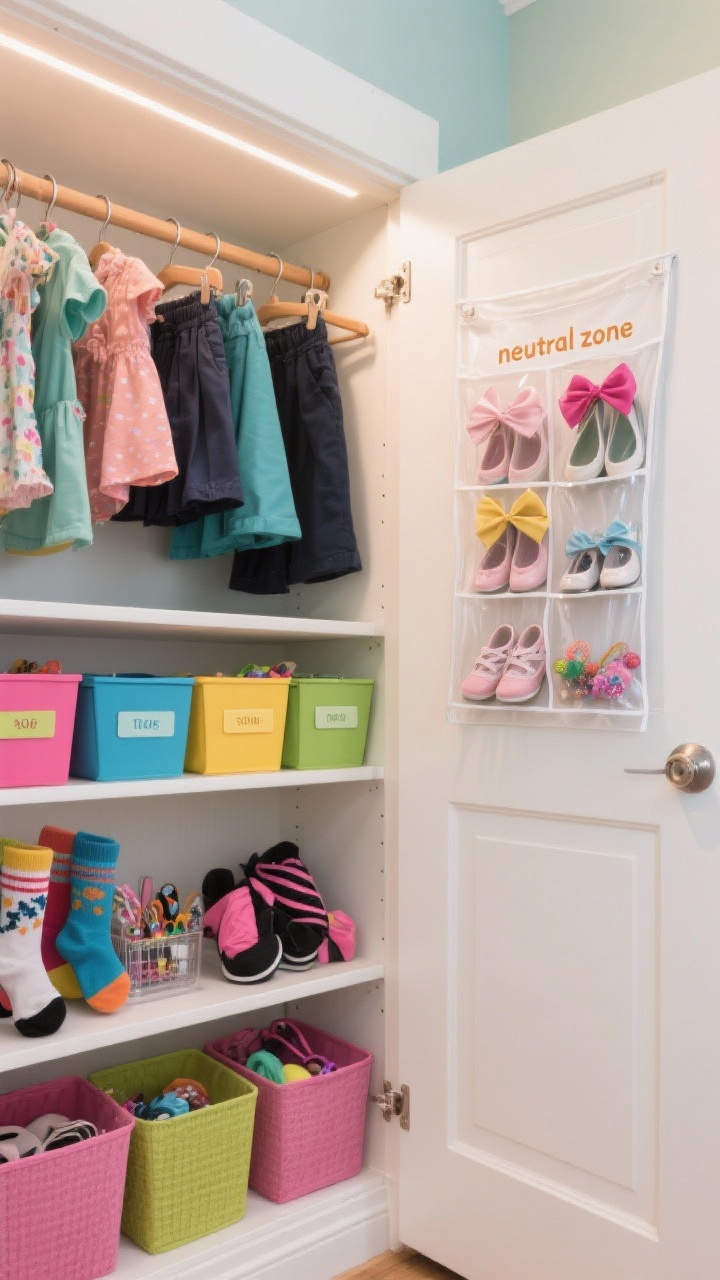
Let’s be honest—the closet is where most sibling wars begin. Time to turn it into a systems masterpiece so everyone knows what’s theirs.
What To Install
- Double hanging bars on both sides—tops above, skirts/pants below.
- Labeled bins for accessories, socks, dance gear—one color per kid.
- Over-the-door shoe organizer for shoes, hair bows, and tiny things that go missing every five minutes.
Drawer Diplomacy
- Assign equal drawer space in dressers and label interior dividers.
- Shared items (costumes, craft supplies) get a neutral zone—one shelf or basket that’s “ours,” not “mine.”
5. Built-In Desks And Craft Stations That Actually Get Used
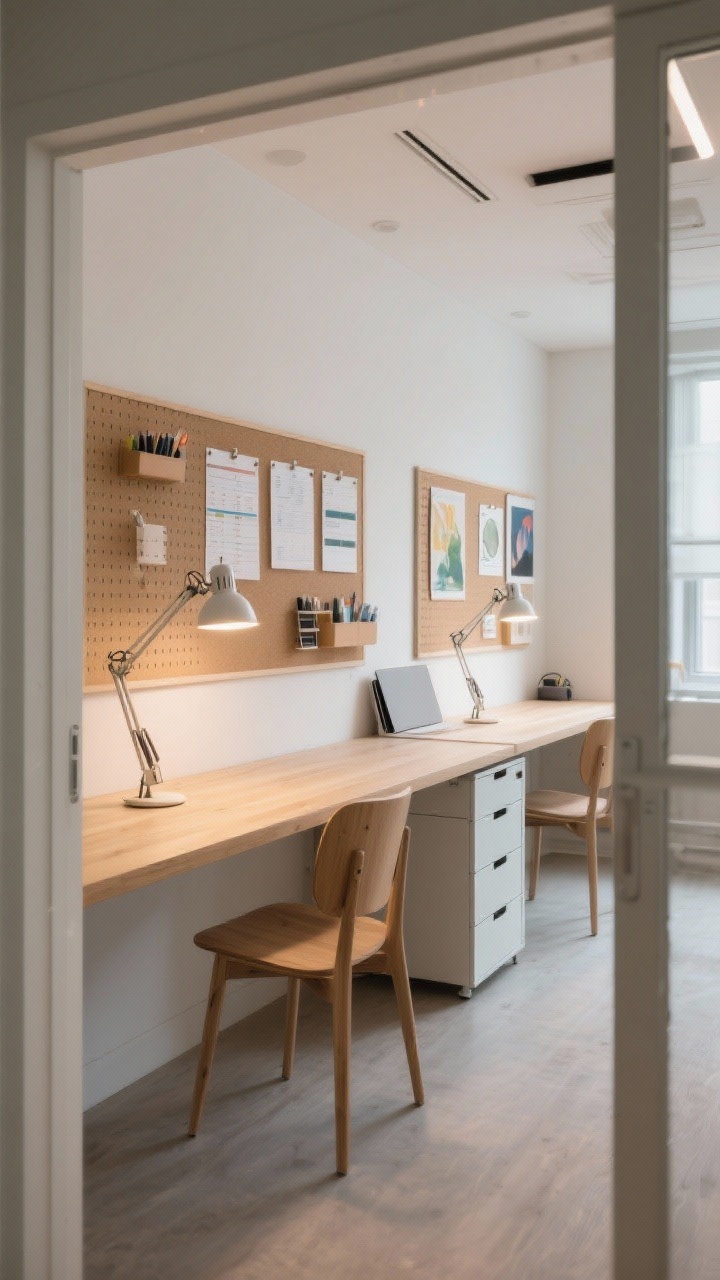
If one kid needs a homework nook while the other’s crafting unicorns, you need a plan. Enter the wall-to-wall workstation with two chairs and separate task lights.
Design It Like This
- Long countertop with two leg spaces—think mini study hall.
- Pegboards or cork boards above each seat for schedules and art.
- Drawer towers between seats to buffer noise and store supplies.
Small Room Hack
- Use a fold-down desk that tucks away when not in use. Bonus: cleaner floors, happier parents.
- Choose dim-to-bright task lamps to avoid bedtime battles over lights.
6. Color, Pattern, And Personality—Without Clashing
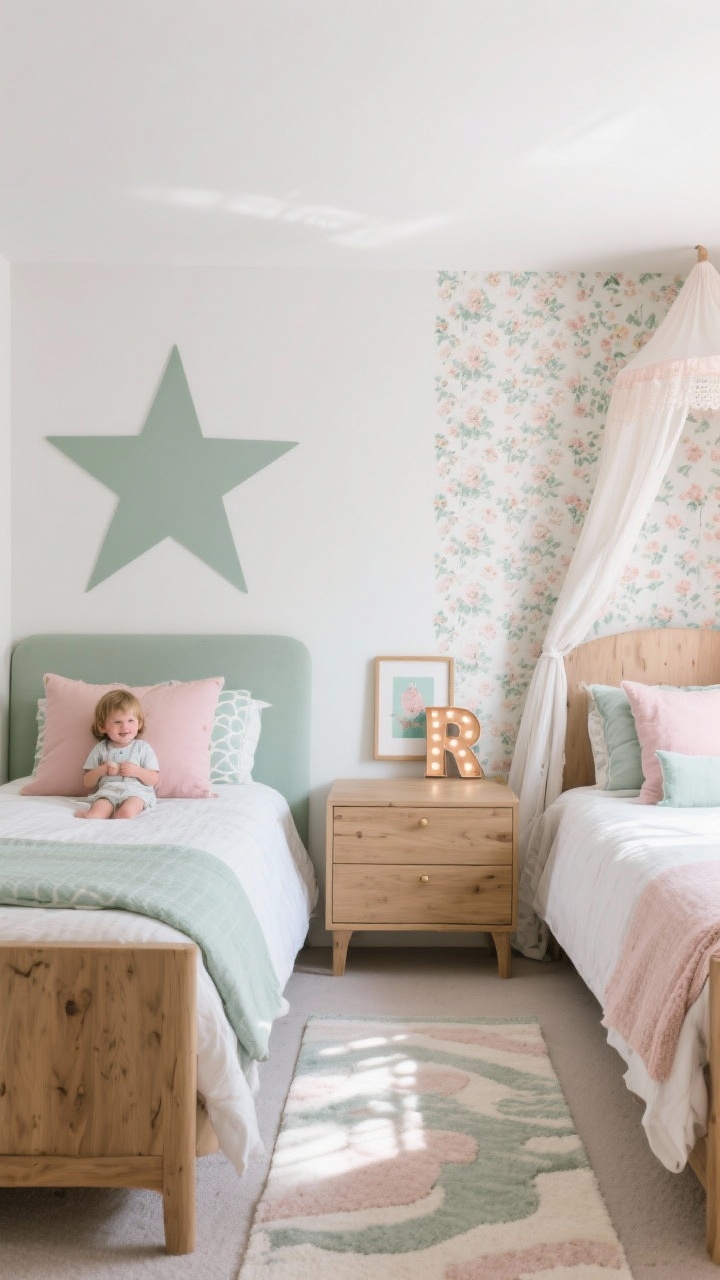
Different tastes? No problem. Start with a neutral base (walls, large furniture) and let each girl pick accent colors and patterns. Balance is the name of the game.
Make It Cohesive
- One shared motif (stars, florals, stripes) used differently on each side.
- Mix scales: one big pattern, one small. It reads polished, not chaotic.
- Repeat colors at least three times—pillow, art, rug—to tie things together.
Personality Moments
- Let each child choose a signature item (a marquee letter, canopy, or statement pillow).
- Use peel-and-stick wallpaper behind each bed for easy, renter-friendly style. IMO, it’s the fastest glow-up.
7. The Calm Corner: Reading Nook Or Mini Lounge
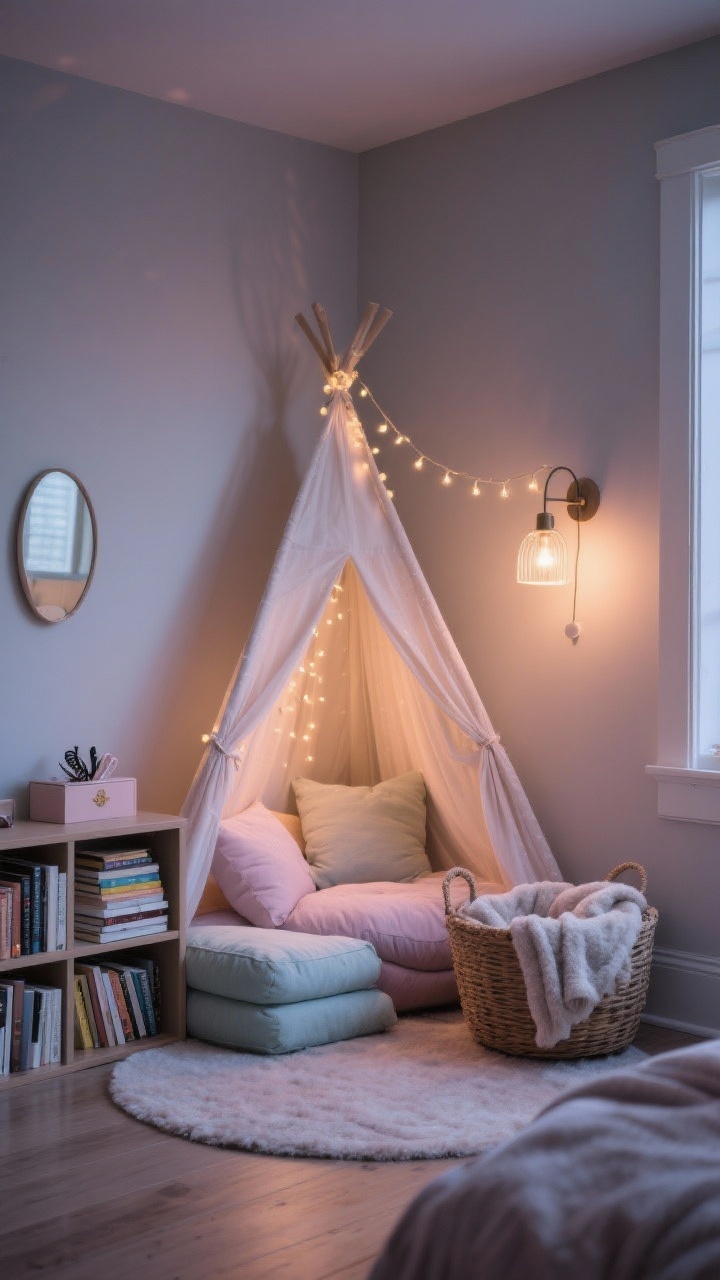
Every shared room needs a neutral ground—a spot where both can reset. Create a cozy nook with floor cushions, a small bookshelf, and soft lighting. It’s cute, yes, but it also keeps the peace.
How To Build It
- Corner canopy or tent for instant magic and acoustic softness.
- Wall sconce or string lights on a dimmer for nighttime wind-downs.
- Basket of blankets and a rotating stack of books—they’ll actually use it, promise.
Bonus: Morning Flow
- Add a small mirror and hair accessories box in the nook to keep primping out of the bed zone. Less traffic = fewer squabbles. FYI, it speeds up school mornings.
Quick Extras To Keep Everything Smooth
- Hooks at kid height for backpacks and robes—floor piles, begone.
- Soft-close bins for toys so cleanup isn’t loud or dramatic.
- White noise machine if bedtimes are staggered. Shockingly effective.
Here’s the big picture: a shared girls’ room can be stylish, efficient, and surprisingly zen. Choose one layout that fits your space, add storage that truly works, and give each kid their own small-but-special claim. You’ll free up floor space, lower the bickering, and raise the cute factor—wins across the board.