
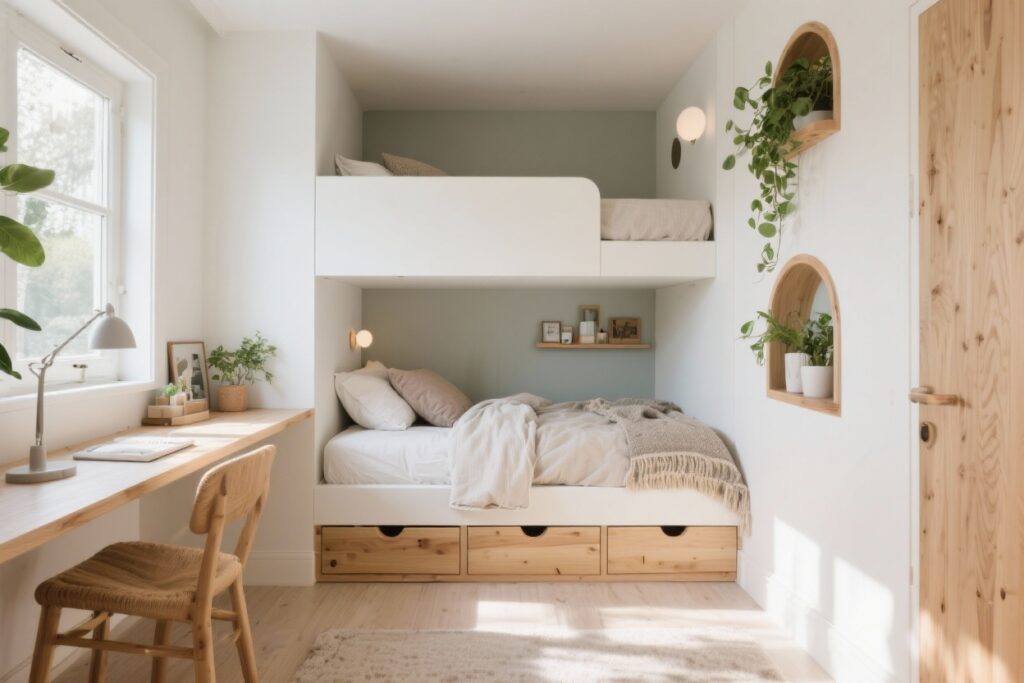
Small bedroom, big dreams? Bunk beds are your secret weapon. They’re like magic tricks for square footage—suddenly there’s room for sleep, play, storage, and even a mini office nook. Let’s turn that cramped corner into a multi-functional wonderland with ideas that are stylish, smart, and actually doable.
1. The Built-In Beauty: Wall-to-Wall Bunks That Look Custom
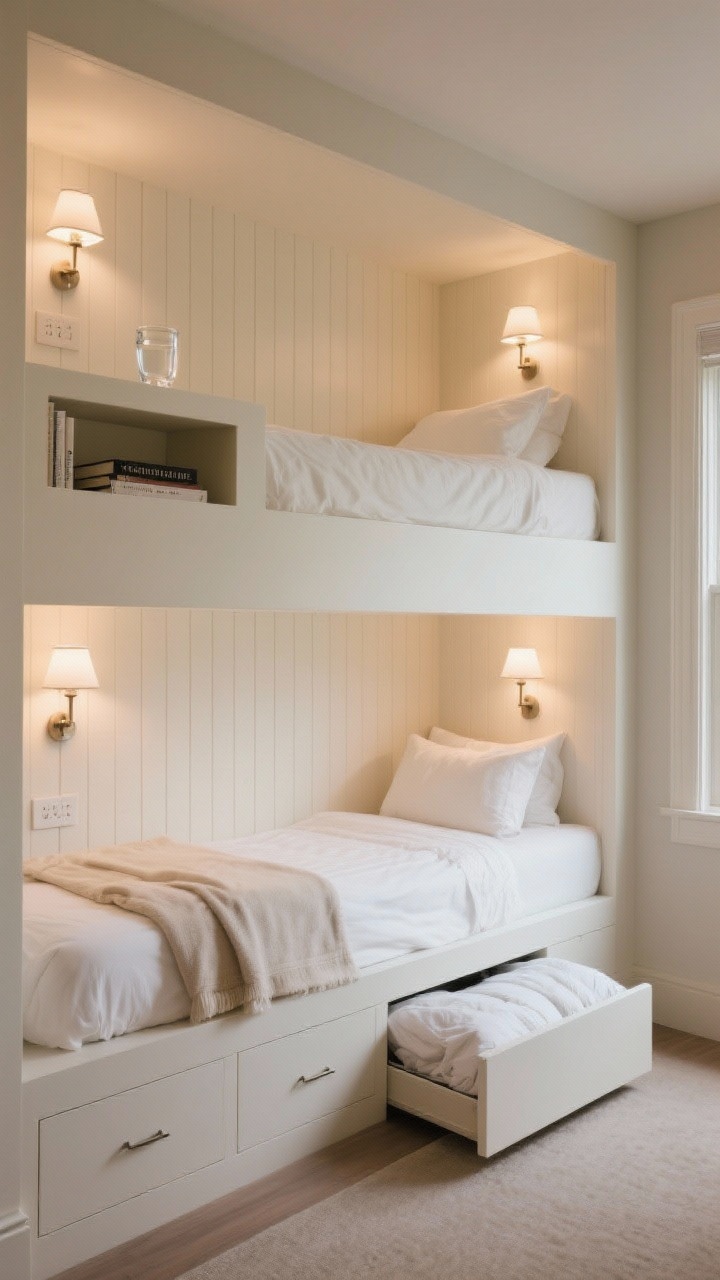
Want a room that looks straight out of your favorite design feed? Go built-in. Wall-to-wall bunks feel intentional and sleek, and they squeeze every inch of space into something useful—no awkward gaps, no dust-bunny zones.
Design the bunks to fit the entire wall and add a ledge or niche for each sleeper. It’s hotel-chic but cozier.
Pro Moves
- Add integrated niches for books, water, and a nightlight—no need for bedside tables.
- Use paneling or beadboard on the bunk walls for texture that hides scuffs.
- Hardwire sconce lights for each bunk with individual switches. Instant grown-up vibes.
- Choose drawers at the base or a lift-up platform for hidden storage (off-season clothes, duvets—bye!).
FYI: Built-ins don’t have to be custom. Many modular systems can be trimmed to fit and painted to look bespoke.
2. Loft + Lounge: Sleep Up High, Live Down Low
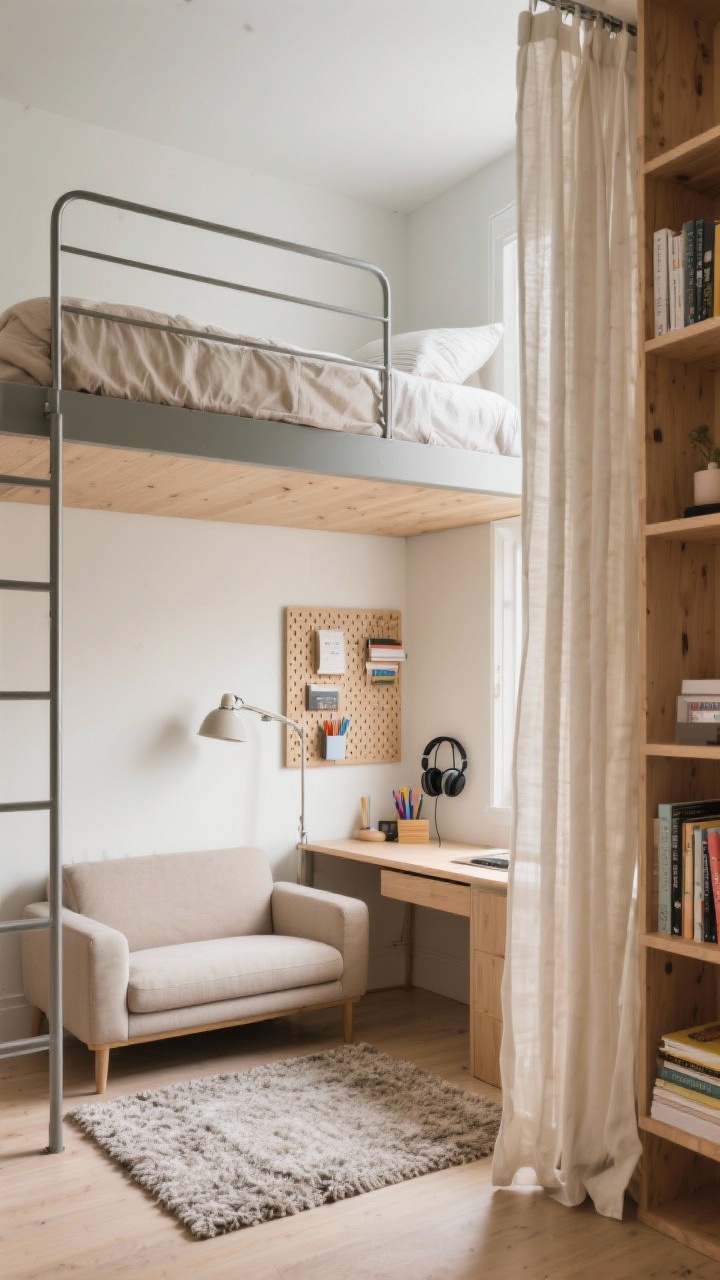
Not every bunk needs a bottom bunk. A loft bed frees up serious real estate underneath for a chill zone, desk, or wardrobe. Perfect for tweens, teens, or compact guest rooms that moonlight as home offices.
Keep the top sleek with a slim railing and the bottom flexible—furniture you can move around means the room can grow with the sleeper.
What To Put Underneath
- Desk setup with a pegboard for school supplies and headphones.
- Reading nook with a loveseat, wall lamp, and plush rug. Instant cozy corner.
- Wardrobe zone with a low dresser + clothing rack for tight closets.
Tip: Go vertical with curtains or a slim bookcase under the loft to define the space without making it feel cramped.
3. The Storage Ninja: Drawers, Cubbies, and Secret Stash Spots
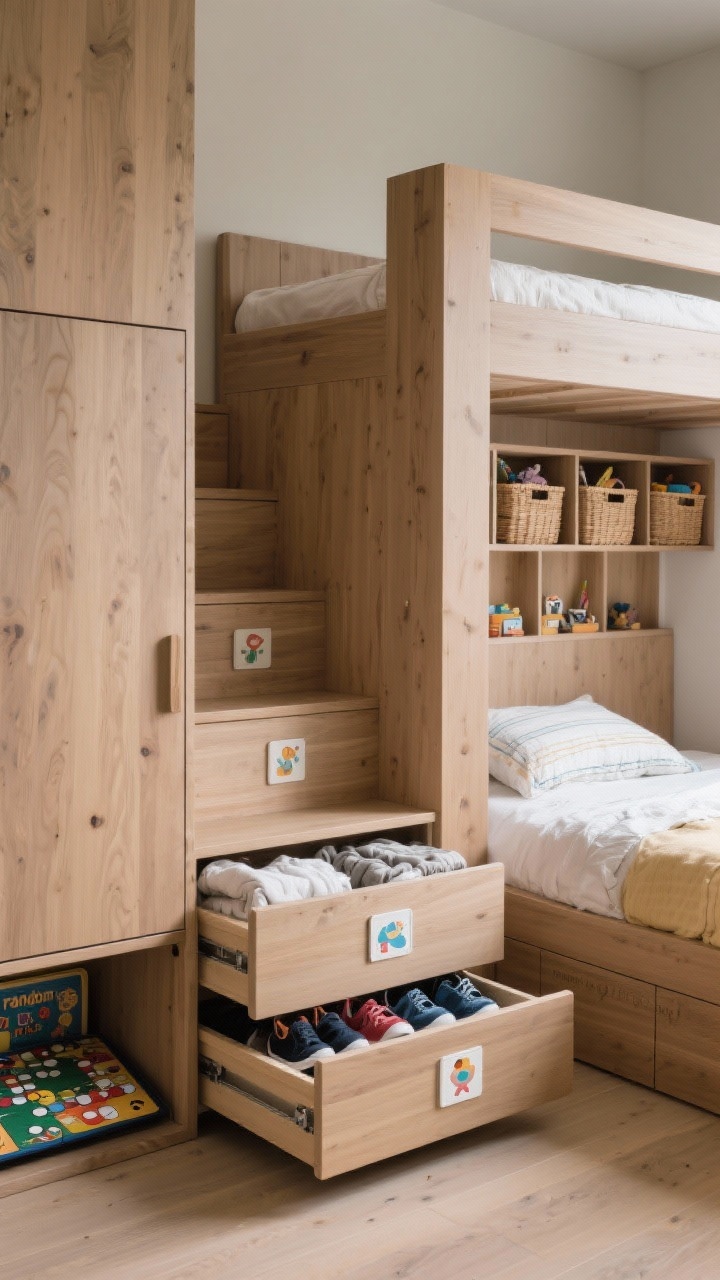
If your room’s bursting at the seams, let your bunk bed do the heavy lifting—literally. Choose designs with under-bed drawers, staircase storage, and bedside cubbies. Visual calm, clutter gone.
Stair drawers are safer than ladders and hold tons of stuff. Win-win.
Smart Storage Ideas
- Stair drawers sized for shoes, toys, or extra bedding.
- End-of-bed cabinets for bulky items (board games, anyone?).
- Headboard cubbies with baskets to prevent “random tiny things” chaos.
- Labels that kids can actually read—icons help for younger ones.
IMO, choose wood tones or matte paint to keep it looking clean even after life happens.
4. Perpendicular Power: L-Shaped Bunks That Create Zones
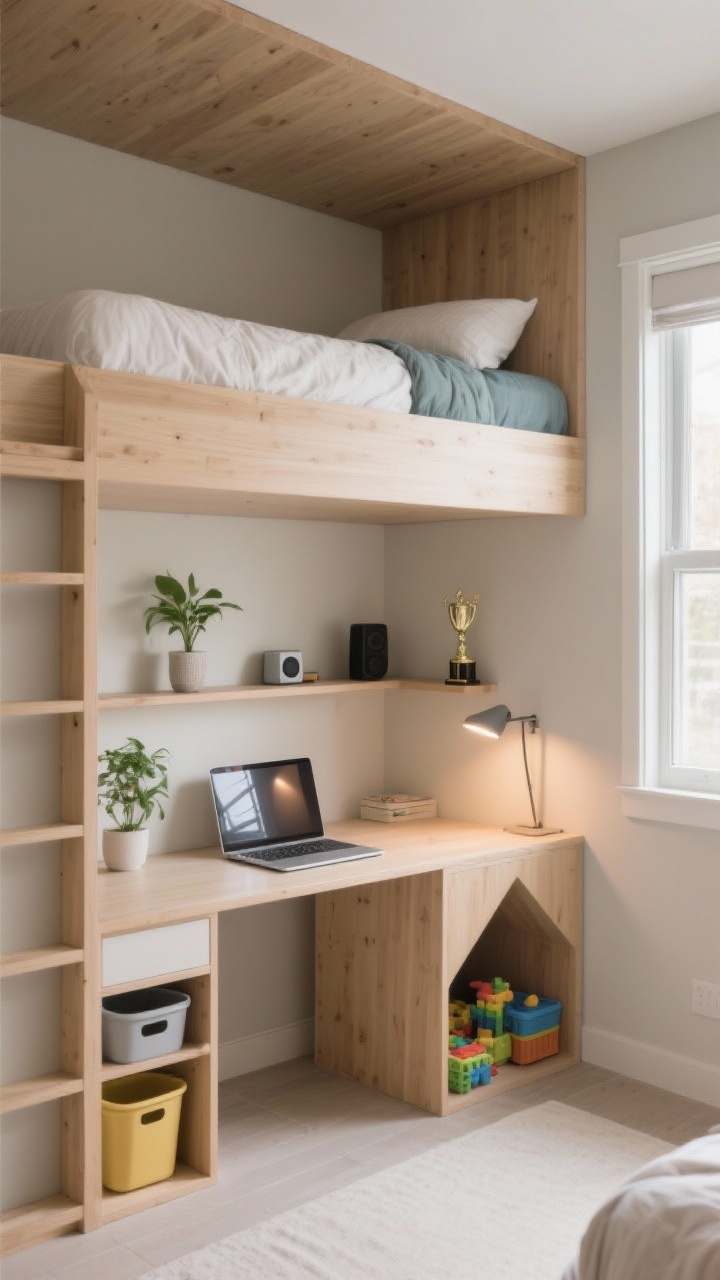
Standard stacked bunks are great, but L-shaped bunks bring style and flexibility. Rotate the bottom bed 90 degrees and you get better flow, more headroom, and a mini “room within a room.”
This layout is clutch for odd-shaped spaces or rooms with tricky window placement.
How To Use The Corners
- Corner shelving for plants, trophies, or a Bluetooth speaker.
- Desk under the upper bed where it naturally shades the screen (less glare!).
- Play cubby with bins under the overhang for toys or craft supplies.
Design bonus: The L-shape gives each sleeper a little privacy—especially nice if bedtimes don’t match.
5. Triple (Or Quad) Threat: Sleep More Without the Squeeze
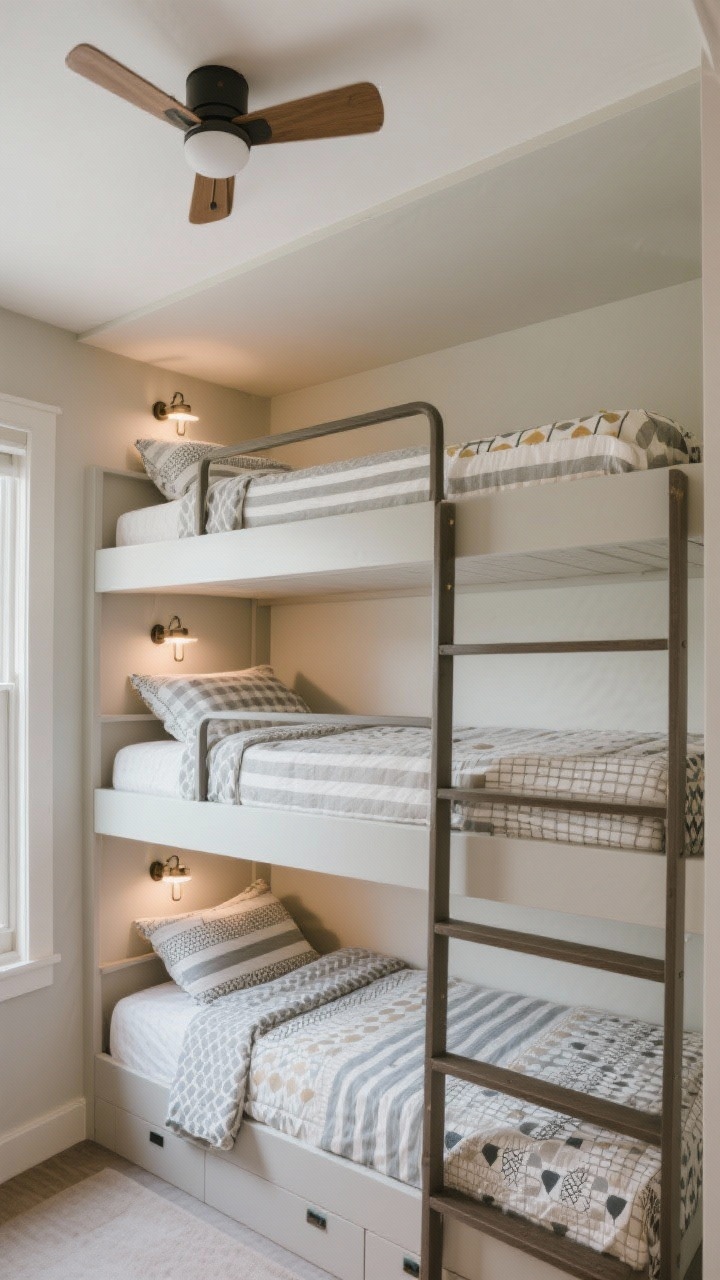
Got cousins visiting, a slumber-party kid, or a vacation home? Consider triple bunks or a quad layout that sleeps four without turning the room into a sardine can.
Stacking three requires extra attention to ceiling height and ventilation. A quad design—two bunks facing two—works best in longer rooms.
Safety + Comfort Checklist
- Ceiling height: Leave at least 30–36 inches from mattress to ceiling for the top sleeper.
- Ventilation: Add a quiet ceiling fan or wall-mounted fan to keep air moving.
- Mattress choice: Use low-profile (6–8 inches) to maximize guardrail height.
- Lighting: A small sconce or clip light for each bed—no overhead glare.
Pro tip: Use coordinated bedding in different patterns within the same palette so it feels collected, not chaotic.
6. The Minimalist Metal Moment: Slim Frames, Big Style
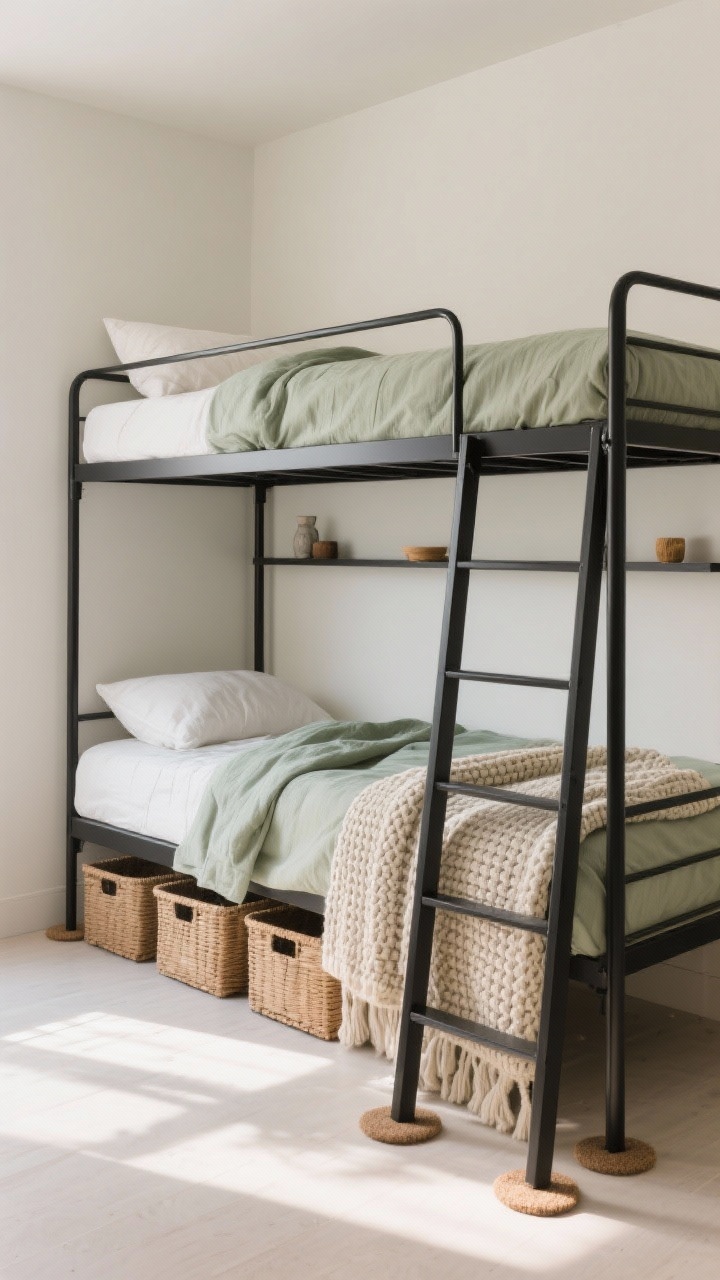
If the room already feels tight, go for a slim metal bunk with clean lines. They visually disappear, play well with modern or Scandinavian decor, and keep things airy. No visual bulk = calmer space.
Keep colors quiet—matte black, warm white, or soft sage—and let the linens do the talking.
Make It Look Elevated
- Layer textures: Linen duvet, chunky knit throw, and a waffle blanket.
- Add a wall shelf above the pillow line for decor that doesn’t eat floor space.
- Use uniform baskets under the bed for a streamlined look (even if the contents are chaos).
FYI: Stick felt pads on the ladder and frame contact points to nix squeaks and protect floors.
7. The Privacy Pod: Curtains, Panels, and Little Sanctuaries
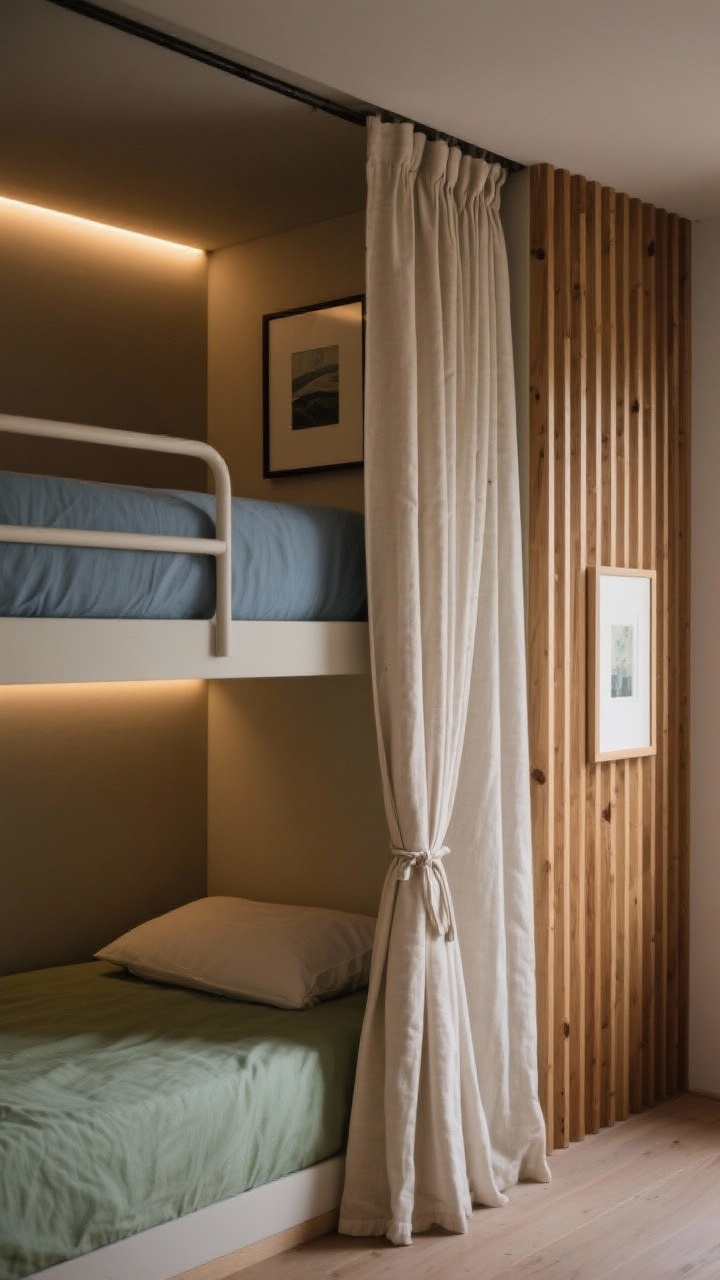
Sharing a room doesn’t have to mean sharing all the time. Add privacy curtains or slatted panels to turn bunks into cozy pods. It helps with bedtime routines, quiet reading, and sibling peace treaties.
Bonus: Curtains soften acoustics and make mornings less blinding if one kid wakes early.
Pod-Perfect Details
- Ceiling or rail-mounted curtains with tiebacks for easy open/close.
- Breathable fabrics (cotton, linen) so airflow isn’t compromised.
- Personalize each bunk with a small art print, monogram hook, or LED strip behind a lip for glow without glare.
- Color zones: Each sleeper picks a palette; you keep it cohesive with shared neutrals.
Want more privacy? Add a half-height panel in wood slats. It filters light and looks boutique-hotel pretty.
Design + Safety Quick Guide
- Guardrails on both sides of the top bunk, with no gaps bigger than 3.5 inches.
- Anchor built-ins to studs; use proper brackets for ladders and guardrails.
- Clear headspace: Measure mattress thickness before you buy—don’t rely on stock photos.
- Lighting: Warm bulbs (2700–3000K) and dimmers to keep things calm at night.
- Flow: Leave at least 24–30 inches of walkway where possible so the room doesn’t feel cramped.
Bottom line: Bunk beds aren’t just for kids’ rooms. They’re brilliant space-makers that can look polished, modern, and totally custom. Pick the layout that fits your life—built-in, lofted, L-shaped, minimalist, or privacy pod—and layer in smart storage, soft lighting, and textures that make the room feel like a hug.
You’ve got this. Start with a tape measure, sketch your dream setup, and turn that small bedroom into the hardest-working, best-looking space in the house.