
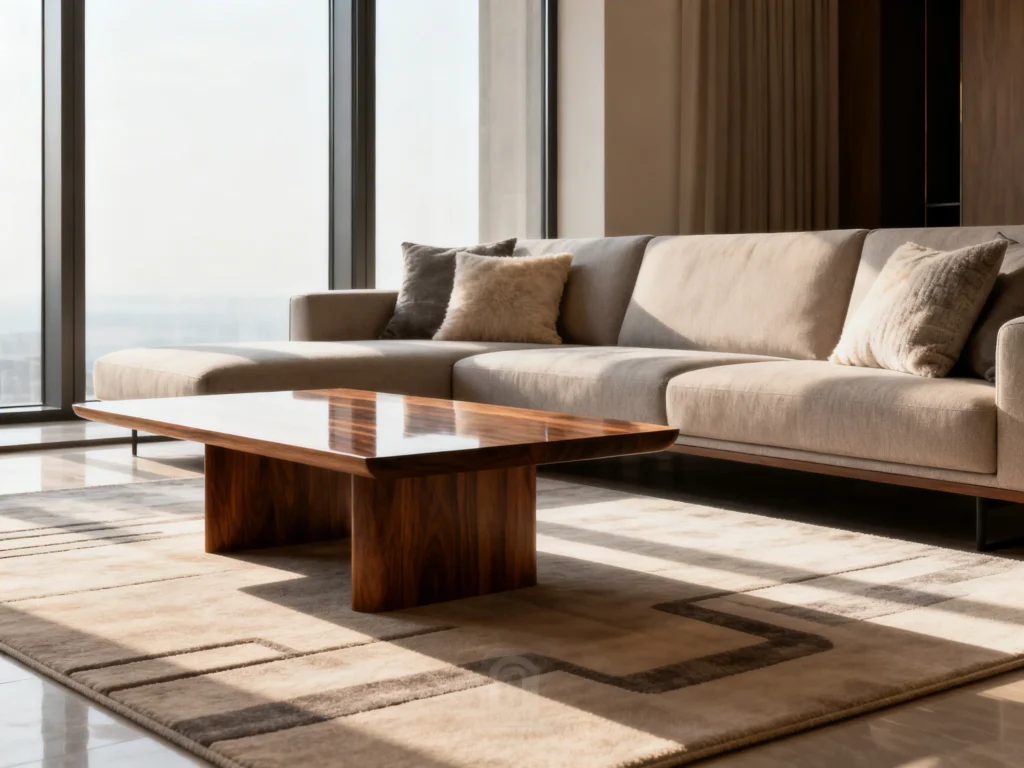
Minimalist Residential Architecture Design That Feels Warm
Minimalist residential architecture can feel calm without turning cold—especially in the living room, where you want breathing room and a sense of welcome. The secret is a warm palette, tactile materials, and a few sculptural moments that make the space feel intentional rather than empty.
Below is a gallery of living rooms that keep the lines clean and the visual noise low, yet still glow with softness, texture, and quiet personality.
Idea 1: Sunwashed Oak + Low-Slung Linen
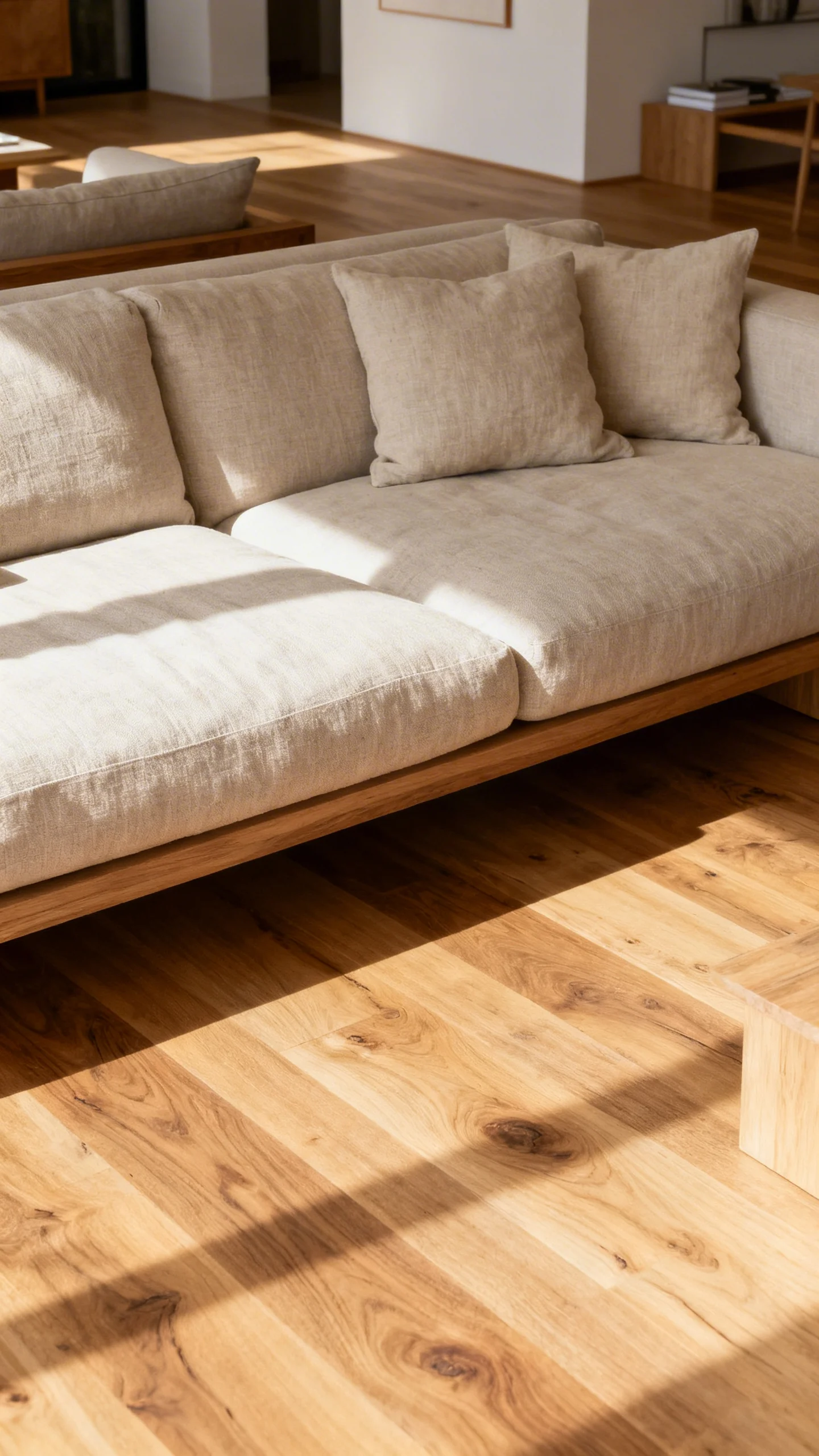
Picture a minimalist living room anchored by pale oak floors and a long, low linen sofa in an oatmeal tone. The architecture does the talking: wide walls, slim baseboards, and a simple ceiling plane that makes the room feel airy and tall.
Warmth shows up in the details—softly rounded cushions, a nubby wool rug, and one oversized ceramic vessel with a few branches. The vibe is coastal-quiet without the clichés, like sunlight that lingers all afternoon.
Idea 2: Microcement Shell + Caramel Leather Accent
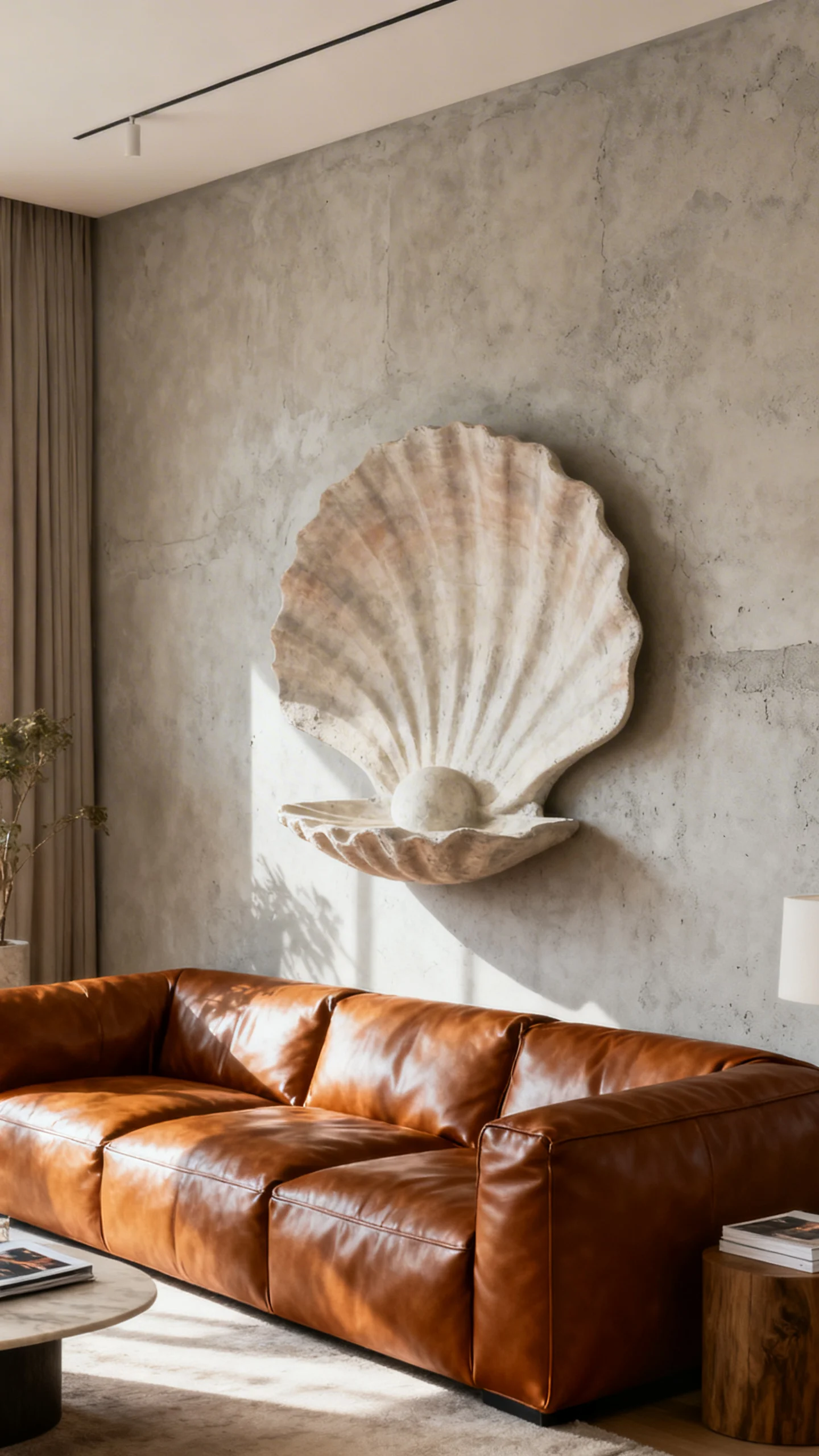
This living room is minimalist at first glance: microcement floors, smooth walls, and a monolithic fireplace that reads like part of the building. Then you notice the warmth—a single caramel leather lounge chair that looks like it’s been perfectly broken in.
A long, simple oak coffee table and a handwoven rug soften the clean surfaces. The whole space feels architectural and grounded, with just enough patina to keep it from feeling gallery-stiff.
Idea 3: Japanese-Scandi Slats + Paper Lantern Glow
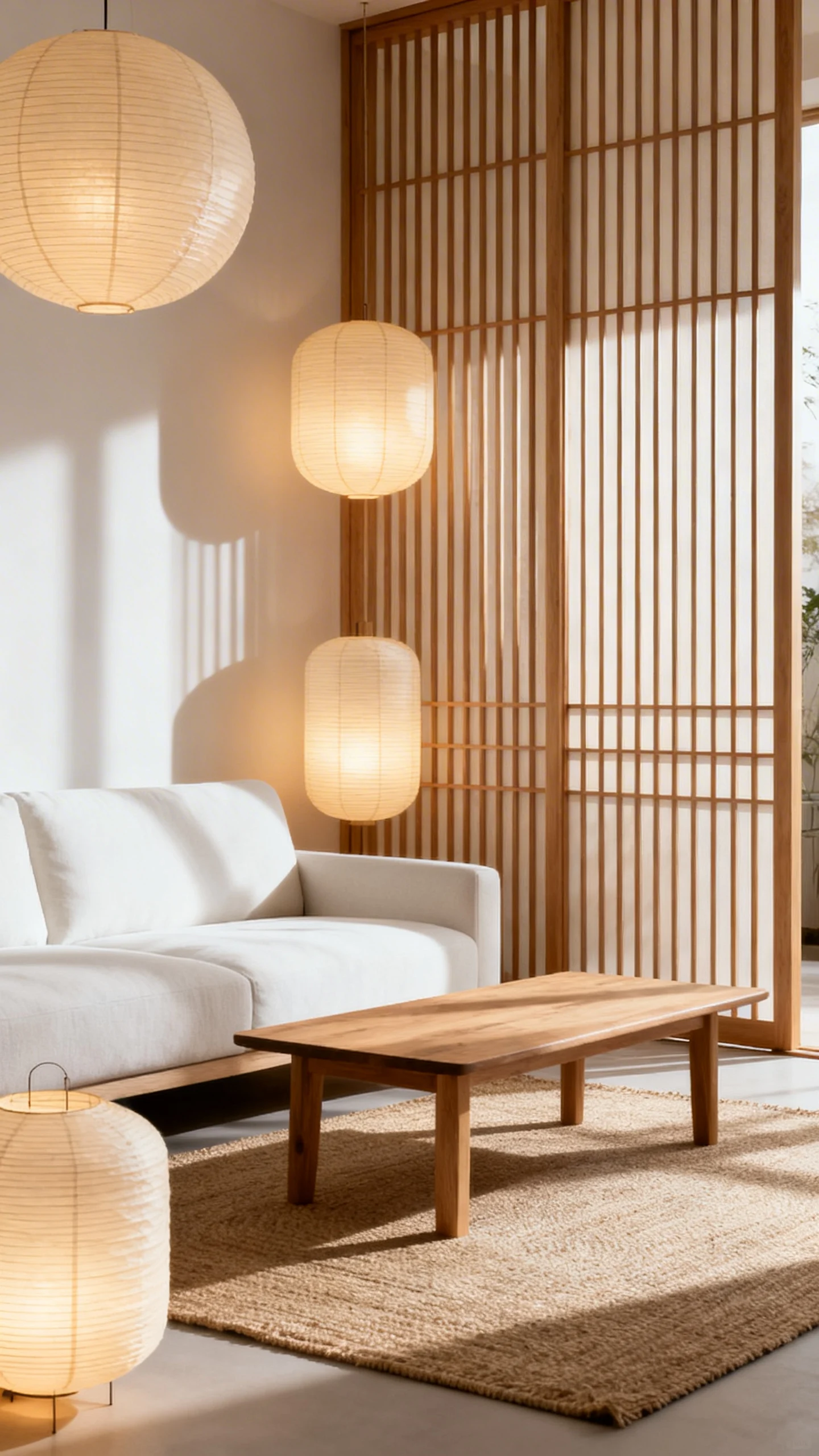
Imagine a living room with a slatted wood feature wall that subtly hides storage and adds depth without clutter. The lines are crisp, the palette is calm—warm white, blond wood, and a touch of charcoal in the upholstery.
Overhead, a paper lantern pendant diffuses light like a gentle fog. The mood is serene and tactile, with a low wood bench, a textured boucle chair, and negative space that feels like a luxury.
Idea 4: Creamy Plaster Curves + Soft Shadow Corners
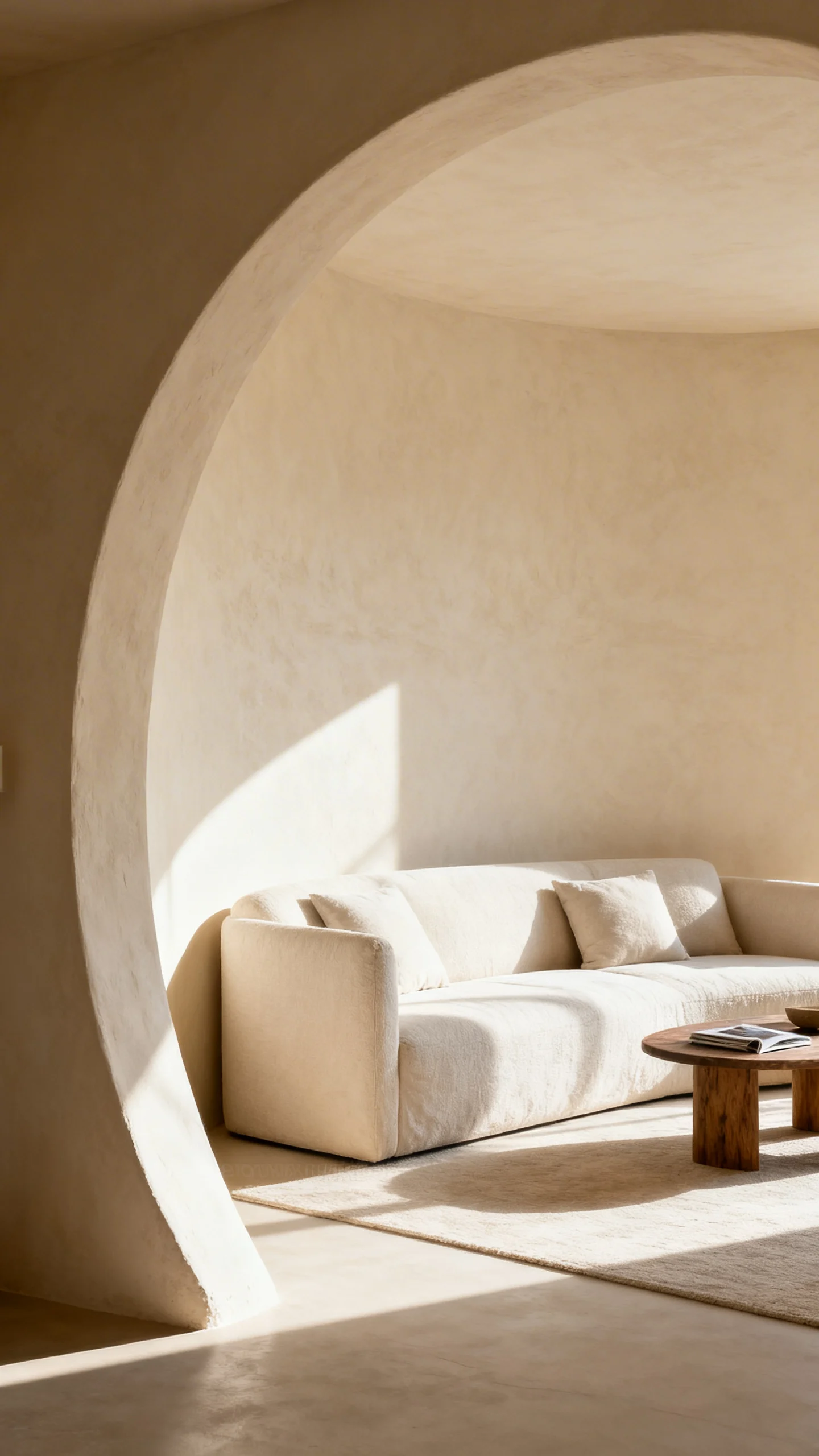
Minimalism gets warmer when the architecture turns curvy. This living room leans into creamy plaster walls with softly rounded corners and a curved niche that feels built-in and soothing.
The furniture stays simple—an armless sofa, a sculptural side table, and a plush rug that blurs the edges. The vibe is Mediterranean-minimal: calm, sunlit, and quietly romantic without being ornate.
Idea 5: Dark Minimalism with Walnut and Amber Light
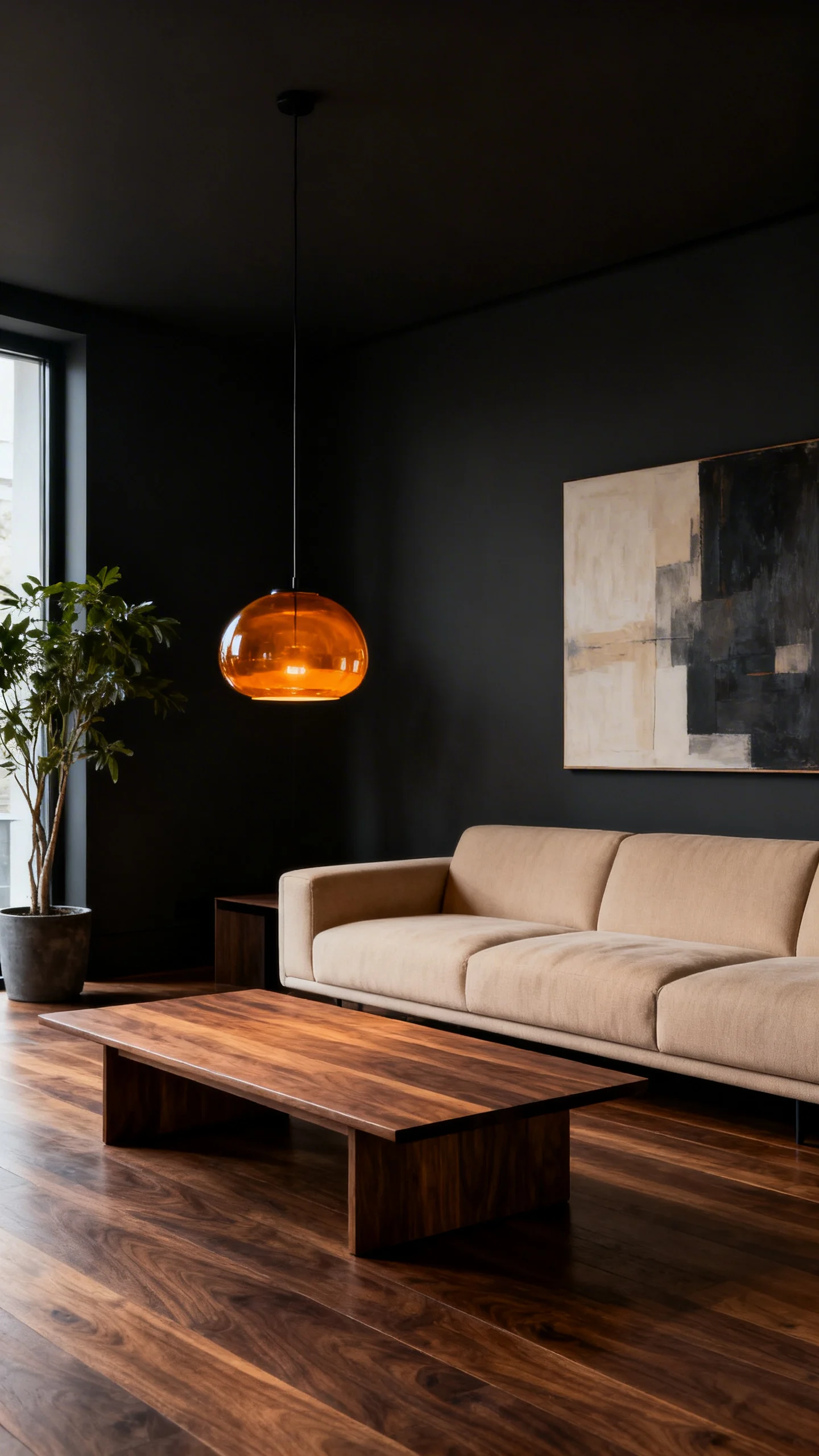
For a warmer take on minimalism, go moody. Picture a living room with deep charcoal walls, a slim black-framed window, and walnut millwork that reads rich and velvety against the darkness.
Instead of bright white lighting, the glow is amber and low—like a boutique hotel lounge, but residential and relaxed. A simple sofa in warm gray and a matte stone coffee table keep it modern and clean.
Idea 6: Stone Fireplace Block + Oversized Cozy Rug
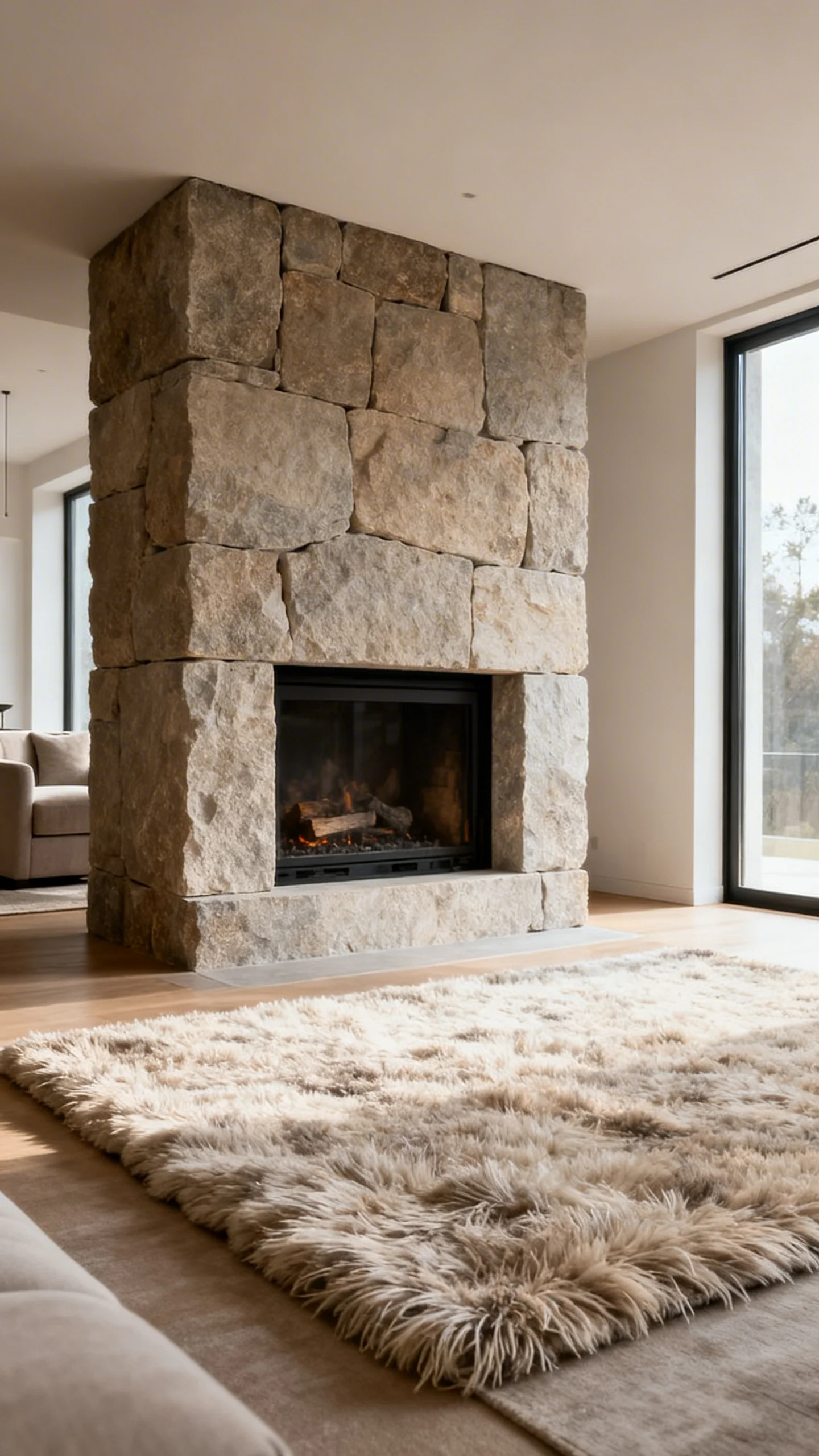
This minimalist living room centers on a single architectural move: a chunky stone fireplace block with crisp edges and a quiet presence. The rest stays restrained—white walls, minimal trim, and a clean-lined sofa.
Warmth comes from scale and softness: an oversized wool rug that practically fills the room and invites bare feet. Add one large artwork with earthy tones and the space feels both elemental and welcoming.
Idea 7: Monochrome Beige Layering with Subtle Texture
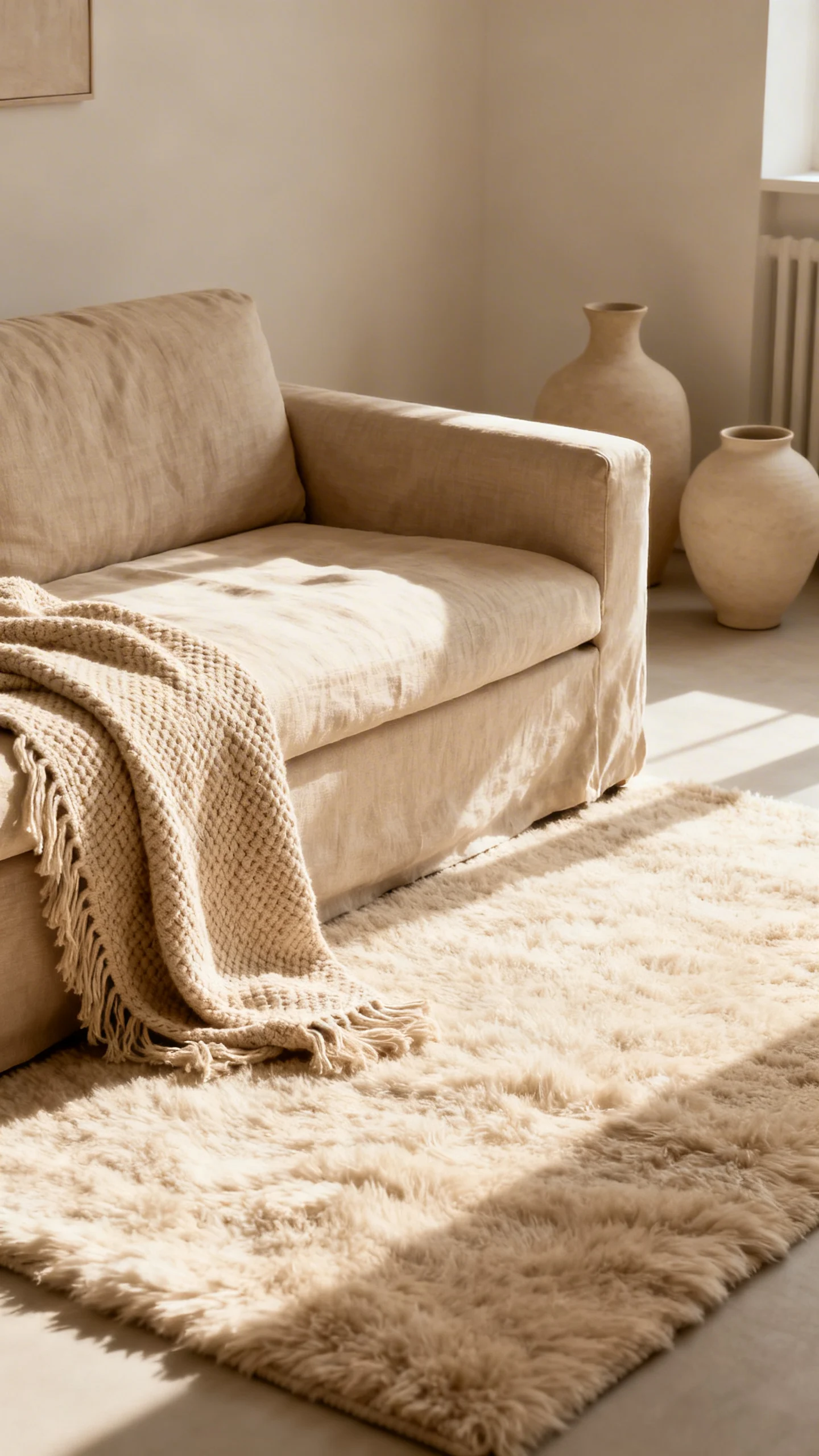
Minimal, but never flat: this living room is a masterclass in beige-on-beige, where the architecture is quiet and the texture does the styling. Think warm ivory walls, a sand-toned sofa, and drapery that falls in soft, tailored folds.
Up close, everything is different—linen, wool, raw oak, matte ceramic. The mood is whisper-soft and luminous, like a calm morning with the windows cracked open.
Idea 8: Brick + Smooth White Planes for an “Old Meets New” Warmth
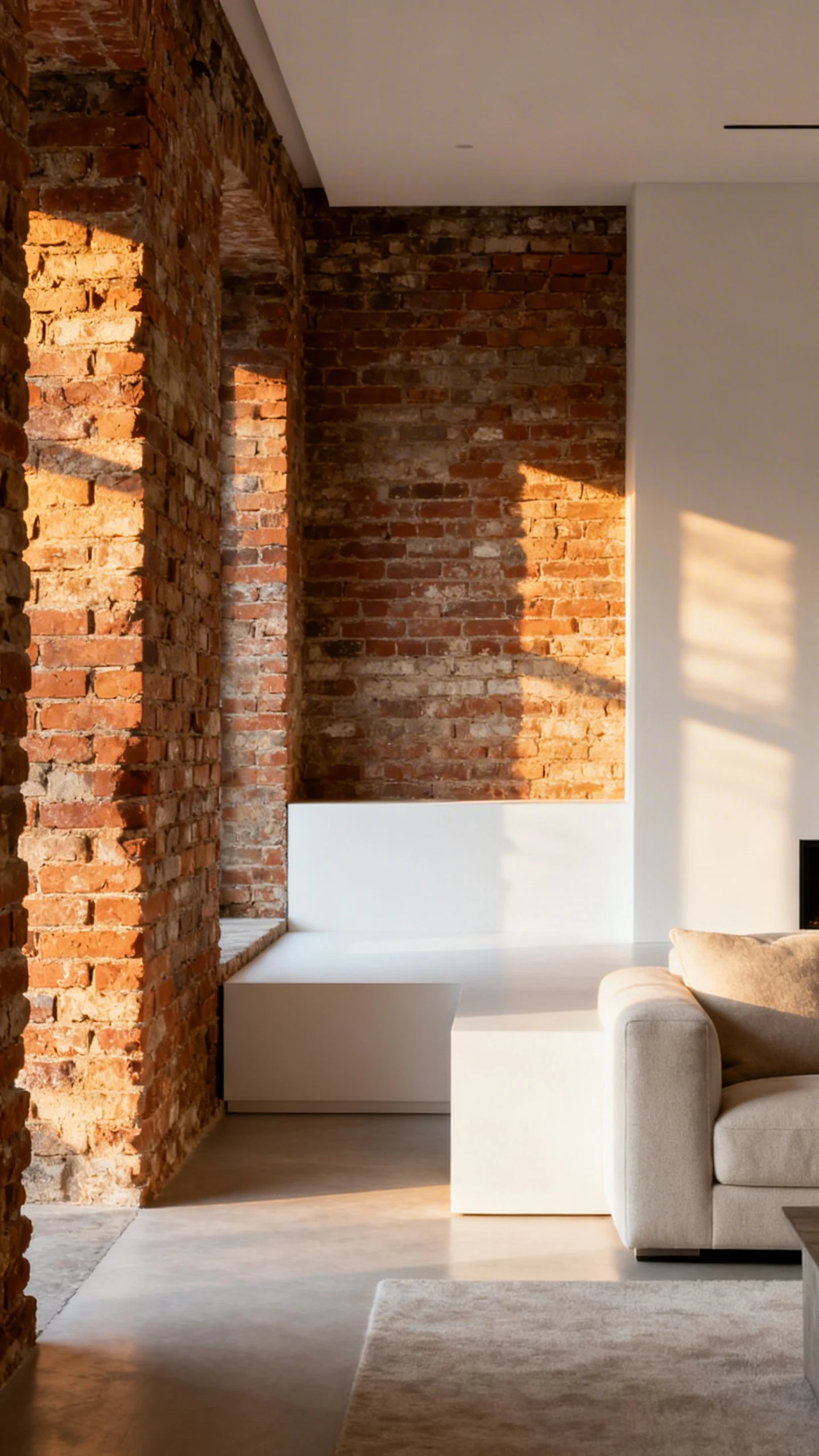
A single exposed brick wall can make a minimalist living room feel instantly lived-in. Pair it with smooth white planes—clean ceiling lines, simple window trim, and a streamlined built-in ledge that keeps decor minimal.
The contrast is the charm: tactile brick, sleek plaster, and a modern sofa in creamy fabric. Add a black metal coffee table and one tall plant, and it reads warm, urban, and effortlessly architectural.
Idea 9: Minimal Built-Ins with Hidden Storage and Soft Display
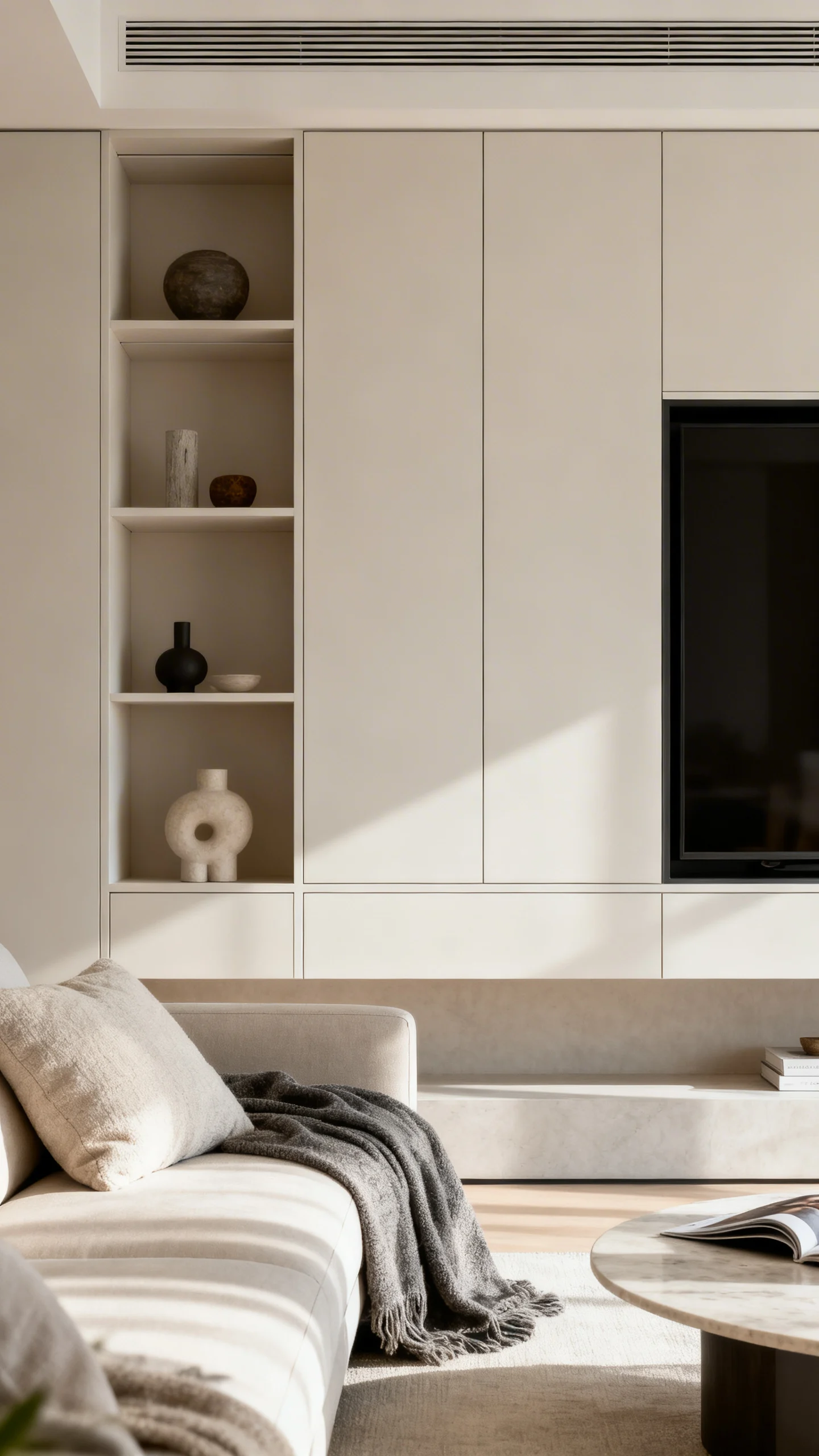
In this living room, the architecture supports the calm: floor-to-ceiling built-ins that look like part of the wall, with hidden storage that keeps surfaces clear. The palette stays warm—light oak fronts, warm white paint, and a soft greige sofa.
Open shelving is sparse and intentional: a few books stacked horizontally, one sculptural object, a framed textile. The vibe is quiet luxury—organized, breathable, and still cozy.
Idea 10: Window-First Minimalism with Sheer Drapes and a Conversation Pit Feel
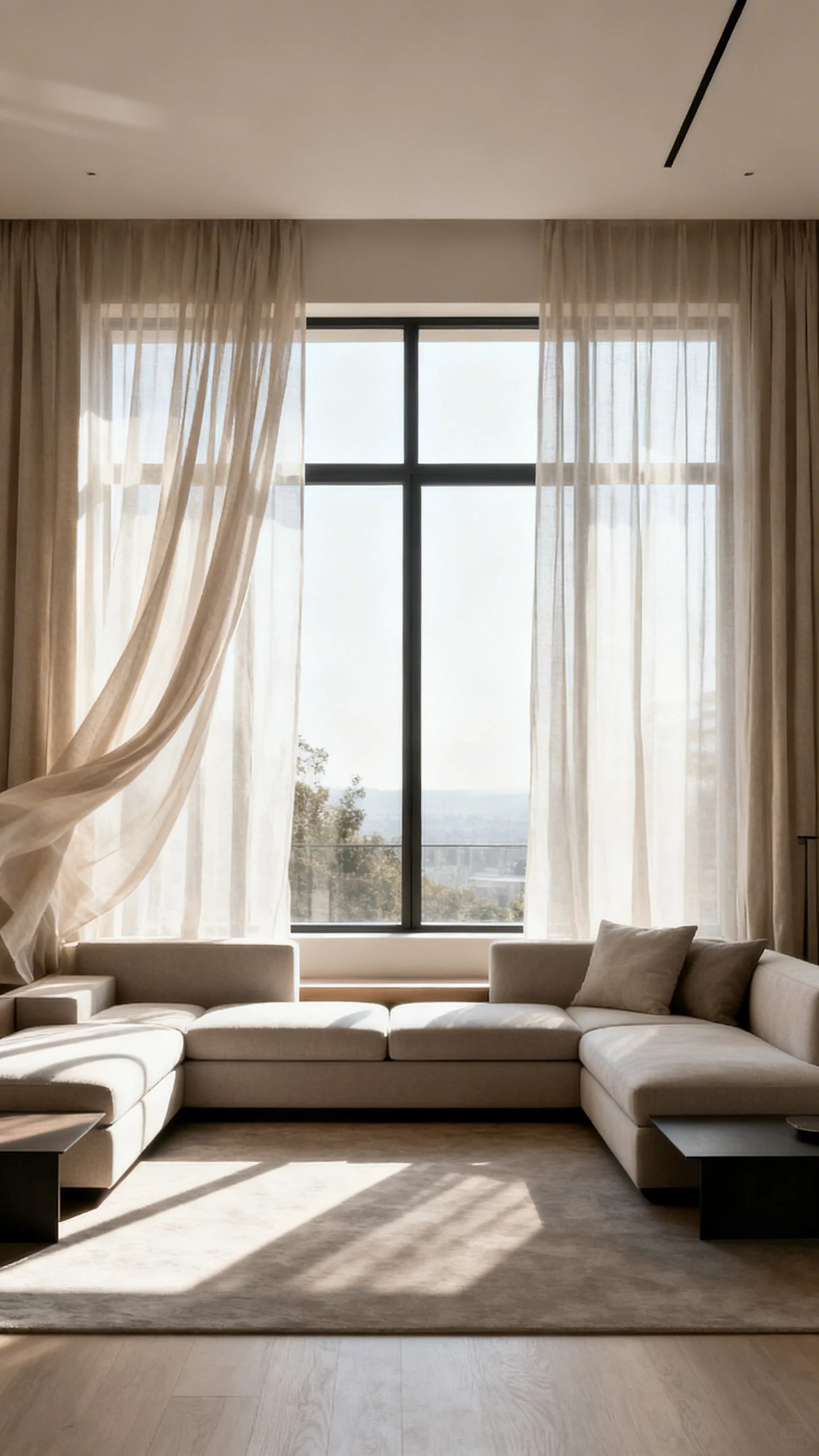
Let the living room’s architecture revolve around the view: a large window wall, minimal framing, and sheer drapes that filter light into a gentle glow. The furniture is low and arranged like a modern conversation pit—inviting, grounded, and social.
Keep it warm with a large rug, soft upholstery, and one statement piece like a sculptural floor lamp. The mood feels expansive but intimate, proving minimalism can be both open and deeply comfortable.
FAQ
How can a minimalist living room feel warm instead of stark?
Warm minimalism comes from tactile materials and gentle color: linen, wool, oak, plaster, and a palette of warm whites, creams, and earthy neutrals. A few oversized, soft elements (like a substantial rug or plush sofa) make the clean architecture feel inviting.
What colors work best for warm minimalist residential architecture in a living room?
Think warm white, ivory, sand, oatmeal, camel, warm gray, and walnut. These shades keep the look minimalist while adding a cozy undertone that pairs beautifully with natural light and wood.
Which materials instantly add warmth to minimalist design?
Natural wood (especially oak and walnut), limewash or plaster finishes, textured upholstery (boucle, linen), wool rugs, and stone with subtle variation. These materials add depth without adding visual clutter.
Can dark colors still work for a warm minimalist living room?
Yes—charcoal, deep brown, and near-black can feel incredibly warm when balanced with walnut wood, amber lighting, and soft textiles. The key is keeping shapes simple and letting the materials carry the mood.
How do you keep a minimalist living room from feeling empty?
Focus on a few strong, architectural anchors: a fireplace block, built-ins, a statement window, or a textured wall finish. Then use scale—one large artwork, a generous rug, and thoughtfully sized furniture—to make the space feel intentional and complete.