
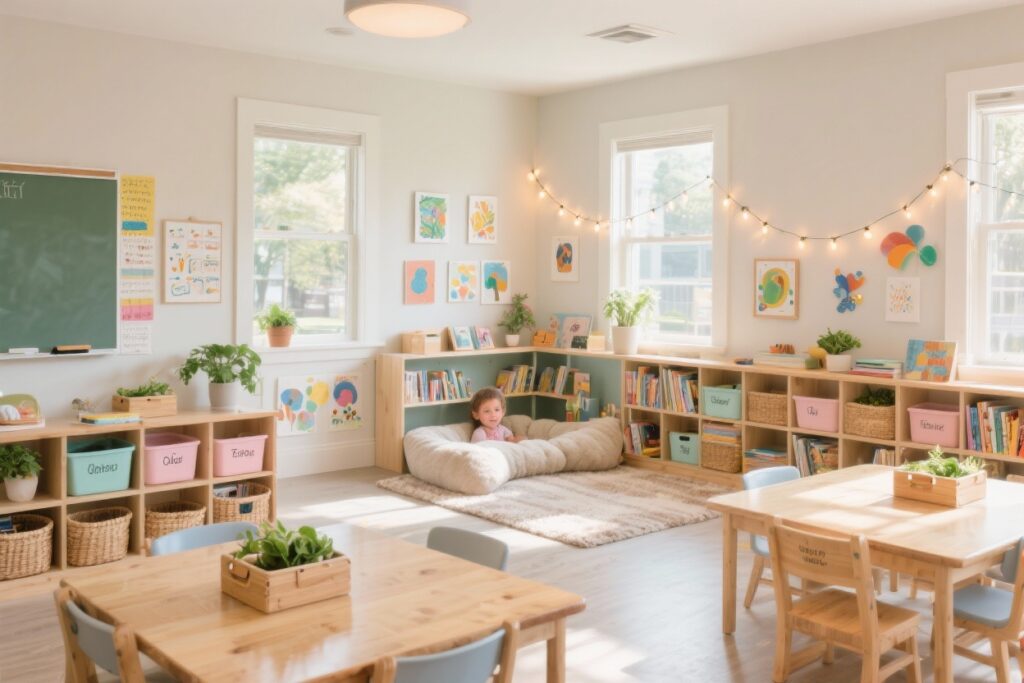
You know that classroom that magically feels calm, bright, and totally put-together? That can be yours—without a renovation budget or a second coffee IV. These ideas are teacher-tested, kid-approved, and designed to keep your room organized, cozy, and super functional. Let’s make your classroom the place students actually want to be.
1. Create Zones That Work (And Keep Chaos Contained)
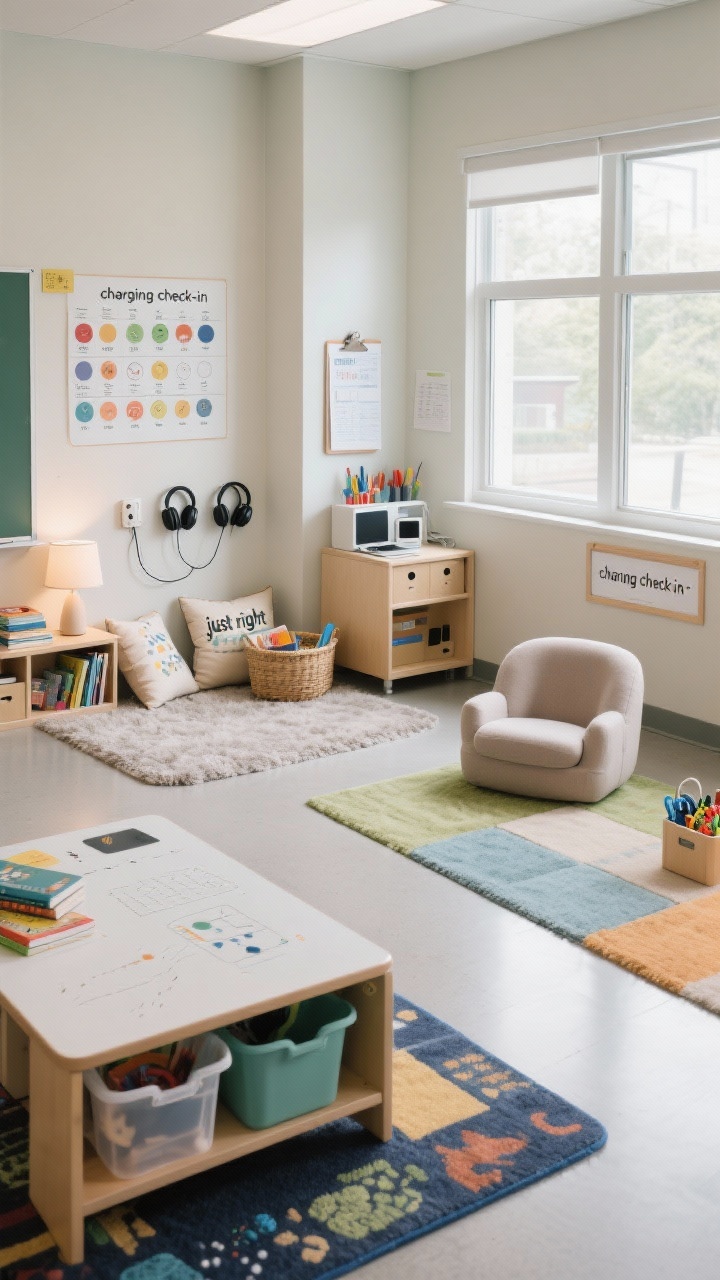
Think of your classroom like a tiny city with districts: reading, writing, art, tech, and calm. When kids know where things happen, behavior improves and transitions are smoother. Plus, it looks like you’ve got your life together—bonus.
Smart Zone Ideas
- Reading Nook: Low shelf, soft rug, a couple of pillows, and a basket of “just right” books. Add a lamp for cozy vibes.
- Maker/Art Table: Wipeable surface, easy-to-grab bins, and a splash mat if paint enters the chat.
- Tech Corner: Power strip in a cord management box, labeled device slots, and a “charging check-in” clipboard.
- Calm-Down Spot: Small, soft chair, visual feelings chart, noise-canceling headphones, and fidget tools in a labeled caddy.
Pro tip: Use different floor textures—rug, foam tiles, bare floor—to subtly signal boundaries. Kids read the room (literally).
2. Pick a Color Palette That Calms (Not Overstimulates)
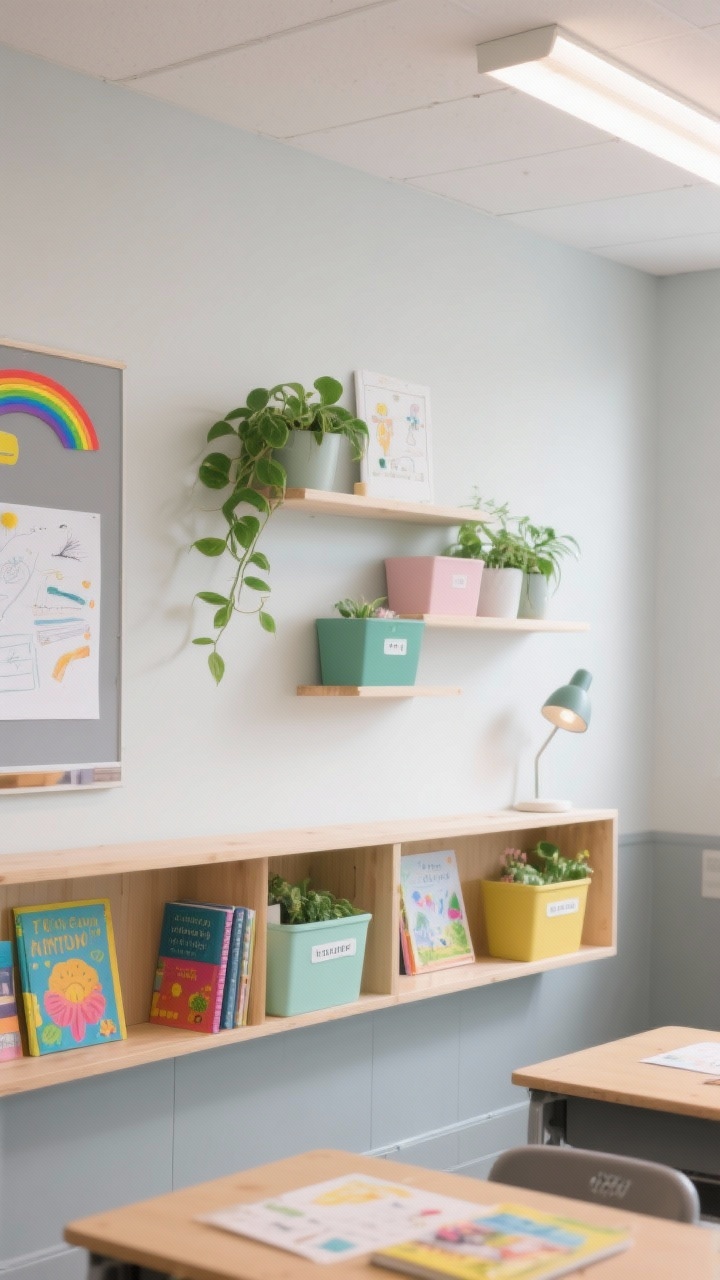
Yes, the rainbow is cute. But too many bright colors can overwhelm attention spans. Choose a simple palette—think 2-3 base colors and 1-2 accent colors—and repeat it across your room.
Color Hacks Teachers Swear By
- Neutrals + Nature: Soft gray, white, and wood tones with green accents = fresh and cozy.
- Muted Rainbow: Dusty pastels or jewel tones instead of neon. Same fun, fewer distractions.
- Soft Lighting: Swap harsh overheads for lamp corners and fluorescent light filters. Instant mood shift.
FYI: If you love color, put it in student work and books. Your decor can be the calm backdrop that lets their creativity shine.
3. Label Everything Like a Minimalist (But Make It Cute)
When kids can find things—and put them back—you win the day. Labels are the secret sauce for independence, smooth transitions, and your sanity.
Labeling That Actually Works
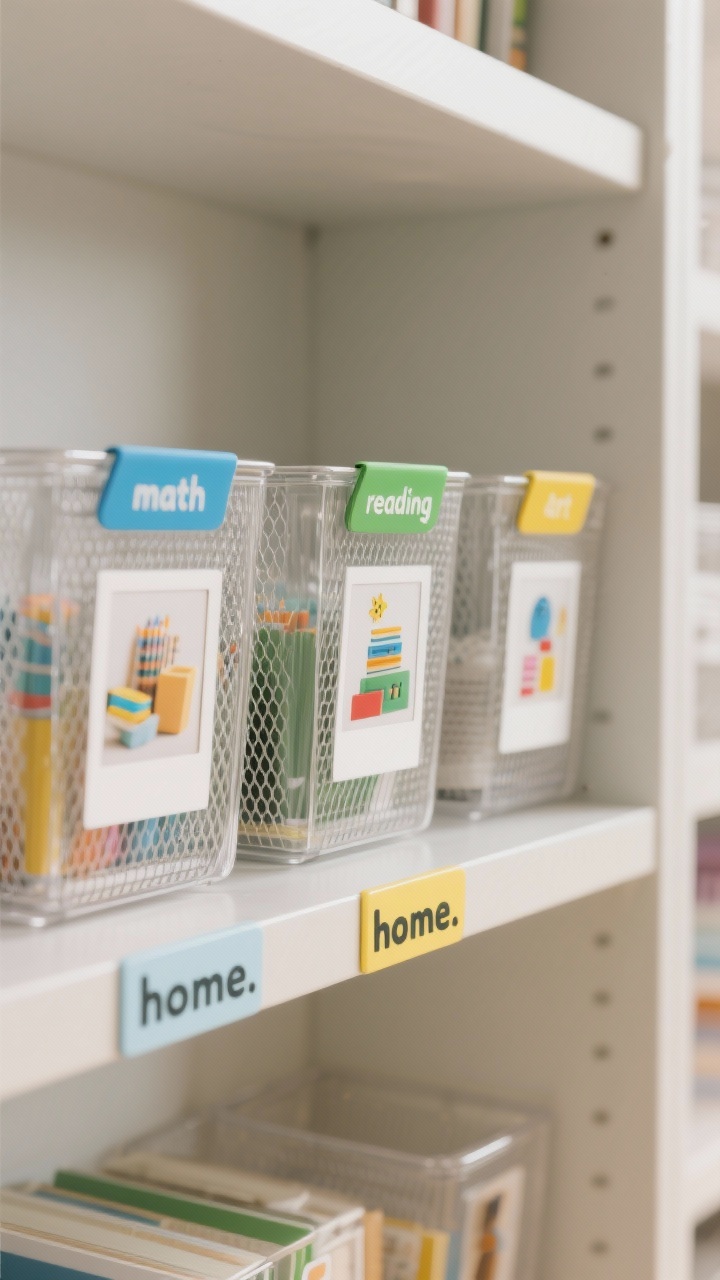
- Picture + Word Labels: Great for early readers and multilingual learners. Use photos of the actual item—no guesswork.
- Consistent Fonts: One clean font for labels, one fun font for headers. Consistency looks polished.
- Color-Coded Bins: Blue for math, green for reading, yellow for art. Keep the system simple and universal.
- Open Storage: Clear bins or mesh baskets. Seeing the supply reduces the “Where’s the glue?!” chorus.
Bonus: Label shelves and bin spots, not just the bins. When things go walkabout, their “home” is still obvious.
4. Bulletin Boards That Teach (Not Just Look Pretty)
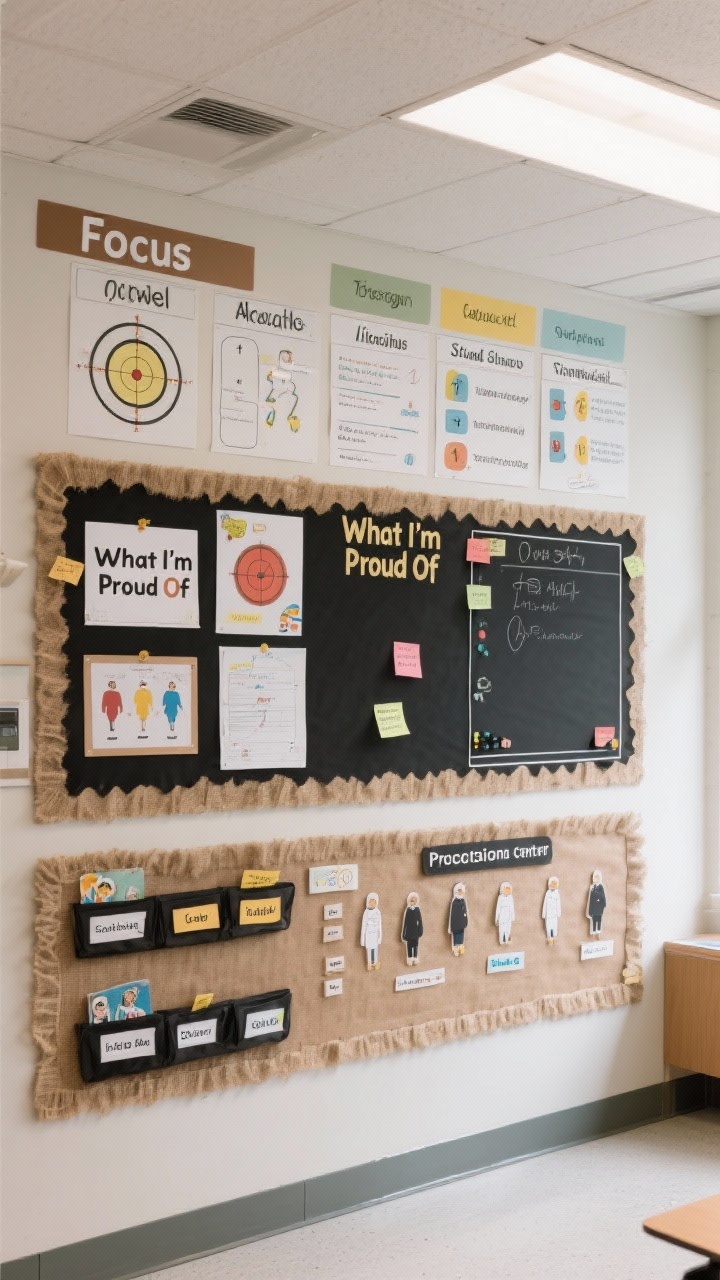
Bulletin boards are prime real estate. Skip the Pinterest-perfect “look-only” boards and make them functional. They can guide routines, reinforce content, and celebrate progress.
Board Ideas That Pull Their Weight
- Focus Wall: Weekly targets, vocabulary, and anchor charts. Keep it clean and current.
- Student Showcase: Rotate work weekly. Add a “What I’m Proud Of” sticky note under each piece.
- Interactive Board: Velcro-backed word cards, math problems with dry-erase sleeves, or “Question of the Day.”
- Procedures Central: Visual steps for lining up, turning in work, or tech rules. Less repeating = more teaching.
Keep borders simple and backgrounds neutral—like black kraft paper or burlap. Your content should be the star, not the polka dots.
5. Cozy Seating Without the Clutter
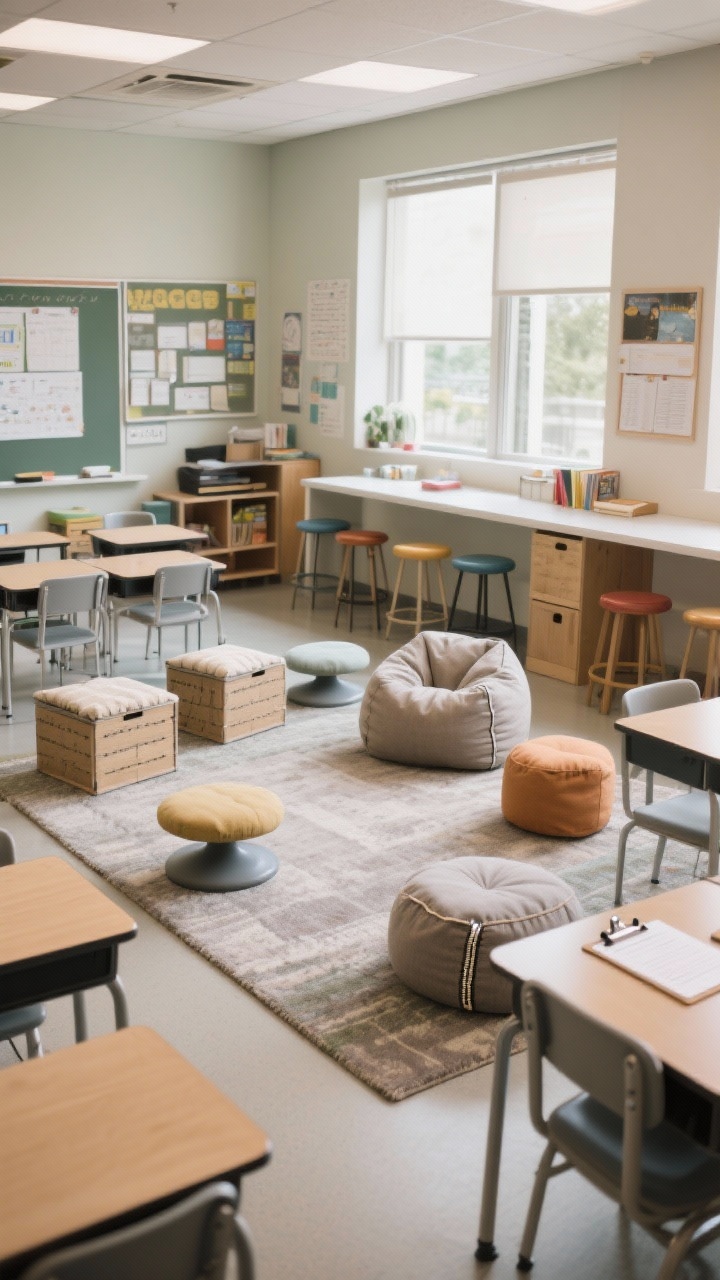
Flexible seating doesn’t mean chaos. Mix a few alternative options with traditional desks and set clear expectations. Comfort helps focus, but structure keeps it together.
Seating Mix That Makes Sense
- Low Options: Floor cushions, wobble cushions, and clipboards for rug work.
- Mid Options: Stools at a counter-height table or crates with cushion tops (storage + seat = genius).
- Soft Spot: One small chair or beanbag in the reading corner. One. Not six. You’re welcome.
Rules That Keep It Smooth:
- Pick a seat, not a new identity—stay put during the block.
- Choose a seat where you can do your best work (you’ll revisit this line a lot).
- All seats are for learning, not lounging. Cute, not nap time.
IMO, choose washable fabrics and zip-off covers. One mystery spill and you’ll be grateful.
6. Daily Systems That Save Your Brain
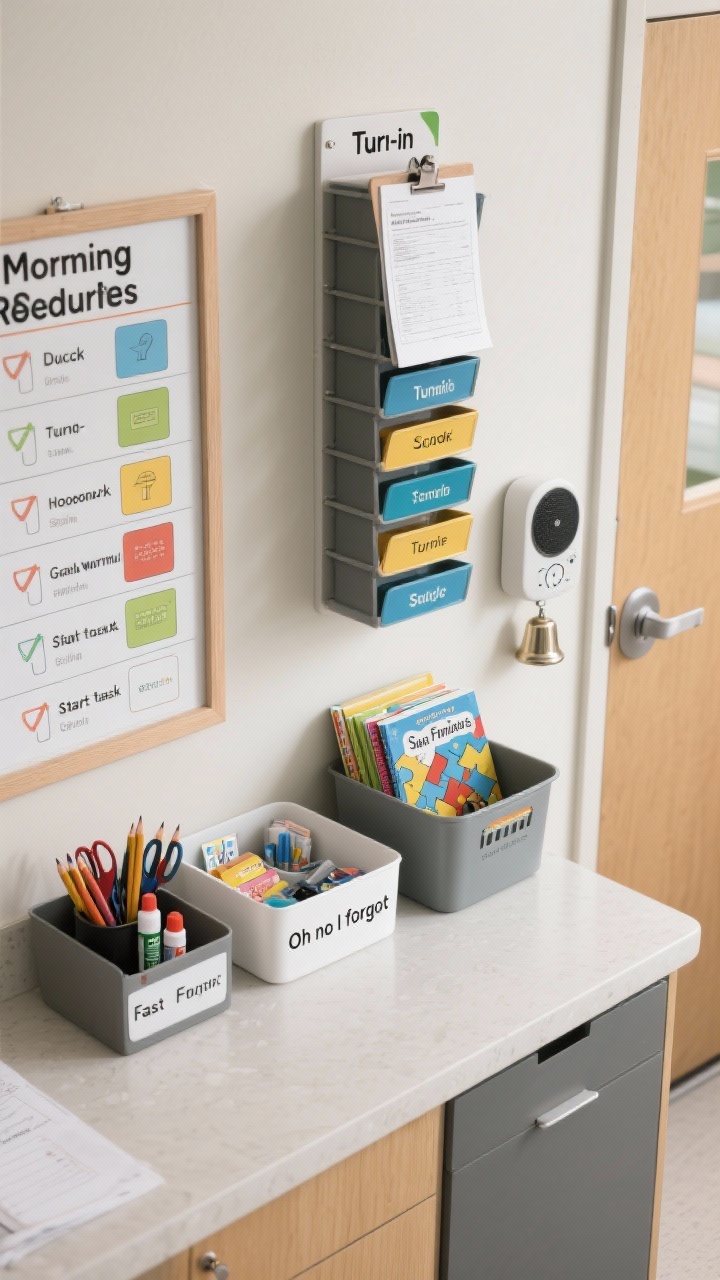
Decor isn’t just pretty—it should make your day smoother. Set up visual routines and grab-and-go systems so kids know what’s next and what’s expected.
Simple Systems, Big Payoff
- Morning Routine Board: Visual checklist: Unpack, turn in homework, grab warm-up, start task. Post it by the door.
- Turn-In Tower: Trays labeled by subject or class. Clip a sample to the front so kids can double-check format.
- Supply Stations: One for communal tools (sharpened pencils, scissors, glue), one for “Oh no I forgot” items.
- Fast Finishers: A clearly labeled bin with task cards, puzzle books, and extension activities.
Timers + Signals: Use a visual timer and a consistent sound cue for transitions. It’s kinder than shouting over 25 mini conversations, and it looks intentional (because it is).
7. Add Personality With Student Voice (And Keep It Durable)
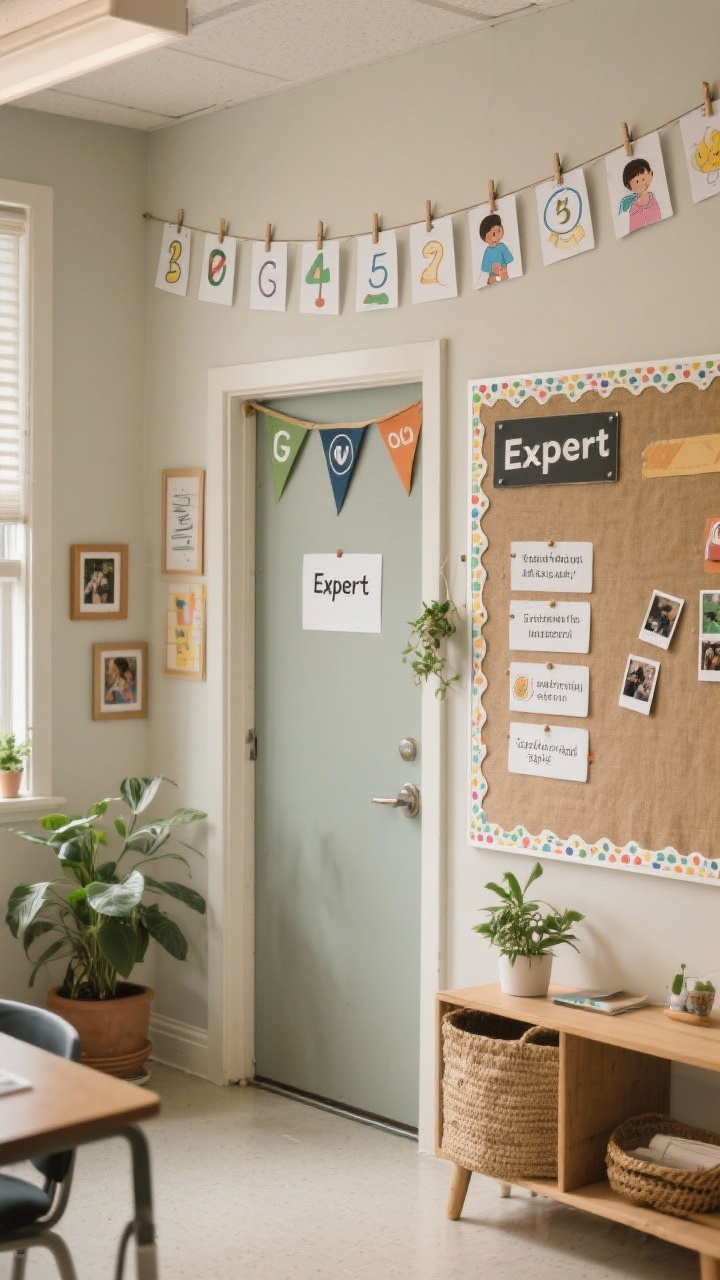
Your classroom should feel like a community art project—curated by you, co-created by them. Let students’ voices shape the space so they feel ownership and pride.
Kid-Friendly Personalization
- Goal Walls: Students write monthly goals on laminated cards; you clip them to a string line. Update = wipe + rewrite.
- Class-Made Alphabet/Number Line: Students draw the visuals. It’s adorable and actually meaningful.
- Doorway Greeters: Name tags on mini pennants or Polaroid-style frames around the door. Welcome vibes.
- Rotating “Expert” Board: Feature student tips—how to use watercolor, keyboard shortcuts, or book recs.
Durability Tricks:
- Laminate high-touch visuals like center directions and charts.
- Use Velcro dots or magnetic tape for fast swaps—seasonal updates in minutes.
- Choose fabric bulletin board backings (like canvas or burlap) to reuse year after year.
Quick design sprinkle? Add greenery—real plants if you can, faux if you can’t. A few sprigs go a long way for cozy, calm energy.
Shopping List Snapshot
- Neutral bulletin paper or fabric, simple borders
- Clear bins, label sleeves, and a label maker (or printable labels)
- Rug for reading zone, a lamp, and light filters
- Clipboards, wobble cushions, and a couple of floor pillows
- Velcro dots, magnetic tape, page protectors, dry-erase pockets
- Cord management box and a multi-port charger
- One plant (or two). It’s a personality hire.
Bottom line: Organized, cozy, kid-friendly doesn’t mean expensive or complicated. With a clear color palette, labeled systems, and student-centered touches, your classroom can feel calm and look intentional—every single day. You’ve got this, and your students will feel it the second they walk in. Now go hang that Focus Wall and call it decor therapy, because honestly, it is.