
DIY Bathroom Design Ideas for Small Bathrooms
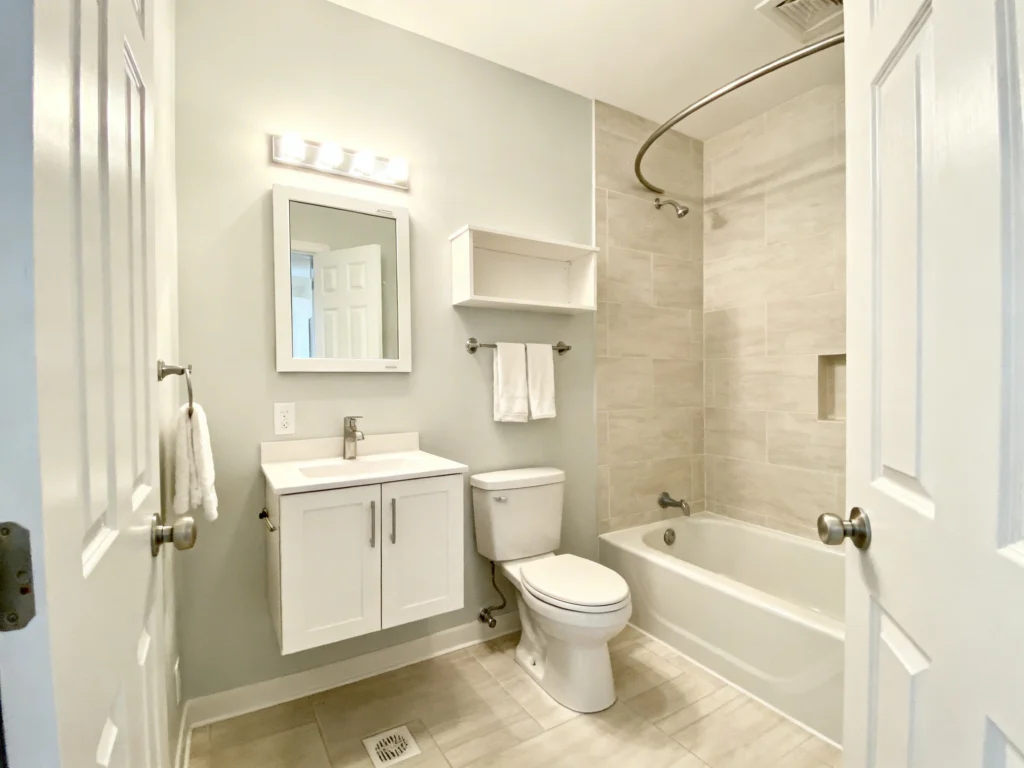
Small bathrooms can feel tight fast—but the right DIY design moves can make them look larger, function better, and feel more intentional without a full remodel. The key is choosing upgrades that save inches, reduce visual clutter, and improve daily flow.
Below are practical, small-space-friendly DIY bathroom design ideas with measurements, clearances, and material tips so you can plan confidently before you pick up a drill.
1) Swap to a Compact Vanity (or Convert to a Wall-Mount Look)
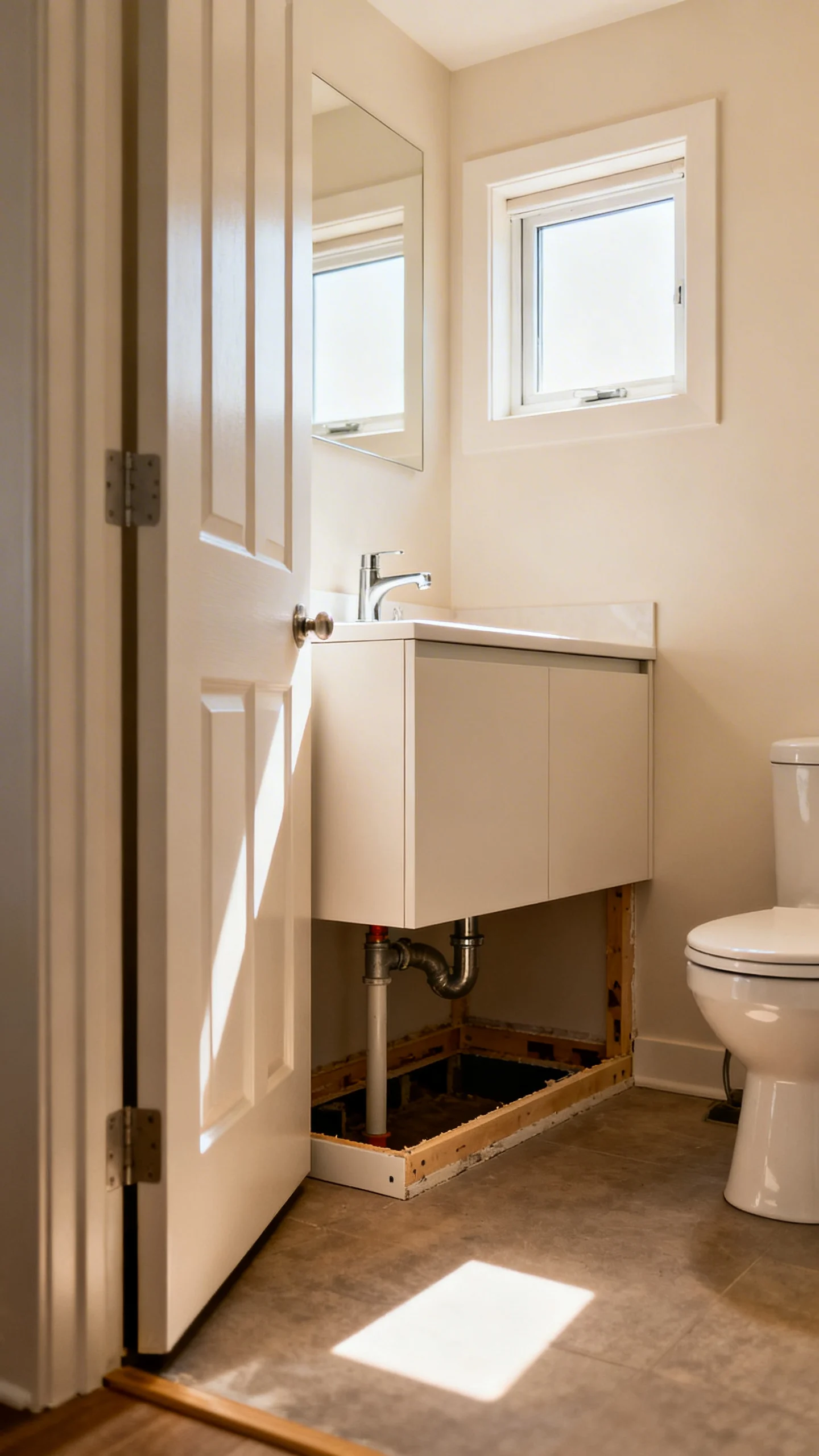
If your vanity crowds the room, downsizing is often the biggest functional win. For very small bathrooms, a 18–24 inch-wide vanity can outperform a bulky 30–36 inch unit, especially when you’re fighting for door swing or knee space. Aim for at least 21 inches of clear floor space in front of the sink (30 inches feels best if you can get it).
DIY approach: replace the vanity with a narrower model, or “fake” a wall-mounted vanity by adding a recessed toe-kick and painting the base the same color as the wall for a lighter visual. Choose a shallow-depth vanity (16–18 inches deep) when space is tight; standard depth (20–22 inches) can steal precious clearance in a narrow bath.
2) Install a Recessed Medicine Cabinet to Gain Storage Without Bulk
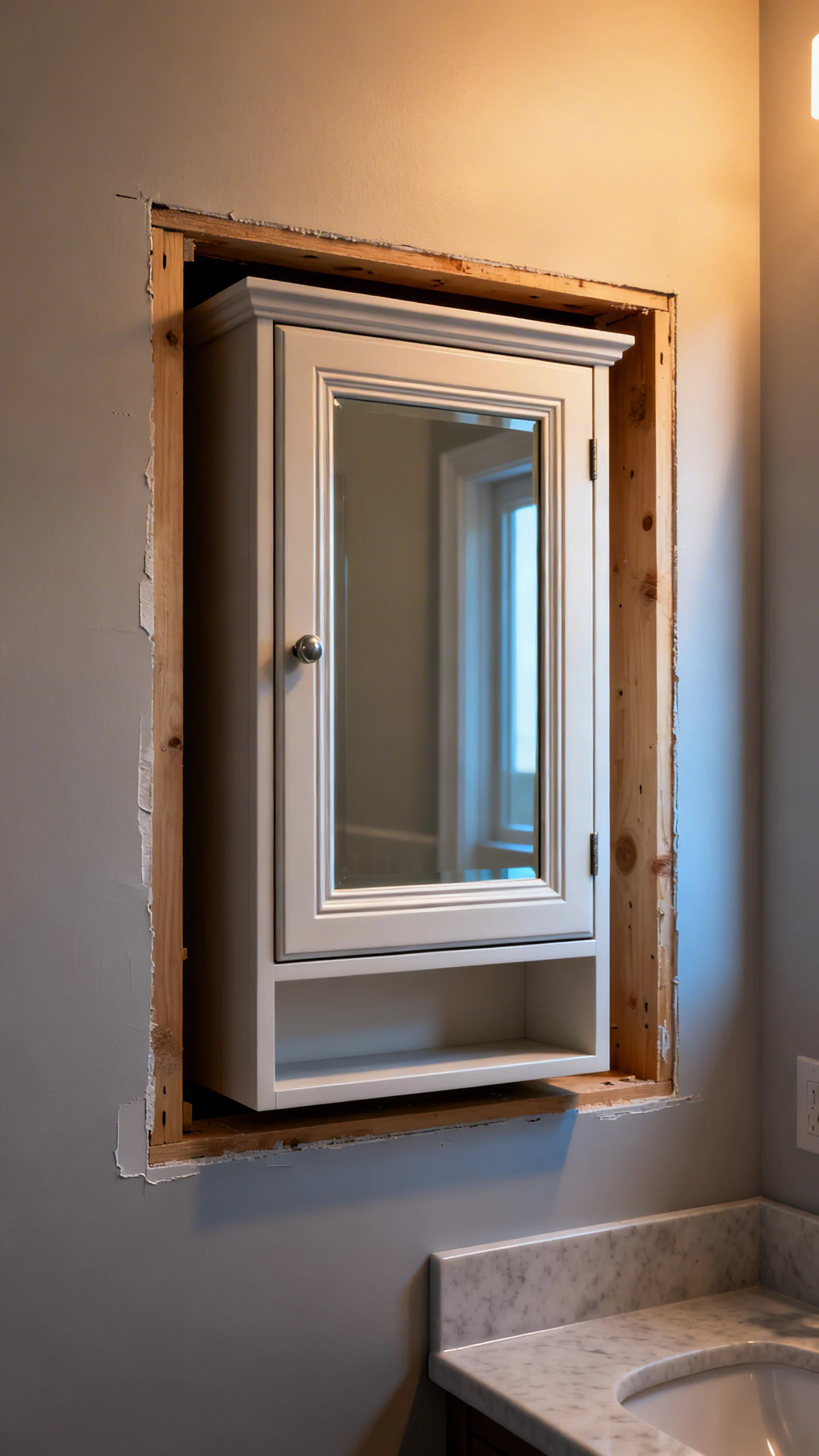
Surface-mounted cabinets stick out 4–6 inches—exactly where you want elbow room. A recessed medicine cabinet sits between studs and gives you storage without changing the footprint. Standard stud spacing is 16 inches on center, so many recessed cabinets are designed around a 14–14.5 inch interior cavity.
DIY tips: use a stud finder, confirm there are no vents or plumbing in the cavity, and choose a cabinet with an adjustable-depth flange to sit flush with tile or drywall. If cutting into tile is too risky, consider a thinner surface cabinet (3–4 inches deep) with mirrored doors to keep the look light.
3) Replace a Swing Door With a Space-Saving Option
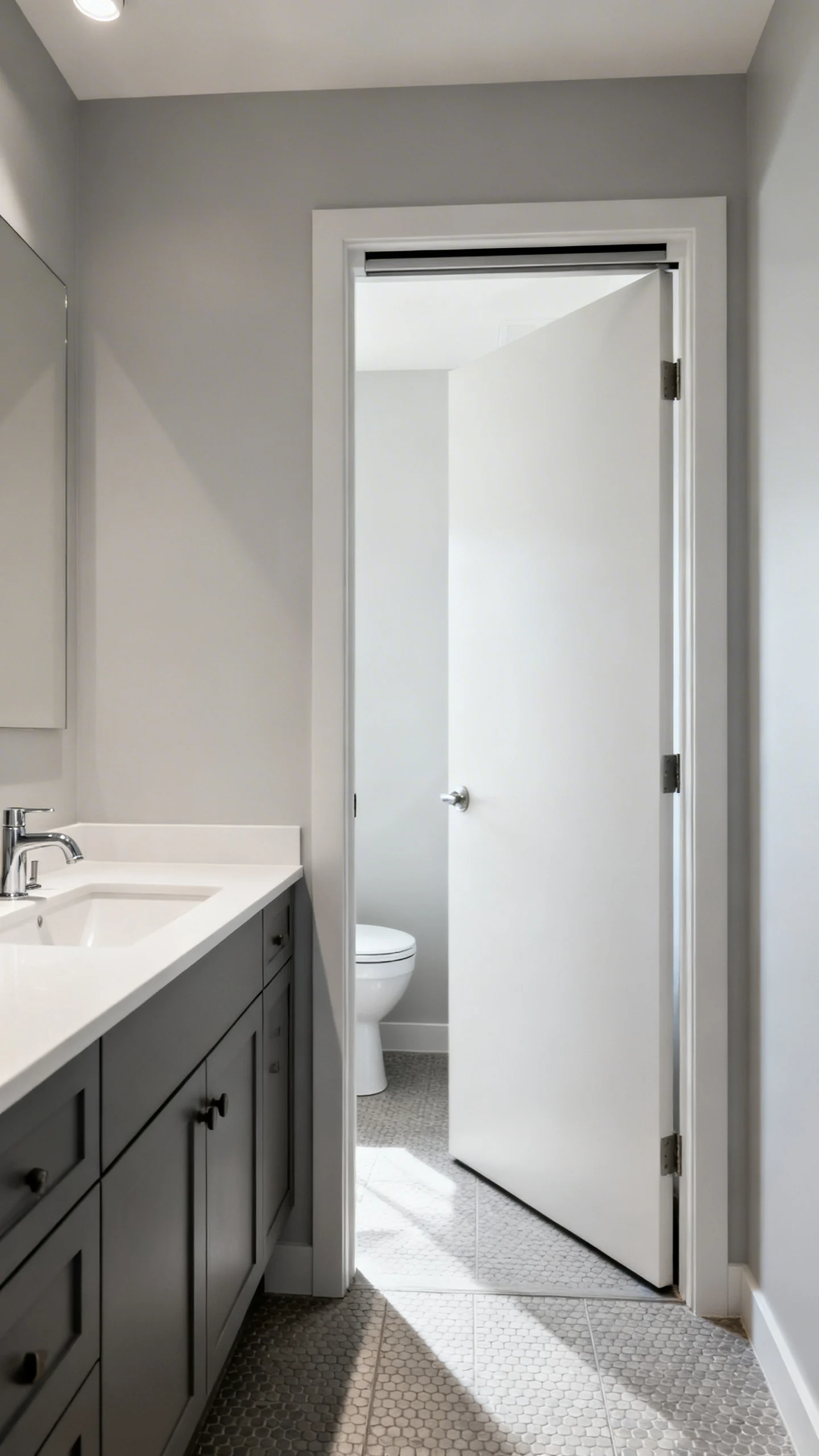
Door clearance is a silent space-killer in small bathrooms. If the door collides with the vanity or toilet, consider a DIY door strategy: reverse the swing (rehang so it opens out), install a pocket door (bigger project), or use a barn-style slider (easier but requires wall space).
Practical notes: an outswing door can free up valuable interior floor space, but check local code and hallway clearance. For barn-style doors, ensure you have enough wall length for the door to slide fully open and choose a privacy latch designed for sliders. Weatherstrip or add a bottom guide to reduce wobble and improve the “solid” feel.
4) Use Large-Format Light Tile (or a Tile “Wainscot”) to Visually Expand the Room
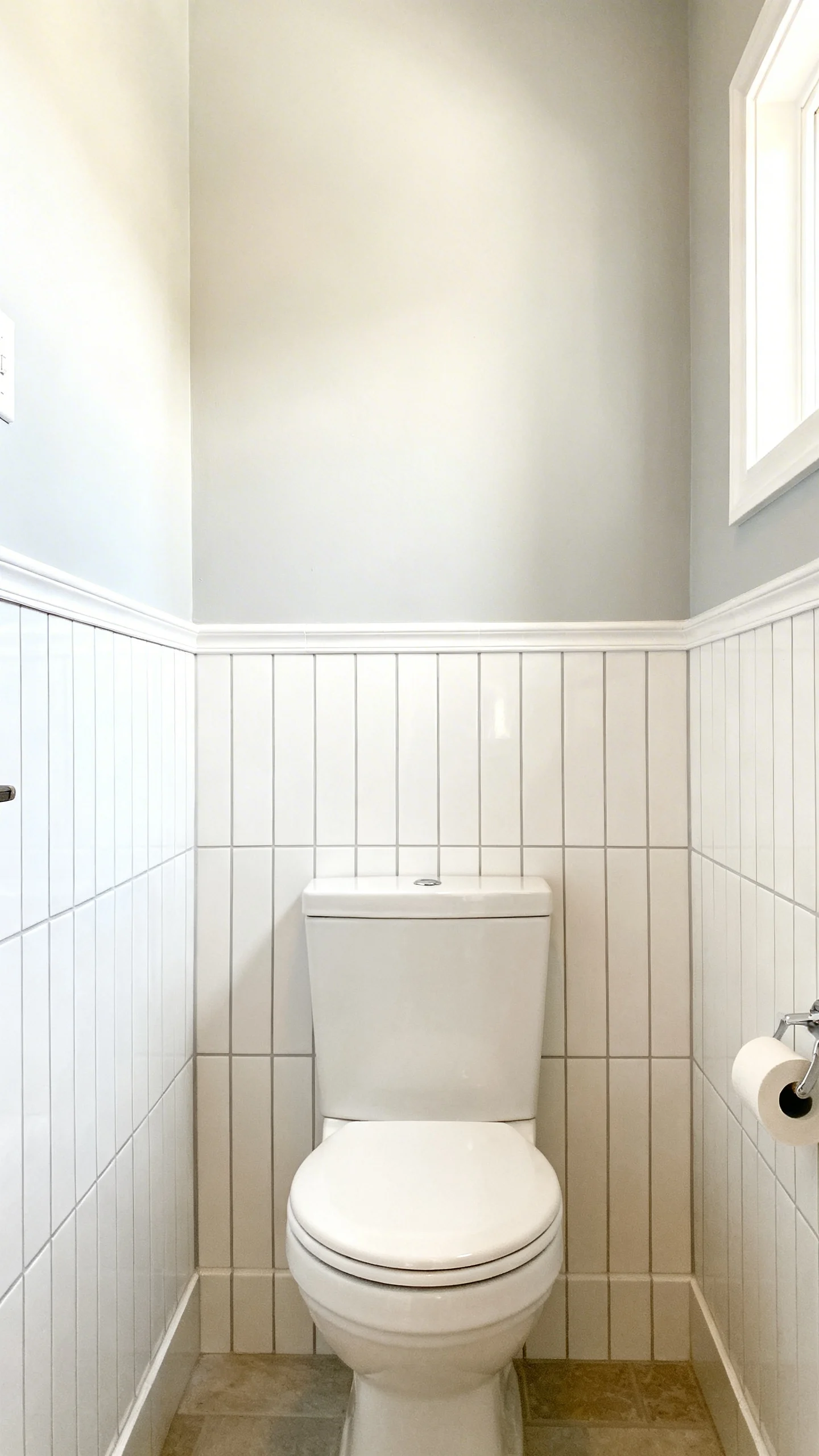
Tile layout can make a small bathroom feel busier than it is. Larger tiles have fewer grout lines, which reads calmer and more spacious. If you’re DIY tiling, consider 12×24-inch porcelain on walls or floors for a modern, expanded look (use a leveling system to keep lippage down).
If full-height tiling isn’t in budget, try a half-wall tile wainscot (about 42–48 inches high) and paint above in a moisture-resistant satin or semi-gloss. Choose grout in a close match to tile color for a less “grid-like” effect. Pros: porcelain is durable and water-resistant. Cons: big tile is heavier and less forgiving on uneven walls, so prep matters.
5) Upgrade Lighting With a Slim Vanity Sconce and Brighter, Better Bulbs
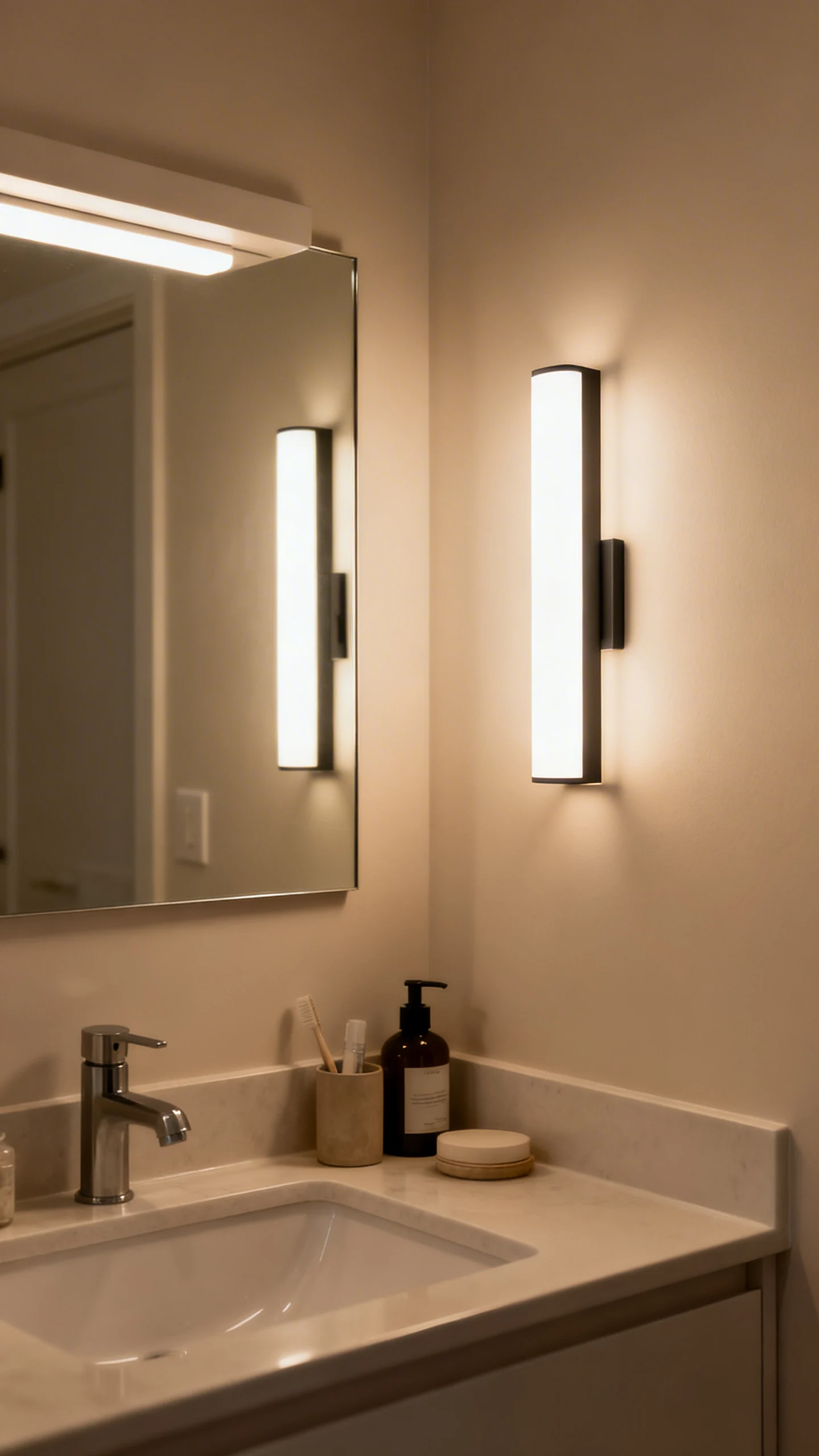
Dim lighting makes small bathrooms feel smaller. A DIY swap to a slimmer vanity light can reduce visual clutter and improve function at the mirror. Look for fixtures that project less than 6–8 inches from the wall to avoid a cramped look in narrow baths.
For bulbs, aim for 2700–3000K for a warm, flattering glow, or 3000–3500K for a cleaner, spa-like white. Choose high CRI (90+) if possible so colors look accurate. If you’re not moving wiring, keep your new fixture similar in size to cover the existing electrical box and any paint shadowing.
6) Add Open Shelving Above the Toilet (with Correct Anchoring)
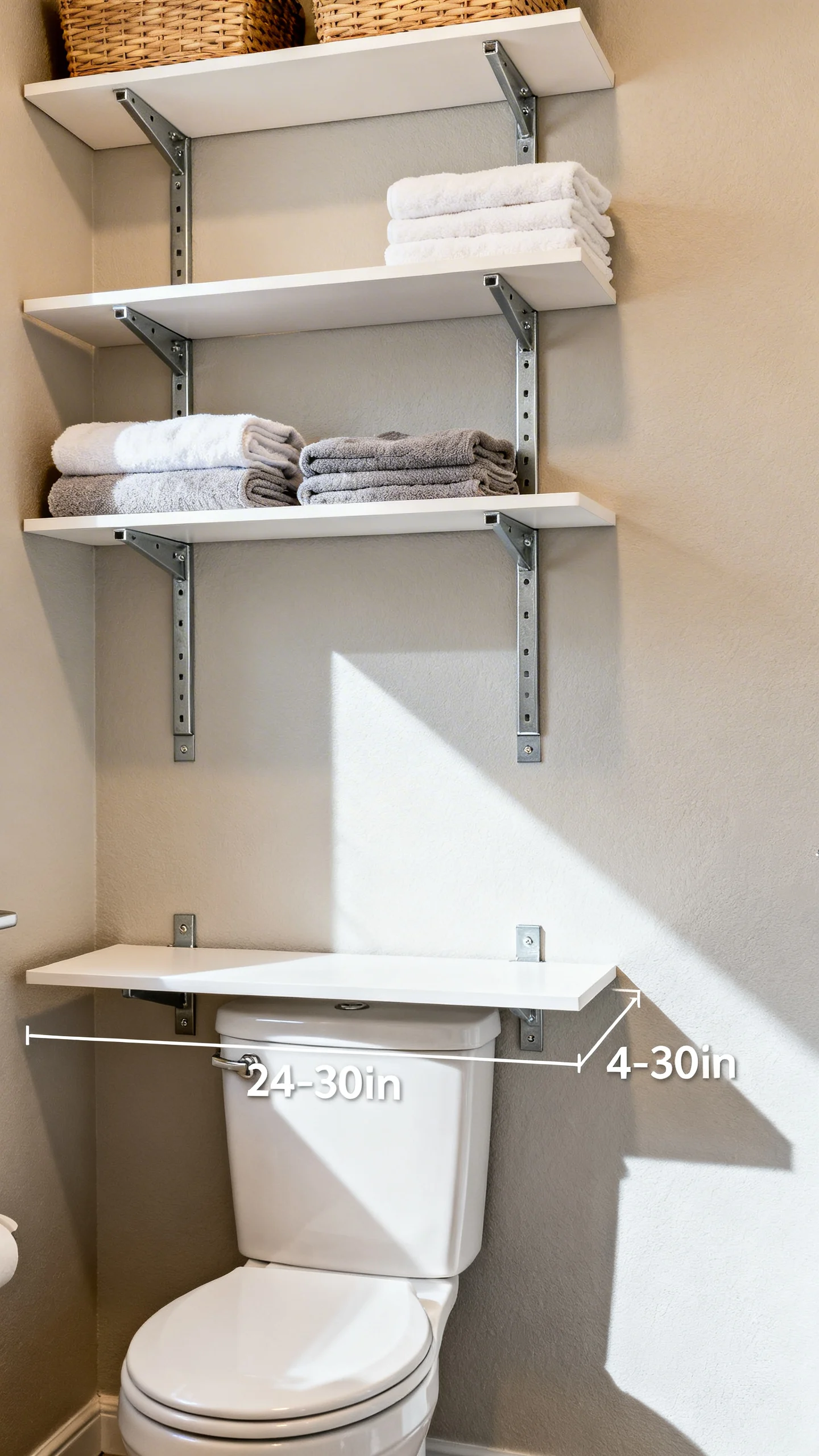
In tiny bathrooms, vertical space is your best friend. A DIY shelf or cabinet above the toilet can add storage without consuming floor area. Keep the bottom shelf at least 24–30 inches above the toilet tank lid so it’s easy to access and doesn’t feel like it’s looming.
Use moisture-resistant materials: sealed wood, painted MDF (with a quality primer), or metal shelving. Anchor into studs when possible; if not, use heavy-duty wall anchors rated for the load. Style tip that stays practical: use matching containers (baskets, lidded bins) to hide small items and reduce visual noise.
7) Choose a Slim Mirror (or Add a Framed Mirror) to Control Proportions
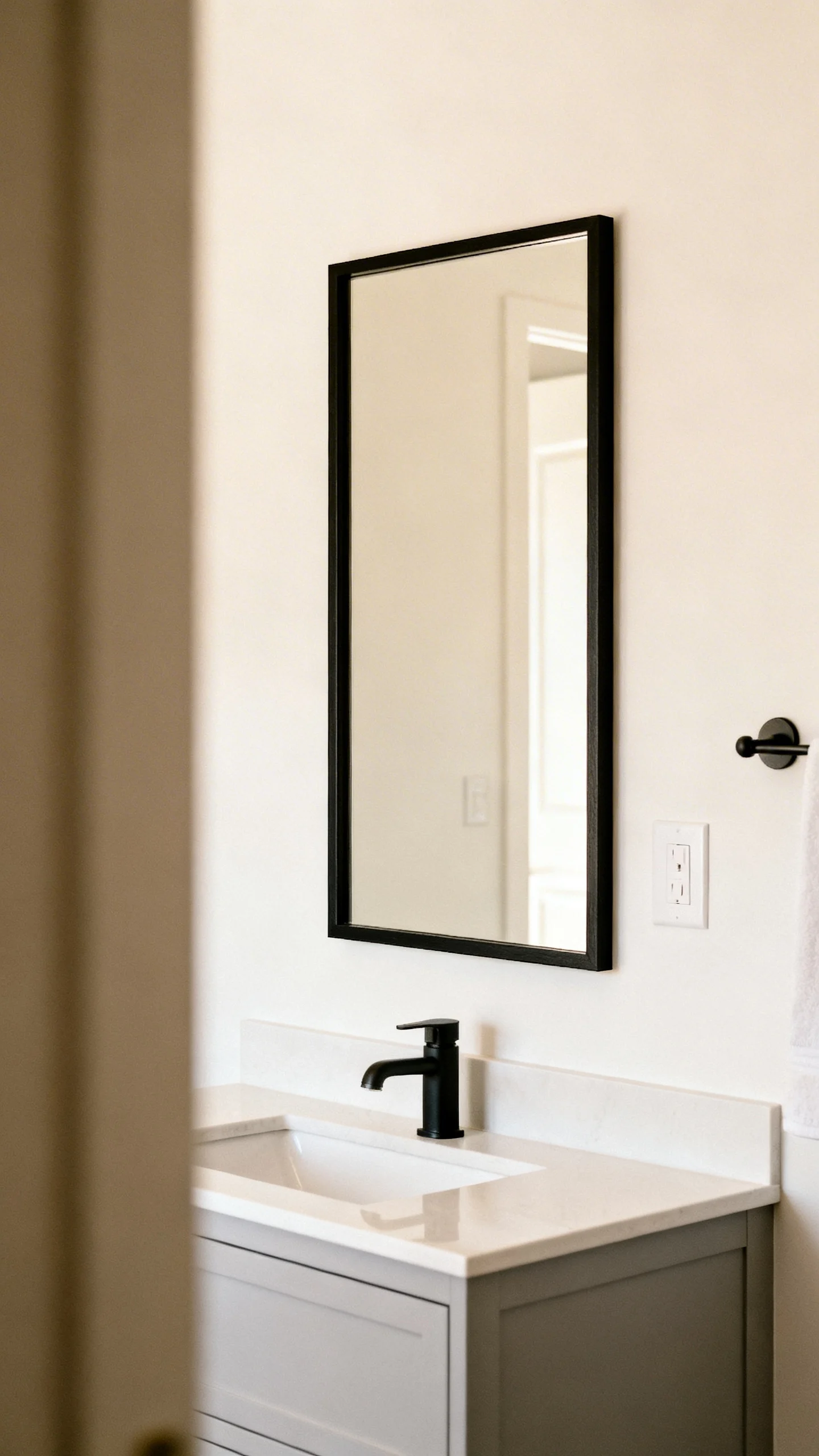
A mirror that’s too wide can crowd wall space needed for towel hooks or light switches; too small can look awkward and underlit. A good rule: mirror width should be close to the vanity width, typically 1–2 inches narrower on each side for a clean border.
DIY idea: frame your existing builder-grade mirror with a moisture-resistant frame kit or PVC trim. Seal all edges with paint or waterproof finish so humidity doesn’t warp it. A taller mirror can visually lift the ceiling—especially helpful in small bathrooms with limited wall area.
8) Replace a Bulky Shower Curtain Rod With a Curved or Tension Rod Upgrade
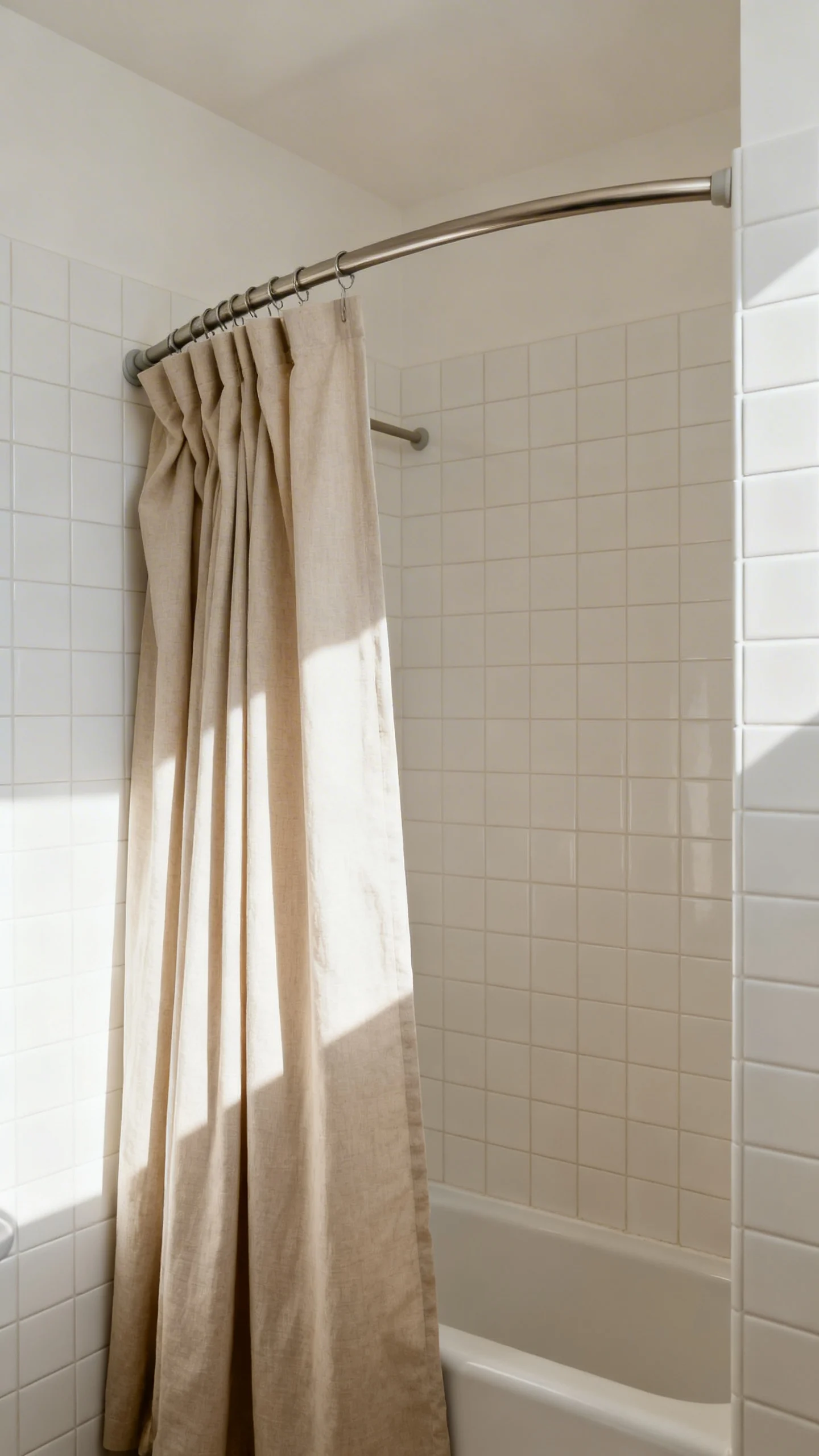
If your bathroom has a tub-shower combo, a small rod change can make the shower feel larger. A curved shower rod can add several inches of elbow room without moving plumbing. If drilling into tile worries you, a high-quality tension rod can be a no-holes solution (just choose one with strong end pads and rust-resistant metal).
Pair it with a light-colored, fabric-look liner or a clear liner to reduce visual blocking. Keep the curtain hem just above the floor for a tailored look that doesn’t bunch—less clutter, easier cleaning, and a more intentional small-bath vibe.
9) Use Space-Saving Hardware: Hooks, Rails, and a Narrow Towel Bar
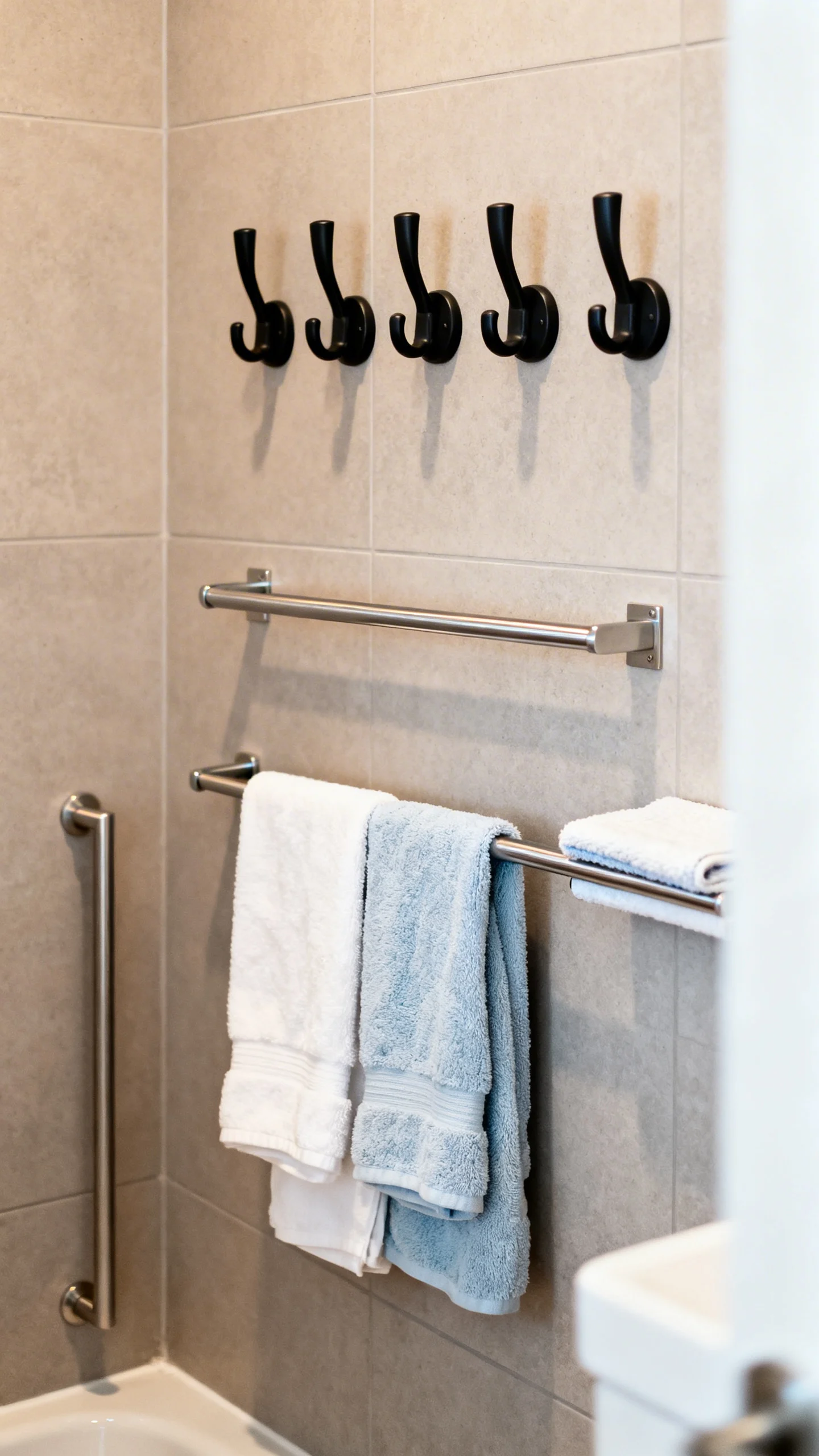
In small bathrooms, towel storage often becomes a pile problem. Swap traditional towel bars for hooks (they hold more, take less wall space, and towels dry well when spaced). If you prefer bars, choose a narrower length (18 inches instead of 24) to fit tight wall sections.
DIY planning tip: mount hooks around 60–66 inches from the floor for adults, lower for kids. For hand towels near the sink, a ring or short bar placed within easy reach prevents drips across the room. Choose stainless steel or aluminum finishes for better corrosion resistance in humid air.
10) Paint With a Moisture-Smart System and a Light-Reflective Color Strategy
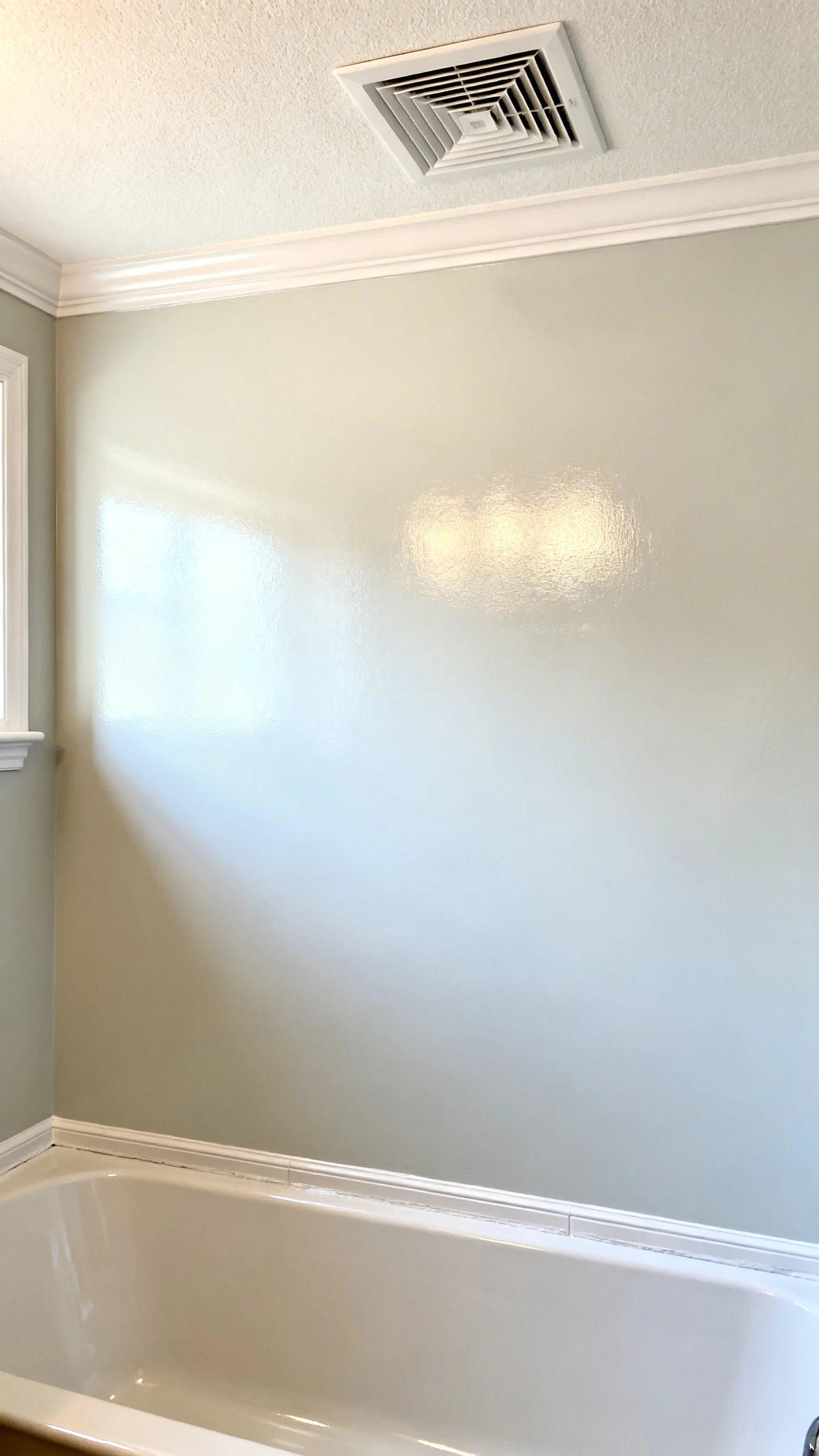
Paint is the quickest DIY bathroom transformation, but bathrooms need the right prep. Use a mildew-resistant primer where needed, then a high-quality bath paint in satin or semi-gloss for wipeable durability. If you’re painting over glossy surfaces, lightly sand or degloss for adhesion.
For small bathrooms, lighter colors reflect more light and make edges feel softer. Try warm whites, pale greiges, or misty blue-grays. If you crave contrast, keep it controlled: a darker vanity or lower tile band with lighter walls above helps the room feel grounded without shrinking it visually.
FAQ
What is the minimum clearance needed in front of a bathroom sink or vanity?
Aim for at least 21 inches of clear floor space in front of the sink, with 30 inches being more comfortable when possible. If you’re reworking layout, also ensure doors and drawers can open without hitting the toilet or shower entry.
Are wall-mounted vanities good for small bathrooms?
Yes—because they expose more floor, they can make the room feel larger and simplify cleaning. If a true wall-mount isn’t possible, a visually “lighter” vanity (slim depth, open legs, or a recessed toe-kick) can deliver a similar spacious effect.
What tile is easiest to DIY in a small bathroom?
Porcelain is durable and water-resistant, but smaller formats (like 2×2 mosaics) are easier on shower floors because they follow slope better. For walls, 12×24 tiles look expansive but require very flat surfaces and careful leveling to avoid lippage.
How can I add storage in a tiny bathroom without making it feel crowded?
Use recessed storage (medicine cabinets), vertical storage (over-toilet shelves), and closed containers to keep small items contained. Prioritize shallow-depth options so storage doesn’t steal elbow room or create a cluttered silhouette.
What type of paint finish is best for small bathrooms?
Satin or semi-gloss is typically best because it resists moisture and wipes clean more easily than flat paint. Use a mildew-resistant primer if the room has a history of humidity issues, and ensure the bathroom fan is working well to protect your finish long-term.